.webp)


Epilepsy is a long term neurological condition that affects people of all ages. It is marked by repeated seizures caused by sudden electrical activity in the brain. While epilepsy can feel overwhelming for patients and families, the good news is that effective treatments are available. With the right medical guidance, many people with epilepsy can live full, active lives.
At Continental Hospitals, known as one of the best hospitals in Hyderabad, epilepsy care is approached with precision, compassion, and advanced medical expertise. This article explains epilepsy treatment options, focusing on medicines and surgery, to help patients and caregivers understand what works best and when.
What Is Epilepsy?
Epilepsy is not a single disease. It includes many types of seizure disorders, each with different causes and patterns. Some people may experience brief staring spells, while others may have full body convulsions. Seizures can be triggered by factors such as sleep deprivation, stress, infections, head injury, or genetic conditions.
Early diagnosis and proper treatment are essential. Delayed or improper management can affect education, work, safety, and overall quality of life.
visit our best neuro doctor hyderabad at Continental Hospitals, Hyderabad. Our experienced neurologists provide advanced diagnosis, personalized treatment, and compassionate care to help you achieve better seizure control and an improved quality of life.
First Line of Treatment: Medicines for Epilepsy
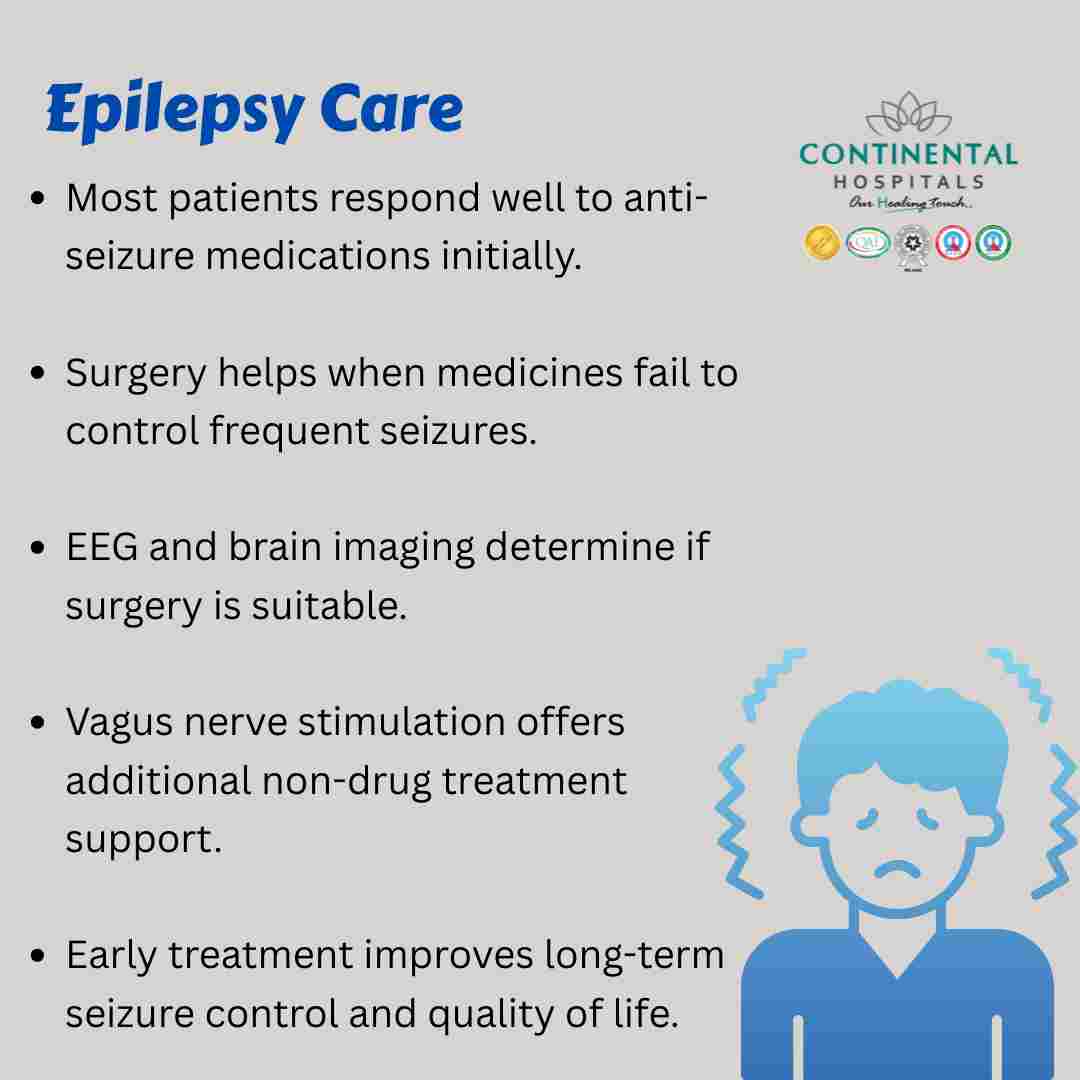
For most patients, anti seizure medicines are the first and most effective treatment.
How epilepsy medicines work?
Epilepsy medicines help control abnormal electrical activity in the brain. They do not cure epilepsy, but they reduce or completely stop seizures in many patients.
Benefits of epilepsy medicines

Medicine-based treatment is preferred initially because:
- It is noninvasive
- It works well for many seizure types
- It allows patients to continue normal daily activities
- It can be adjusted over time
Common points patients ask?
Do epilepsy medicines work for everyone?
Many patients achieve good seizure control with the right medicine and dose. Some may need changes in medication to find the best fit.
Are medicines taken for life?
Not always. Some patients may reduce or stop medicines under doctor supervision if they remain seizure-free for a long time.
Are there side effects?
Side effects vary by medicine and person. Most are mild and manageable with medical guidance.
What are the limitations of epilepsy medication?
Despite advances, medicines may not fully control seizures in all patients. When seizures continue even after trying appropriate medicines, the condition is called drug resistant epilepsy.
This is when doctors start evaluating advanced treatment options.
What happens when epilepsy medicines are not enough?
About one out of three epilepsy patients may not respond well to medicines alone. Uncontrolled seizures can increase the risk of injury, memory problems, anxiety, and reduced independence.
In such cases, further evaluation is essential to explore whether surgery or other advanced therapies can help.
Is surgery a permanent treatment for epilepsy?
Epilepsy surgery is considered when seizures start from a specific area of the brain and do not respond to medicines.
How doctors decide on surgery?
Before recommending surgery, specialists perform detailed testing such as:
- Brain imaging scans
- EEG and video EEG monitoring
- Neuropsychological assessments
- Functional brain mapping
These tests help identify the exact area causing seizures and ensure surgery will not affect vital brain functions.
What are the different types of epilepsy surgery?
Surgical options depend on the patient’s condition and seizure type.
Resective surgery
The part of the brain causing seizures is removed safely.
Disconnective surgery
Nerve pathways that spread seizures are interrupted.
Neuromodulation procedures
Devices may be used to regulate brain signals when removal is not possible.
What are the benefits of epilepsy surgery?
For selected patients, surgery can:
- Reduce seizure frequency significantly
- Stop seizures completely in some cases
- Improve quality of life
- Reduce long term medicine dependence
Surgery is not suitable for everyone, but for the right candidate, it can be life changing.
Medicine vs Surgery: How Do Doctors Decide?
There is no one size fits all approach. Doctors consider many factors before choosing treatment.
Decision factors include
- Type of seizures
- Frequency and severity
- Response to medicines
- Brain imaging results
- Patient age and lifestyle needs
Key difference explained simply
| Aspect | Medicine | Surgery |
| Invasiveness | Non invasive | Surgical procedure |
| First choice | Yes | Only when medicines fail |
| Seizure control | Effective for many | Highly effective for selected cases |
| Long term goal | Seizure reduction | Possible seizure freedom |
Both treatments aim for the same goal: safe seizure control and improved life quality.
Why is early specialist care important for epilepsy?
Many patients live with uncontrolled epilepsy longer than necessary. Early referral to a neurologist or epilepsy specialist can prevent complications and help choose the right path sooner.
Seeking care at a trusted center like Continental Hospitals ensures access to advanced diagnostics and a complete range of treatment options under one roof.
Why Choose Continental Hospitals?
Continental Hospitals stands out as one of the best hospitals in Hyderabad for neurological care, including epilepsy management.
Key strengths include
- Experienced neurologists and neurosurgeons
- Advanced epilepsy monitoring units
- Multidisciplinary treatment planning
- Patient focused and ethical care
- International standards of safety and quality
The hospital follows strict clinical protocols and holds respected national and international accreditations, reflecting its commitment to patient safety, infection control, and clinical excellence.
From diagnosis to long term follow up, patients receive personalized care based on global best practices.
Which Is Better for Epilepsy: Medicine or Surgery?
Treatment is only one part of epilepsy care. Lifestyle adjustments also play a role.
Helpful tips
- Take medicines exactly as prescribed
- Maintain regular sleep patterns
- Avoid known seizure triggers
- Manage stress effectively
- Attend follow up visits regularly
With proper care and support, many people with epilepsy study, work, travel, and live confidently.
Conclusion
Epilepsy treatment has evolved significantly. Medicines remain the foundation of care and help most patients achieve good seizure control. When medicines fail, surgical options offer hope for better outcomes and even seizure freedom in selected cases.
If you or a family member is experiencing seizures or living with uncontrolled epilepsy, consult our Best Neurologist in Hyderabad at Continental Hospitals, Hyderabad. Our expert team is committed to providing advanced, evidence based epilepsy care with compassion and precision.
Book an appointment today at one of the best hospitals in Hyderabad and take the first step toward better seizure control and a healthier future.
Related Blogs: