.webp)

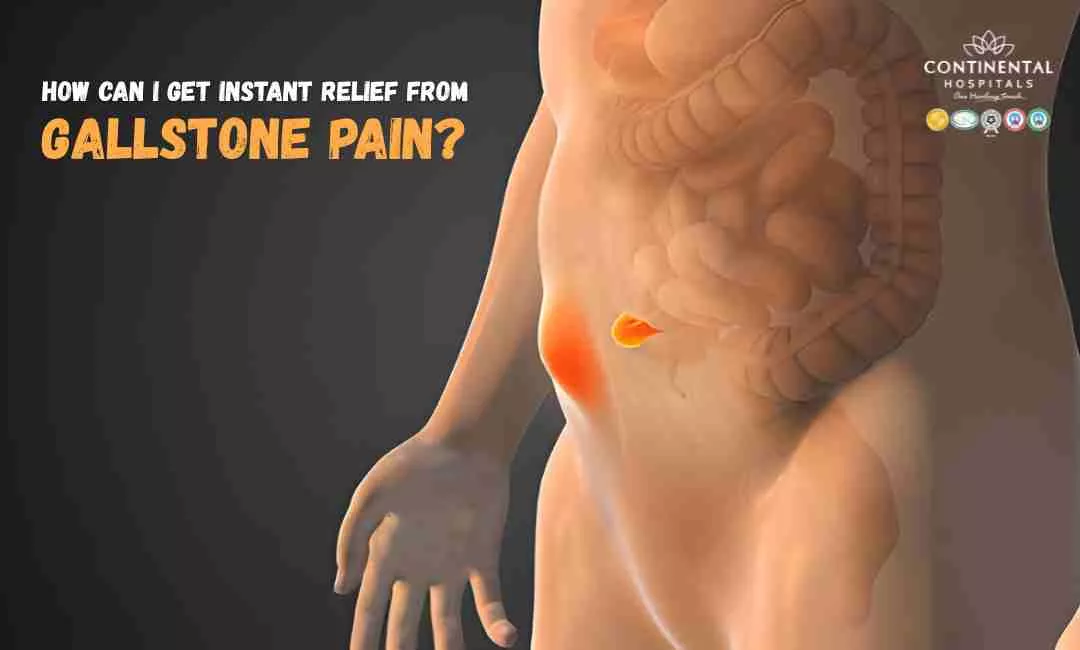
Gallstone pain can strike suddenly and feel overwhelming. Many people describe it as sharp, gripping, or cramping pain that interrupts daily life and sleep. If you are searching for quick comfort and clear medical guidance, this article explains how to get relief from gallstone pain, what causes it, where it occurs, and when you should see a doctor. This content is written to help patients make safe, informed decisions and is tailored for readers looking for trusted care at Continental Hospitals, widely regarded as one of the best hospitals in Hyderabad.
What Is Gallstone Pain?
Gallstone pain happens when hardened deposits of bile block the normal flow from the gallbladder. This blockage causes pressure and inflammation, leading to intense discomfort. Gallstone pain symptoms can vary, but the pain often starts suddenly and builds in intensity.
How does gallstone pain feel like?
Most patients describe it as:
- Sharp or stabbing pain
- Tight, squeezing discomfort
- Pain that comes in waves and does not ease with movement
Gallstone pain at night is common because lying down can change bile flow, triggering pain episodes.
For accurate diagnosis, safe treatment, and long-term relief, consult our best Gastroenterologist at Continental Hospitals. Early care leads to better outcomes and faster recovery.
Where Does Gallstone Pain Occur?
Understanding the gallstone pain area helps you identify the problem early.
Gallstone pain location
- Upper right side of the abdomen
- Center of the upper abdomen below the chest
- Pain may radiate to the back or right shoulder blade
Many women ask about gallstone pain location female patterns. In women, pain may feel more central or radiate toward the chest or back, sometimes confusing it with gastric or heart-related discomfort.
So, where does gallstone pain occur?
Primarily in the upper abdomen, but it can spread, making diagnosis tricky without medical evaluation.

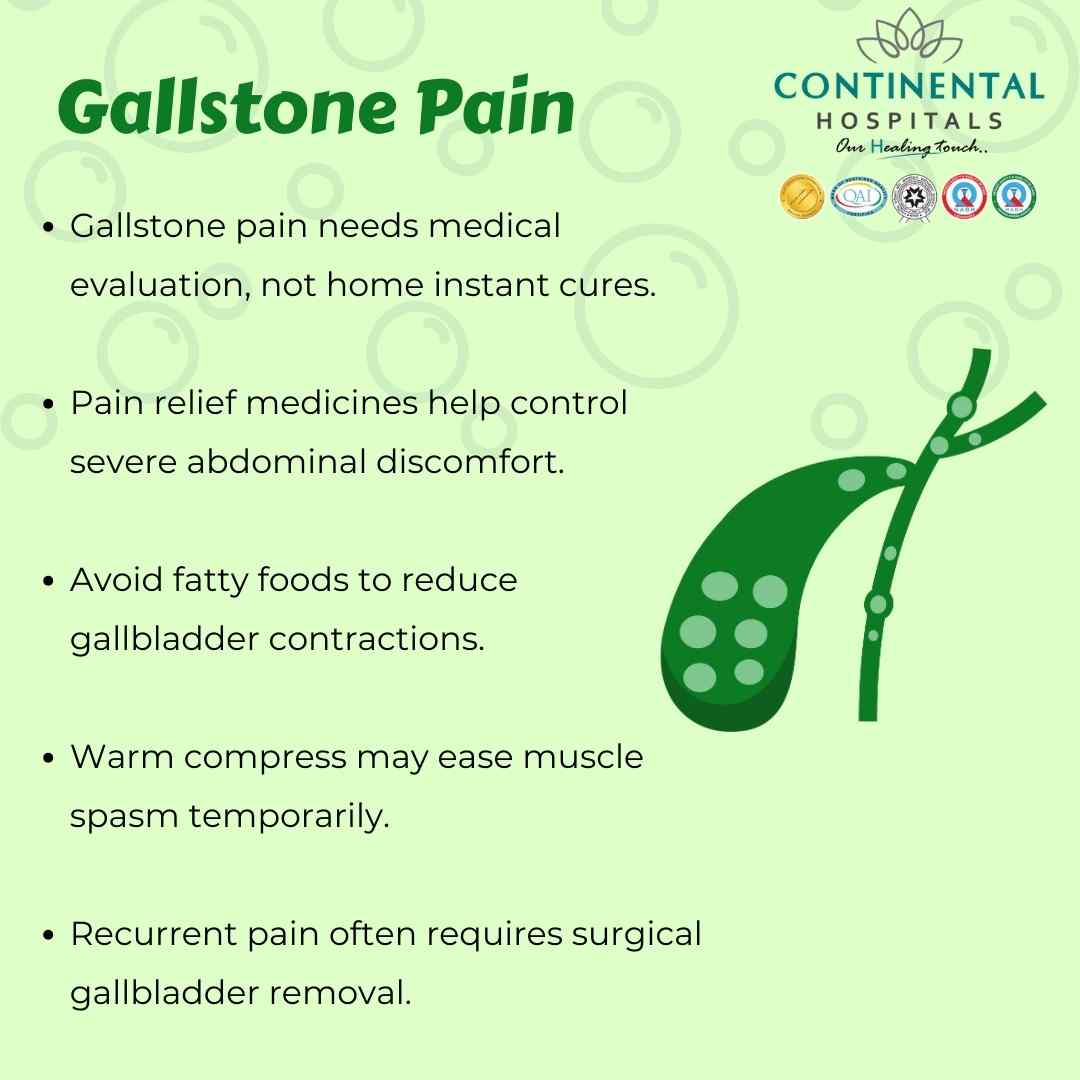
How to Get Instant Relief from Gallstone Pain?
If you are experiencing gallstone pain, these steps may help provide temporary relief. These methods do not remove gallstones but can ease symptoms until medical care is available.
1. Stop eating immediately
Eating stimulates the gallbladder. Avoid fatty or heavy foods during pain episodes to reduce pressure.
2. Change your position
Sitting upright or lying on your left side may reduce gallstone pain intensity in some patients.
3. Apply a warm compress
Placing a warm heating pad on the gallstone pain area can relax muscles and reduce cramping.
4. Stay hydrated
Small sips of warm water may help ease bile flow and reduce discomfort.
5. Pain-relief medication
Gallstone pain medicine prescribed by a doctor can reduce inflammation and pain. Avoid self-medicating with random painkillers, as some may worsen gastric symptoms.
6. Apple cider vinegar for gallstone pain
Some people use diluted apple cider vinegar for gallstone pain relief. While it may help digestion temporarily, it is not a treatment and should not replace medical advice.
These methods explain how to relieve gallstone pain temporarily. If pain returns or worsens, medical evaluation is essential.
Gallstone Pain Relief: What Works and What Does Not?
Methods that may help temporarily
- Warm compress
- Doctor-prescribed gallstone pain tablet
- Rest and hydration
Methods to avoid
- Fatty meals
- Alcohol
- Delaying treatment despite severe pain
Gallstone pain killer medications should only be taken under medical supervision. Incorrect use can mask serious complications.
Why Is Gallstone Pain Worse at Night?
Why gallstone pain at night?
At night, digestion slows, and bile flow changes. Lying flat can increase pressure inside the gallbladder, triggering pain. Gallstone pain at night is a warning sign that stones may be obstructing bile flow.
How to Stop Gallstone Pain Safely?
Patients often ask how to stop gallstone pain instantly. The honest medical answer is that true, lasting relief comes from treating the cause.
Short-term relief:
- Medical pain control
- Anti-inflammatory medicines
- Observation under medical care
Long-term relief:
- Identifying stone size and number
- Treating inflammation
- Surgical or non-surgical management based on diagnosis
Gallstone pain relief without proper evaluation is usually temporary.
When Is Gallstone Pain an Emergency?
Seek immediate medical care if gallstone pain symptoms include:
- Severe pain lasting more than a few hours?
- Fever and chills?
- Yellowing of eyes or skin?
- Persistent vomiting?
These may indicate infection or complications that require urgent treatment.
Diagnosis and Treatment at Continental Hospitals
At Continental Hospitals, patients benefit from advanced diagnostic imaging, including ultrasound and other precise scans that identify gallstone pain location and severity accurately.
Treatment options are personalized and may include:
- Medication-based management
- Minimally invasive procedures
- Advanced laparoscopic surgery when required
The focus is always on patient safety, faster recovery, and long-term relief.
Why Choose Continental Hospitals for Gallstone Pain?
Continental Hospitals is recognized as a best hospital in Hyderabad for digestive and hepatobiliary care because of:
- Internationally accredited healthcare standards
- Experienced Gastroenterologists and GI Surgeons
- Advanced imaging and minimally invasive surgery
- Multidisciplinary care approach
- Patient-centered treatment plans
- Strong focus on safety, infection control, and outcomes
The hospital follows globally recognized clinical protocols and quality benchmarks, ensuring trusted care for gallstone pain and related conditions.
Conclusion
Gallstone pain can disrupt life, sleep, and overall health. While home measures may offer temporary gallstone pain relief, lasting comfort comes from expert medical care. Knowing where gallstone pain occurs, how it feels, and when to seek help can protect you from serious complications.
For accurate diagnosis, safe treatment, and long-term relief, consult our best Gastroenterologist at Continental Hospitals. Early care leads to better outcomes and faster recovery.