.webp)


Do you often finish dinner late and then struggle to fall asleep? Many people believe that as long as they eat healthy food, the timing does not matter. But sleep science tells a different story. Late night eating can quietly disturb your sleep, digestion, and overall health.
At Continental Hospitals, known as the Best hospital in Hyderabad, our specialists frequently see patients who complain of poor sleep, acidity, bloating, or unexplained fatigue. In many cases, dinner timing and sleep habits are closely linked. Understanding how late night eating affects your body can help you improve both sleep quality and long term health.
Why Dinner Timing Matters for Sleep?
Your body follows a natural internal clock called the circadian rhythm. This rhythm controls when you feel alert and when you feel sleepy. It also regulates digestion, hormone release, and metabolism.
When you practice late night eating, you send mixed signals to your body. Instead of preparing for rest, your system shifts into digestion mode. This delay can disturb your sleep cycle and reduce sleep quality.
Sleep science shows that eating late at night sleep patterns can become lighter and more fragmented. You may fall asleep, but your body does not reach deep, restorative stages of sleep easily.
Visit our pulmonology department at Continental Hospitals for expert diagnosis, personalized care, and early treatment to prevent complications.
What Happens Inside Your Body After a Late Night Dinner?
When you eat dinner very late, several changes happen:
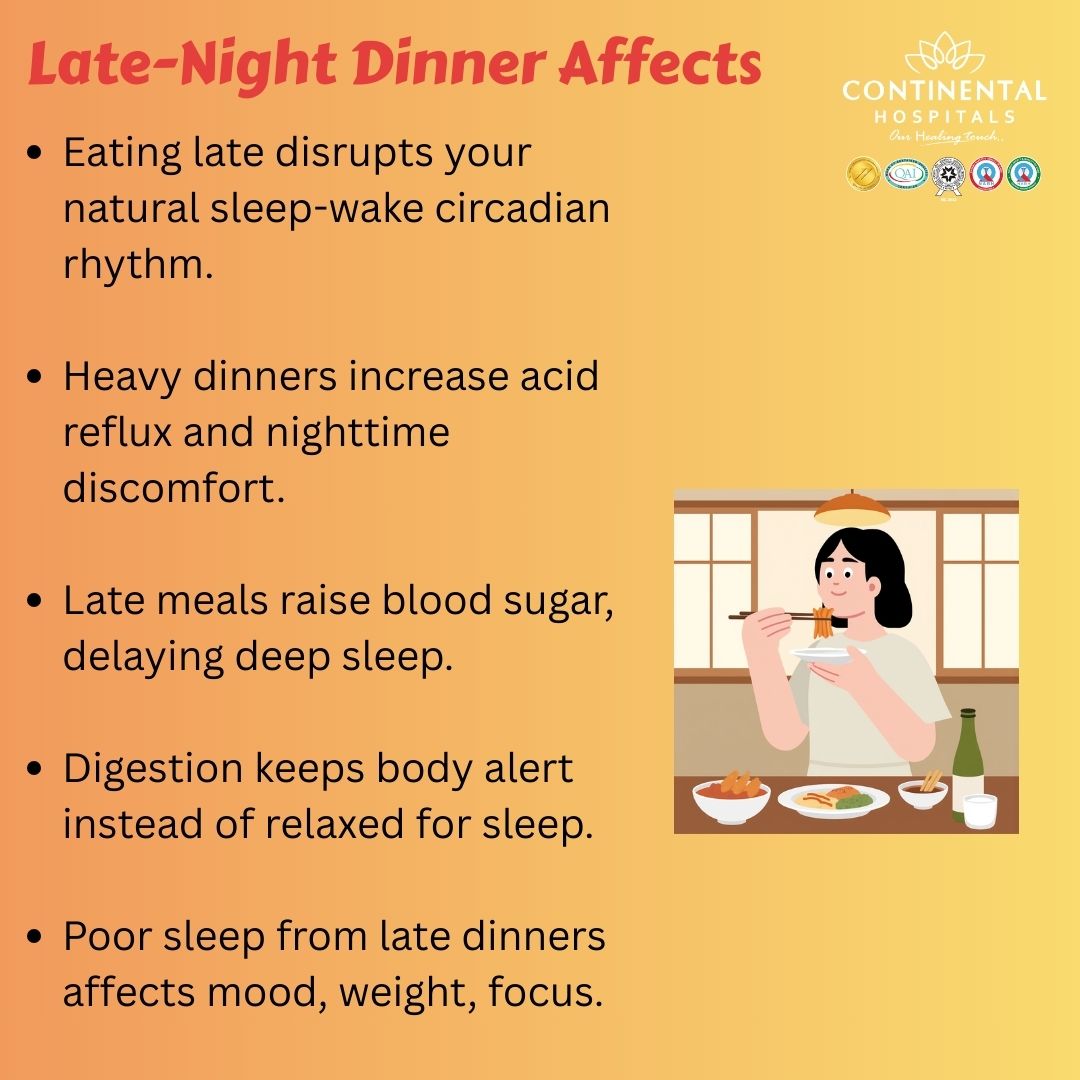
- Digestion remains active when your body should be resting
- Stomach acid production increases
- Blood sugar levels rise
- Body temperature slightly increases
- Melatonin release may be delayed
Melatonin is the hormone that signals your body it is time to sleep. Late night eating may suppress or delay melatonin production. As a result, you may feel restless, wake up frequently, or struggle to fall asleep.

Does Eating Late Affect Sleep?
Yes, does eating late affect sleep? The answer is clearly yes.
Here are the common late night dinner effects on sleep:
Poor sleep onset
You may take longer to fall asleep because your digestive system is still active.
Frequent night awakenings
Indigestion, acidity, or discomfort can wake you up multiple times.
Reduced deep sleep
Deep sleep is essential for body repair. Eating late at night sleep quality often reduces deep sleep duration.
Morning fatigue
You may wake up tired even after spending enough hours in bed.
Over time, late night eating can create a cycle of poor sleep and low energy. This may also increase cravings the next day, leading to more irregular eating patterns.
Late Night Eating and Acid Reflux
One of the most common late night dinner effects is acid reflux. When you lie down soon after eating, stomach acid can move back into the food pipe. This causes burning sensation, chest discomfort, or sour taste in the mouth.
People with gastritis, GERD, or sensitive digestion are especially vulnerable. Eating late at night sleep quality can worsen significantly due to reflux symptoms at night.
At Continental Hospitals, our gastroenterologists frequently treat patients whose nighttime reflux improves simply by correcting dinner timing and sleep habits.
Impact on Weight and Metabolism
Late night eating is also linked to weight gain and metabolic issues. When you eat late, your body is less efficient at processing glucose. Insulin sensitivity is lower at night.
Sleep science research suggests that irregular dinner timing and sleep disturbances may increase the risk of:
- Weight gain
- Insulin resistance
- Type 2 diabetes
- High blood pressure
When sleep quality decreases, hunger hormones such as ghrelin increase, and fullness hormones such as leptin decrease. This makes you feel hungrier the next day.
So late night eating not only affects sleep but also influences metabolism and long term health.
Who Is at Higher Risk?
Some individuals are more sensitive to late night eating:
- People with diabetes
- Individuals with thyroid disorders
- Patients with acidity or GERD
- Shift workers
- Those with stress related sleep problems
If you already struggle with sleep issues, eating late at night sleep quality may worsen further.
Signs That Your Late Dinner Is Affecting Sleep
You may notice:
- Difficulty falling asleep
- Bloating or heaviness at bedtime
- Heartburn at night
- Restless sleep
- Morning headaches
- Daytime sleepiness
If these symptoms are frequent, dinner timing and sleep patterns need attention.
Ideal Gap Between Dinner and Bedtime?
Sleep specialists generally recommend finishing dinner at least two to three hours before bedtime. This gives your body enough time to digest food before you lie down.
Light meals are better at night. Heavy, oily, or spicy foods increase the risk of discomfort.
Here are simple steps to reduce late night dinner effects:
- Eat dinner at a consistent time
- Avoid heavy meals after sunset
- Limit caffeine in the evening
- Reduce screen time before bed
- Keep your bedroom cool and dark
Small lifestyle changes can significantly improve eating late at night sleep outcomes.
What Does Sleep Science Recommend?
Sleep science emphasizes regularity. Your body loves routine. When you eat, sleep, and wake at consistent times, your internal clock stays balanced.
Benefits of early dinner include:
- Better melatonin release
- Improved deep sleep
- Lower acid reflux risk
- Stable blood sugar levels
- Improved morning alertness
Late night eating disturbs this balance and may lead to long term sleep disturbances.
When Should You See a Doctor?
If correcting dinner timing and sleep habits does not improve your symptoms, you may need medical evaluation.
Consult a doctor if you have:
- Severe acidity or chest discomfort
- Chronic insomnia
- Uncontrolled diabetes
- Frequent night awakenings
- Unexplained weight gain
Sleep issues sometimes indicate underlying conditions such as sleep apnea, hormonal imbalance, or gastrointestinal disorders.
Why Choose Continental Hospitals?
Continental Hospitals is recognized as the best hospital in Hyderabad for its patient centered care and advanced medical services.
Our strengths include:
- National and international accreditations ensuring global standards of safety and quality
- Highly experienced specialists in gastroenterology, endocrinology, pulmonology, and internal medicine
- Advanced diagnostic technology for sleep disorders and digestive conditions
- Integrated care approach combining lifestyle guidance and medical treatment
- Commitment to ethical, transparent, and evidence based care
Our multidisciplinary team evaluates not just symptoms but the root cause. Whether your concern is late night eating, acid reflux, diabetes, or chronic sleep disturbance, we provide comprehensive evaluation and personalized treatment plans.
Our accreditations reflect adherence to strict quality benchmarks and patient safety protocols. This commitment makes us a trusted healthcare destination for families across Hyderabad and beyond.
Conclusion
Late night eating may seem harmless, but its impact on sleep quality can be significant. Eating late at night sleep disturbances become more common, digestion slows, and hormonal balance gets disrupted.
Dinner timing and sleep are closely connected. By finishing meals earlier, choosing lighter foods, and following consistent routines, you can improve sleep naturally.
If lifestyle changes do not help, professional medical support is essential. At Continental Hospitals, the Best hospital in Hyderabad, our specialists are committed to helping you restore healthy sleep patterns and overall well being.
Good sleep begins with good habits. Make dinner timing a priority and give your body the rest it truly deserves.
If you suffer from persistent sleep problems, acidity, or metabolic concerns linked to late night eating, do not ignore the warning signs.
Consult our best pulmonologist at Continental Hospitals for accurate diagnosis and tailored treatment. Early intervention can prevent complications and improve your quality of life.
Book an appointment today and take the first step toward better sleep and better health.
Related Blog Topics: