.webp)

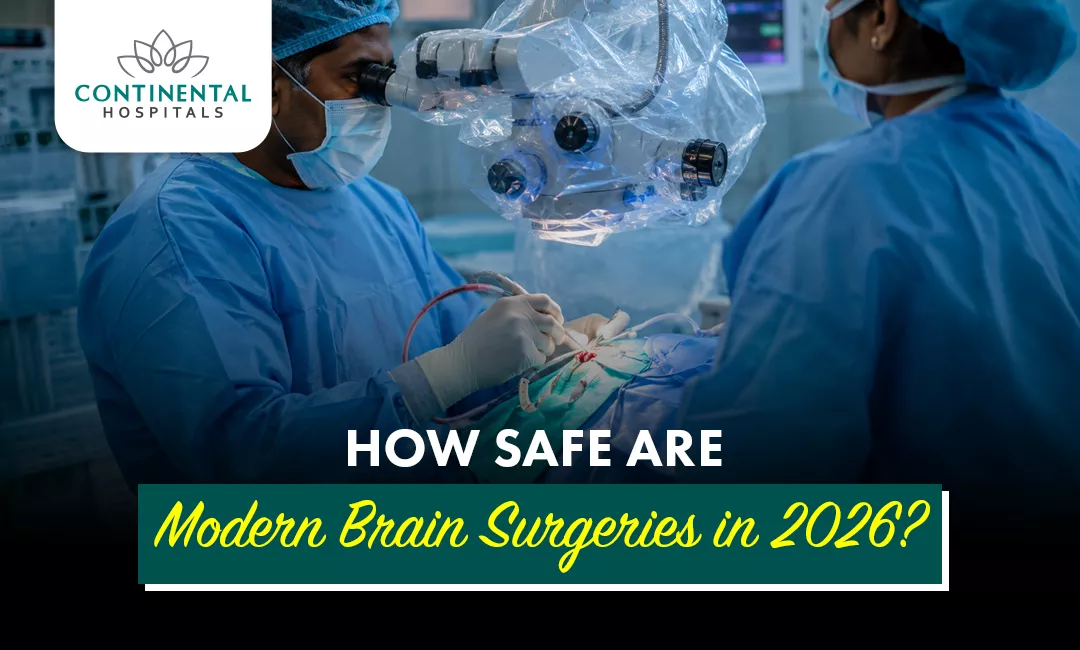
Brain surgery has entered a new era in 2026. What once sounded risky and scary is now safer, more accurate, and more successful because of major advances in medical technology, surgical skills, imaging systems, and skilled neurosurgery care. Today, patients undergoing brain surgery in 2026 are treated with minimally invasive procedures, robotic technology, advanced navigation systems, and quicker recovery options with better outcomes and fewer risks and complications.
At Continental Hospitals, patients get the best in neurosurgery care backed by best infrastructure, experienced specialists, and world-class healthcare standards. As one of the best hospitals in Hyderabad, Continental Hospitals offers state-of-the-art technology with best-in-class, personalized care through safe and effective brain surgery treatment.
What is brain surgery in 2026?
Brain surgery is an advanced surgical procedure conducted to manage various disorders of the brain, nerves, or cavities of the skull. Brain surgery may be required for the following conditions:
• Brain tumors,
• Stroke,
• Epilepsy,
• Brain aneurysms,
• Parkinson’s disease,
• Brain trauma,
• Hydrocephalus,
• Spine and nerve problems.
Brain surgery in 2026 is no longer the procedure of large skull openings. Modern neurosurgery goes hand-in-hand with preserving the healthy brain tissue and targeting the disease with utmost precision.
This huge change has made brain surgery safer all over the world.
If you or your family member is facing any neurological-related issue or brain problem, consult our best neuro doctor hyderabad at Continental Hospitals for advanced brain surgery, safe treatment, and caring management.
Why Is Brain Surgery Safer in 2026?
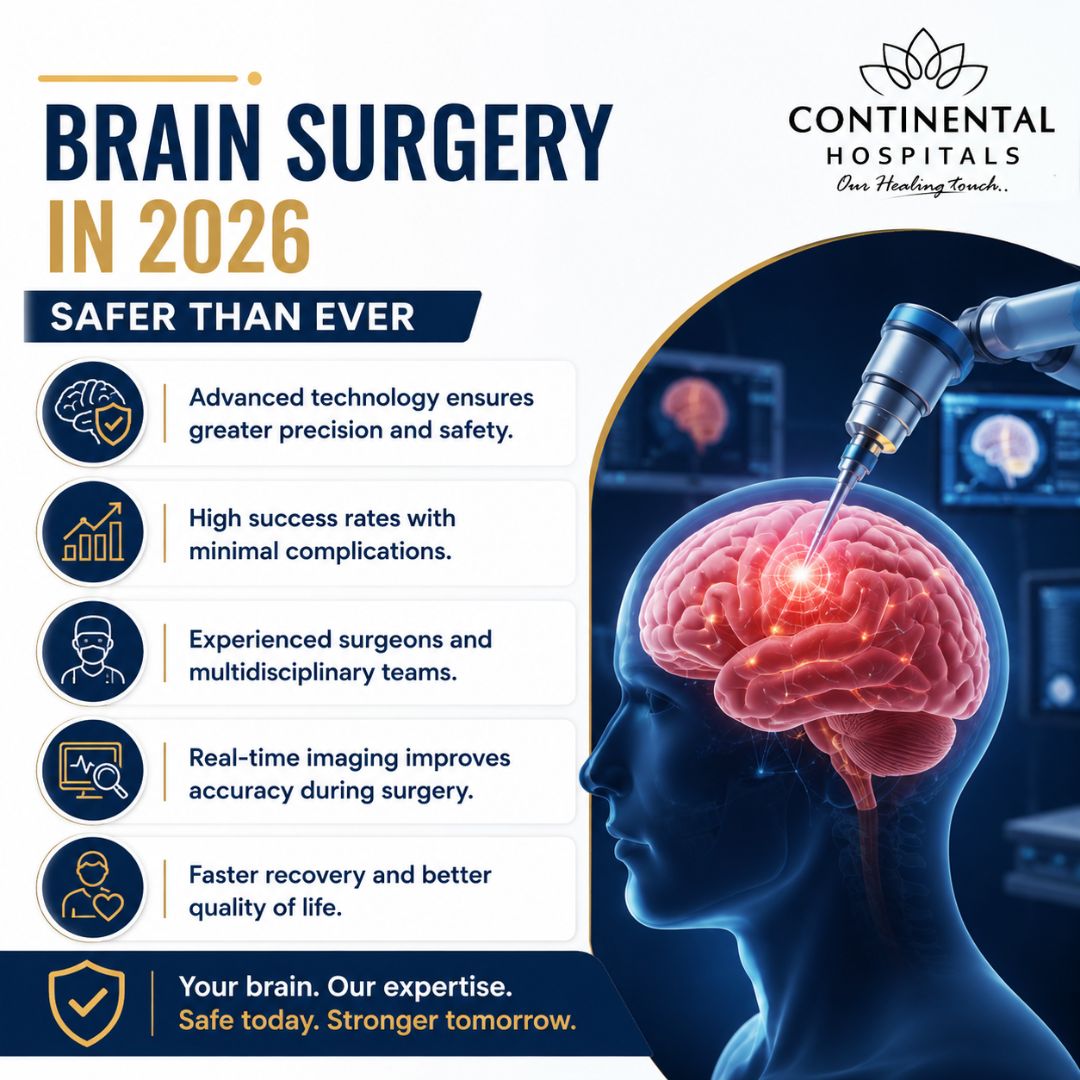
A major factor behind the increased safety of brain surgery is tech. Today's neurosurgeons have a plethora of highly advanced systems designed to assist them in carrying out surgeries with incredible precision and accuracy.
Advanced Brain Imaging
Today’s imaging tech generates detailed 3D images of the brain both before and during brain surgery. Functional imaging, MRI scans and CT scans allow surgeons to identify the location of important structures in the brain

This enables surgeons to avoid damaging healthy tissue associated with speech, movement, vision, memory, and other functions.
Minimally Invasive Brain Surgery
Minimally invasive brain surgery is one of the most important neurosurgical advances in recent times. Instead of large incisions, minimally invasive procedures involve small incisions and the use of specialized surgical tools.
Benefits of minimally invasive brain surgery include:
• Less pain
• Smaller scars
• Less bleeding
• Lower risk of infection
• Shorter hospital stay
• Faster recovery
Hospitals can see patients who recover from minimally invasive brain surgery returning to normal life well before the time required in the past.
Robotic-Assisted Neurosurgery
Robotic surgery helps provide greater precision during delicate surgical procedures such as brain surgery. The surgeon can manipulate the robotic instruments with greatly increased accuracy and stability, especially in hard-to-reach areas of the brain.
This helps reduce human error during brain surgeries and consequently increase their safety during complex procedures.
Real-Time Brain Mapping
Surgeons use state-of-the-art mapping systems to help guide them during certain brain surgeries. In real time, surgeons can see brain activity and safely remove tumors or abnormal tissue while protecting key brain functions.
Real-time mapping is the newest brain surgery breakthrough.
Top Brain Surgeries in 2026
Neurological conditions require different surgical techniques. The most frequent types of surgeries include:
Brain Tumor Surgery
With better tools to delineate tumor margins, tumor surgery is safer. The ability to preserve healthy brain tissues while removing cancerous and noncancerous lesions is critical.
Endoscopic Neurosurgery
U-shaped cameras are entry points that traverse through very small incisions with little damage to surrounding tissue and are the most common for pituitary tumors and fluid drainage procedures.
Deep Brain Stimulation
Deep brain stimulation is the most common neurosurgical procedure for patients with movement disorders. Small under-the-skin electrodes are placed into certain areas of the brain to relieve symptoms and help improve quality of life.
Vascular Neurosurgery
Catheter-based minimally invasive techniques are used in many cases to treat brain aneurysms and abnormal vessels rather than needing to do invasive surgeries.
What Makes Brain Surgery in 2026 More Lucrative?
The success of brain surgery depends on many factors, such as technology, the level of the surgeon’s skill, early diagnosis and the quality of post surgical care.
Advanced Surgical Planning.
Artificial intelligence aids and digital planning systems can assist the brain surgeon in preparing a refined surgical plan even before reaching the operating theatre.
This results in a more precise surgery, with fewer complications and complications as such.
Perfect Anesthesia.
Advances in safe and personalized anesthesia. Continuous monitoring helps maintain the condition of patients throughout the duration of the brain surgery procedure.
Early Recovery.
Improved recovery plans help patients recover quicker after brain surgery. The rehabilitation team helps patients in recovery using physiotherapy, speech therapy to name a few, through neurological care.
Strong Infection Control Program.
Hospitals have improved their ability to reduce infections. Sophisticated operation theaters and theaters with sterile air have been introduced.
At Continental Hospitals, patient safety is our priority and we invest heavily in an advanced brain surgery environment and international standard health care facilities.
Brain Surgery Risks.
Brain surgery may still be associated with some risks, but the risks are relatively small due to advances in modern neurosurgery and the level of specialisation in neurology care. The risks may include:
• Bleeding
• Infection
• Brain swelling
• Localised weakling
• Speech impairments
• Seizure residuals
• Cognitive defects
But in general, the chance is small, and most patients have a more rapid recovery than before.
Recovery Duration after Brain Surgery?
Recovery depends on the selected procedure and the general health of the patient. Minimally invasive brain surgeries often require short hospital stay. More complex procedures on the other hand, may take longer time for recovery.
During the recovery period many patients report the following:
• Less pain after surgery
• Earlier mobility
• Faster return to everyday activities
• Better neurological functioning
Rehabilitation has an important role in ensuring patients regain confidence and strength after their operation.
Never Ignore These Symptoms
Any neurological symptoms or findings should be urgently assessed and evaluated. Contact a neurosurgeon if you have:
• Headache that does not improve
• Rapid-onset weakness
• Speech difficulties
• Seizure activity
• Vision loss
• Loss of balance
• Sudden loss of memory
Early diagnosis and detection can result in better treatment outcomes and may reduce the need for emergency surgery.
Why Continental Hospitals?
Continental Hospitals is one of the top hospitals in Hyderabad for neurological and neurosurgical care.
Benefits of seeking treatment at Continental Hospitals include:
• High-quality neurosurgery operation theatres
• Experienced neurosurgeons
• State-of-the-art imaging and navigation systems
• Expertise in minimally invasive brain surgery
• Multidisciplinary neuro care teams
• Comprehensive rehabilitation
• International standards of patient safety
• In addition to, JCI and NAB Healthcare accreditation
We pride ourselves on providing individualized, quality care, with an emphasis always on the patient’s safety, comfort, and long-term prognosis.
Patients receive the benefits of modern facilities, cutting-edge diagnostics, and carefully coordinated neurological care all in the same place.
The Future Of Brain Surgery
Brain surgery in 2026 is seen to develop rapidly in the future. Advances in artificial intelligence, augmented reality, robotic navigation, and precision medicine are guiding the future of neurosurgery.
Future advances may include:
• Smaller cuts for surgery
• More accurate targeting of tumour
• Faster wound healing
• Fewer neurological complications
• Precision-based treatment
Brain surgery in the new age is getting safer, smarter, and more patient-friendly.
Conclusion
Brain surgery in 2026 is more advanced and safer because of significant breakthroughs in technology, imaging, robotics, minimally invasive procedures, and advanced neurosurgical expertise. Patients today can opt for brain surgery treatment modalities with more accuracy, reduced risk, and quick recovery.
If you or your family member is facing any neurological-related issue or brain problem, consult our best neurologist in Hyderabad at Continental Hospitals for advanced brain surgery, safe treatment, and caring management.
Related Blog Topics: