.webp)


Spicy food is loved by many people for the heat, flavour, and excitement it brings to a meal. But your stomach does not always love it the same way. The burning sensation you feel after eating a spicy dish is not just in your mouth. It can also reach your stomach lining and trigger irritation, acidity, and digestive discomfort. Understanding how spicy food affects your stomach helps you make better choices for long-term stomach health.
What Happens Inside Your Stomach When You Eat Spicy Food?
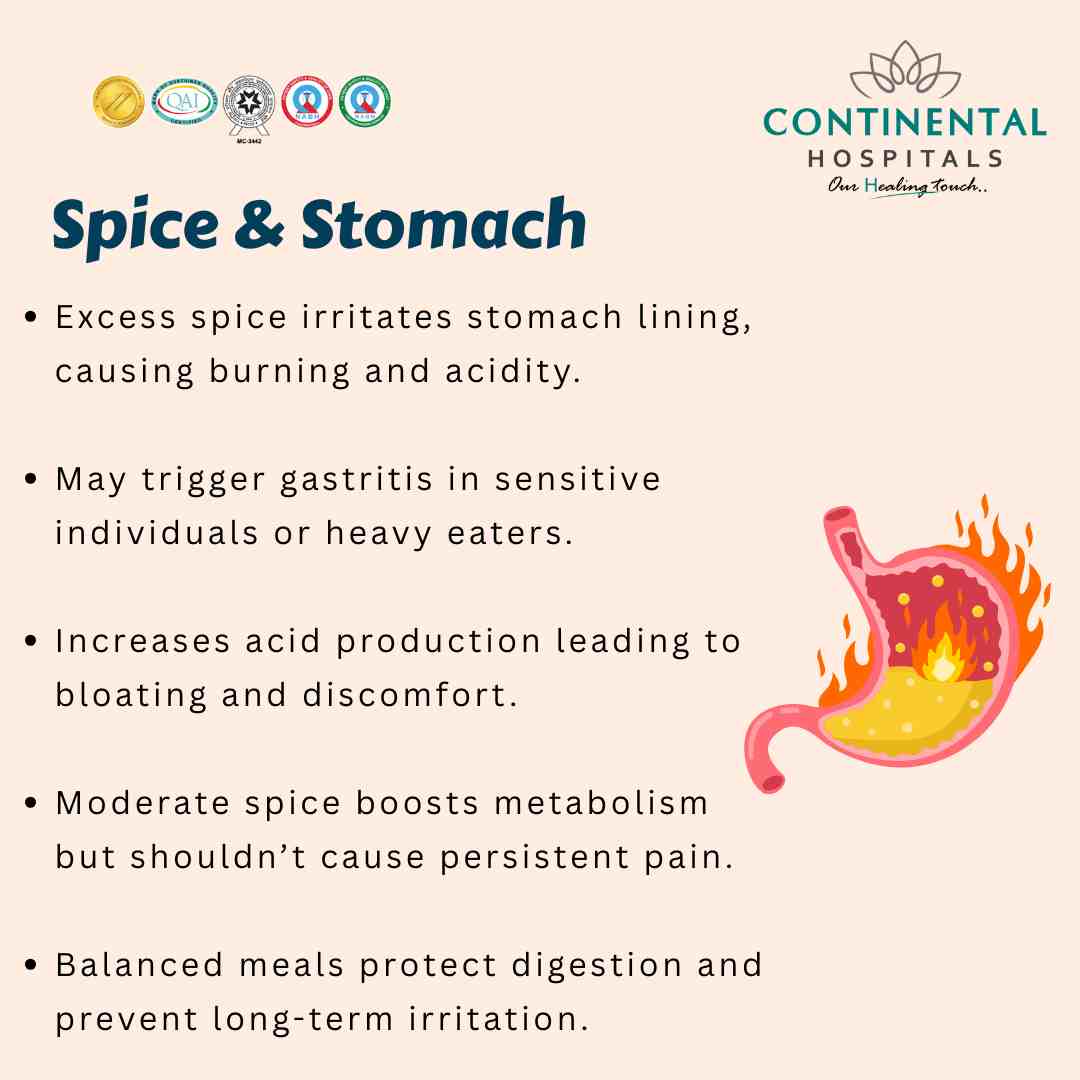
The heat in spicy foods comes from a compound called capsaicin. This ingredient gives chillies their strong burning effect. When capsaicin enters your stomach, it can irritate the stomach lining and increase acid production. This is why many people experience burning discomfort, acidity, or even pain after consuming spicy meals.
Your stomach lining normally protects you from acid. But when it is irritated by spicy foods, especially in high quantities, the protective layer becomes more sensitive. This leads to:
- stomach lining irritation
- spicy food acidity
- capsaicin stomach burn
- bloating
- indigestion
- discomfort after meals
While occasional spicy meals may not harm everyone, frequent consumption can increase the risk of digestive issues.
How Capsaicin Affects the Stomach Lining
Capsaicin activates pain receptors in your mouth and stomach. The receptors send signals that feel like burning, even though there is no actual heat.
Key effects of capsaicin on the stomach lining include:
- Increased acid secretion
- Irritation of the protective mucous layer
- Slower digestion
- Temporary inflammation
Some people tolerate capsaicin better than others. But for those with sensitive digestive systems, even small amounts can trigger symptoms.
Can Spicy Food Cause Ulcers
A common belief is that spicy foods cause stomach ulcers. This is not fully true. Ulcers are mainly caused by the H pylori bacteria or long term use of certain painkillers. However, spicy foods can worsen existing ulcers or irritate an already damaged stomach lining. So if you already have gastritis or ulcer symptoms, spicy foods can make your pain sharper and your healing slower.

Spicy Food and Gastritis Triggers
Gastritis means inflammation of the stomach lining. It can be triggered by infections, stress, alcohol, and foods that irritate the stomach. Spicy foods are one of the most common gastritis triggers because capsaicin increases acid activity.
Symptoms that may worsen with spicy foods include:
- acidity
- burning sensation
- nausea
- upper abdominal pain
- bloating
- indigestion
If you notice these issues frequently after meals, your stomach may be reacting to spicy food risks.
Spicy Foods and GERD
GERD refers to acid reflux where stomach acid flows back into the food pipe. Spicy foods can weaken the lower oesophageal sphincter, the valve that keeps acid inside the stomach. When this muscle relaxes, acid flows upward, causing heartburn and chest discomfort.
GERD spicy foods include:
- hot sauces
- red chilli powder
- black pepper
- green chillies
- pickles with spices
Avoiding these foods during flare ups can improve digestion and reduce pain.
How Spicy Food Affects Digestion?
Spicy food digestion can be challenging for many people. Capsaicin can slow down the stomach’s emptying process, which leads to a heavy feeling or fullness. It also stimulates the gut, which in some people results in cramping or loose stools.
Common digestion effects include:
- slower digestion
- stomach heaviness
- burning during digestion
- acid reflux
- irritation during bowel movements
If you regularly face these symptoms, reducing spice levels in your meals can bring relief.
Signs Your Stomach Does Not Tolerate Spicy Food
You may need to limit spicy food if you notice:
- frequent acidity
- burning after meals
- abdominal bloating
- nausea after spicy dishes
- sharp pain in the upper stomach
- burping and discomfort
- heartburn at night
These are all signs of stomach lining irritation.
Stomach Health Tips for People Who Love Spicy Food
You do not have to give up spicy food completely. Instead, follow simple stomach health tips to reduce irritation:
- Eat smaller portions of spicy dishes
- Add curd, buttermilk, or cooling foods to balance heat
- Avoid spicy meals late at night
- Combine spices with fibre rich foods
- Drink enough water
- Do not eat spicy and oily food together
- Reduce spice intake during acidity or gastritis flare ups
- Limit pickles and spicy fried snacks
- Choose mildly spicy versions of your favourite dishes
These habits support healthy digestion and protect your stomach lining from frequent irritation.
Why Choose Continental Hospitals for Stomach and Digestive Care?
Continental Hospitals is recognised for high quality medical care, advanced facilities, and strong clinical expertise. The hospital maintains international standards of safety, patient care, and infection control. It follows strict quality protocols and has received global accreditations including JCI which reflects its commitment to excellence. The gastroenterology department is equipped with modern diagnostic tools, expert endoscopists, and specialised digestive care teams. Patients receive personalised treatment plans, transparent communication, and comprehensive guidance for both simple and complex stomach conditions.
From acidity management to advanced procedures, Continental Hospitals provides complete care under one roof.
Conclusion
Spicy food adds excitement to meals, but it can irritate your stomach lining and cause symptoms like burning, acidity, indigestion, and reflux. While it does not directly cause ulcers, it can worsen existing stomach conditions. Understanding spicy food stomach effects helps you make smarter choices for better digestive health.
If you suffer from persistent acidity, stomach pain, burning sensation, or digestive problems after eating spicy food, consult our expert Gastroenterologists at Continental Hospitals for accurate diagnosis and personalised treatment. Our specialists are experienced in treating gastritis, GERD, ulcers, and all stomach related issues.