.webp)


Eating is not just about satisfying hunger; it is a crucial part of the digestive process. The way we eat, including the speed at which we consume our meals, significantly affects gut health. In today’s fast-paced life, many people rush through their meals, often leading to a range of digestive problems and long-term health issues.
How Eating Too Fast Impacts Digestion
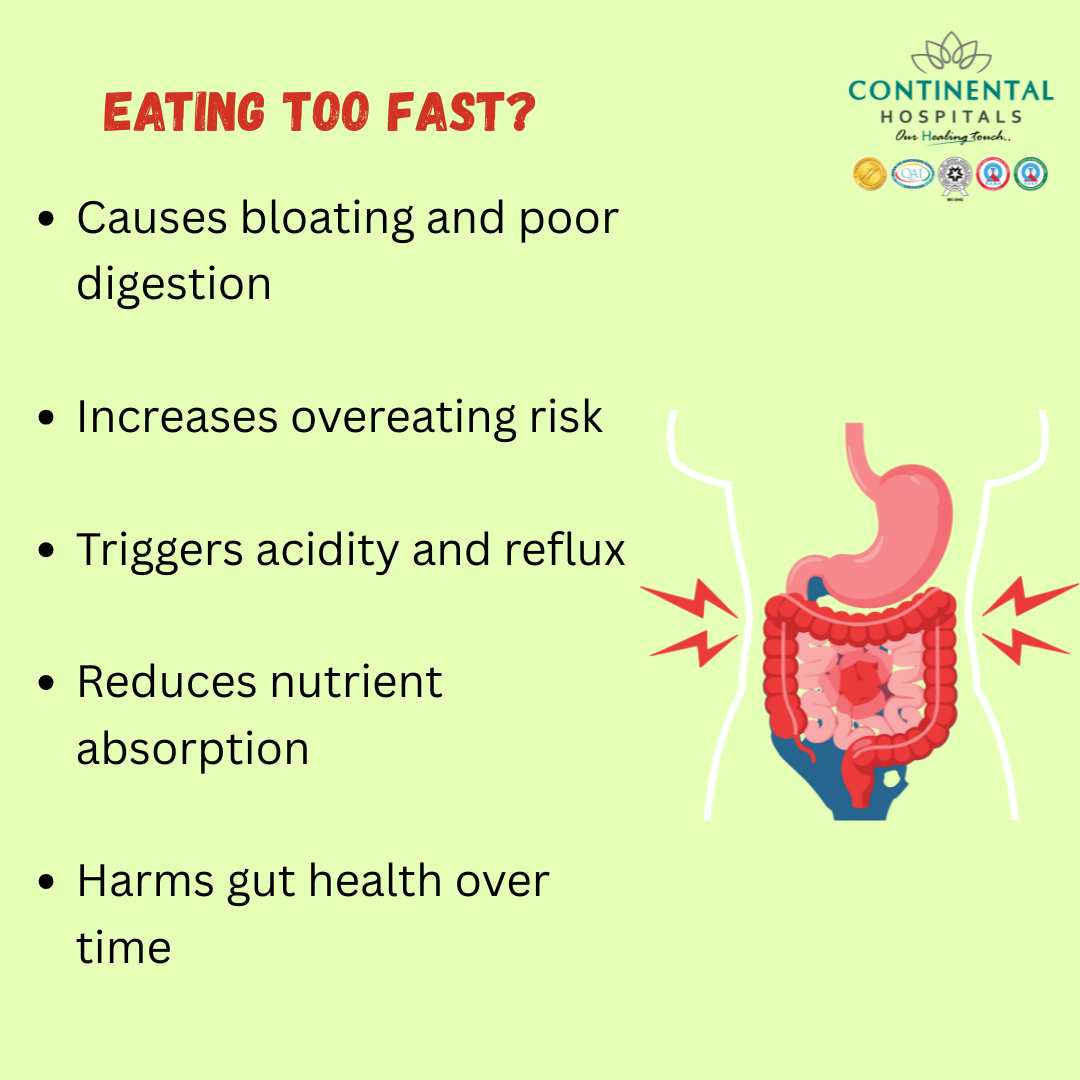
Eating quickly can overwhelm the digestive system. When food enters the stomach in large, unchewed pieces, the stomach has to work harder to break it down. This can cause:
Indigestion and Stomach Pain: Eating rapidly can strain the stomach, causing cramps and discomfort.
Gas and Bloating: Poorly chewed food ferments in the gut, producing excessive gas.
Acid Reflux: Rapid eating can increase stomach acid production, leading to heartburn.
IBS Symptoms: Fast eating may worsen irritable bowel syndrome, causing constipation or diarrhea.
If you have persistent digestive issues, gas, bloating, or acid reflux, visit our Gastroenterology Speciality at Continental Hospitals for expert care and treatment.
Why Eating Too Fast Causes Gas and Bloating
Swallowing air while eating quickly introduces excess air into the digestive system. Additionally, food is not broken down properly by saliva, which contains enzymes essential for digestion. This combination often results in bloating, discomfort, and gas.

Fast Eating and Stomach Pain
When food is not chewed adequately, the stomach must exert more effort to digest it. This additional strain can result in stomach pain, cramps, and sometimes nausea. Repeatedly eating too fast may contribute to chronic digestive discomfort over time.
Can Eating Too Fast Lead to Acid Reflux?
Yes. Eating rapidly can increase the risk of acid reflux. When the stomach becomes overfilled, the lower esophageal sphincter may weaken, allowing acid to flow back into the esophagus. Symptoms include heartburn, chest discomfort, and irritation of the esophageal lining.
Fast Eating and Overall Gut Health
Eating too quickly can also disturb the gut microbiome. Poor digestion reduces nutrient absorption and affects the balance of healthy gut bacteria. Over time, this imbalance may contribute to chronic digestive issues, reduced immunity, and even metabolic problems.
Common Signs You May Be Eating Too Fast
- Feeling full shortly after meals yet continuing to eat.
- Frequent bloating, gas, or stomach cramps.
- Acid reflux or heartburn after meals.
- Difficulty digesting certain foods or feeling heavy after eating.
- Weight gain due to overeating caused by delayed satiety signals.
How to Stop Eating Too Fast
Slowing down your eating pace is one of the easiest ways to protect your gut. Try these strategies:
Chew Thoroughly: Chew every bite properly to ease digestion.
Pause Between Bites: Put down utensils to naturally slow your pace.
Avoid Distractions: Eating while watching TV or working can lead to mindless fast eating.
Set a Timer: Aim to spend at least 20–30 minutes per meal.
Mindful Eating: Focus on your food’s taste, texture, and aroma.
Dietary Tips for a Healthy Gut
Along with slowing down, maintaining healthy eating habits supports digestion:
Eat Fiber-Rich Foods: Include fruits, vegetables, and whole grains.
Stay Hydrated: Adequate water intake aids digestion and prevents constipation.
Limit Processed Foods: Processed items are often difficult to digest.
Include Fermented Foods: Yogurt, kefir, and fermented vegetables promote a healthy gut microbiome.
Avoid Overeating: Even slow eating cannot counteract the effects of large portions.
Why Choose Continental Hospitals for Gut Health?
Continental Hospitals is recognized as the best hospital in Hyderabad for digestive care. Our gastroenterologists and internal medicine specialists provide expert evaluation, advanced diagnostics, and personalized treatment plans for digestive issues, including those caused by fast eating. Patients benefit from professional guidance on diet, lifestyle changes, and medical interventions when necessary. Our hospital is accredited for excellence in patient care, offering state-of-the-art facilities and compassionate, patient-centered treatment.
Preventing Digestive Issues Related to Fast Eating
Prevention is always better than treatment. Simple steps can protect your gut health:
- Take time to enjoy your meals.
- Chew slowly and thoroughly.
- Eat smaller, frequent meals instead of large portions.
- Avoid drinking too much liquid while eating, which can dilute stomach acid.
- Include probiotics to maintain a balanced gut microbiome.
Conclusion
Eating too fast may seem harmless, but its effects on your digestive system can be serious. From bloating and gas to acid reflux and indigestion, the consequences of rapid eating can disrupt gut health and overall well-being. Simple habits like slowing down, chewing properly, and practicing mindful eating can improve digestion, reduce discomfort, and protect your long-term health.
If you experience persistent digestive issues, gas, bloating, or acid reflux, consult our best Gastroenterologist at Continental Hospitals. As the best hospital in Hyderabad, Continental Hospitals provides expert evaluation, advanced diagnostics, and personalized treatment to support optimal gut health. Take the first step toward better digestion and overall wellness today.
Related Blog Topics