.webp)


Spicy food is an inseparable part of Indian cuisine. From fiery curries to street food loaded with chillies, spice adds flavour, aroma, and excitement to meals. But many people often wonder, is spicy food bad for the stomach? If you have experienced abdominal pain after eating spicy food or a burning sensation in the stomach, this question becomes even more important.
At Continental Hospitals, Hyderabad, our best gastroenterology specialists frequently meet patients who are confused about whether spicy food is harming their digestive health or if something else is causing their symptoms. Let us simplify the science, clear common myths, and help you understand when spicy food is safe and when it can become a problem.
What Makes Food Spicy?
The heat in spicy food mainly comes from a compound called capsaicin, found in chillies. Capsaicin stimulates pain receptors in the mouth and digestive tract. This does not mean it damages the stomach in everyone, but it can trigger discomfort in sensitive individuals.
Spices such as red chilli, green chilli, black pepper, and certain masalas can increase stomach acid production. For people with a healthy digestive system, this usually causes no harm. For others, it may lead to symptoms.
Is Spicy Food Bad for the Stomach?
The answer depends on your digestive health. Spicy food bad for the stomach is not a universal truth. For many people, spicy food is digested without any issue. However, if you already have digestive conditions, spicy food effects can become noticeable.
Spicy food may irritate an already sensitive stomach lining. This can result in burning in the stomach after eating spicy food, bloating, or discomfort. People with acid reflux, gastritis, or indigestion are more likely to feel these symptoms.
Common Symptoms After Eating Spicy Food
If spicy food is not suiting your stomach, you may notice the following:
- Stomach pain after spicy food, especially in the upper abdomen
- Burning sensation or heat in the chest or stomach
- Acid reflux spicy food symptoms like sour taste or regurgitation
- Abdominal pain after eating spicy food
- Intestinal pain after eating spicy food in some cases
- Nausea or spicy food indigestion
- Worsening of spicy food acidity at night
These symptoms are signals that your digestive system may need medical attention.

Does Spicy Food Cause Gastritis?
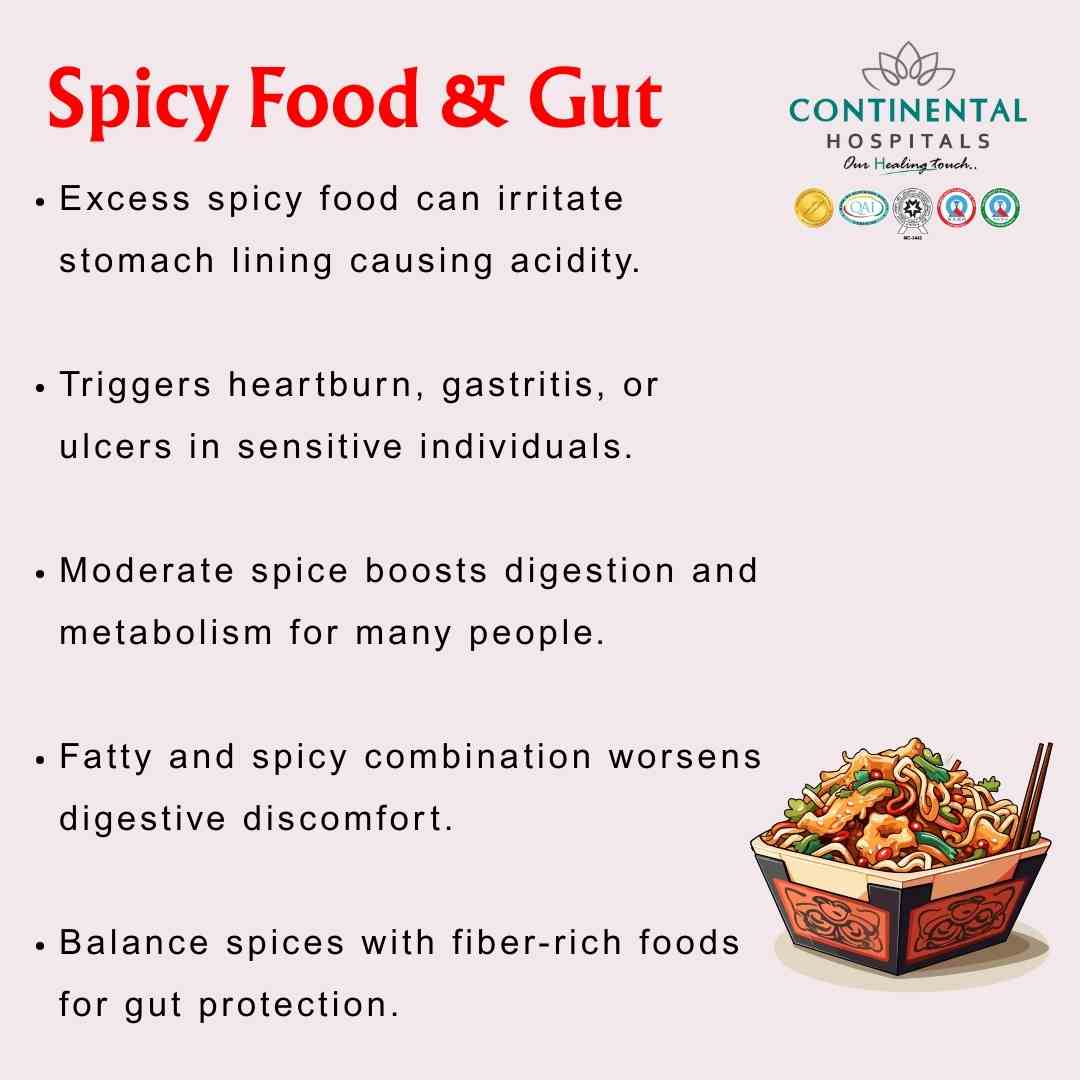
Spicy food gastritis is a commonly discussed topic. Gastritis is inflammation of the stomach lining. Spicy food does not directly cause gastritis in healthy individuals. However, if gastritis already exists, spicy food can worsen the irritation and pain.
Capsaicin can increase blood flow to the stomach lining and stimulate acid secretion. This may aggravate symptoms like burning pain, nausea, and fullness in people with gastritis.
Acid Reflux and Spicy Food
Acid reflux occurs when stomach acid flows back into the food pipe. Spicy food is a known trigger for acid reflux in many individuals. Acid reflux spicy food symptoms include heartburn, chest discomfort, and a bitter taste in the mouth.
If you notice frequent reflux after eating spicy meals, it is a sign that your stomach acid balance may be disturbed. Repeated episodes should not be ignored.
Is Spicy Food an Ulcer Myth?
One common belief is that spicy food causes ulcers. This is a spicy food ulcer myth. Most stomach ulcers are caused by bacterial infection or long-term use of certain pain medications. Spicy food does not cause ulcers, but it can irritate an existing ulcer and increase pain.
So while spicy food is not the root cause, it can make ulcer symptoms more uncomfortable.
Spicy Food and Digestive Health
Spicy food digestive health is not always negative. In moderate amounts, spices can actually support digestion. Capsaicin may help improve blood flow and stimulate digestive juices. Some spices also have antimicrobial properties.
Problems arise when spicy food is eaten in excess or when the stomach lining is already inflamed or sensitive.
Who Should Be Careful With Spicy Food?
You should limit spicy food if you experience:
- Frequent acid reflux
- Chronic gastritis
- Irritable bowel symptoms triggered by spice
- Recurrent stomach pain after spicy food
- Burning in stomach after eating spicy food regularly
Listening to your body is important. If symptoms repeat, medical evaluation is advised.
How to Reduce Discomfort From Spicy Food?
If you enjoy spicy food but face discomfort, these simple steps may help:
- Eat spicy food in moderation
- Avoid spicy meals on an empty stomach
- Combine spicy food with curd or fibre rich foods
- Drink water but avoid excess immediately after meals
- Avoid lying down immediately after eating
- Identify which spice triggers your symptoms
If symptoms persist, do not self treat repeatedly with antacids.
When Should You See a Doctor?
Ask yourself these questions.
- Do you feel burning in the stomach after eating spicy food almost every day?
- Do you experience abdominal pain after eating spicy food even in small amounts?
- Is acid reflux affecting your sleep or daily routine?
If your answer is yes, it is time to consult a specialist. Persistent symptoms may indicate gastritis, acid reflux disease, or other digestive conditions.
Why Choose Continental Hospitals, Hyderabad?
Continental Hospitals is widely recognised as one of the best hospitals in Hyderabad for advanced digestive care. Our Department of Gastroenterology offers comprehensive evaluation and treatment for acid reflux, gastritis, indigestion, and other gastrointestinal conditions.
We are known for our international accreditations that reflect high standards of patient safety, clinical excellence, and quality care. Our hospital follows globally accepted protocols and evidence based practices to ensure accurate diagnosis and effective treatment.
What makes Continental Hospitals different?
- Experienced gastroenterologists with advanced training
- State of the art endoscopy and diagnostic facilities
- Multidisciplinary care approach for complex digestive issues
- Patient focused treatment plans
- Strong emphasis on safety, hygiene, and clinical quality
Our team believes in treating the root cause, not just the symptoms.
Conclusion
So, is spicy food bad for the stomach? Not always. For healthy individuals, spicy food can be enjoyed in moderation without harm. However, for people with acid reflux, gastritis, or sensitive digestion, spicy food effects can lead to discomfort and pain.
Ignoring repeated symptoms like stomach pain after spicy food or burning in the stomach after eating spicy food can delay diagnosis and proper care. Understanding your body and seeking timely medical advice is the key to long term digestive health.
Book your consultation with our top Gastroenterology Department at Continental Hospitals today and take the first step towards a healthier, more comfortable digestive life.
Related Blog Topics: