.webp)


Male fertility is influenced by a combination of genetic, environmental, and lifestyle factors. Understanding how lifestyle and male fertility interact is crucial for men who wish to improve reproductive health. Many male fertility issues develop silently, and men often realize there is a problem only after trying to conceive. Recognizing the impact of daily habits can help prevent complications and support overall reproductive wellness.
If you have male fertility issues, visit our Andrology Speciality at Continental Hospitals for early evaluation and effective treatment guidance.
Understanding Male Fertility Issues
Male fertility issues refer to problems that reduce the ability to father a child naturally. Common issues include low sperm count, poor sperm motility, abnormal sperm shape, and hormonal imbalances. These conditions can result from genetic factors, medical conditions, or lifestyle choices.
Some of the most common male fertility issues include:
- Low sperm count caused by poor lifestyle or medical conditions
- Abnormal sperm morphology affecting fertilization capability
- Hormonal imbalances impacting testosterone and reproductive function
- Reduced sperm motility affecting the ability of sperm to reach the egg
Understanding these issues is the first step toward improving reproductive health.
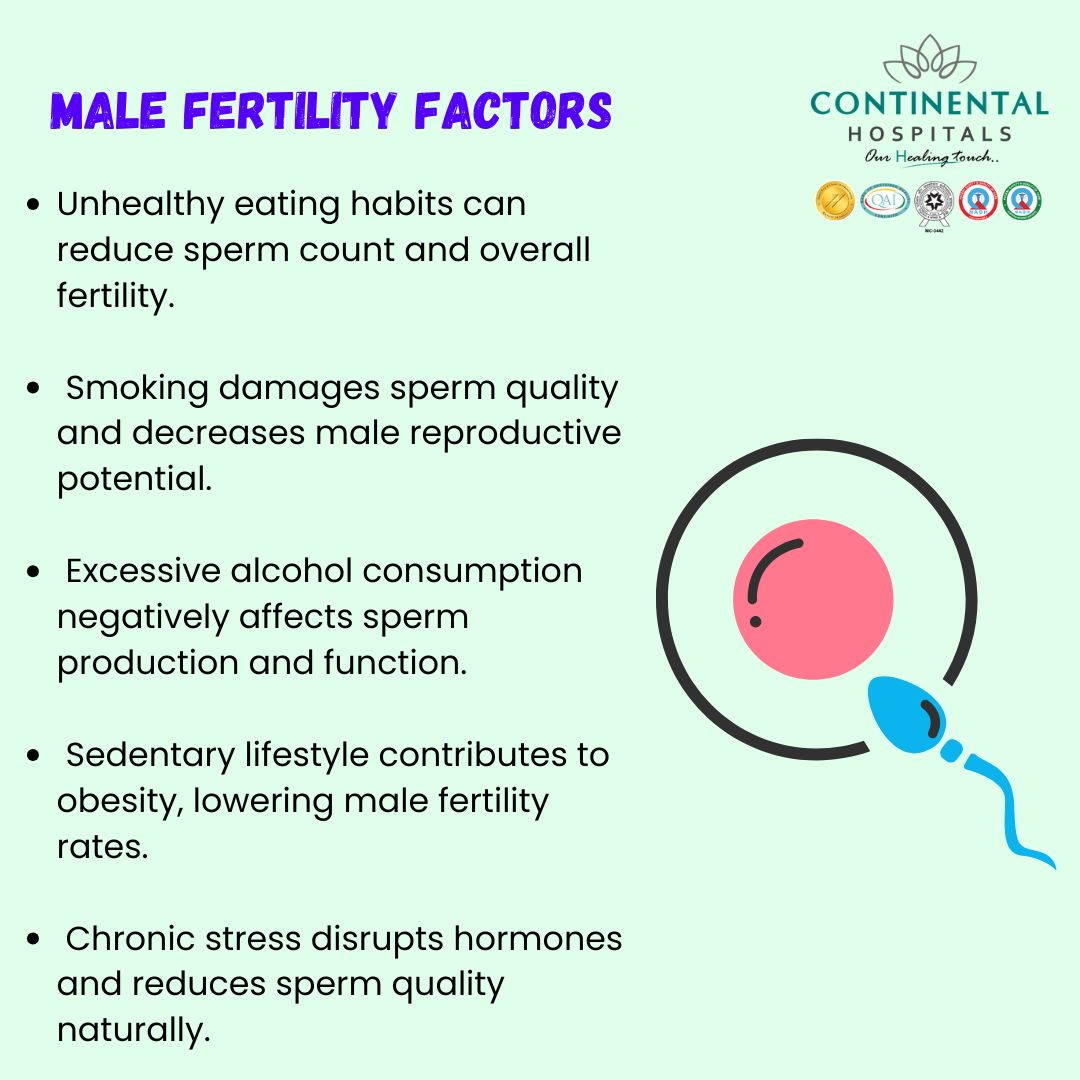
Factors Affecting Male Fertility
Several factors play a role in male fertility. While some causes are uncontrollable, such as age or genetics, many are influenced by lifestyle choices. These factors include:
Diet for Male Fertility
Poor nutrition can reduce sperm quality and hormone production. A balanced diet rich in fruits, vegetables, lean protein, and healthy fats supports sperm health. Foods high in antioxidants, zinc, and selenium are particularly beneficial.
Exercise and Sperm Health
Regular physical activity helps maintain hormonal balance, manage weight, and improve circulation, all of which contribute to better sperm quality. Excessive exercise, however, can sometimes negatively impact testosterone levels.

Smoking and Male Infertility
Tobacco use damages sperm DNA, reduces sperm count, and lowers motility. Smoking also increases oxidative stress, which can affect overall reproductive health.
Alcohol and Male Fertility
Excessive alcohol consumption reduces testosterone production and sperm quality. Moderate alcohol intake or abstinence can improve reproductive outcomes.
Obesity and Male Infertility
Being overweight can lower testosterone levels, increase estrogen, and reduce sperm production. Maintaining a healthy weight through diet and exercise is crucial for male fertility.
Stress and Male Fertility
Chronic stress affects hormone levels and sperm production. Stress management techniques, including meditation, yoga, or counseling, can improve reproductive health.
Environmental Factors Affecting Male Fertility
Exposure to pollutants, pesticides, heavy metals, and radiation can harm sperm health. Minimizing exposure to environmental toxins is important for maintaining fertility.
Testosterone and Male Fertility
Low testosterone affects sperm production and sexual health. Men experiencing fatigue, low libido, or erectile issues should seek evaluation to check testosterone levels.
How to Improve Male Fertility
Improving male fertility often involves lifestyle changes, medical evaluation, and supportive care. Here are practical steps:
- Maintain a balanced diet rich in antioxidants, vitamins, and minerals
- Engage in moderate physical activity to support hormone balance
- Avoid smoking, excessive alcohol, and recreational drugs
- Manage stress through mindfulness practices and counseling
- Keep a healthy body weight to optimize testosterone and sperm production
- Limit exposure to environmental toxins, including pesticides and chemicals
- Seek medical advice for hormonal or reproductive health concerns
Following these tips can naturally boost fertility in men and improve overall reproductive health.
Common Causes of Low Sperm Count
Low sperm count causes vary widely. Some of the most common include:
- Hormonal imbalances affecting testosterone and other reproductive hormones
- Medical conditions such as varicocele, infections, or genetic disorders
- Lifestyle factors such as poor diet, smoking, alcohol, and obesity
- Environmental exposure to toxins and radiation
- Chronic stress impacting hormonal balance and sperm production
Identifying the underlying cause is essential for effective treatment.
Male Reproductive Health Tips
In addition to lifestyle changes, maintaining reproductive health requires routine medical care. Male reproductive health tips include:
- Regular medical checkups and fertility evaluations
- Screening for sexually transmitted infections
- Monitoring hormone levels, including testosterone
- Maintaining proper hygiene and avoiding prolonged heat exposure to testes
- Following a healthy diet and exercise regimen
These steps help men protect their fertility and overall reproductive wellness.
Why Choose Continental Hospitals?
Continental Hospitals is a leading healthcare institution and best hospital in Hyderabad, recognized for its advanced fertility and reproductive health services. The hospital is accredited by national and international healthcare organizations, reflecting its commitment to patient safety, quality care, and ethical practices.
The hospital offers:
- Experienced fertility specialists, urologists, and endocrinologists
- Advanced diagnostic facilities for male reproductive health
- Personalized treatment plans tailored to each patient
- Comprehensive care combining medical evaluation, lifestyle guidance, and treatment options
Continental Hospitals focuses on providing compassionate care with evidence-based protocols, making it a trusted destination for men seeking to improve fertility and overall reproductive health.
Conclusion
Lifestyle choices play a significant role in male fertility. Poor diet, smoking, alcohol, stress, obesity, and environmental exposure can all negatively affect sperm quality and reproductive health. By adopting healthy habits, managing stress, and seeking timely medical evaluation, men can naturally improve fertility outcomes.
If you have male fertility issues, consult our best Andrologist at Continental Hospitals for early evaluation and effective treatment guidance.