.webp)


Morning acidity is a common digestive complaint that affects people of all ages. Waking up with a burning sensation in the chest, sour taste in the mouth, nausea, or bloating can disrupt the start of your day and signal underlying gut health issues. Understanding what causes morning acidity and how your digestive system communicates distress can help you take timely action and prevent long term complications.
What Is Morning Acidity?
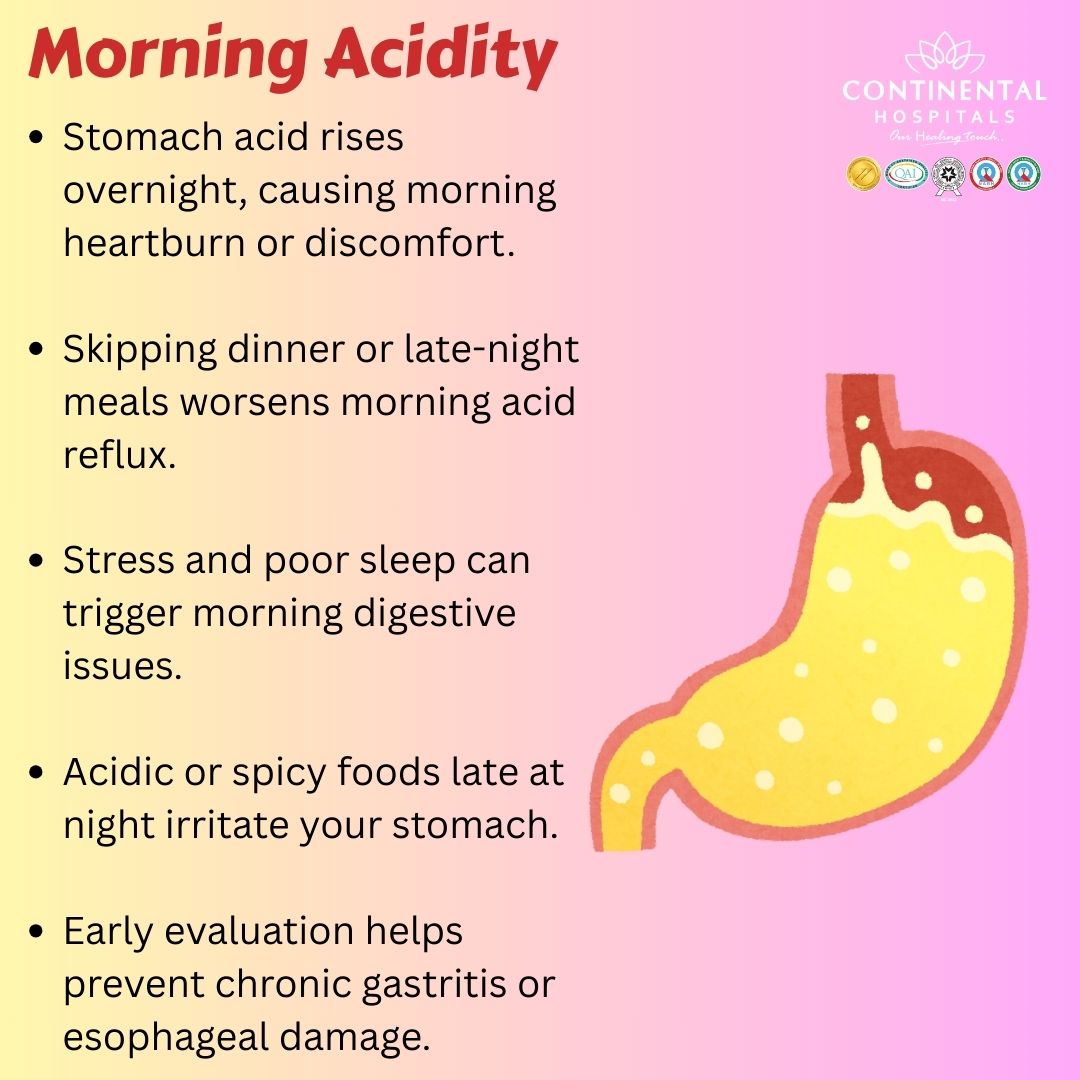
Morning acidity refers to excessive stomach acid production or acid reflux symptoms that occur after waking up. It often presents as heartburn, chest discomfort, regurgitation, gas and acidity in morning hours, or a burning feeling in the throat.
During sleep, stomach acid can flow back into the food pipe if digestion is slow or protective mechanisms weaken. This leads to irritation and the unpleasant symptoms many people experience soon after waking.
Visit our Gastroenterology Department at Continental Hospitals for expert care in acid reflux and digestive disorders. Book your consultation today.
Why Does Morning Acidity Happen?
Your gut works continuously, even while you sleep. Several factors can disturb this balance and lead to morning acidity problem.
Common Causes of Morning Acidity
- Late night meals that are heavy or oily
- Spicy, fried, or acidic foods at dinner
- Lying down immediately after eating
- Irregular sleep patterns
- Stress and anxiety affecting gut health
- Smoking or alcohol consumption
- Excess stomach acid production
- Weak lower esophageal sphincter allowing acid reflux
- Empty stomach acidity due to long fasting hours
When these factors combine, stomach acid remains active overnight and triggers acid reflux symptoms in the morning.
Symptoms You Should Not Ignore
Morning acidity can present in different ways. Recognising early signs helps in timely acid reflux treatment.

Common Symptoms
- Burning sensation in chest or throat
- Sour or bitter taste in mouth
- Nausea or vomiting feeling
- Gas and bloating
- Abdominal discomfort
- Loss of appetite in the morning
- Chronic cough or throat irritation
- Difficulty swallowing in severe cases
If these symptoms occur frequently, it indicates ongoing acid reflux and disturbed gut health.
How Gut Health Influences Morning Acidity?
Your gut is home to beneficial bacteria that support digestion and regulate stomach acid. Poor gut health can increase acid production and delay stomach emptying, worsening morning acidity.
Factors that weaken gut health include poor diet, dehydration, stress, lack of sleep, and frequent use of painkillers. When gut balance is disturbed, acid reflux becomes more frequent and severe.
Improving gut health is one of the most effective acid reflux remedies and provides long term relief.
Is Morning Acidity Dangerous?
Occasional morning acidity is usually manageable with lifestyle changes. However, persistent acidity should not be ignored.
Chronic acid reflux can lead to complications such as:
- Esophagitis or inflammation of the food pipe
- Ulcers
- Breathing issues due to acid aspiration
- Barrett’s esophagus in long standing cases
If morning acidity problem continues for weeks despite home care, professional evaluation is essential.
Practical Tips to Reduce Morning Acidity
Simple daily habits can significantly reduce stomach acid imbalance and prevent acid reflux.
Lifestyle and Dietary Tips
- Eat dinner at least two to three hours before sleep
- Avoid spicy, fried, and acidic foods at night
- Drink enough water during the day
- Eat smaller, balanced meals
- Elevate your head slightly while sleeping
- Avoid smoking and alcohol
- Practice stress management techniques
- Maintain a healthy weight
Foods That Support Gut Health
- Oatmeal and whole grains
- Bananas and apples
- Yogurt and probiotic rich foods
- Green vegetables
- Coconut water
These foods help neutralise stomach acid and improve digestion.
Acid Reflux Remedies at Home
For mild cases, home based acid reflux remedies can help relieve symptoms.
- Warm water in the morning helps flush excess acid
- Herbal teas like chamomile or ginger soothe the stomach
- Avoid skipping breakfast
- Eat slowly and chew food properly
However, self treatment should not replace medical advice if symptoms persist.
When Should You See a Doctor?
You should consult a specialist if you experience:
- Morning acidity daily or several times a week
- Severe heartburn that interferes with sleep
- Unexplained weight loss
- Difficulty swallowing
- Vomiting or blood in stools
Early diagnosis ensures effective acid reflux treatment and prevents complications.
Expert Acid Reflux Treatment at Continental Hospitals
Continental Hospitals offers advanced digestive care with a multidisciplinary team of experienced gastroenterologists, physicians, and diet experts. The hospital follows evidence based protocols for diagnosing and managing acid reflux and gut related disorders.
Why Choose Continental Hospitals?
- Internationally recognised accreditations ensuring global standards of care
- Highly experienced gastroenterology specialists
- Advanced diagnostic facilities for digestive disorders
- Patient focused treatment plans
- Comprehensive care for chronic acidity and gut health issues
- Trusted reputation as one of the best hospitals in Hyderabad
The hospital is accredited by NABH and NABL, reflecting its commitment to quality, safety, and clinical excellence. These accreditations ensure that every patient receives care aligned with national and international healthcare standards.
Diagnosis and Care Approach
At Continental Hospitals, evaluation of morning acidity includes:
- Detailed clinical assessment
- Dietary and lifestyle evaluation
- Endoscopy if required
- Laboratory tests to rule out complications
Based on findings, doctors recommend personalised acid reflux treatment plans that may include medication, diet modification, and lifestyle counselling.
Can Morning Acidity Be Prevented?
Yes. With the right guidance and consistent habits, morning acidity can be effectively controlled and prevented. Focusing on gut health, balanced meals, stress control, and medical supervision when needed makes a significant difference.
Preventive care is always better than long term medication dependency.
Conclusion
Morning acidity is not just a minor discomfort but an important message from your gut. It reflects how your digestive system responds to food habits, lifestyle, and stress. Paying attention to early symptoms, improving gut health, and seeking timely medical advice can prevent long term complications.
At Continental Hospitals, consult our best gastroenterologists provide comprehensive care for acid reflux and digestive disorders using advanced diagnostics and personalised treatment approaches. If morning acidity problem affects your daily life, book a consultation and take the first step toward better gut health and a comfortable, acid free morning.
Related Blog Topics:
- Oily Foods and Acidity: Why Your Stomach Reacts
- Acidity in Children
- Warning signs your gut health is in trouble