• Share this:
post-title

Perimenopause in Your 40s: What Changes to Expect

Written by - Editorial Team
Medically Reviewed by - Dr Suneetha Kumari Putchala

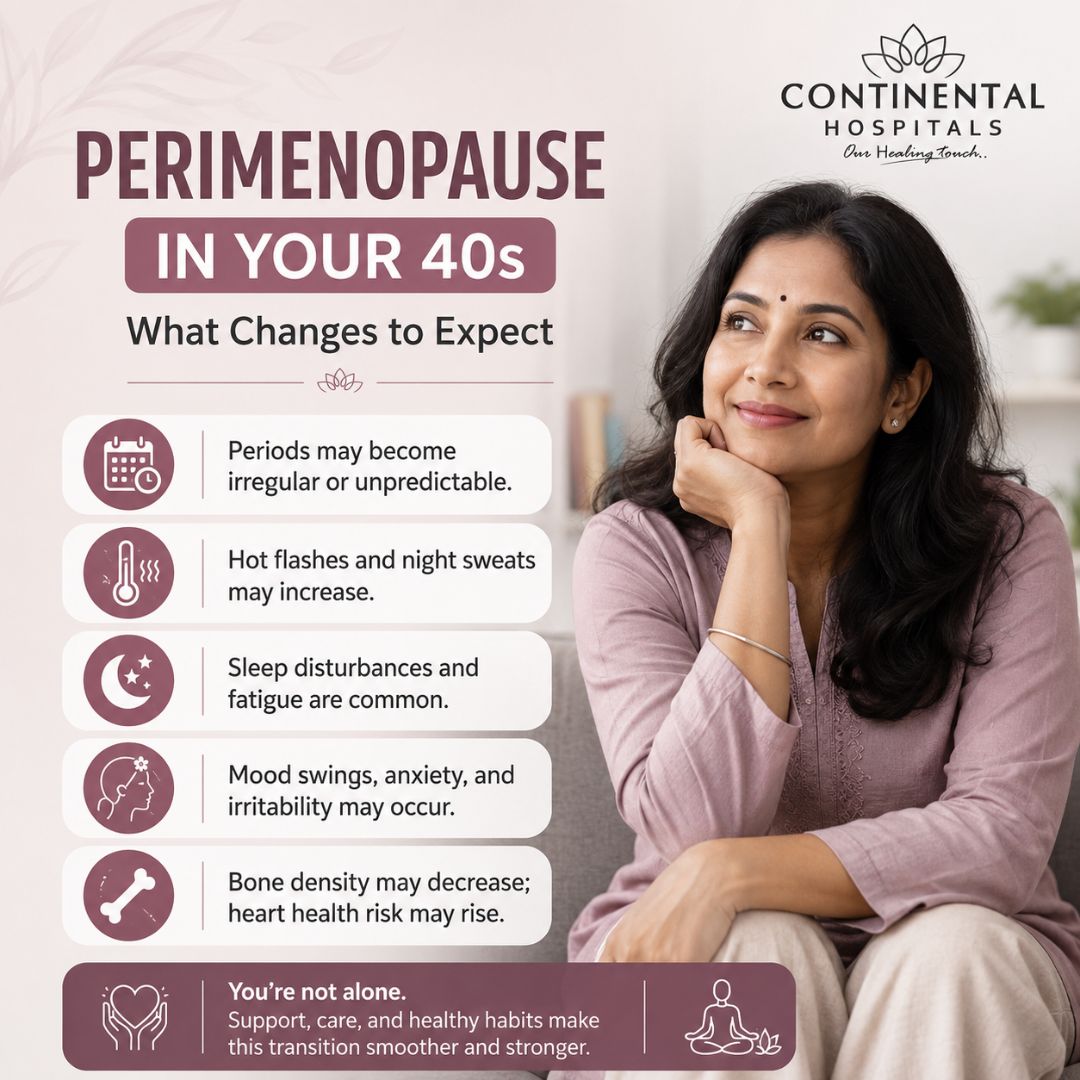
Women often notice that their bodies and minds are going through some changes in their 40s. They may start to have periods, mood swings, sleep problems, gain weight, and get hot flashes all of a sudden. These changes are usually linked to perimenopause, which's a natural stage that happens before menopause and affects every woman in a different way.

Understanding what perimenopause is can really help women deal with their symptoms better stay healthy overall and get help when they need it. At Continental Hospitals, which is one of the best hospitals in Hyderabad, there are expert gynecologists who provide advanced care and personalized treatment for women who are going through hormonal changes during this time of their lives.

What Is Perimenopause?

Perimenopause is the time before menopause when a woman's body starts to change. During this time the ovaries start to make estrogen and progesterone, which can cause hormones to fluctuate. This can start to happen when a woman's in her late 30s or early 40s and can go on for several years before she actually reaches menopause.

Menopause is officially confirmed when a woman has not had a period for 12 months in a row. Perimenopause happens before that. Can cause some pretty noticeable physical and emotional symptoms.

A lot of women go through perimenopause in their 40s. The timing and how bad the symptoms are can be different for each woman.

Common Signs of Perimenopause

The signs of perimenopause can be a little confusing because they can come on slowly. Some women may only have symptoms while others may notice some big changes that affect their daily life.

Some common symptoms of perimenopause include:

  • Periods
  • Hot flashes and night sweats
  • Mood swings and feeling irritable
  • Feeling anxious and emotional
  • Having trouble sleeping
  • Gaining weight around the stomach
  • Feeling tired all the time
  • Vaginal dryness
  • Not being interested in sex
  • Having trouble focusing
  • Hair falling out and skin feeling dry
  • Breast tenderness
  • Getting headaches a lot

These changes happen to women because their estrogen levels are all over the place during perimenopause. Perimenopause is a time when women's bodies are going through a lot of changes, and perimenopause symptoms can be really tough to deal with. Women who are going through perimenopause may want to talk to their doctor about how to manage their symptoms and stay healthy.
Second Opinion

How Periods Change During Perimenopause

One of the things that happens when you are going through perimenopause is that your periods change. Your periods may get shorter or longer. You may bleed more or less than you usually do.

  • You may notice some things that are different, such as:
  • You miss your period
  • You bleed a little between periods
  • You have very heavy bleeding
  • There is a long time between your periods
  • Your periods are not regular anymore

It is normal to have periods when you are going through perimenopause. If you are bleeding too much or for too long you should see a doctor to make sure everything is okay. The doctor can check to see if you have any problems.

Emotional and Mental Changes During Perimenopause

When you are going through perimenopause, the hormones in your body can affect how you feel. You may feel sad or angry for no reason.

You may feel some things, such as:

  • You get angry easily
  • You feel worried
  • You feel like you cannot handle things
  • You feel sad
  • You do not want to do things
  • You have trouble focusing

If you do not sleep well, it can make you feel worse. When you do not sleep well you may feel tired you may have trouble thinking. You may feel like you cannot handle things.

If you are feeling very bad, you should talk to a doctor because they can help you. There are things that can help you feel better.

Physical Changes Women May Notice

When you are in your 40s and going through perimenopause, you may notice some changes in your body. Your body may not work the way it used to and your skin may not look the same.

Need an Appointment?

Some things that you may notice include:

  • You gain weight even if you eat the amount of food
  • Your joints. Your muscles are stiff
  • Your skin is dry
  • You have hair on your face
  • Your hair is not as thick as it used to be
  • You have muscle
  • You get tired easily

It is very important to take care of yourself when you are going through perimenopause.

Sleep Problems During Perimenopause

Many women have trouble sleeping when they are going through perimenopause. You may sweat at night; you may feel worried. Your hormones may be changing.

You may have some problems, such as:

  • You have trouble falling asleep
  • You wake up a lot during the night
  • You sweat at night
  • You feel tired in the morning
  • You feel tired, during the day

If you do not sleep well, it can affect your health, your heart health, and your overall health. If you see a doctor, they can help you sleep better.

Can Perimenopause Affect Fertility?

Yes. Perimenopause affects fertility because the woman's body has ovulation during perimenopause. However, it is still possible for a woman to get pregnant until perimenopause turns into menopause.

Women who do not want to get pregnant should keep using birth control during perimenopause. Women who want to have a baby may want to talk to a doctor about their fertility and have a checkup with a gynecologist.

Early Menopause Symptoms

Some women have early menopause symptoms before they are 45 years old. This can happen because of the womans family history, medical problems, surgery, diseases that affect the system, or certain medical treatments.

The symptoms of menopause can include:

  • The womans periods stop suddenly
  • The woman has bad hot flashes
  • The woman has dryness
  • The womans mood changes
  • The woman has trouble sleeping
  • The womans fertility decreases

It is very important for women to see a doctor early and get help to manage their symptoms and stay healthy for a long time especially for their bones and heart.

Tips to Manage Perimenopause Symptoms

Women can feel better. Be healthier during perimenopause if they make some changes to their lifestyle.

Some good habits that can help women include:

  • Eating food that's good, for them and has a lot of calcium and protein
  • Exercising regularly
  • Keeping a weight
  • Finding ways to manage stress
  • Not smoking and not drinking much alcohol
  • Getting rest
  • Drinking water
  • Not drinking too much caffeine
  • Women should also see their doctor regularly to check their hormone levels, bone health, and heart health.

When Should You See a Doctor?

Perimenopause is a part of life. Some symptoms need a doctor's attention.

You should see a doctor if you have:

  • heavy bleeding
  • Bleeding between periods
  • Bad mood swings
  • Trouble sleeping
  • Really bad hot flashes
  • Pain in your pelvic area
  • Symptoms that affect your daily life

Seeing a doctor early can make you feel better. It can also help you feel more confident and healthy during menopause.

Why Choose Hospitals for Perimenopause Care?

Continental Hospitals is one of the best hospitals in Hyderabad. They take care of women's health. The hospital has doctors. They can help you with perimenopause symptoms.

Here are reasons why women trust Continental Hospitals:

  • They have experienced doctors
  • They have equipment for diagnosis
  • They care for your body and mind
  • They give you a plan that's just for you
  • They take care of patients well
  • They have technology
  • They are accredited by NABH and JCI
  • They focus on patients

The doctors at Continental Hospitals know that perimenopause affects women differently. They give each woman care that's just for her.

Perimenopause is natural. Symptoms can be tough. Knowing the signs of perimenopause helps women take care of their health.

Conclusion

Perimenopause can affect your body and mind. You may have periods. You may have mood swings. You may have trouble sleeping. You may have flashes. With a doctor, healthy habits and good care, you can feel better. You can live a life.

If you are experiencing perimenopause symptoms or early menopause symptoms, consult our best gynecologist in Hyderabad team at Continental Hospitals, one of the best hospitals in Hyderabad, for advanced diagnosis, compassionate care, and comprehensive women’s health support.

Frequently Asked Questions

Perimenopause is the transitional stage before menopause when hormone levels, especially estrogen and progesterone, begin to fluctuate. It commonly starts in a woman’s 40s, but some women may notice symptoms in their late 30s. During this phase, the ovaries gradually produce fewer hormones, leading to changes in menstrual cycles and overall health. Periods may become irregular, lighter, or heavier than usual. Many women also experience mood swings, sleep disturbances, hot flashes, and fatigue. Perimenopause can last several years before menopause officially occurs. Menopause is confirmed after 12 consecutive months without a menstrual period. Lifestyle habits, genetics, and medical conditions can influence how early symptoms begin. Understanding these changes helps women manage symptoms better and maintain overall wellness during this stage of life.
Women in their 40s may notice several physical and emotional changes during perimenopause. Common symptoms include irregular periods, hot flashes, night sweats, mood swings, anxiety, and irritability. Sleep problems and fatigue are also frequently reported. Some women experience weight gain, especially around the abdomen, due to hormonal fluctuations. Reduced estrogen levels may cause vaginal dryness and discomfort during intimacy. Changes in memory, concentration, and mental clarity can also occur. Hair thinning and dry skin are additional symptoms many women notice. Symptoms vary greatly from person to person, with some experiencing mild discomfort while others face significant challenges. Recognizing these symptoms early can help women seek appropriate medical advice and lifestyle support.
Irregular periods are one of the earliest signs of perimenopause because hormone levels begin to fluctuate unpredictably. The ovaries may not release eggs regularly every month, which affects the menstrual cycle. Some women may have shorter cycles, while others may skip periods for several months. Bleeding may become heavier or lighter than usual. Hormonal imbalance can also cause spotting between periods. Although irregular cycles are common during perimenopause, very heavy bleeding or prolonged periods should be evaluated by a doctor. Stress, thyroid disorders, and certain medical conditions can also affect menstrual patterns. Tracking periods can help identify unusual changes and assist healthcare providers in diagnosis. Understanding menstrual irregularities can help women feel more prepared during this transition.
Yes, hormonal fluctuations during perimenopause can significantly affect mood and emotional well-being. Many women experience irritability, anxiety, sadness, or sudden mood swings. Changes in estrogen levels may influence brain chemicals that regulate emotions and stress responses. Sleep disturbances and fatigue can further worsen emotional symptoms. Some women may feel overwhelmed, less motivated, or emotionally sensitive during this phase. Difficulty concentrating and memory lapses are also commonly reported. Maintaining regular exercise, healthy eating habits, and stress management techniques may improve emotional balance. Counseling or support groups can help women cope with emotional changes effectively. If symptoms become severe or interfere with daily life, professional medical support may be recommended.
Perimenopause often disrupts sleep due to hormonal changes, night sweats, and increased anxiety. Many women have difficulty falling asleep or staying asleep throughout the night. Poor sleep quality can lead to daytime fatigue, reduced concentration, and irritability. Hot flashes during the night are a common reason for interrupted rest. Hormonal fluctuations may also affect the body’s natural sleep cycle. As energy levels decrease, women may feel physically exhausted even after resting. Regular physical activity and maintaining a consistent sleep schedule may improve sleep quality. Avoiding caffeine and screen time before bed can also help. If sleep disturbances persist, consulting a healthcare provider is important for proper management and treatment options.
Healthy lifestyle habits can help reduce many perimenopause symptoms and improve overall well-being. Eating a balanced diet rich in fruits, vegetables, calcium, and protein supports hormonal and bone health. Regular exercise helps maintain a healthy weight, improves mood, and reduces stress. Strength training and walking are especially beneficial during this stage. Staying hydrated and limiting caffeine, alcohol, and processed foods may help control hot flashes and bloating. Practicing relaxation techniques such as yoga, meditation, and deep breathing can support emotional balance. Maintaining good sleep habits is also important for energy and mental health. Avoiding smoking can reduce the risk of heart disease and osteoporosis. Regular health checkups help monitor hormone-related changes and overall health during perimenopause.
Yes, pregnancy is still possible during perimenopause because ovulation may continue even if periods become irregular. Although fertility naturally declines with age, women can still conceive until menopause is officially reached. Menopause is confirmed only after 12 consecutive months without a menstrual period. Because ovulation becomes unpredictable during perimenopause, it may be difficult to know when pregnancy can occur. Women who do not wish to become pregnant should continue using contraception during this phase. Pregnancy risks may increase with age, including complications such as high blood pressure and gestational diabetes. Women considering pregnancy in their 40s should consult a healthcare provider for guidance. Understanding fertility changes during perimenopause helps women make informed reproductive decisions.
Women should consult a doctor if perimenopause symptoms become severe or affect daily activities and quality of life. Heavy menstrual bleeding, bleeding between periods, or periods lasting longer than usual should be medically evaluated. Persistent mood changes, anxiety, or depression also require professional attention. Severe hot flashes, chronic sleep problems, and extreme fatigue may benefit from treatment options. A doctor can help rule out other medical conditions such as thyroid disorders or anemia. Hormone therapy, lifestyle guidance, or non-hormonal treatments may be recommended depending on individual symptoms. Regular health screenings are important during the 40s to monitor heart health, bone density, and hormonal changes. Early medical support can help women manage symptoms effectively and maintain long-term wellness.
Disclaimer: The information provided in this blog is intended for general knowledge and informational purposes only, and does not constitute medical advice. Always consult with a qualified healthcare professional for any medical concerns or before making any decisions about your health.

Get in Touch With Us

Whether you are from India or abroad, we are here to help you with your medical queries. Please fill out the form below and our team will connect with you shortly.

  • ✔ Quick response from our medical experts
  • ✔ Secure data handling & privacy
  • ✔ Easy upload for reports & documents
0 / 100
Checkboxes Section


Chat with our medical experts on WhatsApp for quick assistance and hassle-free appointment booking

Recent Posts
Language Based Image
0 / 100