.webp)

Scrub typhus in India is becoming a significant health concern, especially in rural and semi urban regions where people are more exposed to mite habitats. This infection is caused by a bacteria called Orientia tsutsugamushi, which spreads through the bite of infected chiggers. Many fever infections in India today are often confused with viral fevers or dengue, which leads to delays in scrub typhus diagnosis and treatment. Understanding the early symptoms, risk factors, and prevention methods can help protect individuals and families from serious complications.
What Is Scrub Typhus?
Scrub typhus is a tropical infection India continues to struggle with during monsoon and post monsoon seasons. It is transmitted through a tiny insect called a chigger. These insects are usually found in dense vegetation, bushes, farms and forest areas. When a chigger bites, it can transmit the bacteria into the body and the individual may not even realise they were bitten.
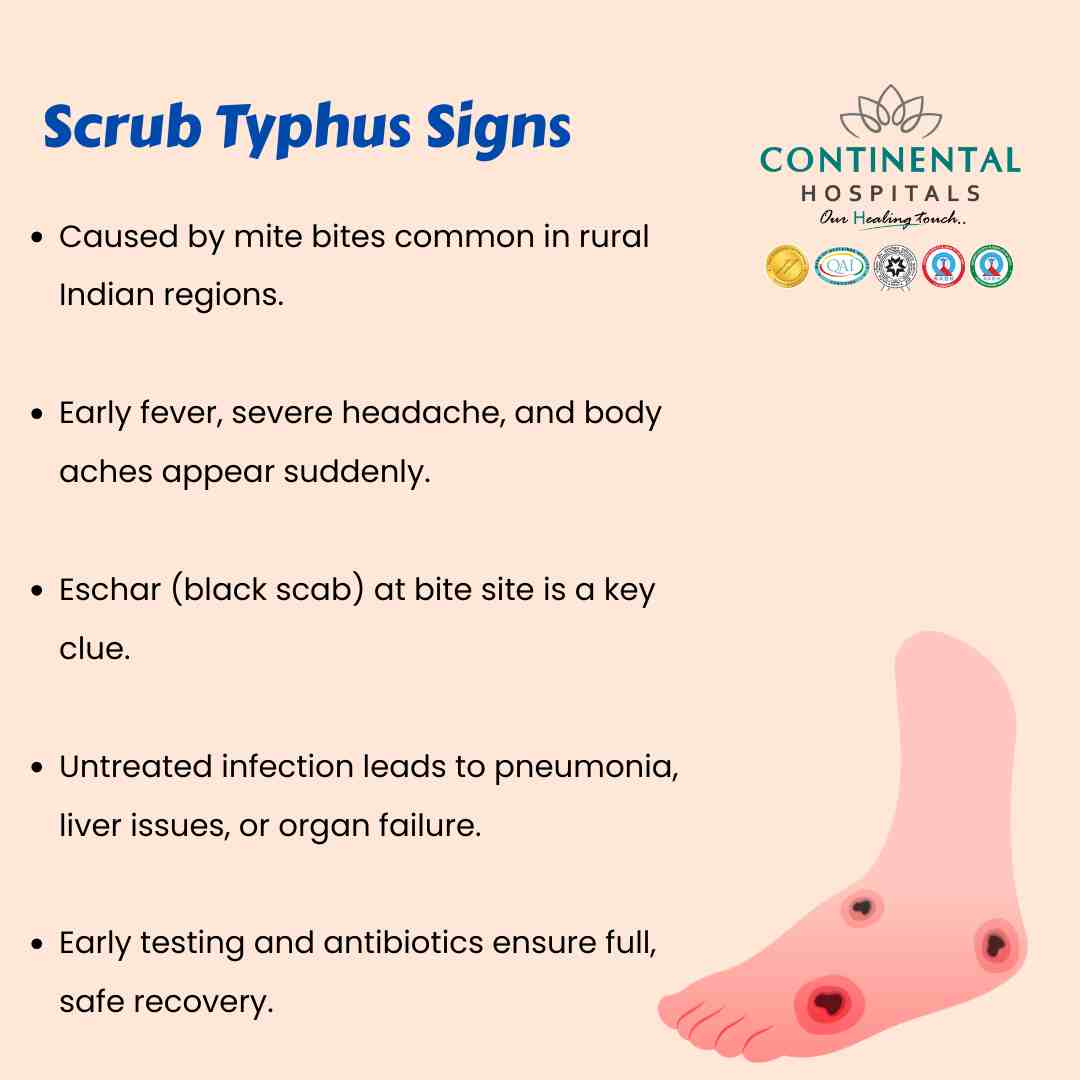
The bite sometimes forms a dark scab like patch on the skin known as an eschar. Scrub typhus eschar is one of the most important clues doctors look for during examination. However, the eschar may not appear in all patients, which makes the infection harder to recognise.
Scrub Typhus Early Symptoms You Must Know
Early detection is important because scrub typhus can progress quickly if left untreated. Many of the scrub typhus early symptoms are similar to other fever infections in India. Recognising the differences helps in seeking timely help.
Key Early Symptoms
Here are the most common early warning signs
- Sudden high fever that does not settle easily
- Severe headache
- Body aches and muscle pain
- Chills and shivering
- Extreme tiredness
- Rash that may appear on the trunk or limbs
- Swollen lymph nodes
- Appearance of an eschar scrub typhus at the bite site which looks like a painless black scab
The eschar is an important sign and helps differentiate scrub typhus from dengue, malaria and viral fevers. If any of these symptoms appear, especially after travelling to rural or outdoor areas, medical evaluation is needed without delay.
How the Infection Progresses?
If not diagnosed early, scrub typhus can affect many organs including the lungs, liver, brain and kidneys. It may lead to breathing difficulty, confusion, low blood pressure or multi organ complications. This is why early scrub typhus diagnosis plays a key role in preventing severe outcomes.
Doctors usually confirm the infection with blood tests. Treatment with antibiotics such as doxycycline scrub typhus usually provides quick relief when started early.

Who Is at Higher Risk?
People living or working in outdoor environments are more likely to encounter mite bite infection. Risk groups include
- Farmers
- Field workers
- Children playing outdoors
- People visiting forests, farms or grassy landscapes
- Individuals living in rural India infections prone areas
How Scrub Typhus Is Diagnosed?
Scrub typhus diagnosis requires careful examination and specific tests. Doctors begin by evaluating symptoms, travel history and exposure risk. The eschar scrub typhus, when present, is a strong indicator. Blood tests that detect antibodies or PCR testing help confirm the infection.
Accurate and timely diagnosis prevents complications and supports quick recovery.
Effective Treatment for Scrub Typhus
Once diagnosed, doctors prescribe medications that target the bacteria. Doxycycline scrub typhus is commonly used and is effective when taken early. In certain cases, other antibiotics may be used based on the patient’s condition. Most individuals recover well when treatment begins in the early stages.
Delays can lead to serious illness, so individuals with persistent fever should not wait for symptoms to worsen.
Prevention Tips Everyone Should Follow
Scrub typhus is preventable with simple measures. These steps reduce the chance of mite bite infection
- Avoid sitting or sleeping on grass and dense vegetation
- Wear long sleeves and long trousers when visiting outdoor or rural areas
- Use insect repellents on exposed skin
- Keep surroundings clean and free from overgrown bushes
- Check the body for any unusual marks or eschar after outdoor activities
- Educate family members about typhus symptoms and risks
Important Points to Remember
- Scrub typhus is a treatable infection when caught early
- Fever lasting more than two days should be medically evaluated
- Do not ignore an eschar as it is a key sign
- People in rural and agricultural regions must stay alert
- Early treatment with appropriate medication prevents complications
Why Choose Continental Hospitals for Scrub Typhus Care?
Continental Hospitals provides expert care for tropical infections India frequently faces, including scrub typhus. The hospital is supported by highly qualified infectious disease specialists, advanced diagnostic labs and a multidisciplinary care team. Continental Hospitals follows strict clinical protocols and is recognised for its international level patient safety standards and accreditations including global quality and clinical excellence certifications. Patients receive timely diagnosis, accurate treatment and continuous monitoring to ensure complete recovery.
Continental Hospitals also focuses on patient education, preventive care and detailed follow up support, making it a trusted centre for fever infections India and complex infectious diseases.
Conclusion
Scrub typhus India continues to be a significant cause of fever, especially in rural India infections affected regions. The infection is treatable, but only when recognised early. Understanding scrub typhus early symptoms, staying alert to mite bite infection risks and seeking prompt medical care can protect you and your family. Continental Hospitals provides specialised care, trusted diagnosis and expert treatment for all types of tropical infections India encounters.
For consultation or expert guidance, connect with our best Infectious Disease Specialist at Continental Hospitals for comprehensive evaluation and personalised treatment.