.webp)

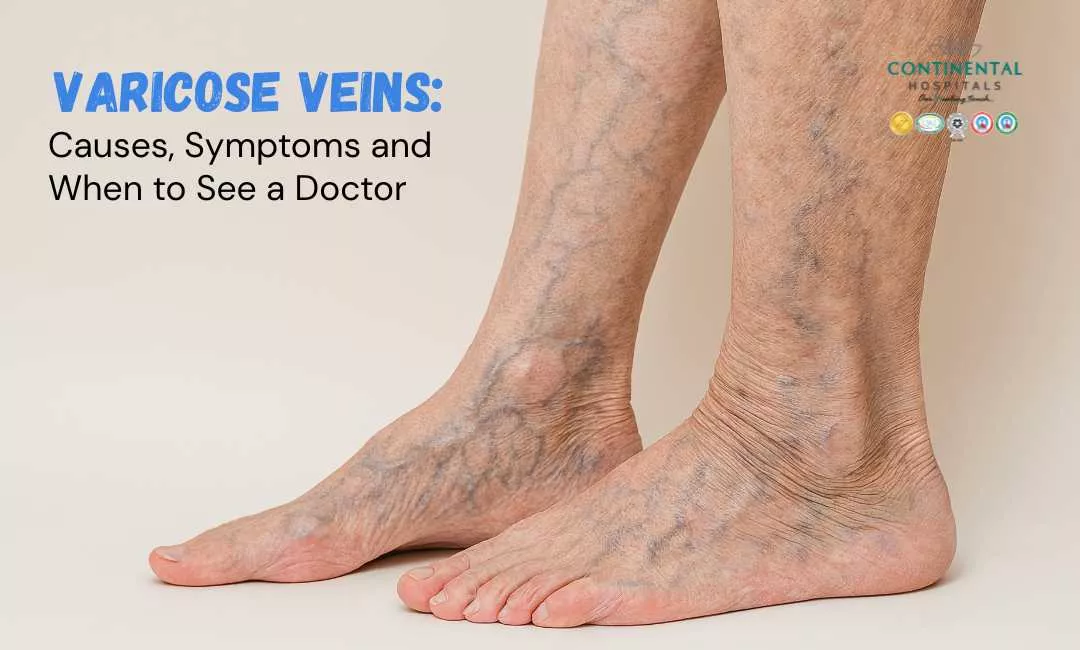
Varicose veins are a common vascular condition that many people ignore until discomfort or visible changes become severe. Often seen as twisted, enlarged veins on the legs, varicose veins are more than just a cosmetic issue. They can signal underlying circulation problems that need medical attention.
What Are Varicose Veins?
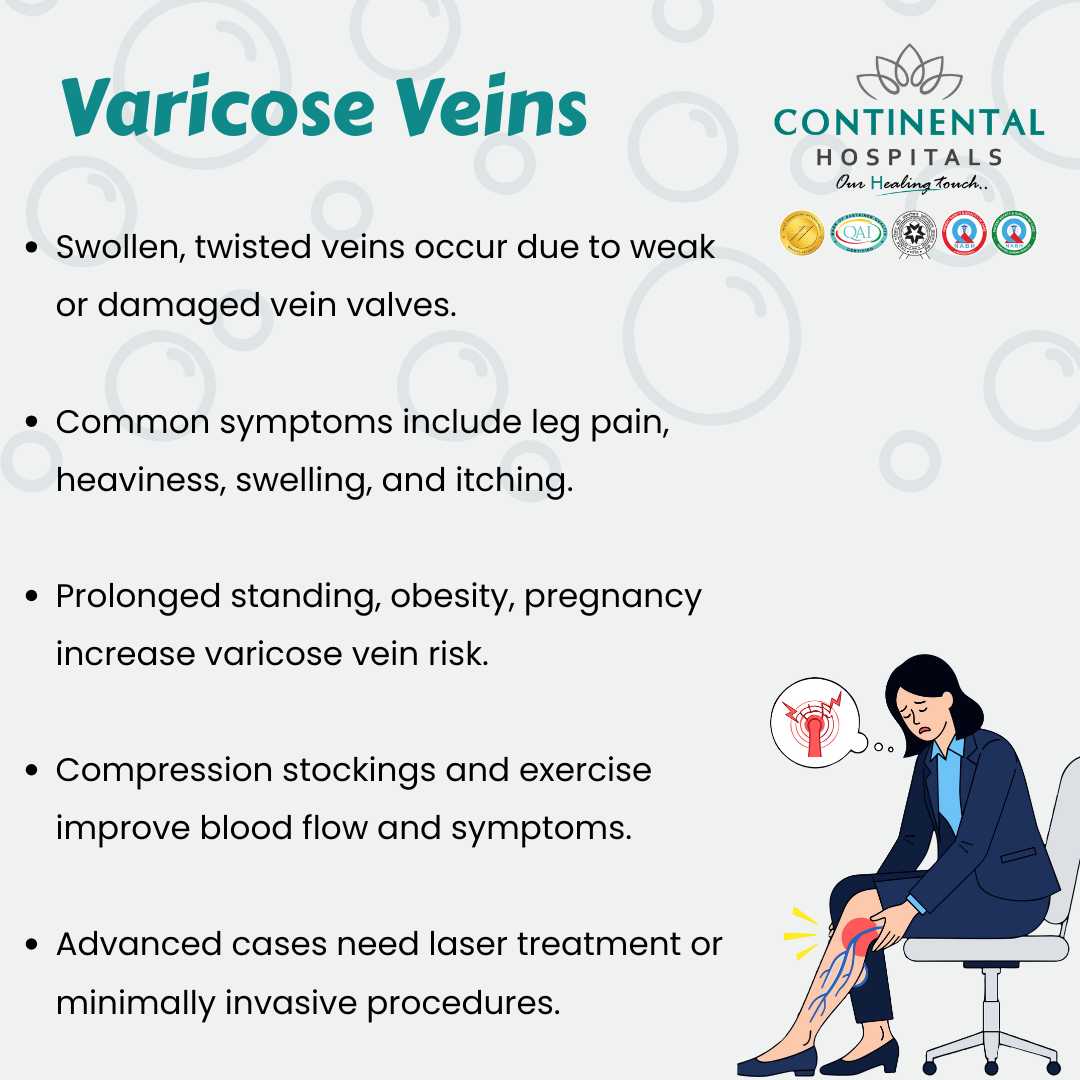
Varicose veins are swollen, enlarged veins that usually appear on the legs and feet. They develop when the valves inside the veins become weak or damaged, causing blood to pool instead of flowing smoothly back to the heart.
Healthy veins move blood upward efficiently. When this system fails, veins stretch, twist, and become visible under the skin.
What Causes Varicose Veins?
Several factors can increase pressure on leg veins and weaken vein walls over time.
Common Causes of Varicose Veins
- Weak vein valves that allow blood to flow backward
- Prolonged standing or sitting, especially at work
- Age-related changes in blood vessels
- Pregnancy, due to increased blood volume and pressure
- Obesity, which puts extra strain on leg veins
- Family history of vein disease
- Lack of physical activity
People who stand for long hours, such as teachers, healthcare workers, and retail staff, are at higher risk.
Symptoms of Varicose Veins
Symptoms can range from mild discomfort to significant pain and skin changes.
Early Symptoms

- Visible blue or purple veins
- Heaviness in the legs
- Mild aching or discomfort after standing
- Swelling around ankles
Progressive Symptoms
- Burning or throbbing pain in legs
- Leg cramps, especially at night
- Itching around veins
- Skin discoloration near the ankles
- Hardening of veins
Ignoring these symptoms can lead to complications.
Are Varicose Veins Dangerous?
Varicose veins are not always dangerous, but untreated cases can cause serious problems.
- Possible Complications
- Skin ulcers near the ankle
- Bleeding from injured veins
- Blood clots in superficial veins
- Chronic venous insufficiency
- Severe leg swelling and skin damage
Early diagnosis and vascular treatment can prevent these complications.
When Should You See a Doctor?
You should consult a doctor if you notice:
- Persistent leg pain or swelling
- Veins that become hard, red, or tender
- Skin darkening or sores near the ankle
- Sudden leg swelling or warmth
- Bleeding from varicose veins
- Symptoms affecting daily activities
Timely evaluation helps determine the best treatment approach.
How Are Varicose Veins Diagnosed?
Doctors usually diagnose varicose veins through:
- Physical examination
- Medical history review
- Doppler ultrasound to check blood flow and valve function
Ultrasound helps identify hidden vein problems that may not be visible on the skin.
Treatment Options for Varicose Veins
Treatment depends on symptom severity and vein condition.
- Non-Surgical Treatments
- Lifestyle changes
- Compression stockings
- Weight management
- Leg elevation
- Regular walking and exercise
These help reduce symptoms but may not remove existing veins.
Minimally Invasive Procedures
- Laser vein treatment
- Radiofrequency ablation
- Injection-based vein closure
These procedures are safe, effective, and performed without large cuts.
Surgical Treatment
- Recommended in advanced cases with complications
- Performed by experienced vascular surgeons
Doctors choose the treatment based on individual needs.
Benefits of Early Treatment
- Relief from leg pain and heaviness
- Improved blood circulation
- Reduced risk of ulcers and clots
- Better skin appearance
- Improved mobility and quality of life
Modern treatments allow quick recovery and minimal downtime.
Who Is at Higher Risk?
You may have a higher risk of varicose veins if you:
- Have a family history of vein disease
- Are overweight
- Are pregnant or have multiple pregnancies
- Spend long hours standing
- Are above middle age
- Preventive care and regular checkups help manage risk.
How to Prevent Varicose Veins?
While not all cases are preventable, these steps help reduce risk:
- Avoid standing or sitting for long periods
- Take short walking breaks
- Maintain a healthy weight
- Elevate legs when resting
- Exercise regularly
- Avoid tight clothing around the waist and legs
Early lifestyle changes can slow disease progression.
Why Choose Continental Hospitals?
Continental Hospitals is recognized as one of the best hospitals in Hyderabad, offering advanced care for vascular and vein-related conditions.
What sets Continental Hospitals apart?
- Experienced vascular surgeons and specialists
- Advanced diagnostic and imaging facilities
- Minimally invasive vein treatment options
- Internationally accredited hospital standards
- Comprehensive pre- and post-treatment care
- Focus on patient safety, comfort, and outcomes
The hospital follows strict quality protocols and evidence-based practices to deliver reliable and effective treatment.
Conclusion
Varicose veins are more than a cosmetic concern. They can cause pain, swelling, and long-term complications if left untreated. Understanding the causes and symptoms helps you seek care early and avoid progression.
If leg pain, swelling, or visible veins are affecting your comfort or daily routine, medical evaluation is important.
If you are experiencing leg pain, swelling, or visible varicose veins, consult our top vascular specialist at Continental Hospitals. Our expert team provides accurate diagnosis, modern treatment options, and personalized care to help you regain comfort and confidence.
Book an appointment today at Continental Hospitals, Hyderabad, for trusted and comprehensive varicose vein care.