.webp)


Breathing is something we rarely think about until it becomes difficult. When the lungs cannot supply enough oxygen to the body or remove carbon dioxide properly, ventilator support becomes lifesaving. Ventilators are advanced medical machines that help patients breathe when their own lungs need assistance. At Continental Hospitals, ventilator support is provided with strict safety protocols, advanced technology, and expert critical care teams, making it one of the trusted options for patients seeking care at the best hospital in Hyderabad.
What Is Ventilator Support?
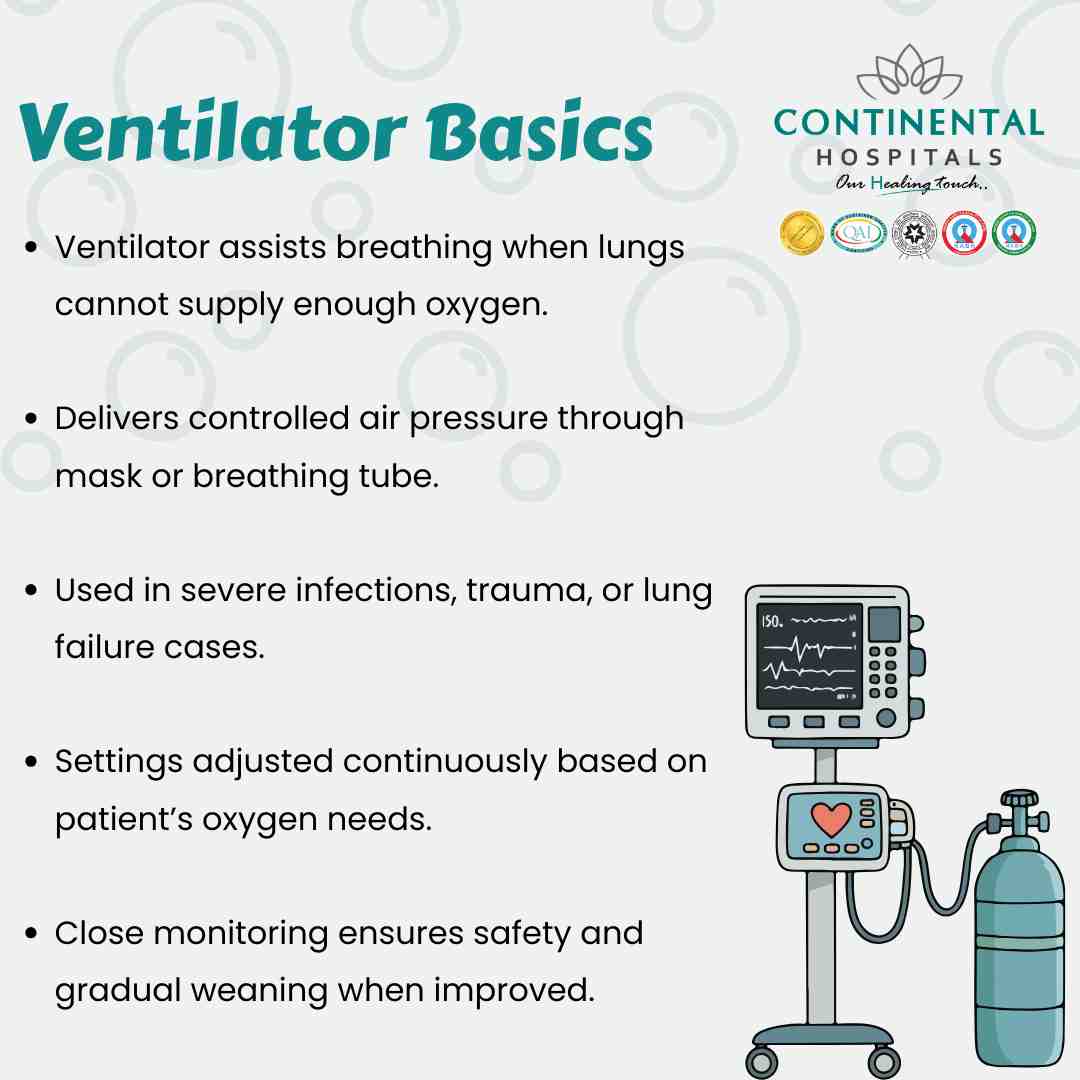
Ventilator support is a medical treatment where a machine helps move air in and out of the lungs. It does not replace the lungs permanently but supports breathing until the patient recovers or stabilizes.
Ventilators are commonly used in intensive care units for patients who:
- Have severe lung infections
- Are unable to breathe adequately on their own
- Need support during or after major surgery
- Have critical illnesses affecting breathing
The goal is always to support natural breathing and gradually reduce dependence on the machine when possible.
How Does a Ventilator Work?
A ventilator works by delivering oxygen-rich air into the lungs and allowing carbon dioxide to be removed. This process supports gas exchange, which is essential for organ function.
Here is how it functions step by step:
- Air is delivered through a tube or mask
- Oxygen enters the lungs
- Carbon dioxide is removed
- Breathing rate and pressure are controlled by doctors
- The machine adjusts based on the patient’s condition
Ventilators are carefully monitored to match the patient’s breathing needs at every stage.
Ways Ventilator Support Is Given
Ventilator support can be provided in different ways depending on the patient’s condition.

Non-invasive ventilator support
- Uses a face or nasal mask
- Common in mild to moderate breathing difficulty
- Patient can still speak and swallow
- Often used in early stages of respiratory distress
Invasive ventilator support
- A breathing tube is placed into the windpipe
- Used in severe or life-threatening conditions
- Requires close ICU monitoring
- Allows precise control of breathing
Doctors decide the safest option after carefully assessing the patient.
When Is Ventilator Support Needed?
Ventilator support may be recommended in many medical situations, including:
- Severe pneumonia or lung infections
- Acute respiratory distress syndrome
- Chronic lung diseases during flare-ups
- Head injury or stroke affecting breathing control
- Sepsis or severe infections
- After complex surgeries requiring breathing support
Early ventilator support can prevent complications and improve recovery outcomes.
What Happens After Being Put on a Ventilator?
Once a patient is on ventilator support:
- Vital signs are monitored continuously
- Oxygen levels and lung pressures are adjusted
- Sedation may be used for comfort if needed
- Doctors review progress daily
As the lungs begin to recover, the medical team gradually reduces ventilator support. This process is known as weaning and is done carefully to ensure the patient can breathe independently.
Is Ventilator Support Safe?
Yes, ventilator support is safe when managed by experienced critical care teams. Like any medical treatment, it carries risks, but these are minimized with proper monitoring and infection control practices.
Safety measures include:
- Strict ICU hygiene protocols
- Continuous monitoring of oxygen levels
- Regular assessment by critical care specialists
- Early mobilization and respiratory therapy when possible
At Continental Hospitals, patient safety and recovery remain the highest priorities.
Common Myths About Ventilators
Many people worry when they hear the word ventilator. Clearing these doubts helps families make informed decisions.
- Ventilators are not permanent life support in most cases
- Many patients recover fully and come off ventilators
- Being on a ventilator does not mean there is no hope
- Early ventilator support can save lives
Understanding facts reduces fear and helps patients focus on recovery.
Recovery After Ventilator Support
Recovery depends on the underlying illness and overall health of the patient. After ventilator support:
- Breathing exercises are encouraged
- Physiotherapy helps regain strength
- Nutrition support aids healing
- Follow-up care ensures lung recovery
Doctors guide patients step by step through the recovery process.
Why Choose Continental Hospitals?
Continental Hospitals is recognized as one of the best hospitals in Hyderabad, offering advanced critical care services with global standards.
Key reasons to choose Continental Hospitals include:
- Advanced ICUs with modern ventilator technology
- Experienced intensivists, pulmonologists, and critical care nurses
- Internationally recognized accreditations ensuring quality and safety
- Strict infection prevention and control protocols
- Multidisciplinary approach for complex cases
- Patient-centered care focused on recovery and dignity
These strengths make Continental Hospitals a trusted destination for critical respiratory care.
When Should You See a Doctor?
Seek immediate medical attention if you or a loved one experiences:
- Severe shortness of breath?
- Bluish lips or fingertips?
- Confusion or extreme fatigue?
- Rapid breathing or chest discomfort?
Early evaluation by a doctor can prevent worsening and reduce the need for prolonged ventilator support.
How Doctors Decide on Ventilator Support?
Doctors assess:
- Oxygen levels in the blood
- Breathing effort and lung function
- Chest imaging and lab results
- Overall medical condition
The decision is always made in the patient’s best interest, with clear communication to family members.
Conclusion
Ventilator support is a critical medical intervention that helps patients breathe when their lungs need assistance. With timely care, expert monitoring, and advanced ICU facilities, many patients recover well and return to normal life. Understanding how ventilators work reduces fear and builds confidence in medical care.
At Continental Hospitals, ventilator support is delivered with compassion, precision, and internationally accredited standards, reinforcing its position as the best hospital in Hyderabad for advanced critical care.
If you or a loved one is suffering from breathing difficulties or has been advised ventilator support, do not delay care. Consult our best Critical Care Specialists at Continental Hospitals for expert evaluation, advanced ICU care, and personalized treatment focused on recovery.