post-title

What are the last signs of congestive heart failure?

Written by - Editorial Team
Medically Reviewed by - Dr Abhisekh Mohanty

Congestive heart failure, commonly known as CHF, is a serious condition where the heart cannot pump blood efficiently. This can lead to fluid buildup, swelling, and a range of symptoms that worsen over time. Recognizing the last signs of congestive heart failure is crucial for timely medical intervention, improving quality of life, and preventing complications. Understanding the stages, causes, symptoms, and treatments of CHF can empower patients and families to respond appropriately.

What is Congestive Heart Failure?

Congestive heart failure occurs when the heart’s ability to pump blood is weakened. This can affect the heart’s left, right, or both sides, resulting in poor circulation and fluid accumulation in the lungs, legs, or abdomen. CHF may develop gradually or appear suddenly due to heart attacks, hypertension, or heart valve problems.

Key points:

  • The heart cannot meet the body’s oxygen demands
  • Blood may back up in lungs, liver, or extremities
  • CHF can be chronic (long-term) or acute (sudden onset)


Shortness of breath, chest pain, or swelling? Visit our Best Cardiology Doctors in Hyderabad at Continental Hospitals, Hyderabad for expert CHF care and heart health support.

What Causes Congestive Heart Failure?

Understanding the causes of CHF helps in prevention and management. Common causes include:

  • Coronary artery disease
  • High blood pressure
  • Heart attacks damaging heart muscle
  • Cardiomyopathy (weakened heart muscle)
  • Heart valve disorders
  • Chronic arrhythmias (irregular heartbeats)
  • Diabetes or thyroid problems

Lifestyle factors like smoking, alcohol, poor diet, and sedentary habits can worsen CHF progression.
What Are the Stages of Congestive Heart Failure?

CHF is classified into stages based on symptoms and heart function:

Second Opinion

Stage A: At risk, no symptoms yet
Stage B: Heart structural changes, no symptoms
Stage C: Symptoms present, like fatigue, swelling, and shortness of breath
Stage D: Advanced heart failure with severe symptoms even at rest

Knowing your stage can help guide treatment and lifestyle changes.

What are the common symptoms of CHF?

The signs of congestive heart failure vary but often include the following:

  • Shortness of breath, especially during activity or lying down
  • Swelling in feet, ankles, legs, or abdomen
  • Fatigue or weakness
  • Rapid or irregular heartbeat
  • Persistent cough, sometimes producing frothy or pink-tinged sputum
  • Weight gain due to fluid retention

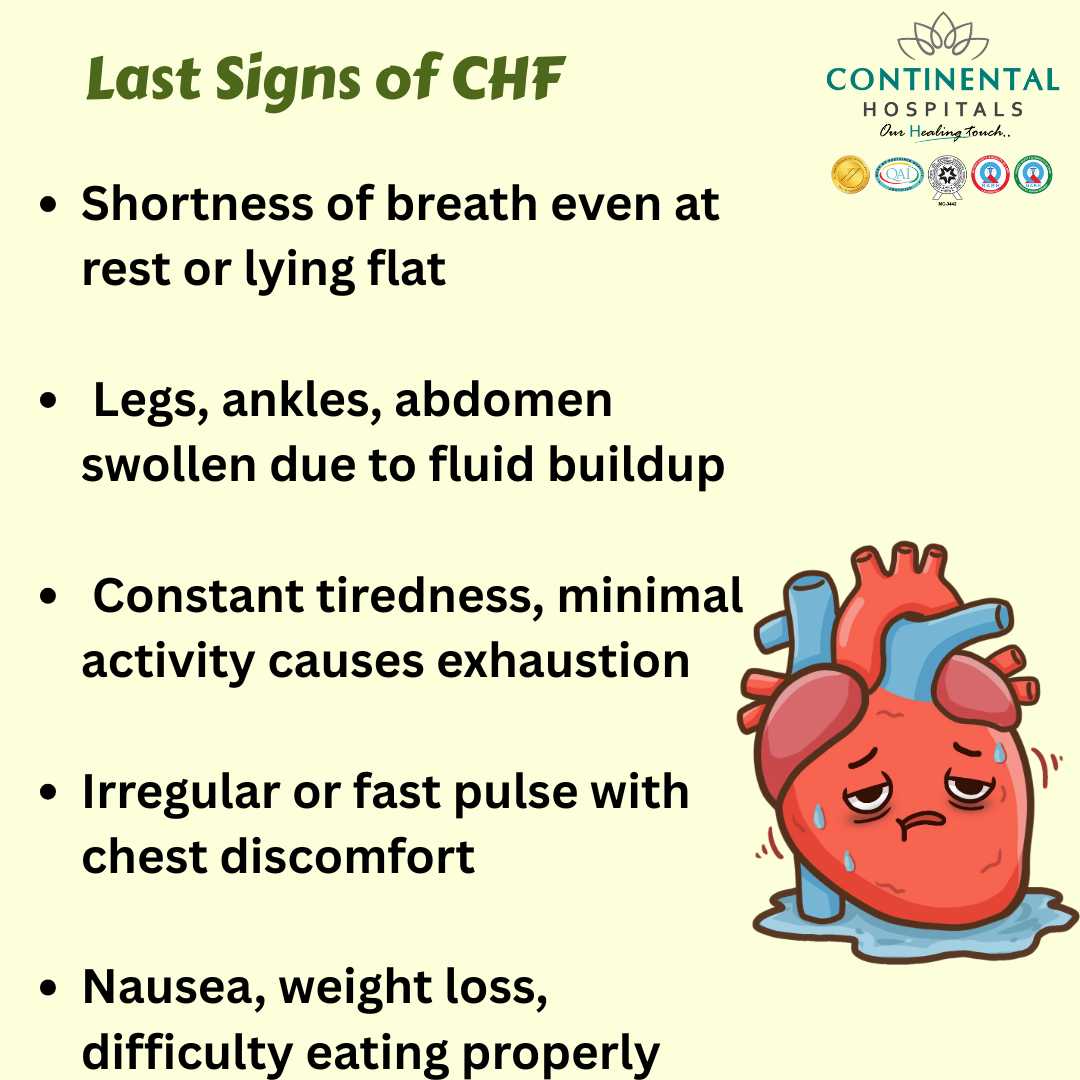
What are the last signs of congestive heart failure?

The last signs of CHF indicate advanced disease and require urgent medical attention. These signs may include:

Severe Shortness of Breath
Patients may struggle to breathe even at rest. Breathlessness can worsen at night, causing sleep disturbances.

Fluid Retention and Swelling
Extensive swelling in legs, abdomen, or hands, and sudden weight gain from fluid accumulation.

Persistent Fatigue and Weakness
Daily activities become challenging due to lack of energy. Muscle weakness may be pronounced.

Need an Appointment?

Confusion and Cognitive Changes
Poor blood flow to the brain can cause confusion, memory issues, or disorientation.

Persistent Cough and Wheezing
A chronic congestive heart failure cough may produce frothy, pink, or blood-tinged sputum due to fluid in the lungs.

Chest Pain or Pressure
Chest discomfort can occur due to heart strain, especially in chronic systolic or diastolic congestive heart failure.

Low Blood Pressure and Fainting
The heart struggles to maintain adequate circulation, sometimes leading to dizziness or fainting.

Organ Dysfunction
Kidney or liver function may decline due to prolonged congestion and poor circulation.

These signs indicate that CHF is at an advanced stage, often stage D, and requires immediate medical care.

What treatments are available for congestive heart failure?

Management of CHF focuses on improving heart function, relieving symptoms, and preventing complications. Treatments may include:

Medications:

  • Diuretics to remove excess fluid
  • ACE inhibitors to reduce heart strain
  • Beta-blockers to improve heart pumping
  • Blood thinners to prevent clots

Lifestyle Changes:

  • Limiting salt intake to reduce fluid retention
  • Controlled fluid intake as advised by a doctor
  • Regular monitoring of weight and swelling
  • Moderate physical activity as tolerated

Advanced Interventions:

  • Pacemakers or defibrillators for heart rhythm management
  • Surgery for heart valve repair or replacement
  • Heart transplant in selected advanced cases

Early recognition of worsening symptoms improves outcomes significantly.

What are the signs to monitor at home for congestive heart failure?

Patients and caregivers should monitor:

  • Sudden increase in swelling or weight gain
  • Increased breathlessness or cough at night
  • Chest pain or persistent fatigue
  • Dizziness, confusion, or fainting

Tracking these changes helps doctors adjust treatment promptly.

Why Choose Continental Hospitals for CHF Care?

Continental Hospitals is recognized as the best hospital in Hyderabad for comprehensive cardiac care. With international accreditations, advanced diagnostics, and specialized cardiology teams, patients receive expert care for all stages of congestive heart failure. The hospital’s Pulmonology, Cardiology, and Internal Medicine departments work together to manage complex cases with personalized treatment plans.

Key benefits include:

  • Expert cardiologists and heart failure specialists
  • Advanced imaging and diagnostic facilities
  • Comprehensive CHF management including lifestyle, diet, and medications
  • Compassionate patient-centered care

Continental Hospitals prioritizes early intervention and long-term follow-up to improve survival, quality of life, and heart function.

Conclusion

Congestive heart failure is a serious condition that can progress to advanced stages if left untreated. Recognizing the last signs of CHF, such as severe shortness of breath, swelling, persistent fatigue, confusion, and cough, is crucial for timely intervention. Early diagnosis, proper medications, lifestyle changes, and regular follow-ups can slow progression and improve quality of life.

If you suffer from shortness of breath, chest pain, swelling, or persistent cough, consult our top cardiologists in Hyderabad at Continental Hospitals. As the best hospital in Hyderabad, Continental Hospitals offers expert diagnosis, advanced heart evaluation, and compassionate care to help you manage CHF safely and improve heart health. Seek professional support today to protect your heart and ensure long-term well-being.

Related Blog Topics

  1. How to prevent Heart attacks in Winter
  2. What to Do During a Heart Attack Before Reaching Hospital

Frequently Asked Questions

The last signs of congestive heart failure often indicate that the heart is no longer able to pump enough blood to meet the body's needs. People may experience severe shortness of breath even while resting, extreme fatigue, and persistent coughing or wheezing. Swelling in the legs, feet, abdomen, or hands may become more noticeable due to fluid buildup. Loss of appetite, nausea, and unintended weight loss are also common. Some people develop confusion, memory problems, or difficulty concentrating because the brain receives less oxygen-rich blood. Irregular heartbeats, chest discomfort, cold hands and feet, and reduced urine output may also occur. In advanced stages, breathing may become labored, especially when lying flat. These symptoms require immediate medical attention and supportive care.
Congestive heart failure may be reaching the final stage when symptoms become severe and interfere with daily life despite treatment. Shortness of breath may occur even while sitting or resting. Frequent hospital admissions, persistent swelling, severe weakness, and inability to perform basic activities are common warning signs. Patients may need oxygen therapy or medications through an intravenous line. Fatigue becomes overwhelming, and sleep is often disturbed by breathing difficulties. Appetite usually decreases, and unintentional weight loss may occur. Mental confusion, dizziness, and poor circulation can also develop. Healthcare providers assess these symptoms along with heart function tests to determine disease progression and recommend appropriate treatment or palliative care.
Yes, breathing problems are among the most common symptoms in advanced congestive heart failure. Fluid can accumulate in the lungs, making it difficult to breathe even during rest. Patients may feel breathless while talking, eating, or lying flat. They may need to sleep with multiple pillows or remain seated to breathe comfortably. Episodes of sudden breathlessness at night are also common. Wheezing, persistent coughing, and a sensation of chest tightness may occur. Oxygen therapy, medications, and supportive treatments can help reduce discomfort. Prompt medical evaluation is essential whenever breathing becomes suddenly worse, as it may indicate worsening heart failure or another serious condition requiring immediate care.
Swelling increases in advanced congestive heart failure because the weakened heart cannot pump blood efficiently. This causes fluid to accumulate in the body's tissues, especially in the legs, ankles, feet, and abdomen. As heart function worsens, the kidneys also receive less blood flow, making it harder to remove excess fluid. Patients may notice tighter shoes, swollen legs, abdominal bloating, or rapid weight gain from fluid retention. Swelling may also make walking and daily activities difficult. Doctors often prescribe diuretics, dietary sodium restriction, and fluid management to control these symptoms. Persistent or worsening swelling should always be evaluated because it may indicate that heart failure is progressing.
Advanced congestive heart failure can affect brain function because reduced blood flow limits the supply of oxygen and nutrients. Patients may experience confusion, forgetfulness, difficulty concentrating, or unusual drowsiness. Some people become disoriented or have trouble recognizing familiar surroundings. These changes may also be influenced by low oxygen levels, infections, medication effects, or electrolyte imbalances. Family members often notice changes in personality or alertness before the patient does. Medical evaluation is important because some causes of confusion can be treated. Managing heart failure effectively and addressing underlying medical issues may improve mental clarity and overall quality of life.
Treatment for end-stage congestive heart failure focuses on improving comfort, reducing symptoms, and maintaining the best possible quality of life. Doctors may adjust medications to control fluid retention, blood pressure, and heart rhythm. Oxygen therapy can help relieve breathlessness. Some patients may benefit from advanced treatments such as ventricular assist devices, heart transplantation, or specialized cardiac procedures if they are eligible. Palliative care can provide additional support by managing symptoms and addressing emotional and physical needs. Nutritional guidance, fluid monitoring, and regular follow-up appointments remain important. Treatment plans are individualized based on the patient's overall health and personal goals.
Emergency medical care is needed if a person with congestive heart failure develops severe shortness of breath, chest pain, fainting, bluish lips or fingers, or sudden confusion. Rapid swelling, coughing up pink frothy sputum, or a racing heartbeat accompanied by dizziness should also be treated as medical emergencies. Difficulty speaking because of breathlessness or inability to lie flat comfortably may indicate worsening heart failure. Delaying treatment can increase the risk of life-threatening complications. Immediate evaluation allows doctors to stabilize breathing, remove excess fluid, and treat the underlying cause of symptom worsening as quickly as possible.
Although congestive heart failure is usually a chronic condition, its progression can often be slowed with proper treatment and lifestyle changes. Taking prescribed medications regularly, limiting salt intake, maintaining a healthy weight, staying physically active as advised, and avoiding smoking and excessive alcohol can improve heart function. Managing conditions such as diabetes, high blood pressure, and kidney disease is equally important. Regular follow-up visits help doctors monitor symptoms and adjust treatment when needed. Early recognition of worsening signs, including sudden weight gain or increased breathlessness, allows prompt intervention. With consistent care, many people can maintain a better quality of life and reduce hospitalizations.
Disclaimer: The information provided in this blog is intended for general knowledge and informational purposes only, and does not constitute medical advice. Always consult with a qualified healthcare professional for any medical concerns or before making any decisions about your health.

Get in Touch With Us

Whether you are from India or abroad, we are here to help you with your medical queries. Please fill out the form below and our team will connect with you shortly.

  • ✔ Quick response from our medical experts
  • ✔ Secure data handling & privacy
  • ✔ Easy upload for reports & documents
banner_image

Chat with our medical experts on WhatsApp for quick assistance and hassle-free appointment booking

Recent Posts