.webp)


Labour in pregnancy is one of the most important and emotional phases of a woman’s life. Understanding what happens during labour helps reduce fear, builds confidence, and prepares both the mother and family for a safe delivery. This article explains labour in pregnancy in a simple, clear, and reassuring way, covering its stages, symptoms, and medical care options.
This guide is written for expecting mothers seeking trusted information from the best hospital in Hyderabad.
What Is Labour in Pregnancy?
Labour in pregnancy refers to the natural process through which the uterus contracts to help deliver the baby and placenta. These contractions gradually open the cervix and push the baby through the birth canal.
Labour in pregnancy usually begins between 37 and 42 weeks, but every woman’s experience is different. Some labours start naturally, while others may need medical assistance depending on the mother’s or baby’s condition.
Types of Labour in Pregnancy
Understanding the types of labour in pregnancy helps parents know what to expect.
1. Spontaneous Labour
This begins naturally without medical intervention. It is the most common form of labour in pregnancy and often leads to natural birthing.
2. Induced Labour
Doctors may recommend induction when labour does not start on its own or if there are health concerns. The process of inducing labor involves medications or procedures to start contractions safely.
3. Assisted Labour
Tools may be used to help deliver the baby during the final stage if needed.

4. Preterm Labour
This occurs before 37 weeks and requires immediate medical care. Preventing preterm labor is a key focus of prenatal monitoring.
Signs of Labour in Pregnancy
Recognizing early signs of labour in pregnancy helps ensure timely hospital care.
Common signs include:
- Regular uterine contractions
- Lower back pain that comes and goes
- Bloody or mucus discharge
- Water breaking
- Pressure in the pelvis
Labour pain symptoms in pregnancy usually start mildly and become stronger, longer, and closer together.
The Stages of Labour in Pregnancy
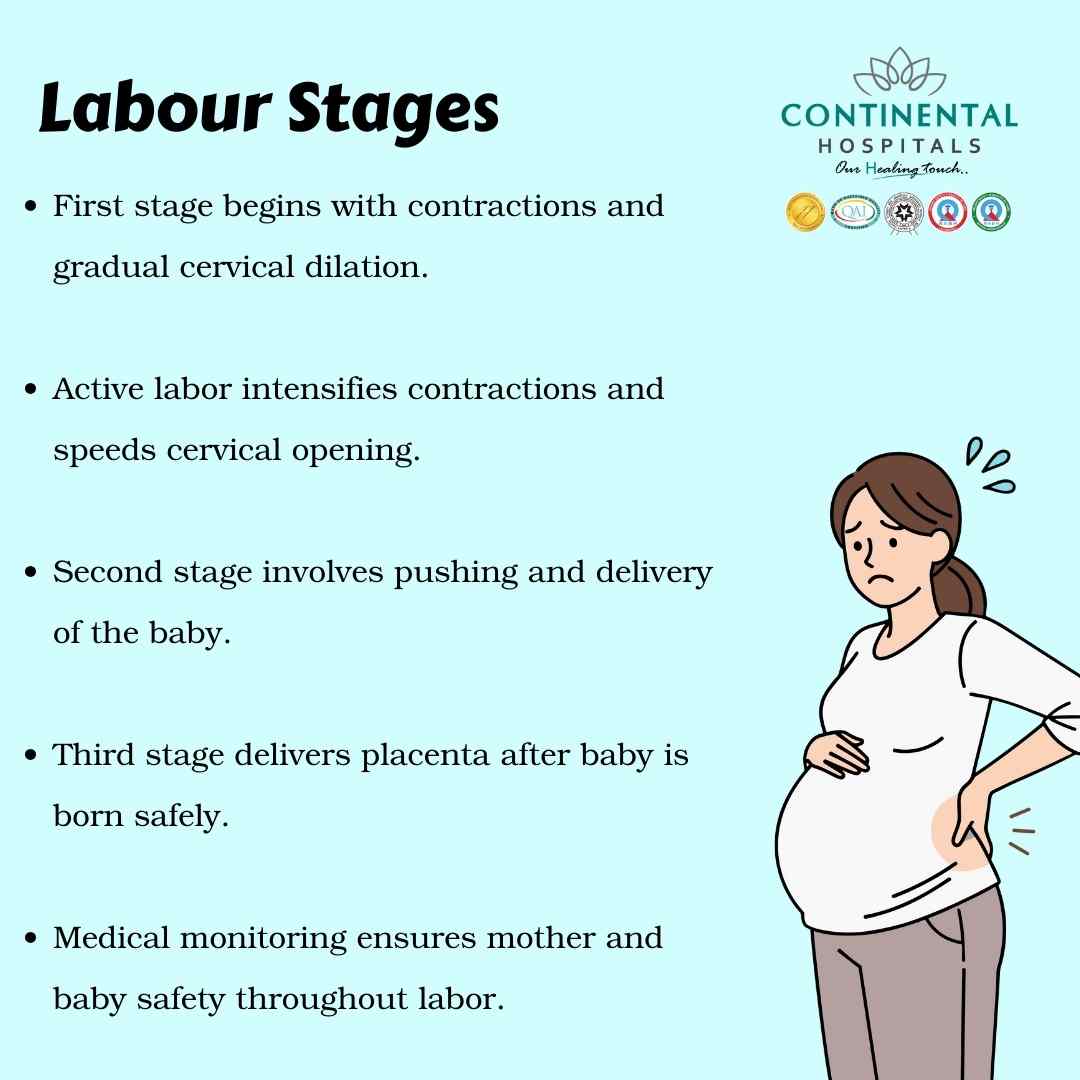
Doctors describe the stages of labour in pregnancy in a structured way to monitor progress and safety. Some explain it as 3 stages of labour, while others describe the 4 stages of labour for better clarity.
First Stage of Labour: Cervical Dilation
The first stage is the longest and most important stage of labour in pregnancy.
It has three phases:
Early Labour
- Cervix opens up to 4 cm
- Contractions are mild and irregular
- Mother may feel excited or nervous
Active Labour
- Cervix opens from 4 to 7 cm
- Contractions become stronger and closer
- Labour pain symptoms in pregnancy increase
Transition Phase
- Cervix opens from 8 to 10 cm
- Contractions are intense
- Medical support is crucial
This stage prepares the body for natural birthing and requires continuous monitoring.
Second Stage of Labour: Baby’s Birth
This stage begins once the cervix is fully open.
What happens?
- The mother pushes during contractions
- The baby moves through the birth canal
- Doctors guide safe delivery
This stage can last minutes or hours. Controlled breathing and expert support play a key role. Most natural birthing experiences occur during this stage under close supervision.
Third Stage of Labour: Delivery of the Placenta
After the baby is born, the placenta is delivered.
Key points:
- Mild contractions continue
- Placenta separates naturally
- Doctors check for complete removal
This stage usually lasts a short time but is important to prevent complications.
Fourth Stage of Labour: Recovery Phase
The fourth stage of labour focuses on recovery.
During this time:
- Vital signs are monitored
- Bleeding is controlled
- Bonding with the baby begins
Medical teams ensure the mother is stable and comfortable.
Labour Pain Symptoms in Pregnancy: What Is Normal?
Labour pain symptoms in pregnancy vary from woman to woman.
Common sensations include:
- Cramping similar to menstrual pain
- Lower back discomfort
- Pelvic pressure
- Intense contractions
Pain relief options may be discussed based on individual needs and medical advice.
Naturally Induce Labor: What Helps?
Some women ask if they can naturally induce labor. Gentle methods may help only under medical guidance.
These may include:
- Light walking
- Relaxation techniques
- Staying hydrated
Always consult a doctor before trying any method to naturally induce labor.
Process of Inducing Labor
The process of inducing labor is carefully planned by doctors when required.
Methods include:
- Medications to soften the cervix
- Controlled stimulation of contractions
- Continuous fetal monitoring
Induction is recommended only when benefits outweigh risks.
Preventing Preterm Labor
Preventing preterm labor is a major part of prenatal care.
Doctors may advise:
- Regular antenatal checkups
- Managing infections early
- Avoiding stress and overexertion
- Monitoring high risk pregnancies closely
Early detection helps protect both mother and baby.
When Should You Go to the Hospital?
You should visit the hospital immediately if you experience:
- Strong regular contractions
- Water breaking
- Reduced baby movements
- Heavy bleeding
- Severe pain or fever
Prompt care ensures safe labour in pregnancy.
Why Choose Continental Hospitals?
Continental Hospitals is widely recognized as the best hospital in Hyderabad for comprehensive maternity care.
Key reasons include:
- Advanced labour and delivery units
- Experienced obstetricians and gynecologists
- Continuous fetal and maternal monitoring
- International healthcare accreditations
- High standards of patient safety and infection control
- Emergency neonatal and intensive care support
Every labour in pregnancy is managed with precision, compassion, and evidence based protocols.
Conclusion
Understanding what is labour in pregnancy and its stages helps expecting mothers feel prepared and confident. From early signs to the final recovery phase, each step plays a vital role in childbirth. Whether it is natural birthing or medically assisted delivery, expert guidance ensures the best outcome.
If you are approaching delivery or experiencing symptoms of labour in pregnancy, consult our best Obstetrician and Gynecologist at Continental Hospitals.