.webp)


Sleep should feel natural. You lie down, close your eyes, and drift off. But for many people, sleep does not come easily. Instead, nights are filled with tossing, turning, and constant thoughts. This ongoing difficulty with sleep is known as insomnia, one of the most common sleep disorders affecting adults today.
Insomnia is not just about losing sleep. It affects mood, focus, memory, energy levels, and overall health. Understanding why insomnia happens is the first step toward better sleep and long term wellbeing.
What Is Insomnia?
Insomnia is a sleep disorder where a person has trouble falling asleep, staying asleep, or waking up too early and not being able to return to sleep. Even when there is enough time for rest, sleep feels unrefreshing.
There are two main types of insomnia
• Short term insomnia lasts for days or weeks and is often linked to stress or routine changes
• Chronic insomnia happens at least three nights a week for three months or more
Both types can affect daily life and should not be ignored.
Visit our General Physician Department at Continental Hospitals. Get expert care for sleep problems—book your appointment today for restful sleep.
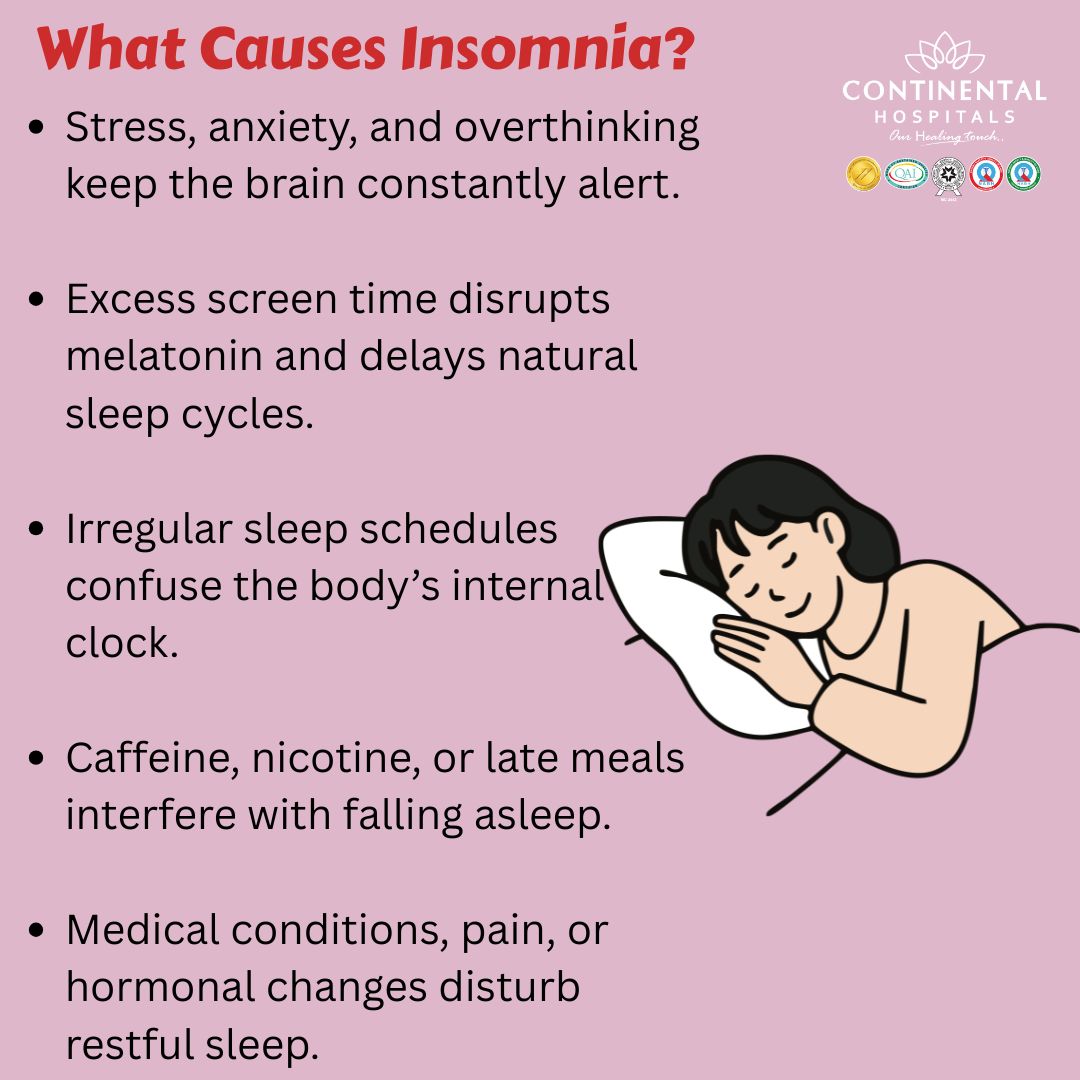
Common Causes of Insomnia
Insomnia causes vary from person to person. Often, more than one factor is involved.
Stress and Mental Overactivity
Stress is one of the most common causes of insomnia. Worrying about work, family, health, or personal responsibilities keeps the mind active when it should relax. Overthinking at bedtime delays sleep and reduces sleep quality.

Anxiety and Depression
Mental health conditions strongly affect sleep. Anxiety can cause racing thoughts and physical tension, making it hard to fall asleep. Depression often leads to early morning awakenings or excessive daytime tiredness with poor nighttime sleep.
Poor Sleep Habits
Irregular sleep schedules confuse the body clock. Sleeping late, waking up at different times, or spending too much time in bed during the day can lead to sleep problems. Using mobile phones, laptops, or watching television late at night also interferes with sleep.
Medical Conditions
Certain health conditions are closely linked with insomnia
• Chronic pain
• Asthma or breathing problems
• Acid reflux
• Hormonal changes
• Neurological disorders
These conditions disrupt sleep by causing discomfort or repeated awakenings.
Medications and Stimulants
Some medicines for blood pressure, allergies, depression, or asthma may affect sleep. Excess caffeine, nicotine, and alcohol can also interfere with the natural sleep cycle.
Sleep Disorders
Insomnia itself is a sleep disorder, but it can also occur along with other sleep conditions such as sleep apnea, restless legs syndrome, or circadian rhythm disorders. In these cases, treating the underlying sleep disorder is essential.
Signs That Insomnia Is Affecting Your Health
Insomnia is more than a nighttime issue. It impacts daytime functioning.
Common signs include
• Difficulty concentrating
• Memory problems
• Irritability or mood changes
• Low energy levels
• Reduced work performance
• Headaches or body aches
When sleep problems continue, they increase the risk of high blood pressure, diabetes, obesity, and heart disease.
How Insomnia Affects Daily Life
Poor sleep affects how the brain and body function. Lack of rest slows reaction time, affects judgment, and weakens immunity. Over time, chronic insomnia can affect relationships, productivity, and emotional health.
Many people try to adjust by drinking more coffee or taking naps, but these habits often worsen insomnia instead of improving it.
How to Fall Asleep and Sleep Better Naturally
Many people ask how to cure insomnia naturally. Simple lifestyle changes can improve sleep quality when practiced consistently.
Maintain a Fixed Sleep Schedule
Going to bed and waking up at the same time daily helps regulate the body clock. Consistency is key for better sleep.
Create a Sleep Friendly Environment
A quiet, dark, and cool bedroom promotes restful sleep. The bed should be used only for sleep, not for work or screen time.
Limit Screen Exposure Before Bed
Electronic screens stimulate the brain and suppress melatonin. Avoid screens at least one hour before bedtime to help the body prepare for sleep.
Watch What You Consume
Reduce caffeine intake, especially in the evening. Heavy meals close to bedtime can also disturb sleep.
Relaxation Techniques
Deep breathing, gentle stretching, or meditation can calm the mind and body before sleep. These practices help reduce stress related insomnia.
How to Treat Insomnia Naturally With Medical Guidance
While lifestyle changes help many people, persistent insomnia may require professional care. Doctors evaluate sleep patterns, mental health, and medical conditions to identify the root cause.
Treatment options may include
• Sleep hygiene counseling
• Cognitive behavioral therapy for insomnia
• Managing underlying medical or mental health issues
• Short term medications when clinically required
Proper diagnosis ensures safe and effective treatment without long term dependence.
When Should You See a Doctor?
You should consult a specialist if
• Insomnia lasts more than a few weeks
• Sleep problems affect daily life
• You feel constantly tired despite enough time in bed
• You rely on sleep medicines regularly
Early medical attention prevents insomnia from becoming chronic.
Why Choose Continental Hospitals for Insomnia Care?
Continental Hospitals is recognized as one of the best hospitals in Hyderabad, offering comprehensive care for sleep disorders. The hospital follows international standards of quality and patient safety with globally recognized accreditations.
At Continental Hospitals, insomnia care is supported by
• Experienced neurologists and sleep specialists
• Advanced diagnostic facilities
• Multidisciplinary approach involving mental health experts
• Evidence based treatment protocols
• Patient focused care with long term follow up
The hospital’s commitment to clinical excellence and ethical medical practice makes it a trusted destination for managing complex sleep problems.
Conclusion
Insomnia is not just a minor inconvenience. It is a sleep disorder that affects physical health, mental wellbeing, and quality of life. Understanding insomnia causes helps you take the right steps toward better sleep. Simple lifestyle changes can improve sleep, but ongoing sleep problems need professional evaluation.
Ignoring insomnia can lead to long term health issues. With the right care, restful sleep is achievable.
If you suffer from insomnia, frequent sleep problems, or difficulty falling asleep, consult our best general physician at Continental Hospitals. Early diagnosis and personalized treatment can help you sleep better and regain a healthier life. Book an appointment today and take the first step toward restful sleep.
Related Blog Topics: