.webp)


Heart Health is a growing concern for many families, especially as lifestyle diseases rise across all age groups. One common question people ask is simple but important. What is better for the heart, oil, ghee, or butter? These everyday cooking fats play a major role in Heart Health, and the choices we make in the kitchen can directly affect cholesterol levels, blood vessels, and long term cardiac wellness.
Why Dietary Fats Matter for Heart Health?
Fats are not the enemy. In fact, the right fats are essential for Heart Health. They help absorb vitamins, support hormone balance, and provide energy. The problem arises when the type or quantity of fat is not suitable for the heart.
Too much saturated fat or unhealthy trans fat can raise bad cholesterol, clog arteries, and increase the risk of heart disease. Choosing the right fat and using it in moderation is key to protecting Heart Health.
Visit Our Cardiologist Department at Continental Hospitals, Hyderabad, for expert diagnosis, guidance, and personalized heart care.
Understanding Cooking Oils and Their Role in Heart Health
Cooking oils are widely used in Indian kitchens. They are usually extracted from plants and seeds and contain different types of fatty acids.
Benefits of cooking oil for Heart Health
- Rich in unsaturated fats that help reduce bad cholesterol
- Improve blood vessel flexibility
- Support overall Heart Health when used in limited amounts
Common heart friendly oils
- Olive oil
- Groundnut oil
- Mustard oil
- Sunflower oil
- Rice bran oil
Most refined and cold pressed oils contain monounsaturated and polyunsaturated fats. These fats are known to support Heart Health by improving lipid profiles. However, reheating oil multiple times or using too much oil can reduce its benefits.
Is oil always good for the heart?
Not all oils are equal. Highly refined oils and oils reused many times can harm Heart Health. Choosing good quality oils and rotating between different types is considered a healthier approach.

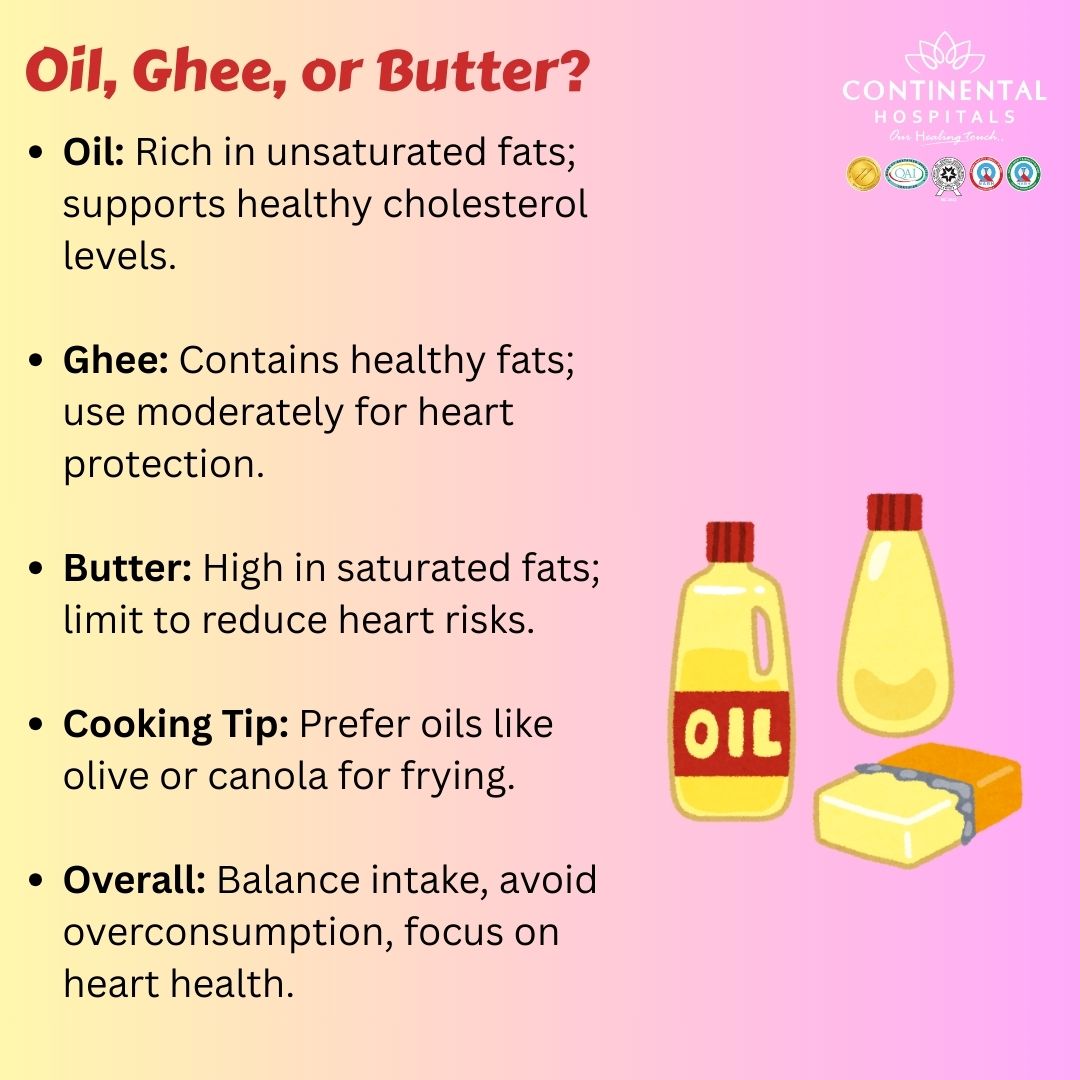
Ghee and Heart Health: Traditional Fat Under the Scanner
Ghee has been part of Indian diets for centuries. It is made by clarifying butter and removing milk solids. Many people believe ghee is unhealthy, while others swear by its benefits.
Ghee benefits related to Heart Health
- Contains fat soluble vitamins
- Has short chain fatty acids that support digestion
- More stable at high cooking temperatures
Ghee contains saturated fat, which means excess intake can increase cholesterol. However, small quantities of ghee may not be harmful for Heart Health in healthy individuals.
Is ghee good for heart health?
The answer depends on how much and how often. Limited use of ghee in home cooking may be acceptable for people without cholesterol problems. For those with heart disease, diabetes, or obesity, ghee should be consumed cautiously and only after medical advice.
Butter and Its Impact on Heart Health
Butter is made from milk cream and is commonly used as a spread or cooking ingredient. It has a rich taste but also a high saturated fat content.
Butter and Heart Health concerns
- High in saturated fat
- Can raise bad cholesterol if used regularly
- Less stable at high heat compared to ghee
Butter does not offer significant advantages for Heart Health. Regular intake may increase the risk of artery blockage, especially in people with existing heart conditions.
Butter vs ghee heart health comparison
- Ghee is slightly better than butter due to better heat stability
- Butter contains more milk solids and cholesterol
- Neither should be consumed in excess for Heart Health
Oil vs Ghee vs Butter: Which Is the Best Fat for Heart?
When comparing oil vs ghee vs butter, cooking oil generally emerges as the better option for Heart Health, especially plant based oils rich in unsaturated fats.
Quick comparison for Heart Health
- Cooking oil supports cholesterol balance
- Ghee can be used occasionally in small amounts
- Butter should be limited or avoided for regular use
The best fat for heart health is not about choosing one and eliminating others completely. It is about balance, portion control, and individual health conditions.
How to Use Fats Smartly for Better Heart Health?
Making small changes in daily cooking habits can protect Heart Health over time.
Heart friendly fat usage tips
- Use oils in limited quantities
- Avoid deep frying and repeated reheating
- Prefer steaming, grilling, or sautéing
- Mix different oils instead of using one type always
- Keep ghee and butter for occasional use only
Do you need to stop ghee completely?
Not necessarily. Healthy individuals can include small amounts of ghee as part of a balanced diet. People with heart disease should consult a cardiologist before making dietary changes.
When Should You Be Concerned About Your Heart Health?
You should pay close attention to Heart Health if you experience symptoms such as chest pain, shortness of breath, fatigue, palpitations, or if you have a family history of heart disease.
Diet is only one part of Heart Health. Regular exercise, stress management, adequate sleep, and routine health checkups are equally important.
Why Choose Continental Hospitals for Heart Health Care?
Continental Hospitals is recognized as one of the best hospitals in Hyderabad for comprehensive cardiac care. The hospital is known for its commitment to quality, safety, and patient centered treatment.
What sets Continental Hospitals apart
- Internationally accredited hospital standards
- Advanced cardiac diagnostics and treatment facilities
- Experienced cardiologists and heart surgeons
- Multidisciplinary approach to Heart Health
- Evidence based treatment protocols
The cardiology department at Continental Hospitals focuses on early detection, preventive care, and advanced interventions to support long term Heart Health.
Conclusion
Choosing between oil, ghee, and butter is not just about taste. It is about protecting Heart Health every day. Cooking oils rich in unsaturated fats are generally the best choice for the heart. Ghee can be included in moderation, while butter should be limited.
Heart Health improves with informed food choices, regular medical guidance, and timely care. If you are unsure about what fats are right for you, professional advice can make all the difference. Continental Hospitals stands ready to support your Heart Health journey with trusted expertise and advanced care.
If you are suffering from chest discomfort, high cholesterol, blood pressure issues, or have concerns about your Heart Health, do not ignore the signs. Consult our Best Cardiologist at Continental Hospitals, the best hospital in Hyderabad, for accurate diagnosis, lifestyle guidance, and personalized treatment plans.
Related Blog Topics: