.webp)

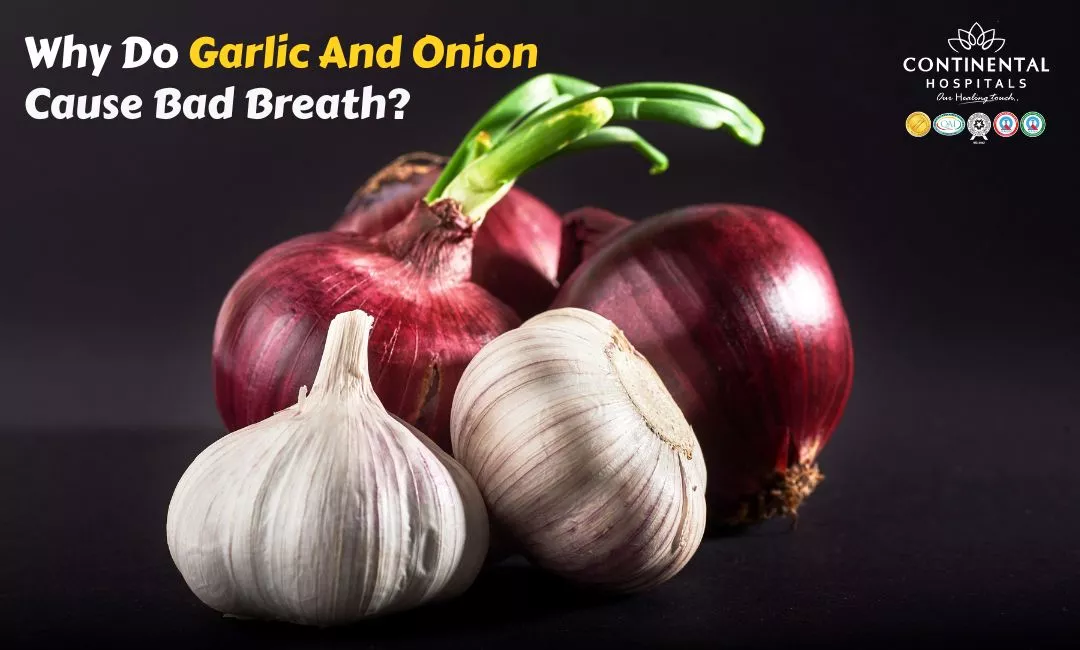
Bad breath after meals is a common concern, especially after eating garlic or onion. Many people wonder why these healthy ingredients leave behind an unpleasant smell that brushing alone cannot remove. Understanding the science behind garlic bad breath and onion bad breath can help you manage it better without giving up on these nutritious foods.
What Is Bad Breath?
Bad breath, also known as halitosis, refers to an unpleasant odor coming from the mouth. It can occur due to poor oral hygiene, dry mouth, dental issues, digestive problems, or certain foods that cause bad breath.
Among food-related causes, garlic and onion are the most common triggers.
Struggling with persistent bad breath from garlic or onion? Visit the Dentists Department at Continental Hospitals for expert diagnosis, treatment, and care.
Why Garlic Causes Bad Breath?
Garlic is widely used in Indian cooking and is known for its medicinal benefits. However, it is also a major cause of persistent mouth odor.
The Science Behind Garlic Bad Breath
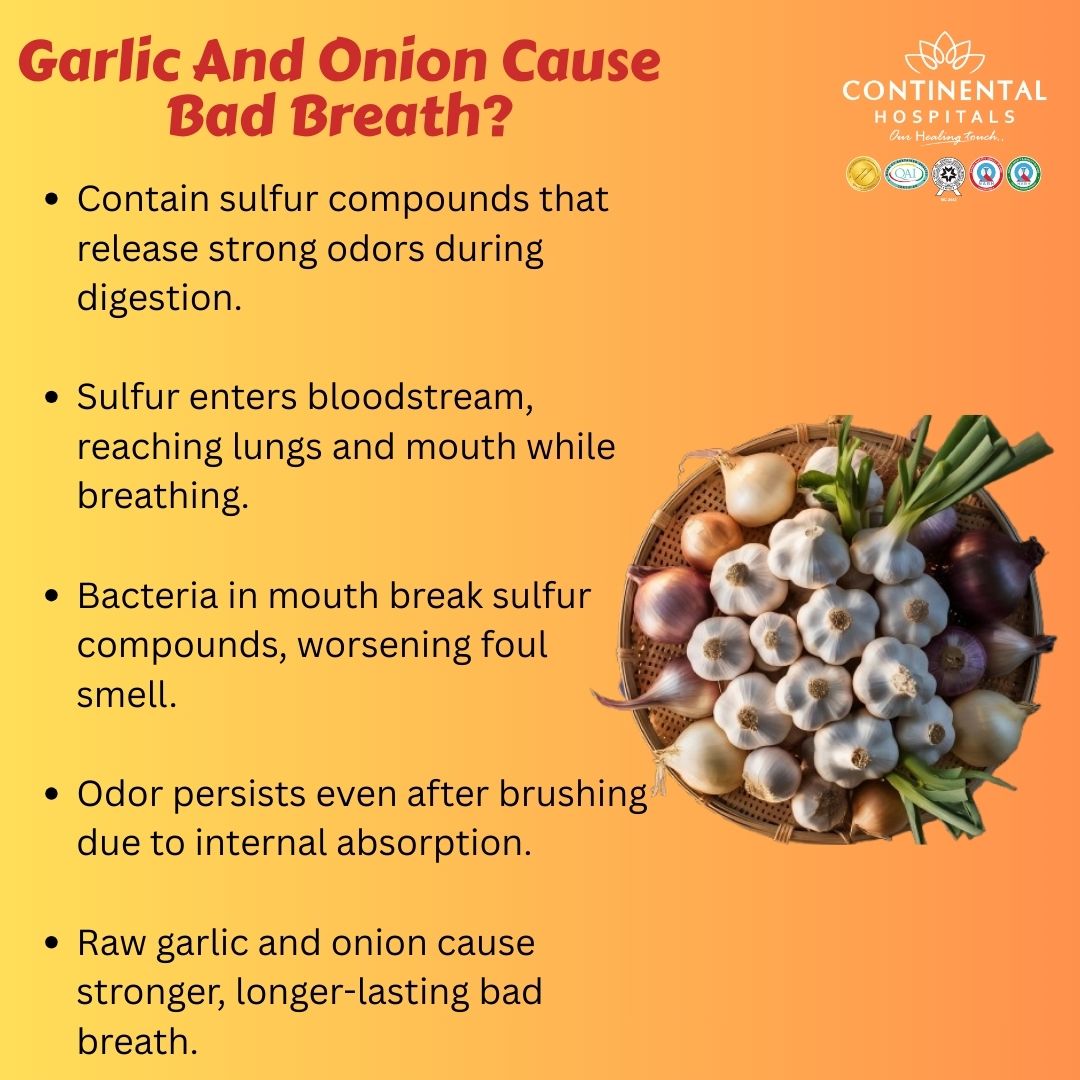
Garlic contains sulfur-containing compounds, especially allicin. When garlic is crushed or chewed, allicin breaks down into volatile sulfur compounds. These compounds are responsible for the strong smell associated with garlic breath.
Here is why garlic bad breath lasts longer than other food smells?

- Sulfur compounds enter the bloodstream after digestion
- They travel to the lungs and are released through breathing
- The smell comes not only from the mouth but also from the breath
This is why bad breath after eating garlic does not go away easily with brushing or mouthwash.
Raw Garlic Bad Breath Is Stronger
Raw garlic bad breath is usually more intense than cooked garlic. Cooking reduces the amount of sulfur compounds, which is why cooked garlic causes less odor compared to raw garlic.
Why Onion Causes Bad Breath?
Onion bad breath occurs for similar reasons, but the effect is usually shorter than garlic.
How Onion Leads to Bad Breath?
Onions also contain sulfur compounds. When you chew onion, these compounds mix with saliva and produce a strong smell. Like garlic, onion compounds can enter the bloodstream and affect breath.
Reasons why onion causes bad breath include:
- Release of sulfur gases during chewing
- Breakdown of onion compounds in the digestive system
- Reduced saliva production after eating raw onion
Raw onion causes stronger odor than cooked onion, especially when eaten alone or in salads.
Why Brushing Does Not Fully Remove Garlic Breath?
Many people brush their teeth immediately after eating garlic or onion but still notice bad breath. Why does this happen?
Garlic breath causes go beyond the mouth. Since sulfur compounds are absorbed into the bloodstream, brushing only cleans the teeth and tongue, not the lungs or digestive system. This is why the smell may return even after good oral hygiene.
Foods That Cause Bad Breath Besides Garlic And Onion
While garlic and onion are the most well-known, other foods that cause bad breath include:
- Strong spices
- Coffee
- Alcohol
- Certain protein-rich foods
- Sugary foods that promote bacterial growth
Knowing your triggers can help you manage breath odor better.
How Long Does Garlic And Onion Bad Breath Last?
The duration of garlic bad breath varies depending on:
- Quantity consumed
- Whether garlic was raw or cooked
- Individual digestion and metabolism
- Oral hygiene habits
Garlic breath can last several hours and sometimes up to a full day. Onion bad breath usually fades faster but may still last for a few hours.
Simple Ways To Reduce Garlic And Onion Bad Breath
You do not need to avoid garlic or onion completely. These practical steps can help reduce odor.
After Eating Garlic Or Onion
- Drink plenty of water to flush sulfur compounds
- Brush teeth and clean the tongue thoroughly
- Rinse the mouth with plain water after meals
Foods That Help Neutralize Odor
Some foods can help reduce bad breath after eating garlic or onion.
- Fresh fruits like apples and citrus
- Green vegetables
- Yogurt with natural probiotics
- Herbs such as mint or parsley
Maintain Good Oral Hygiene
- Brush twice daily
- Clean the tongue regularly
- Use dental floss to remove food particles
When Bad Breath Is Not Just About Food?
If bad breath continues even without eating garlic or onion, it may indicate an underlying issue.
Possible causes include:
- Gum disease
- Tooth decay
- Dry mouth
- Sinus infections
- Digestive problems
If you experience persistent bad breath, it is important to seek medical advice.
When Should You See A Doctor?
You should consult a doctor or dentist if:
- Bad breath lasts for many days
- Mouth feels dry frequently
- You notice gum bleeding or pain
- There is a bitter taste or burning sensation
Early evaluation helps identify the root cause and prevents complications.
Expert Care At Continental Hospitals
Continental Hospitals in Hyderabad is known for its patient-focused care and advanced medical services. The hospital is accredited by national and international healthcare quality organizations, reflecting its commitment to safety, excellence, and ethical medical practices.
With experienced specialists across dentistry, gastroenterology, ENT, and internal medicine, Continental Hospitals ensures a comprehensive approach to diagnosing and managing bad breath and related conditions.
Why Choose Continental Hospitals?
- Team of experienced and qualified doctors
- Advanced diagnostic facilities
- Evidence-based treatment protocols
- Multispecialty care under one roof
- Trusted as one of the best hospitals in Hyderabad
Patients receive personalized guidance that addresses both symptoms and underlying causes.
Conclusion
Garlic and onion are healthy foods, but their sulfur compounds are the main reason behind strong mouth odor. Understanding why garlic causes bad breath and why onion causes bad breath helps you manage it without avoiding these ingredients completely.
With proper oral hygiene, smart food choices, and timely medical advice, bad breath after eating garlic or onion can be controlled effectively. For expert care and reliable guidance, Continental Hospitals in Hyderabad remains a trusted destination for comprehensive health solutions.
If you suffer from persistent bad breath, frequent garlic bad breath, or onion bad breath that affects your confidence, consult our best dentists at Continental Hospitals. Our specialists will help identify the cause and guide you with effective treatment and lifestyle advice.
Related Blog Topics: