.webp)


Gut health has become one of the most searched and discussed topics across nutrition, wellness, and preventive care. People want to understand how digestion, immunity, weight, skin, and even mental strength are linked to what happens inside the gut. Modern research shows that a healthy gut microbiome supports long term health and reduces the risk of several chronic conditions. This article explains what the gut microbiome is, how it works, signs of imbalance, the best foods for gut health, probiotics and prebiotics, and how to follow a simple gut microbiome diet plan for beginners.
What is the Gut Microbiome?
The gut microbiome refers to the community of trillions of bacteria, fungi, viruses, and microbes that live in the digestive tract. These microbes help break down food, absorb nutrients, support the immune system, produce vitamins, regulate metabolism, and maintain the gut brain connection. A balanced gut microbiome protects the body from harmful bacteria and strengthens the intestinal barrier. When the microbiome is healthy, digestion becomes smooth and energy levels remain stable.
Why Gut Health Is Becoming a Priority?
Gut health is trending because people now understand that the gut does much more than process food. Research links the gut to immunity, mood, hormone balance, inflammation, metabolism, and brain performance. Many individuals experience bloating, constipation, acidity, or food sensitivities without knowing these could be early signs of dysbiosis in the gut. Correcting gut balance can reduce these symptoms and improve overall wellbeing.
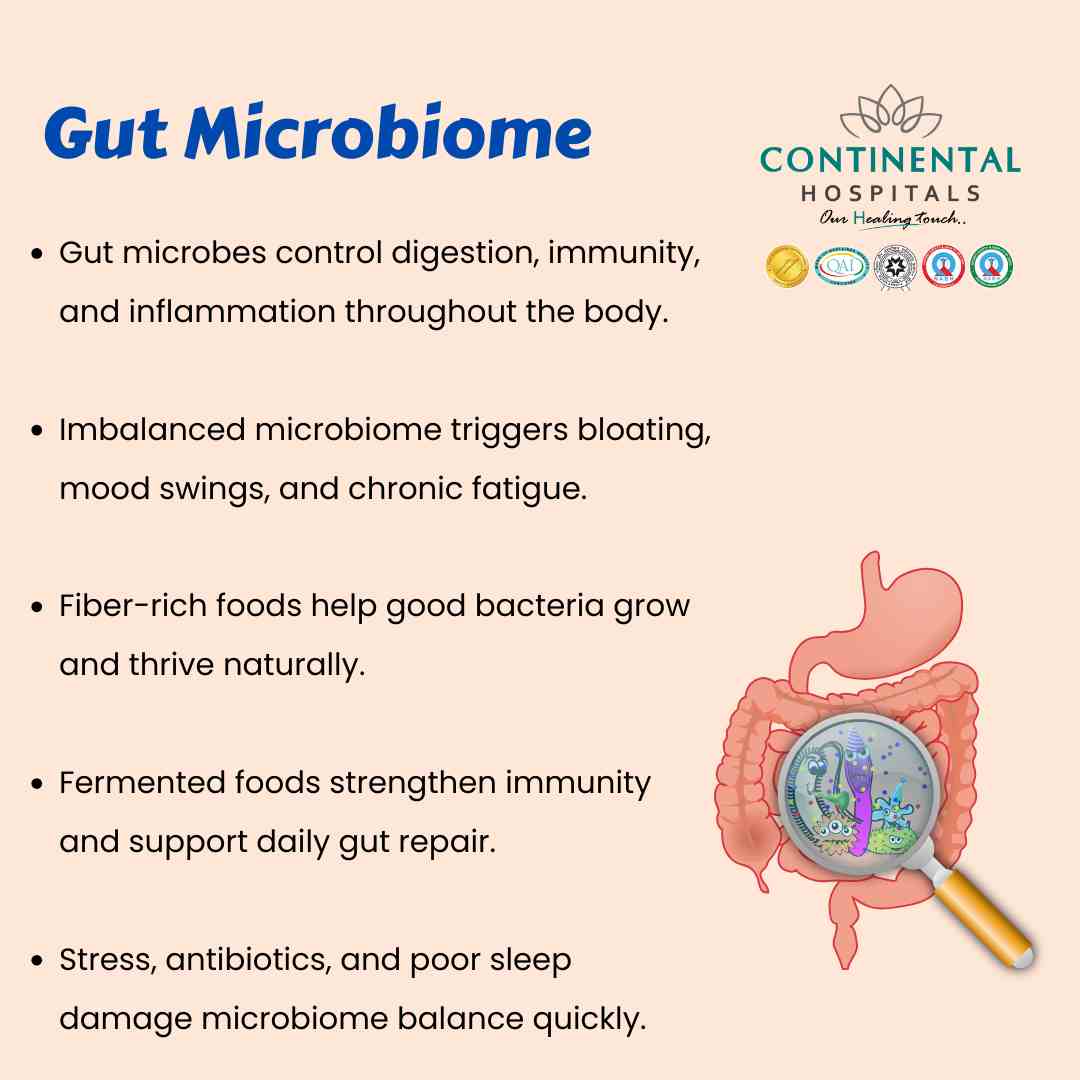
Signs of Dysbiosis in the Gut
Dysbiosis means an imbalance between good and bad gut bacteria. Common signs include:
- Frequent bloating and gas
- Irregular bowel habits like constipation or loose stools
- Food intolerances
- Fatigue after meals
- Sugar cravings
- Acidity or reflux
- Skin flare ups like acne
- Low immunity and frequent infections
- Trouble sleeping
- Difficulty losing weight
- Brain fog or difficulty concentrating
If these symptoms continue for a long period, a gastroenterologist can help diagnose the root cause.
How to Improve Gut Health Naturally?
Natural lifestyle changes are the most effective way to rebuild a healthy gut microbiome. Some of the most helpful practices include:
- Eating a variety of whole foods that support good bacteria
- Drinking enough water each day
- Including fermented foods in meals
- Reducing packaged foods and processed sugars
- Eating fiber rich vegetables and fruits
- Managing stress levels
- Maintaining regular sleep cycles
- Staying active through daily walking or exercise
These simple habits create a healthy environment for the microbiome to flourish.
Best Foods for Gut Microbiome
Certain foods naturally increase the diversity of gut bacteria. Some of the best foods for gut microbiome include:

- Fermented foods like curd, kefir, kombucha, kimchi, homemade pickles
- Fiber rich foods like apples, berries, oranges, carrots, broccoli, and leafy greens
- Whole grains like oats, brown rice, quinoa, and millets
- Legumes such as chickpeas, rajma, lentils, and peas
- Healthy fats from nuts, seeds, avocados, and olive oil
- Herbs and spices like ginger, garlic, turmeric, and cinnamon
Including these foods daily supports good bacteria and improves digestion.
Probiotics for Gut Health and Which Strains Help
Probiotics are beneficial bacteria that help restore balance in the gut. They support digestion, reduce inflammation, and improve immunity. Some of the most research backed probiotic strains include:
- Lactobacillus rhamnosus
- Lactobacillus acidophilus
- Lactobacillus plantarum
- Bifidobacterium longum
- Bifidobacterium bifidum
- Saccharomyces boulardii
These strains are commonly found in probiotic curd, fermented foods, and probiotic supplements. A doctor can help decide which strain is most suitable for individual gut needs.
Prebiotic Foods List
Prebiotics are special plant fibers that act as food for good bacteria. Adding prebiotics to meals helps strengthen the microbiome. Important prebiotic foods include:
- Bananas
- Garlic
- Onions
- Leeks
- Asparagus
- Oats
- Flaxseeds
- Chia seeds
- Apples
- Barley
Combining prebiotics with probiotics creates a powerful symbiotic effect.
Gut Health and Mental Health Connection
The gut brain axis is the communication link between the digestive system and the brain. The microbiome produces neurotransmitters like serotonin which influence mood, sleep, and stress response. When gut bacteria are balanced, mental clarity and emotional wellbeing improve. Dysbiosis can increase anxiety symptoms, irritability, fatigue, and mood swings. This explains why improving gut health often leads to better mental health.
Simple Gut Microbiome Diet Plan for Beginners
A beginner friendly gut microbiome diet focuses on natural, fiber rich, and minimally processed foods. Here is a sample plan:
Early Morning
Warm water with lemon or plain warm water
Breakfast
Oats with fruits and nuts or a bowl of curd with seeds
Mid-Morning
A banana or apple
Lunch
Brown rice or millets with dal, a portion of vegetables, and curd
Evening
Herbal tea with a handful of nuts
Dinner
Soup with vegetables and whole grains or grilled vegetables with lentils
Before Bed
A small cup of probiotic curd if tolerated
Following this plan for a few weeks improves digestion, increases good bacteria, and supports long term gut health.
Why Choose Continental Hospitals for Gut and Digestive Care?
Continental Hospitals is one of the leading centers for advanced gastroenterology care in Hyderabad. The hospital follows international standards of patient safety and clinical quality. It is accredited by global and national healthcare bodies that ensure strict protocols, evidence based treatment methods, and high standards of infection control. The gastroenterology department is equipped with modern endoscopy units, advanced diagnostic systems, and expert specialists who manage common and complex digestive conditions with precision. Patients receive personalized diet guidance, gut microbiome focused counseling, and comprehensive treatment planning.
Conclusion
A healthy gut microbiome is essential for strong immunity, balanced mood, smooth digestion, and long term wellness. Eating the right foods, adding probiotics and prebiotics, managing stress, and following a simple gut microbiome diet plan for beginners can transform overall health. If you suffer from frequent digestive problems, bloating, acidity, or any signs of dysbiosis, expert help can guide you toward long lasting relief.
If you are facing symptoms related to gut imbalance or digestive discomfort, consult the expert gastroenterologists at Continental Hospitals. Our specialists provide advanced care for all digestive and liver related conditions with a patient centered approach.