.webp)


Winter often brings a quiet charm with cool mornings, cozy evenings and a slower pace. But behind this seasonal shift, many women notice something deeper happening inside them. Mood changes winter, increased irritability, low energy and trouble staying motivated are common concerns. These winter mood swings affect women more strongly than men, and understanding why can help in preventing emotional dips and protecting overall wellbeing.
Why Women Experience More Mood Changes in Winter?
Women often experience stronger emotional fluctuations during the colder months for several physical and psychological reasons. These are the most common causes:
1. Hormonal Sensitivity
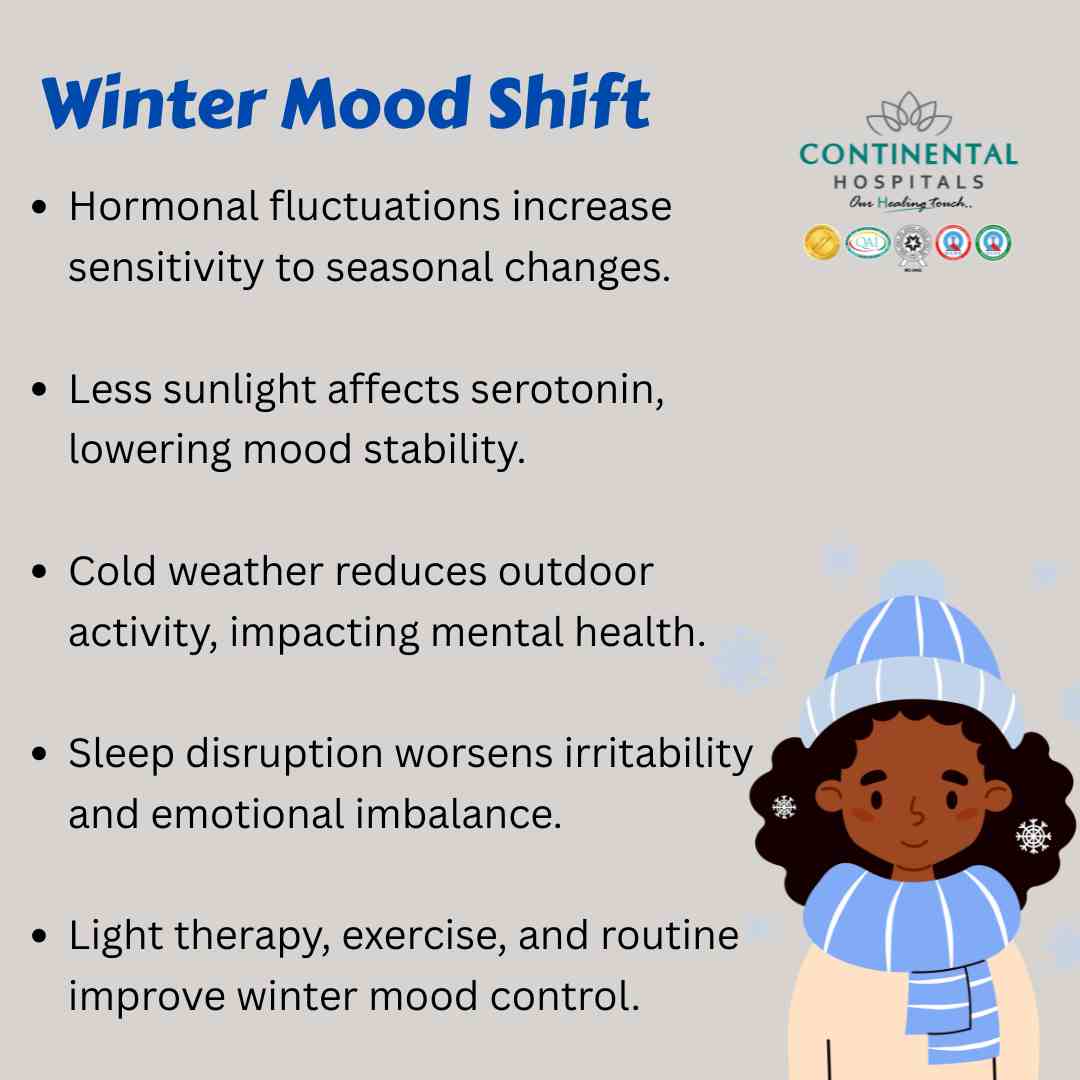
Women experience natural hormonal rhythms throughout their life. During winter, reduced sunlight disrupts the body’s internal clock, influencing melatonin and serotonin regulation. This shift affects women more because their hormonal balance is already closely linked to emotional health. When these hormones fluctuate, winter hormonal mood variations become more noticeable.
2. Lower Serotonin Levels
Serotonin is the body’s natural feel good chemical. Less sunlight means less serotonin production. This leads to sadness, irritability and fatigue. Since women are more sensitive to serotonin dips, winter mood swings become more pronounced.
3. Vitamin D Mood Impact
Women are more likely to have vitamin D deficiency. Vitamin D plays a key role in regulating mood, energy levels and immunity. Reduced sunlight in winter limits natural vitamin D production and this low vitamin D directly affects emotional balance. This is one of the major contributors to winter depression signs and emotional instability.
4. Seasonal Affective Disorder (SAD) in Women
SAD women cases are more common because women’s brains react more strongly to changes in sunlight. Seasonal Affective Disorder is a winter specific depression that causes persistent low mood and lethargy. Women may feel more emotional, anxious or withdrawn due to the lack of natural light.
5. Increased Winter Anxiety
Winter anxiety causes include shorter days, colder weather and limited outdoor activity. These factors reduce physical movement and exposure to nature, which are essential for emotional stability. For women who already juggle multiple roles, even the smallest disruption can impact mental clarity and stability.
6. Sleep Cycle Disruption
Winter affects the natural sleep wake cycle. Longer nights increase melatonin production which makes women feel sleepy, less alert and mentally low. Poor sleep leads to mood dips and emotional reactivity.
7. Social Isolation
With cold weather and early sunsets, social activities reduce. Women tend to rely on social bonding for emotional health. Reduced interactions can contribute to loneliness and low mood.

Common Winter Depression Signs in Women
Recognizing symptoms early helps women take control of their emotional wellbeing. Some warning signs include:
- Feeling low or sad on most days
- Irritability or frustration
- Loss of interest in routine activities
- Craving high carb foods
- Difficulty waking up or sleeping too much
- Low energy and fatigue
- Difficulty concentrating
- Feeling anxious or overwhelmed
- Social withdrawal or loss of motivation
If these symptoms continue for more than two weeks, it may be a sign of seasonal depression or hormonal imbalance.
Most Common Winter Anxiety Causes for Women
- Sudden change in sunlight exposure
- Reduced outdoor activity
- Increased work or personal responsibilities
- Hormonal fluctuations
- Vitamin D deficiency
- Poor sleep patterns
- Emotional burnout
- Lack of routine and structure
Understanding these reasons can help in creating a healthier winter routine.
Winter Wellness Tips To Improve Mood
These simple lifestyle changes can help women maintain emotional balance during winter.
1. Maximize Sunlight Exposure
Spend time outdoors during morning hours. Even a few minutes of sunlight helps improve serotonin and regulate mood.
2. Maintain Physical Activity
Exercise boosts endorphins which improve emotional health. Indoor activities like yoga, stretching or walking inside large indoor spaces can help.
3. Maintain Vitamin D Levels
Adequate vitamin D supports emotional balance and reduces mood fluctuations. Foods rich in vitamin D and supplements suggested by a doctor can help.
4. Improve Sleep Hygiene
Stick to a fixed bedtime, avoid screen time before sleep and ensure a calm sleeping environment.
5. Stay Socially Connected
Meet family members, friends or join virtual group activities to stay connected.
6. Practice Relaxation Techniques
Deep breathing, journaling and meditation help reduce winter anxiety and maintain emotional stability.
7. Eat Mood Boosting Foods
Healthy fats, proteins, seasonal fruits, leafy vegetables and omega rich foods support brain function and mood.
8. Create a Winter Routine
A structured daily routine gives stability and reduces emotional fluctuations.
Additional Tips To Protect Women’s Emotional Health in Winter
- Keep your home bright during the day
- Use warm lighting in the evening
- Avoid comfort eating or overeating
- Manage workload with realistic planning
- Take short breaks during work
- Keep hydration levels adequate
- Avoid excess caffeine
These habits help maintain a positive emotional balance throughout the colder months.
Why Choose Continental Hospitals for Women’s Emotional and Mental Health Care?
Continental Hospitals focuses on complete wellbeing through advanced medical expertise, compassionate care and international level safety standards. The hospital is known for its accreditations that highlight quality, patient safety and clinical excellence. A team of experienced psychiatrists, psychologists and wellness specialists evaluate the root cause of winter mood swings in women and offer personalized care plans that include hormonal evaluation, nutritional guidance, mental health support and lifestyle modification.
With modern infrastructure, evidence based treatment and a multi disciplinary approach, Continental Hospitals ensures that every woman receives comprehensive care for emotional health, winter anxiety causes and winter depression signs. The hospital’s focus on patient centred care helps women rebuild emotional balance and achieve long term wellbeing.
If You Suffer From Winter Mood Swings
If you experience persistent mood changes winter, irritability, low energy or anxiety during the colder months, early evaluation is important. Do not ignore symptoms that interfere with daily life. Professional guidance can help you understand the cause and provide a customized treatment plan.
Conclusion
Winter mood swings hit women harder due to hormonal sensitivity, vitamin D mood impact, serotonin reduction and lifestyle changes that occur in colder months. Understanding these triggers helps women take preventive steps to protect their mental wellbeing. With the right support, winter can be a balanced and emotionally healthy season.
For expert help and compassionate care, book an appointment with our best psychologists at Continental Hospitals. Our mental health and wellness experts are here to support your journey to a healthier mind and body.