.webp)


Winter is the season when your skin feels tight, rough, itchy, and more sensitive than usual. Cold winds, low humidity, long hot showers, and indoor heaters quickly strip away natural oils, leading to a damaged skin barrier. When this protective barrier breaks down, your skin cannot retain moisture or block irritants. This leads to dryness, redness, burning sensations, flaking, and sudden sensitivity. Understanding how to repair your skin barrier in winter can help you maintain healthy, hydrated, and glowing skin throughout the season.
What is the Skin Barrier?
The skin barrier is the outermost layer of your skin. It works like a protective shield, keeping moisture in and irritants out. A healthy skin barrier contains lipids like ceramides, cholesterol, and fatty acids. These lipids act like the mortar between the bricks that protect your skin.
In winter, this protective layer weakens, making your skin lose hydration quickly. As a result, even simple products can feel irritating and previously normal skin can become sensitive.
Why Winter Damages the Skin Barrier?
Cold weather affects the skin in many ways. Some of the most common factors include:
Low humidity
Winter air contains very little moisture. This causes faster evaporation of water from the skin, leading to trans epidermal water loss.
Cold winds
Strong winds weaken the barrier and make the skin more prone to irritation and cracking.
Indoor heaters
Spending long hours in heated rooms dries out the skin, worsening irritation.
Long hot showers
Hot water strips away natural oils that keep your skin soft and protected.
Harsh skincare products
Using strong exfoliants, foaming cleansers, and fragrances during winter can trigger skin barrier damage.

When these factors combine, your skin becomes more reactive and struggles to heal itself.
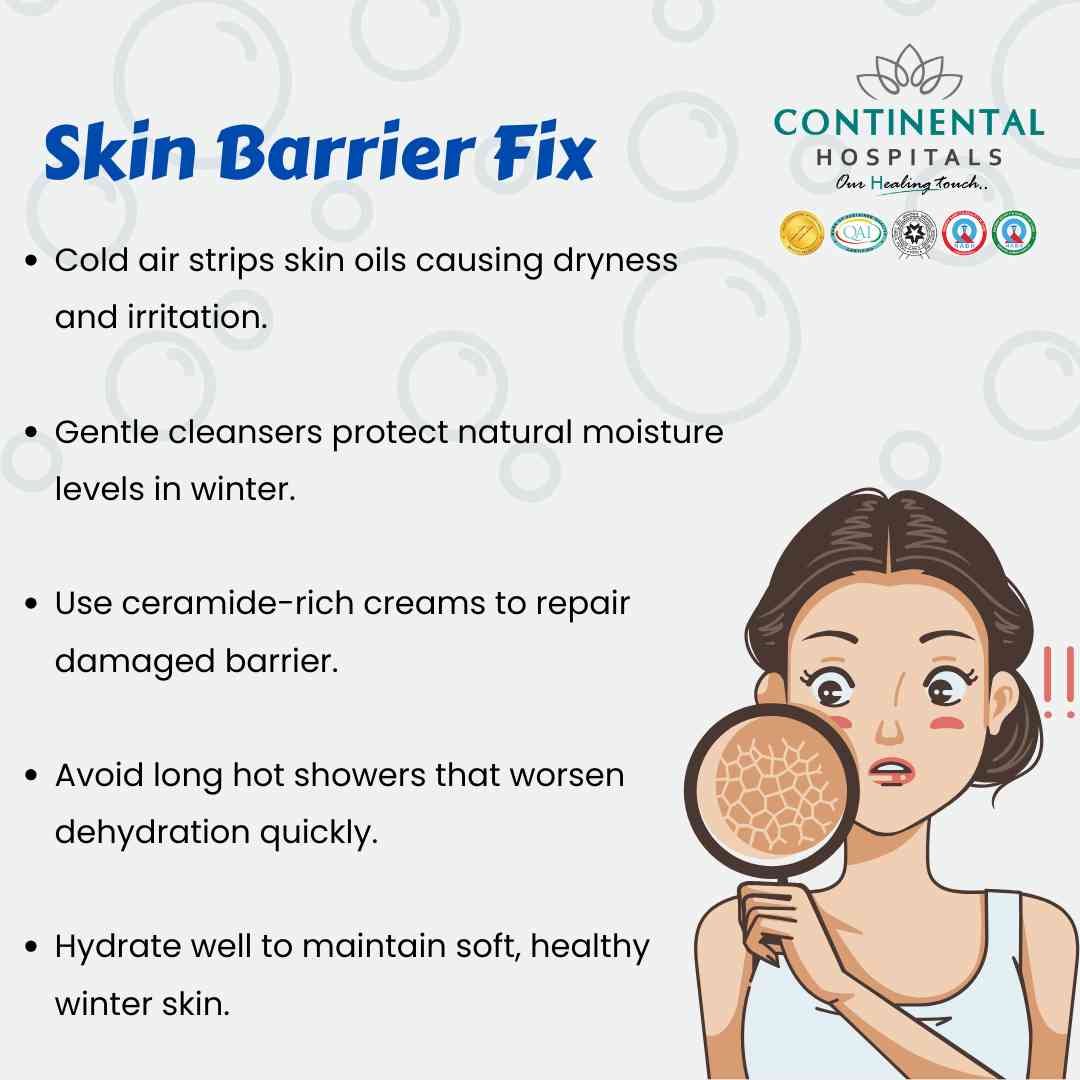
Signs of a Damaged Skin Barrier in Winter
Recognising the symptoms early can help you start treatment quickly. Look for:
- Increased dryness
- Flaky patches
- Tightness after washing
- Redness or inflammation
- Burning or stinging after applying products
- Sudden sensitivity to mild products
- Rough texture
- Itchiness, especially at night
If these symptoms continue, your skin barrier needs repair-focused care right away.
How to Repair the Skin Barrier in Winter?
Here are effective ways to heal your damaged skin barrier and restore hydration.
1. Switch to a gentle cleanser
Choose a mild, fragrance free cleanser that does not foam aggressively. It should clean without stripping. Avoid scrubs and exfoliation when your barrier is damaged.
2. Add ceramides to your routine
Ceramides are essential for winter skincare. They restore lipids, strengthen the barrier, and reduce irritation. Look for moisturisers enriched with ceramides, cholesterol, and fatty acids.
3. Use a hydrating serum
Serums containing hyaluronic acid and glycerin help bind water to the skin. Apply them on slightly damp skin for better absorption.
4. Follow with a rich moisturiser
Choose a thick moisturiser designed for dry winter skin. Use products containing ceramides, squalane, shea butter, niacinamide, or peptides.
5. Seal hydration with occlusives
If your skin is extremely dry, use petrolatum based ointments on trouble areas. These prevent moisture loss and support barrier healing.
6. Reduce shower temperature
Warm showers are better for winter. Keep the duration short and apply moisturiser immediately after stepping out.
7. Protect your skin outdoors
Wear scarves or masks to shield your face from cold air and winds.
8. Avoid over exfoliation
Limit exfoliating products like AHAs, BHAs, retinoids, and scrubs during winter. Focus on healing instead of resurfacing.
9. Use a humidifier indoors
A humidifier adds moisture to the air, preventing excessive dryness while you sleep.
Best Winter Skincare Routine for Skin Barrier Repair
Morning routine
• Gentle hydrating cleanser
• Hyaluronic acid serum
• Ceramide based moisturiser
• Sunscreen with broad spectrum protection
Night routine
• Gentle cleanser
• Niacinamide or ceramide serum
• Deep repair moisturiser
• Occlusive layer on dry areas if needed
This routine supports dryness winter treatment, strengthens sensitive skin in winter, and improves overall skin barrier healing.
Winter Hydration Tips for Healthy Skin
- Drink enough water throughout the day
- Add omega rich foods to your diet
- Use moisturiser twice daily
- Apply hand and foot creams regularly
- Do not use harsh soaps or alcohol based products
- Choose soft cotton clothing to avoid irritation
- Moisturise immediately after bathing
- Avoid scratching dry areas
- Sleep well to support skin repair
When to See a Dermatologist
If your skin remains dry, itchy, inflamed, or extremely sensitive despite following repair tips, it is time to consult a dermatologist. You should also seek medical advice for conditions like eczema, dermatitis, and psoriasis which often flare up during winter.
Why Choose Continental Hospitals for Skin and Dermatology Care?
Continental Hospitals is known for its excellence in clinical standards and high quality patient care. The dermatology team offers advanced diagnostics and personalised skincare plans for all age groups. The hospital follows strict international safety protocols and quality practices that ensure accurate treatment and faster recovery.
Patients benefit from advanced technology, expert dermatologists, modern procedure rooms, and comprehensive support for all skin conditions. Whether you need winter skin barrier repair, sensitive skin winter treatment, or long term skin wellness, the dermatology department ensures safe and effective results.
Conclusion
Winter can be harsh on your skin, but the right skincare routine and barrier focused approach can restore smoothness, hydration, and resilience. Focus on gentle products, deep moisturisation, and protective measures to keep your skin healthy all season. For expert guidance, personalised winter skincare routine planning, and advanced dermatology care, visit Continental Hospitals for comprehensive skin treatment.
If you suffer from persistent winter dryness, irritation, or skin barrier damage, consult our best dermatologist at Continental Hospitals. Our specialists offer customised treatments for ceramide based winter skincare, damaged skin barrier repair, and chronic skin conditions.