.webp)

Sleep is one of the most important pillars of good health. Yet many people ignore the importance of getting enough sleep every night. Whether it is because of work, stress, late night screen time, or an irregular routine, missing sleep can affect almost every part of your body. While you may think that losing a few hours of sleep is harmless, your body often sends clear warning signs that should never be ignored.
Getting enough sleep is essential for your brain, heart, immune system, hormones, and overall well-being. If your body is not getting the rest it needs, it may lead to sleep deficiency, poor sleep quality, and several sleep disorders over time. Recognizing these early signs can help you improve your sleep health before more serious health problems develop.
Why Is Enough Sleep Important?
Your body performs several important functions while you sleep. It repairs tissues, strengthens your immune system, balances hormones, stores memories, and restores energy for the next day. Adults generally need around seven to nine hours of enough sleep every night to stay healthy.
Without enough sleep, your body cannot recover properly, making you more vulnerable to illness, fatigue, and long-term health conditions.
If you're experiencing snoring, interrupted sleep, excessive daytime sleepiness, or other signs of a sleep-related breathing disorder, visit the Pulmonology Department at Continental Hospitals
What Are the Warning Signs That You Are Not Getting Enough Sleep?
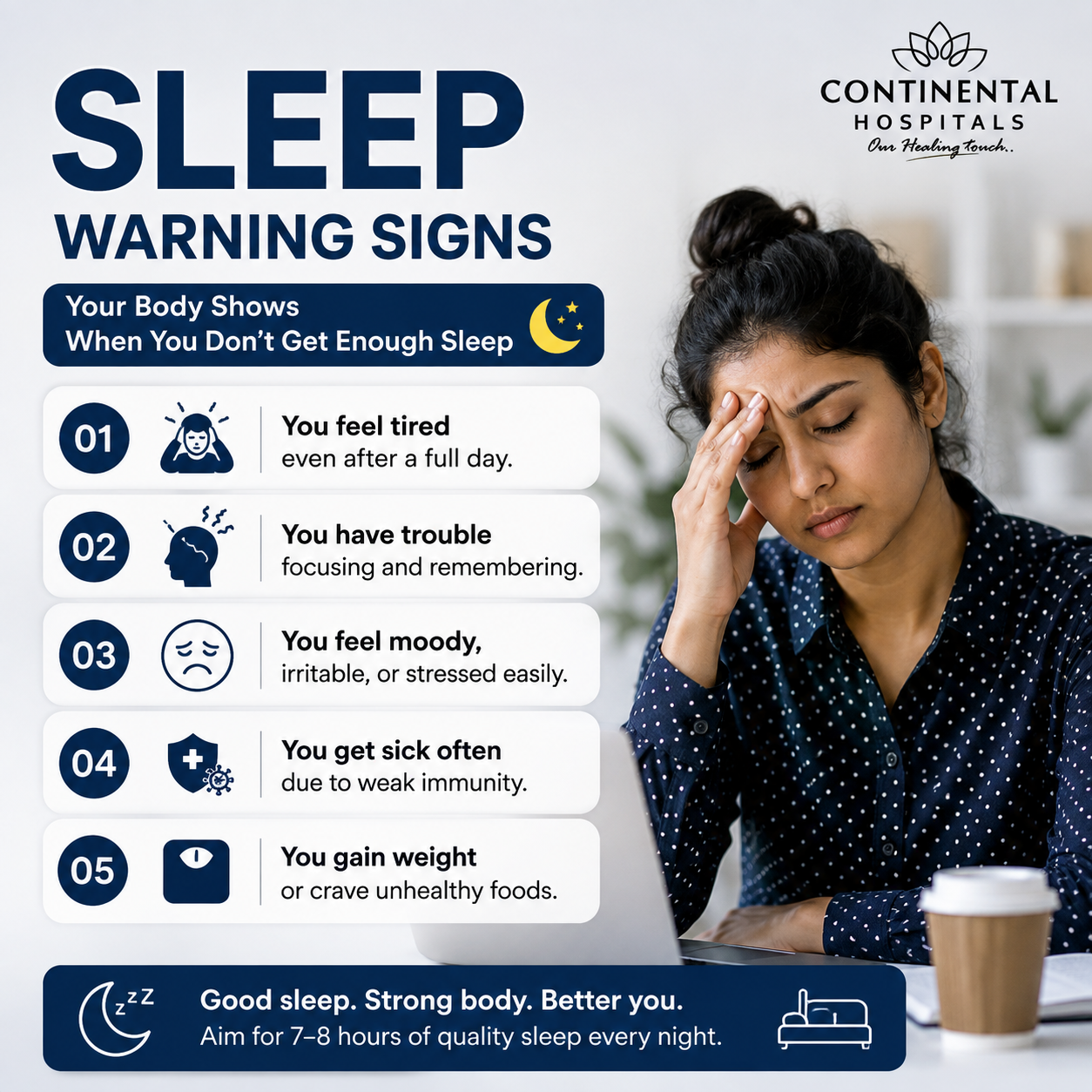
1. Do You Feel Tired Throughout the Day?
Constant tiredness is one of the first signs of sleep deficiency. Even after waking up, you may feel exhausted, lack energy, or struggle to stay awake during meetings, while driving, or during daily activities.
Common symptoms include:
- Feeling sleepy throughout the day
- Frequent yawning
- Low energy levels
- Difficulty staying focused
Are You Finding It Hard to Concentrate?
Your brain needs Enough Sleep to function properly. Poor sleep reduces attention, memory, and decision making skills.
Signs include:

- Forgetting simple tasks
- Difficulty concentrating
- Slower thinking
- Poor work performance
These are common insomnia symptoms that should not be ignored.
Do You Get Irritated Easily?
Mood changes are closely linked to poor sleep quality. People who do not get enough sleep often become emotionally sensitive and react more strongly to everyday situations.
You may notice:
- Increased irritability
- Anxiety
- Mood swings
- Feeling overwhelmed
Improving your sleep hygiene can significantly improve emotional well-being.
Are You Falling Sick More Often?
Your immune system becomes weaker without enough sleep. Sleep helps your body produce infection-fighting cells.
Warning signs include:
- Frequent colds
- Slow recovery from illness
- Increased infections
- Low immunity
Good sleep health supports a stronger immune system.
Are You Gaining Weight Without Any Reason?
Poor sleep can affect hormones that control hunger and fullness. As a result, you may feel hungry more often and crave sugary or unhealthy foods.
Sleep problems can lead to the following:
- Increased appetite
- Late-night snacking
- Weight gain
- Reduced metabolism
Getting enough sleep helps maintain a healthy weight.
Is Your Skin Looking Dull?
Your skin repairs itself while you sleep. Without enough sleep, your skin may begin showing visible signs of fatigue.
Common changes include:
- Dark circles
- Puffy eyes
- Dry skin
- Early wrinkles
- Loss of natural glow
Healthy sleep supports healthy skin.
Are You Having Frequent Headaches?
Many people experience headaches after poor sleep. Lack of enough sleep increases muscle tension and affects brain function, making headaches more common.
If headaches occur frequently along with sleep problems, medical evaluation may be necessary.
Does Your Heart Feel the Effects?
Long-term sleep deficiency can increase the risk of serious health conditions.
Poor sleep may contribute to:
- High blood pressure
- Heart disease
- Stroke
- Diabetes
Protecting your sleep health is also important for protecting your heart.
Could Poor Sleep Affect Your Mental Health?
Yes. There is a strong connection between sleep and mental health.
People with Sleep Disorders often experience the following:
- Depression
- Anxiety
- Stress
- Difficulty managing emotions
Getting enough sleep helps your brain regulate emotions more effectively.
What Causes Poor Sleep Quality?
Many factors can affect your ability to get enough sleep.
Some common causes include:
- Excessive screen time before bed
- Stress and anxiety
- Irregular sleep schedule
- Excess caffeine intake
- Medical conditions
- Certain medications
- Untreated Sleep Disorders
Identifying the cause is the first step toward better sleep.
How Can You Improve Healthy Sleep Habits?
Simple lifestyle changes can improve your sleep significantly.
Follow these healthy sleep habits:
- Go to bed and wake up at the same time every day.
- Keep your bedroom dark, quiet, and comfortable.
- Avoid heavy meals before bedtime.
- Limit caffeine in the evening.
- Reduce screen time before sleeping.
- Exercise regularly during the day.
- Practice relaxation techniques before bed.
- Follow good sleep hygiene every night.
Small daily improvements often lead to better long-term sleep health.
When Should You See a Doctor?
You should consult a doctor if you experience:
- Difficulty sleeping for several weeks
- Loud snoring with breathing pauses
- Severe daytime sleepiness
- Frequent morning headaches
- Ongoing fatigue despite getting adequate rest
- Persistent Insomnia Symptoms
- Suspected Sleep Disorders
Early diagnosis helps prevent complications and improves quality of life.
Why Choose Continental Hospitals?
Continental Hospitals is recognized as one of the best hospitals in Hyderabad, offering comprehensive care for sleep-related health concerns through experienced physicians, pulmonologists, neurologists, ENT specialists, psychiatrists, and internal medicine experts. Our multidisciplinary team focuses on identifying the root cause of sleep problems and providing personalized treatment plans for better long-term sleep health.
Continental Hospitals is internationally accredited by JCI and nationally accredited by NABH and NABL, reflecting our commitment to patient safety, clinical excellence, and world-class healthcare standards. With advanced diagnostic facilities, modern infrastructure, experienced specialists, and patient-centered care, we help patients achieve healthier sleep and better overall wellness.
Conclusion
Your body constantly communicates with you, and poor sleep is one message you should never ignore. Feeling tired, struggling to concentrate, frequent illness, mood changes, headaches, or unexplained weight gain may all indicate that you are not getting enough sleep. Paying attention to these warning signs and following healthy sleep habits can improve your energy, mental clarity, immunity, and overall health.
If you continue to experience sleep disorders, poor sleep quality, insomnia symptoms, or other persistent sleep problems, do not delay seeking medical care.
If you are suffering from ongoing sleep deficiency, chronic insomnia, loud snoring, excessive daytime sleepiness, or other sleep-related concerns, consult our best pulmonologist in Hyderabad at Continental Hospitals. Early diagnosis and expert treatment can help restore healthy sleep patterns, improve your quality of life, and protect your long-term health. Schedule your consultation today and take the first step toward better sleep health.
Related Blogs: