• Share this:
post-title

Weekend sleep but still tired? Signs of Mental Exhaustion

Written by - Editorial Team
Medically Reviewed by - Dr Shwetha Purkanti

You’ve been looking forward to Friday for the whole week, and you’re certain that you’ll be getting ten solid hours of sleep coming up on Saturday and Sunday, which should reset your body. However, when Monday wakes up on the dot, you’re forcing yourself to hit the snooze and drag yourself out of bed, and you can’t help but think to yourself, I don’t know why I’m still so tired. Didn’t I just sleep like an old man on Sunday?

If you’re spending the weekend sleeping but still getting tired, then whatever’s making you so tired probably has nothing to do with your body but with your mind. While sleep does recharge your body, it can’t completely fix your mind if it’s otherwise exhausted.

When it takes more than a few nights of sleep to clear the fog of dullness from your mind, it indicates that your brain is exhausted, and that’s a classic sign of mental fatigue.

What Is Mental Exhaustion? Signs and Symptoms of Being Tired All The Time

It’s important to recognize the signs of mental exhaustion so you can fight back and get your batteries recharged. Mental fatigue’s symptoms usually develop gradually, and you will think you’re just having a few “off days” until the exhaustion takes over.

Here are the most common signs of emotional exhaustion and red flags in your thinking to keep an eye on:

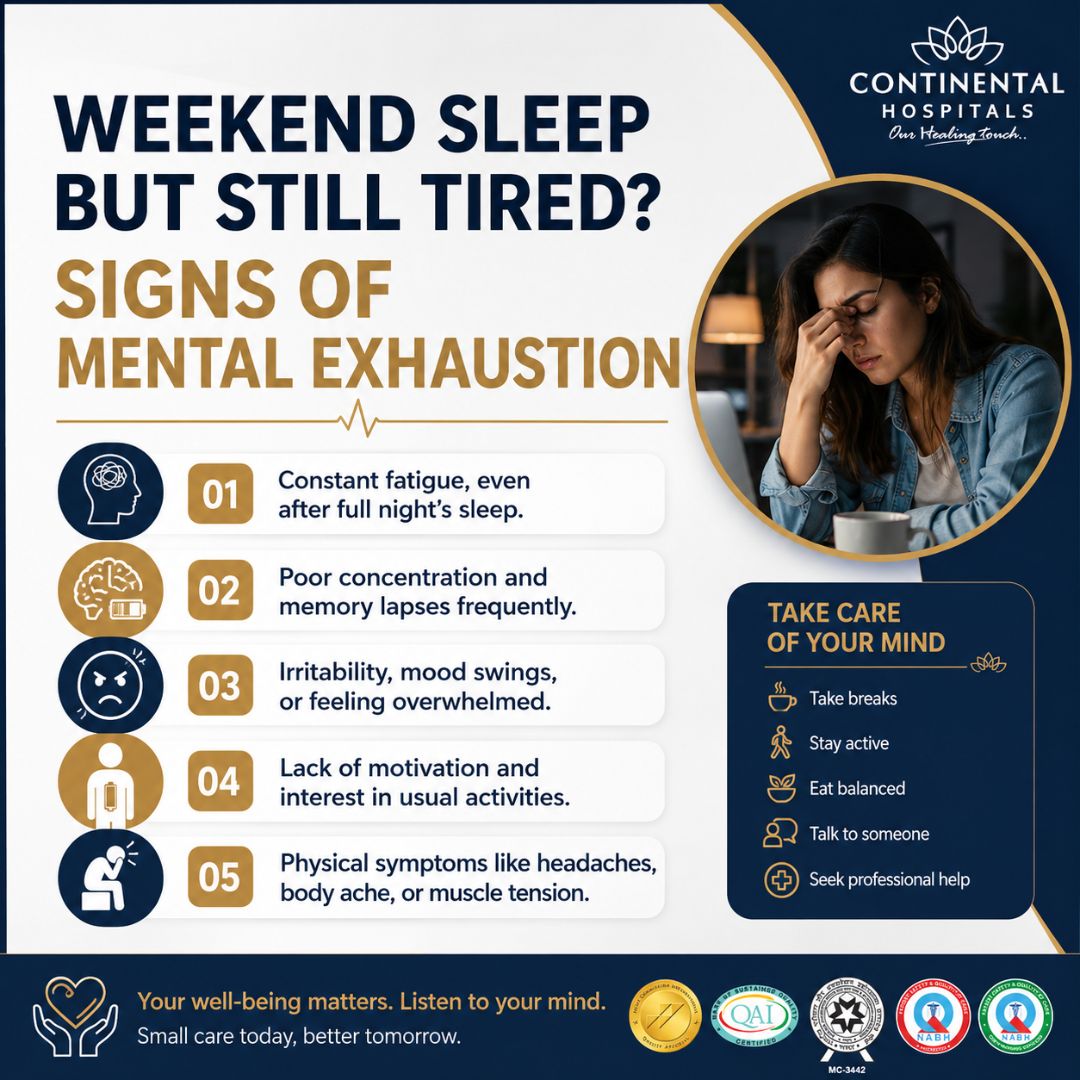
  • Feeling Forgetful and Experiencing Brain Fog: Your focus is slipping. You’re missing deadlines on Monday, and you keep forgetting where you put your keys. You’re struggling to find the right word in conversation.
  • Getting Irritated and Emotionally Distant: You’re getting a bit more impatient with family members or coworkers, and if you’re normally the life of the party, you don’t feel like chatting with anyone.
  • Feeling Unwell: You’re getting frequent tension headaches, muscle pain, and gastrointestinal upset that’s not improving with rest.
  • Feeling Anxious and Gripped by Overwhelm: The mere sight of your to-do list makes you feel foreboding even though everything on it is routine.

If persistent fatigue is affecting your daily life, it may be linked to stress, anxiety, depression, or other mental health concerns. Visit our Best Psychiatry Hospital in Hyderabad at Continental Hospitals for expert evaluation, personalized treatment, and comprehensive mental wellness care.

Why Am I So Tired All The Time Even After I Sleep?

If you find yourself worrying, why am I so tired all the time? It is usually the result of normal physical stressors vs active cognitive exertion. While you become relaxed after a good night's sleep, cognitive burnout will keep your nervous system overactive.

You will often experience both excess sleep and fatigue because your brain has high cortisol (stress hormone) levels and isn't allowing you to enter your deeper stages of sleep that are most restorative. You will lie very still, but your mind will still be racing over problems, and when you wake up, you will still feel exhausted.
Second Opinion

What Makes You Susceptible to Chronic Mental Fatigue?

Burnout doesn't happen in a day. This usually comes from a combination of heavy working loads and stress that goes unsensed or unmanaged.

What causes this extreme fatigue?

  • Adding Up to Overtime: You are in a high-pressure job, working long hours, or you don't have a good work-life balance.
  • Burned Out Caregiver: You are constantly dealing with other people's problems while you are neglecting your own physical or mental health.
  • Circumstances: You are going through a big change like changing jobs, moving or dealing with divorce or grief.

How Is Mental Burnout Treated?

How do I know I am burnt out?
There is no blood test for burnout. The first thing physicians do is look for known medical causes for sleepiness and fatigue, such as thyroid problems, anemia, or vitamin deficiencies, and try to eliminate them. They will then ask questions about your lifestyle, work, stressors, and emotions to identify chronic mental fatigue.

What are the clinical interventions?
The goal is to reduce the stress response of the nervous system. CBT is used to structure your reactions and change negative stress patterns. Counseling may be useful in learning new coping mechanisms. If the fatigue is related to anxiety or depression, therapy or medical management may be beneficial.

How do I avoid burnout and use my energy for good?

The best way to avoid mental exhaustion is to build some habits into your daily life before you experience a wall of stress. Here are some ideas:

  • Take Active Breaks: Enact activities that require no mental effort. Go for a walk in nature, listen to music, and practice mindfulness.
  • Reduce Digital Auto-Pilot: Put away your phone and laptop an hour before bedtime.
  • Say No: Protect your calendar from the endless list of tasks and obligations you do not need to accept.
  • Eat Omega 3 Rich Foods: Try to include foods with antioxidants and Omega 3's in your diet to protect your brain and reduce inflammation.

When to Call the Doctor?

You always have a tiring day. You should wait to call a doctor if you have tiredness for longer than a few weeks. If you are sad, anxious and hopeless and are not able to perform your regular daily activities, then it is important to talk with your doctor.

Why Should We Choose Continental Hospitals for Mental Fatigue Treatment?

At Continental Hospitals, we believe that the health of your mind is as important as that of your body. We provide you with a pathway for complete assessment and care to help you recover from burnout and chronic fatigue.

Need an Appointment?

We are unique in that we have:

  • Expert specialists who work towards unravelling the intricacies associated with stress and fatigue
  • Invention-powered diagnostic screenings to rule out the physical causes of your tiredness
  • Multidisciplinary care, by experts in internal medicine, psychiatry and lifestyle counseling
  • Personalized care plans designed uniquely to cater to your lifestyle and the stressors in your life
  • JCI Accreditation and NABH Accreditation, so you get the highest levels of safety protocols supported by international and national bodies
  • First-class infrastructure that is soothing and healing
  • 24/7 emergency & critical care services, which signifies complete medical security
  • High standards of patient care with an emphasis on empathy, dignity and recovery

Conclusion

Waking up still exhausted after getting a full weekend of sleep is a reminder from our brain that it is not a simple problem of a closed pair of eyes, it is more an issue of a need for relief from stress. By following the right steps to identify mental exhaustion early and taking actionable steps to simplify your lifestyle, you can overcome chronic exhaustion and regain your long-lost vigor and zest.

If you have any questions or concerns relating to fatigue, you should reach out to our best psychiatrist in Hyderabad at Continental Hospitals. Come to Continental Hospitals for a thorough diagnosis, advanced treatment, and overall care.

Related Blog Topics:

  1. How Late-Night Dinner Affects Your Sleep Quality
  2. Is Lack of Sleep Causing Dull Skin?

Frequently Asked Questions

Feeling tired despite getting extra sleep over the weekend may be a sign of mental exhaustion rather than physical fatigue. Mental exhaustion occurs when the brain is overworked due to prolonged stress, emotional strain, excessive workload, or lack of relaxation. Even if you sleep for many hours, your mind may not fully recover if stress levels remain high. Other factors such as poor sleep quality, anxiety, depression, burnout, or irregular sleep schedules can also contribute. People experiencing mental exhaustion often wake up feeling unrefreshed, lack motivation, and struggle to focus. Taking breaks, managing stress, maintaining a consistent sleep routine, and prioritizing mental wellness can help improve energy levels. If symptoms persist, consulting a mental health professional may be beneficial.
Mental exhaustion can affect emotional, cognitive, and physical well-being. Common signs include constant fatigue, difficulty concentrating, forgetfulness, irritability, lack of motivation, and reduced productivity. Many individuals experience feelings of overwhelm, emotional numbness, or increased sensitivity to stress. Physical symptoms such as headaches, muscle tension, sleep disturbances, and appetite changes may also occur. People with mental exhaustion often find it difficult to complete routine tasks and may lose interest in activities they once enjoyed. Social withdrawal and feelings of helplessness can also develop. Recognizing these symptoms early is important because prolonged mental exhaustion may increase the risk of anxiety, depression, and burnout. Seeking support and adopting healthy coping strategies can help restore mental energy.
Normal tiredness usually improves after adequate rest, quality sleep, or a short break. Mental exhaustion, however, tends to persist even after sleeping or taking time off. It is often caused by chronic stress, emotional strain, excessive responsibilities, or prolonged cognitive effort. People experiencing mental exhaustion may feel drained, detached, and unable to focus despite being physically rested. They may struggle with decision-making, memory, and motivation. Emotional symptoms such as irritability, frustration, and anxiety are also common. Unlike ordinary fatigue, mental exhaustion can significantly affect work performance, relationships, and overall quality of life. Identifying the underlying causes and addressing stressors is essential for recovery and long-term mental well-being.
Yes, chronic stress is one of the leading causes of mental exhaustion and ongoing fatigue. When the body remains in a prolonged state of stress, stress hormones such as cortisol stay elevated, placing continuous demands on the brain and nervous system. Over time, this can reduce mental resilience and make even simple tasks feel overwhelming. Individuals may experience poor concentration, mood changes, sleep problems, and persistent tiredness. Chronic stress can also impact physical health, contributing to headaches, digestive issues, and weakened immunity. Without proper stress management, mental exhaustion may worsen and affect daily functioning. Practicing relaxation techniques, maintaining work-life balance, exercising regularly, and seeking professional support can help reduce stress and restore energy.
Mental exhaustion can significantly impact sleep quality even if a person spends enough time in bed. Stress, racing thoughts, anxiety, and emotional overload can interfere with the body's natural sleep cycle. Individuals may have difficulty falling asleep, staying asleep, or achieving deep restorative sleep. As a result, they may wake up feeling tired and unrefreshed despite sleeping for several hours. Poor sleep quality can further worsen mental fatigue, creating a cycle of exhaustion and reduced functioning. Establishing healthy sleep habits, limiting screen time before bed, and managing stress effectively can improve sleep quality. Persistent sleep disturbances should be evaluated by a healthcare professional to identify any underlying issues.
Professional help should be considered when symptoms of mental exhaustion persist for several weeks, interfere with daily life, or continue despite adequate rest and self-care. Warning signs include severe fatigue, difficulty performing routine tasks, loss of interest in activities, frequent emotional distress, sleep disturbances, and ongoing feelings of hopelessness. Mental exhaustion can sometimes be linked to anxiety disorders, depression, or burnout, which may require specialized care. A mental health professional can assess symptoms, identify contributing factors, and recommend appropriate treatment strategies. Early intervention can prevent symptoms from worsening and improve overall well-being. Seeking support is an important step toward recovery and maintaining long-term mental health.
Recovery from mental exhaustion involves addressing both physical and emotional needs. Maintaining a regular sleep schedule, engaging in physical activity, and eating a balanced diet can support overall recovery. Taking breaks throughout the day and setting realistic boundaries at work and home can help reduce mental strain. Mindfulness practices such as meditation, deep breathing, and yoga may improve stress management and emotional resilience. Spending time with supportive friends and family can also have positive effects on mental well-being. Limiting excessive screen time and creating opportunities for relaxation are equally important. Recovery takes time, and consistent self-care habits are often necessary to restore energy and mental clarity.
Yes, untreated mental exhaustion can progress to burnout, a state of severe emotional, physical, and mental depletion. Burnout often develops after prolonged exposure to high levels of stress without adequate recovery. Symptoms may include chronic fatigue, emotional detachment, reduced performance, cynicism, and a sense of helplessness. Individuals may struggle to cope with everyday responsibilities and experience significant declines in productivity and motivation. Burnout can affect personal relationships, workplace performance, and overall health. Recognizing early signs of mental exhaustion and taking proactive steps to manage stress can help prevent burnout. Professional guidance, lifestyle changes, and emotional support are often effective in promoting recovery and resilience.
Disclaimer: The information provided in this blog is intended for general knowledge and informational purposes only, and does not constitute medical advice. Always consult with a qualified healthcare professional for any medical concerns or before making any decisions about your health.

Get in Touch With Us

Whether you are from India or abroad, we are here to help you with your medical queries. Please fill out the form below and our team will connect with you shortly.

  • ✔ Quick response from our medical experts
  • ✔ Secure data handling & privacy
  • ✔ Easy upload for reports & documents
0 / 100
Checkboxes Section


Chat with our medical experts on WhatsApp for quick assistance and hassle-free appointment booking

Recent Posts
Language Based Image
0 / 100