.webp)


Healthy, glowing skin is often seen as a sign of good health. While skincare products and treatments play a role, one of the most important factors affecting skin appearance is sleep. Many people notice that their face looks dull, tired, dry, or uneven after nights of poor sleep. This is not a coincidence. Lack of sleep and sleep deprivation have direct effects on skin health and overall wellbeing. This article explains how not getting enough sleep causes dull skin, the science behind it, symptoms to watch for, and practical ways to restore skin health.
If you have persistent sleep deprivation, dull skin, or fatigue, visit our Sleep Medicine Specilaity at Continental Hospitals for expert care.
Why Sleep Is Essential for Skin Health?
Sleep is the body’s natural repair time. During deep sleep, the body focuses on cell regeneration, tissue repair, and hormone balance. Skin cells renew faster at night than during the day. Blood flow to the skin increases, helping deliver oxygen and nutrients that maintain a healthy glow.
When sleep is disrupted or insufficient, these repair processes slow down. Over time, this leads to visible skin changes such as dullness, dryness, fine lines, and uneven tone.
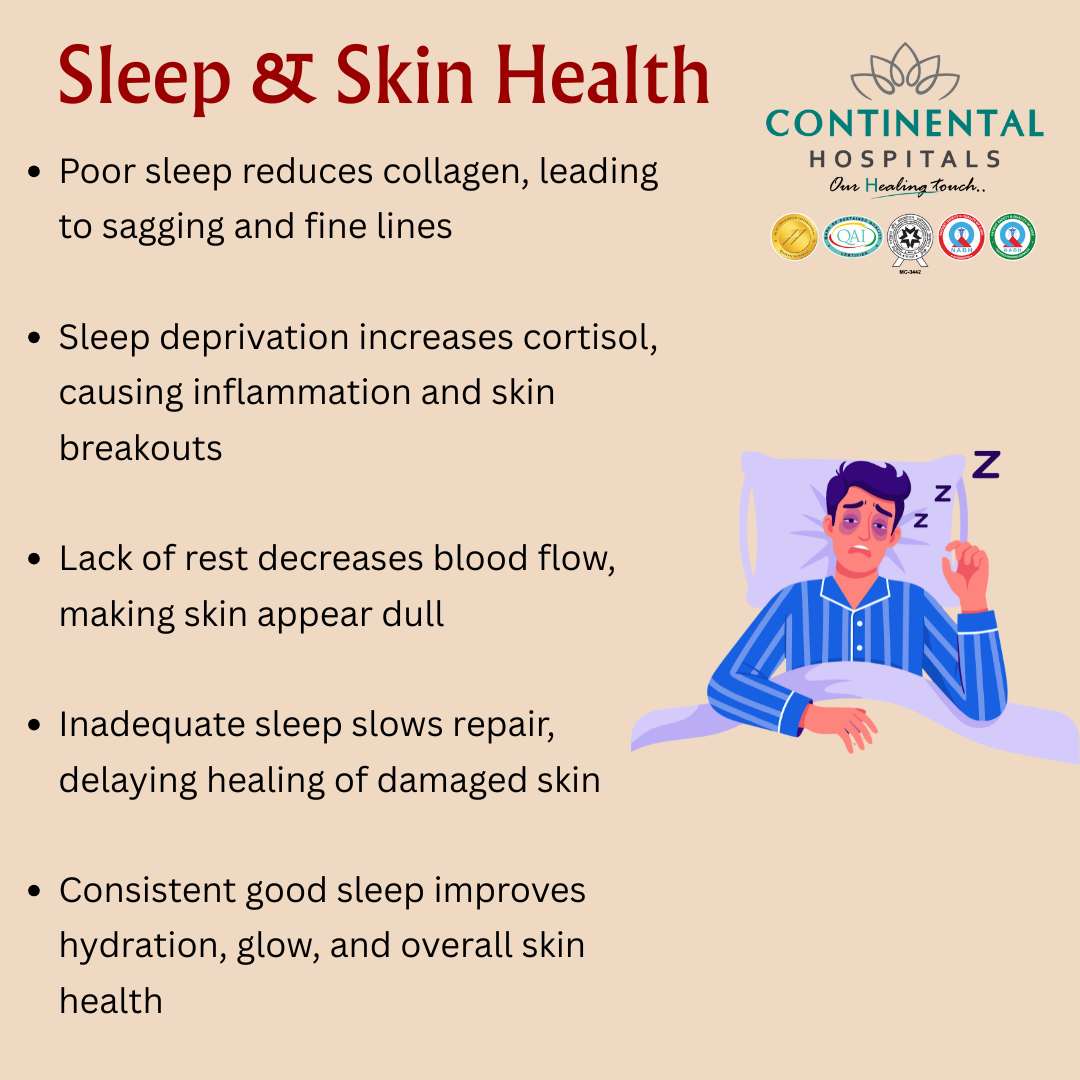
What Happens to Skin When You Don’t Sleep?
Not getting enough sleep affects the skin in several ways:
- Reduced cell renewal makes skin look tired and lifeless
- Slower repair of daily damage caused by pollution and sun exposure
- Imbalanced hormones that affect oil production and hydration
- Poor circulation leading to pale or uneven skin tone
These effects add up, making the face appear dull and fatigued even with good skincare routines.
Lack of Sleep Effects on Skin
Reduced Collagen Production
Collagen is a protein that keeps skin firm, smooth, and elastic. During sleep, collagen production increases. Sleep deprivation reduces this process, leading to fine lines, sagging, and loss of glow.

Increased Cortisol Levels
Poor sleep raises cortisol, the stress hormone. High cortisol breaks down collagen and increases inflammation. This contributes to dull skin, puffiness, and acne flare-ups.
Dehydrated and Dry Skin
Sleep helps regulate hydration levels. Lack of sleep weakens the skin barrier, causing moisture loss. This leads to dry dull skin and rough texture.
Poor Blood Circulation
During quality sleep, blood flow to the skin improves. Sleep deprivation reduces circulation, making skin look pale, uneven, or grey.
Common Sleep Deprivation Symptoms That Affect Skin
Sleep deprivation symptoms often appear first on the face. These include:
- Dull, tired-looking skin
- Dark circles and puffiness under the eyes
- Dry patches and flaky skin
- Increased breakouts or acne
- Uneven skin tone and texture
If these signs persist, they may indicate chronic sleep deprivation rather than simple fatigue.
What Causes Lack of Sleep?
Understanding the causes of lack of sleep helps address the root problem. Common reasons include:
- Stress and anxiety
- Irregular sleep schedules
- Excessive screen time before bed
- Caffeine or heavy meals late at night
- Medical conditions such as insomnia or hormonal imbalance
Identifying and correcting these factors is essential for both sleep quality and skin health.
Not Getting Enough Sleep and Skin Aging
Chronic lack of sleep accelerates visible aging. Studies show that people who sleep poorly develop wrinkles faster and have reduced skin elasticity. Over time, the skin loses its ability to repair itself efficiently, leading to long-term dullness and premature aging.
Sleep deprivation also reduces the effectiveness of skincare products. Even the best creams and treatments work less effectively if the skin is not given time to regenerate.
How Sleep Affects Skincare Results
Many people wonder why their skincare routine does not deliver results. One key reason may be sleep deprivation.
During sleep:
Skin absorbs products more effectively
- Repair enzymes are active
- Inflammation reduces naturally
Without proper sleep, skincare for dull skin becomes less effective, and visible improvements take longer to appear.
Signs Your Face Looks Dull and Tired Due to Sleep Loss
You may notice:
- Makeup does not sit well on the skin
- Skin looks lifeless even after cleansing
- Increased dryness despite moisturising
- Persistent under-eye darkness
These signs often improve significantly once sleep patterns are corrected.
How Much Sleep Does Skin Need?
Most adults need consistent, quality sleep every night for skin repair. It is not just about duration but also sleep quality. Deep, uninterrupted sleep supports hormone balance, cell renewal, and hydration.
Irregular sleep schedules, even with enough hours, can still lead to dull skin if the body’s internal clock is disturbed.
Tips to Improve Sleep for Better Skin
Improving sleep can restore skin glow naturally. Consider the following:
- Maintain a consistent sleep and wake time
- Limit screen exposure before bedtime
- Create a calm sleeping environment
- Avoid caffeine late in the day
- Practice relaxation techniques before sleep
Healthy sleep habits benefit both skin and overall health.
Skincare Tips for Dull Skin Caused by Sleep Deprivation
While improving sleep is essential, supportive skincare helps recovery:
- Use gentle cleansers to avoid irritation
- Apply hydrating moisturisers before bedtime
- Include antioxidants in skincare routines
- Protect skin from sun exposure during the day
These steps support skin repair but cannot replace the benefits of proper sleep.
When to See a Doctor?
If lack of sleep is persistent and accompanied by ongoing fatigue, mood changes, or skin issues that do not improve, medical evaluation is important. Chronic sleep deprivation may be linked to hormonal disorders, stress-related conditions, or underlying health problems.
Why Choose Continental Hospitals?
Continental Hospitals is recognized as one of the best hospitals in Hyderabad for comprehensive health care. The hospital is NABH and JCI accredited, ensuring high standards of patient safety, clinical quality, and advanced care.
Reasons to choose Continental Hospitals include:
- Experienced physicians managing sleep-related and metabolic concerns
- Integrated care involving internal medicine, dermatology, and lifestyle guidance
- Advanced diagnostic facilities for accurate evaluation
- Patient-focused approach aimed at long-term wellbeing
Expert care helps address the root causes of sleep deprivation and its impact on skin and overall health.
If you suffer from persistent sleep deprivation, dull skin, fatigue, or related health concerns, consult an experienced Internal Medicine Doctor or Sleep Specialist at Continental Hospitals. Early evaluation and expert guidance can help restore healthy sleep and improve skin appearance.
Conclusion
Lack of sleep is a major but often overlooked cause of dull, tired-looking skin. Sleep deprivation affects collagen production, hydration, circulation, and hormone balance, all of which are essential for healthy skin. While skincare routines can support recovery, quality sleep remains the foundation of glowing skin.
If you suffer from persistent sleep deprivation, dull skin, fatigue, or related health concerns, consult our top Sleep Specialist at Continental Hospitals. Early evaluation and expert guidance can help restore healthy sleep and improve skin appearance.
Related Blog Topics