post-title

Brain Rot: Causes, Symptoms, and How to Prevent It Naturally

Written by - Editorial Team
Medically Reviewed by - Dr Rahul Konduri

Brain rot is a modern term used to describe mental fatigue, poor focus, slow thinking, and reduced emotional clarity caused by unhealthy lifestyle patterns. It is not a medical diagnosis, but doctors increasingly see patients with similar complaints such as constant mental fog, lack of motivation, forgetfulness, and emotional exhaustion. In today’s digital-heavy routines, brain health is being affected silently, just like digestive problems after eating are often ignored until they worsen.

What Is Brain Rot?

Brain rot refers to a gradual decline in mental sharpness caused by overstimulation, poor sleep, stress, unhealthy diet, and lack of mental rest. It is similar to how indigestion after eating or upper stomach pain after meals develops slowly when digestion is repeatedly stressed.

Your brain, like your digestive system, needs balance. When overloaded daily without recovery, it starts showing warning signs.

Visit our best neuro doctor hyderabad at Continental Hospitals if you or your loved ones are experiencing mental fog, poor concentration, sleep disturbances, or emotional exhaustion.
What are the common causes of brain rot?

Brain rot does not happen overnight. It builds up due to repeated unhealthy habits.

1. Excessive Screen Time
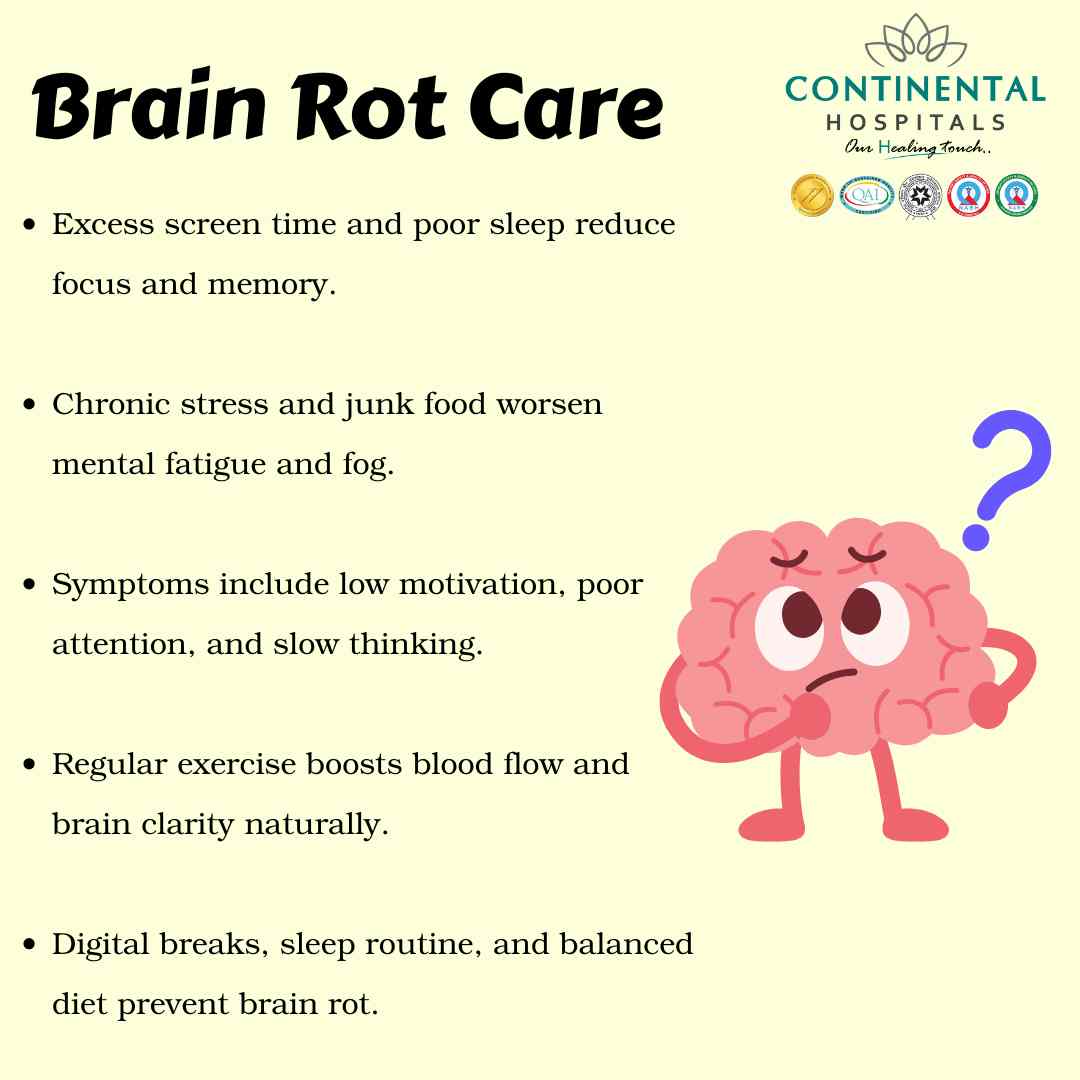
Long hours on phones, laptops, and social media overload the brain with constant information. This reduces attention span and memory retention.

2. Poor Sleep Quality
Inadequate or irregular sleep prevents the brain from repairing itself. Just as gastritis symptoms worsen without dietary control, brain health worsens without proper rest.

3. Chronic Stress
Constant stress keeps the brain in survival mode. Over time, this leads to mental exhaustion, irritability, and poor decision-making.

Second Opinion

4. Unhealthy Diet
Highly processed foods, sugar spikes, and irregular meals affect brain function. Similar to acidity stomach pain caused by poor food choices, the brain also reacts to nutritional imbalance.

5. Lack of Physical Activity
Reduced blood flow and oxygen delivery to the brain due to inactivity can cause sluggish thinking and low energy.

6. Mental Overload Without Breaks
Multitasking without rest weakens concentration and long-term memory.

Mental fog or sleep issues? Consult our top Neurologist at Continental Hospitals.

What are the symptoms of brain rot you should not ignore?

Brain rot symptoms can look mild at first but may affect daily life if ignored.

Common signs include:

  • Difficulty focusing or completing tasks
  • Forgetfulness and mental fog
  • Low motivation and constant tiredness
  • Mood swings, anxiety, or irritability
  • Poor sleep despite feeling exhausted
  • Reduced creativity and slow thinking

Many patients visiting hospitals for unrelated issues such as stomach pain after meals or epigastric pain causes also report mental fatigue, showing how brain and gut health are closely connected.

Need an Appointment?

What is the brain and gut connection?

The brain and digestive system communicate constantly through the gut-brain axis. Conditions like indigestion after eating, gallbladder pain after food, or persistent abdominal pain remedies not working can indirectly affect mental clarity.

Poor digestion reduces nutrient absorption, which impacts brain function. That is why doctors often evaluate both digestive and neurological health together.

How can I prevent brain rot naturally?

Preventing brain rot is possible with consistent lifestyle changes. Small daily habits can protect long-term brain health.

1. Improve Sleep Hygiene

  • Maintain fixed sleep and wake times
  • Avoid screens at least one hour before bed
  • Keep the bedroom dark and quiet

Sleep is as essential to the brain as proper digestion is to prevent gastritis symptoms.

2. Eat Brain-Friendly Foods

  • Fresh fruits and vegetables
  • Whole grains and nuts
  • Adequate protein and hydration

Avoid heavy, oily meals late at night, as they can cause stomach pain when to see doctor situations and also disturb sleep.

3. Reduce Digital Overload

  • Take screen breaks every 60 to 90 minutes
  • Limit unnecessary notifications
  • Avoid constant social media scrolling

4. Move Your Body Daily

  • Walking, yoga, or light exercise improves blood flow to the brain
  • Physical movement also reduces stress hormones

5. Practice Mental Rest

  • Deep breathing
  • Mindfulness
  • Short breaks between work tasks

Just as abdominal pain remedies require rest for healing, the brain also needs quiet time.

6. Stay Socially Connected

Healthy conversations and real-world interactions keep the brain active and emotionally balanced.

What is brain rot in working professionals and students?

Brain rot is increasingly common among:

  • IT professionals with long screen hours
  • Students under constant academic pressure
  • Individuals with irregular sleep and meals

Many patients report digestive problems after eating alongside mental fatigue, showing lifestyle imbalance affects multiple systems together.

When Should You See a Doctor?

Do not ignore symptoms if they persist or worsen.

  • Seek medical advice if you experience:
  • Mental fog lasting more than a few weeks
  • Memory problems affecting work or studies
  • Anxiety, low mood, or sleep disorders
  • Headaches along with poor concentration
  • Digestive complaints like upper stomach pain after eating combined with mental fatigue

Early evaluation helps prevent long-term complications.

How Doctors Evaluate Brain Health?

Doctors may assess:

  • Sleep patterns
  • Stress levels
  • Nutritional status
  • Hormonal balance
  • Neurological function

If required, they may also check digestive health, as issues like acidity stomach pain and gastritis symptoms can indirectly impact brain function.

Why Choose Continental Hospitals?

Continental Hospitals is recognized as one of the best hospitals in Hyderabad, offering integrated care across specialties.

What makes Continental Hospitals trusted:

  • Expert Neurologists, Physicians, and Mental Health Specialists
  • Advanced diagnostic facilities
  • Multidisciplinary approach connecting brain and digestive health
  • International quality and safety accreditations
  • Patient-focused, evidence-based care

The hospital follows global healthcare standards and focuses on early diagnosis, prevention, and long-term wellness.

Conclusion

Brain rot is a warning sign of modern lifestyle overload. It affects focus, memory, mood, and overall productivity. Just like stomach pain after meals or indigestion after eating should not be ignored, persistent mental fatigue also deserves attention.

Natural prevention through better sleep, balanced nutrition, stress management, and reduced screen exposure can protect brain health. However, ongoing symptoms need professional evaluation.

If you or your loved ones are experiencing mental fog, poor concentration, sleep problems, or emotional exhaustion, consult our Best Neurologist in Hyderabad at Continental Hospitals. Early medical guidance can help restore mental clarity, improve daily functioning, and prevent long-term brain health issues.

Frequently Asked Questions

Brain rot is an informal term used to describe mental fatigue, reduced attention span, poor concentration, and cognitive overload caused by excessive exposure to low-quality digital content and prolonged screen time. Although it is not a recognized medical diagnosis, the symptoms are real and can affect productivity, memory, learning, and emotional well-being. Constant scrolling through social media, consuming endless short videos, multitasking across multiple devices, and insufficient mental rest may contribute to this condition. People often experience difficulty focusing on meaningful tasks, forgetfulness, and reduced motivation. Brain rot can affect children, teenagers, and adults alike. While technology itself is not harmful, unhealthy digital habits can interfere with brain function over time. Recognizing the early signs and adopting healthier lifestyle practices can help restore mental clarity and improve overall cognitive health.
Brain rot may present with a variety of mental and emotional symptoms that gradually affect daily life. Common signs include difficulty concentrating, poor memory, mental fog, slower thinking, reduced attention span, lack of motivation, and constant distraction. Many people also experience trouble completing tasks, increased procrastination, forgetfulness, and decreased creativity. Excessive screen time may also contribute to sleep disturbances, eye strain, irritability, and emotional exhaustion. Some individuals feel overwhelmed by simple decisions or struggle to process new information efficiently. These symptoms can interfere with work, education, and personal relationships. If the symptoms persist despite lifestyle changes or significantly affect daily functioning, it is important to consult a neurologist or mental health professional for a proper evaluation.
Brain rot is often linked to a combination of lifestyle habits rather than a single medical condition. Excessive social media use, continuous exposure to short-form digital content, prolonged screen time, poor sleep quality, chronic stress, unhealthy eating habits, dehydration, and lack of physical activity are common contributing factors. Multitasking throughout the day can overload the brain and reduce focus. Nutritional deficiencies, anxiety, depression, and certain medical conditions may also contribute to mental fog and reduced cognitive performance. Spending little time outdoors or avoiding mentally stimulating activities can further impact brain health. Identifying the underlying cause is essential because treatment varies depending on the contributing factors. A healthy routine can significantly improve concentration and cognitive function.
Excessive social media use does not permanently damage the brain in most healthy individuals, but it can negatively affect attention, focus, sleep quality, and emotional well-being. Constant exposure to notifications, rapid content switching, and endless scrolling may overstimulate the brain and reduce the ability to concentrate on longer tasks. Blue light exposure before bedtime can disrupt sleep, which is essential for memory consolidation and brain recovery. Over time, unhealthy digital habits may contribute to mental fatigue, stress, and cognitive overload. Limiting recreational screen time, taking regular digital breaks, and engaging in offline activities such as reading, exercise, or hobbies can help protect brain health and improve overall mental performance.
Preventing brain rot naturally begins with developing healthy daily habits that support brain function. Aim for seven to nine hours of quality sleep each night to allow the brain to recover. Limit unnecessary screen time and schedule regular digital detox periods during the day. Eat a balanced diet rich in fruits, vegetables, nuts, whole grains, healthy fats, and lean proteins that nourish the brain. Stay physically active with regular exercise to improve blood flow and cognitive performance. Practice mindfulness, meditation, or deep breathing to reduce stress. Stay hydrated, spend time outdoors, and challenge your brain with reading, puzzles, learning new skills, or meaningful conversations. Maintaining these habits consistently can improve focus, memory, and overall cognitive health.
Occasional mental fatigue is common, especially during stressful periods, but persistent or worsening cognitive symptoms should not be ignored. You should consult a neurologist if brain fog lasts for several weeks, affects work or daily activities, or is accompanied by memory loss, confusion, severe headaches, dizziness, weakness, speech difficulties, or changes in behavior. Sudden cognitive changes may indicate an underlying neurological condition that requires immediate medical evaluation. A neurologist can assess your symptoms, perform neurological examinations, and recommend appropriate investigations if necessary. Early diagnosis helps identify treatable causes and prevents complications. Seeking timely medical advice ensures you receive the right treatment and guidance for maintaining long-term brain health.
A nutrient-rich diet plays an important role in supporting healthy brain function and improving memory. Foods rich in omega-3 fatty acids, such as fatty fish, walnuts, and flaxseeds, support brain cell health. Leafy green vegetables provide vitamins and antioxidants that protect brain tissue. Berries contain compounds that may improve memory and reduce oxidative stress. Eggs supply choline, an important nutrient for cognitive function, while whole grains provide steady energy for the brain. Nuts, seeds, yogurt, beans, and colorful fruits also contribute essential nutrients. Staying hydrated is equally important because even mild dehydration can affect concentration. Combining a healthy diet with regular exercise and sufficient sleep offers the greatest benefits for long-term cognitive health.
In many cases, symptoms commonly associated with brain rot improve significantly after adopting healthier lifestyle habits. Reducing screen time, getting adequate sleep, exercising regularly, eating a nutritious diet, managing stress, and engaging in mentally stimulating activities can help restore concentration, memory, and mental clarity. Establishing a structured daily routine and taking regular breaks from digital devices also support brain recovery. However, if cognitive symptoms persist despite these changes, it is important to seek medical evaluation because they may be caused by an underlying neurological, psychological, or metabolic condition. Early intervention improves treatment outcomes and helps prevent further cognitive decline. Maintaining healthy habits consistently is the best approach for protecting brain health over the long term.
Disclaimer: The information provided in this blog is intended for general knowledge and informational purposes only, and does not constitute medical advice. Always consult with a qualified healthcare professional for any medical concerns or before making any decisions about your health.

Get in Touch With Us

Whether you are from India or abroad, we are here to help you with your medical queries. Please fill out the form below and our team will connect with you shortly.

  • ✔ Quick response from our medical experts
  • ✔ Secure data handling & privacy
  • ✔ Easy upload for reports & documents
banner_image

Chat with our medical experts on WhatsApp for quick assistance and hassle-free appointment booking

Recent Posts