post-title

Can Too Much Cheese Raise Your Colon Cancer Risk?

Written by - Editorial Team
Medically Reviewed by - Dr S K Gupta

Cheese is a favorite comfort food for many. It’s rich, creamy, and packed with flavor. From pizzas and sandwiches to pasta and snacks, cheese makes its way into a wide variety of dishes. But while enjoying cheese in moderation can be part of a balanced diet, consuming too much may raise some health concerns — especially when it comes to colon cancer.

Let’s explore how cheese and other dairy products may influence your colon health, the science behind the connection, and how you can protect your digestive system without giving up the foods you love.

Understanding Colon Cancer?

Colon cancer, also known as colorectal cancer, develops in the large intestine (colon) or the rectum. It often begins as small, noncancerous growths called polyps. Over time, some of these polyps can turn into cancer. Colon cancer is one of the most common types of cancer globally, and diet plays a big role in its development.

While several risk factors like genetics, age, and lifestyle contribute to colon cancer, diet is one of the few you can control. This includes not just what you eat, but how much and how often.

Concerned about your colon health? Visit the Best Cancer Specialist in Hyderabad at Continental Hospitals for expert evaluation, diagnosis, and advanced cancer care from our experienced specialists.
Is Cheese Linked to Colon Cancer?

Research on dairy and colon cancer has shown mixed results. Some studies suggest that cheese and other full-fat dairy products may increase cancer risk, while others say dairy could offer protective benefits due to calcium. The confusion comes down to a few key points:

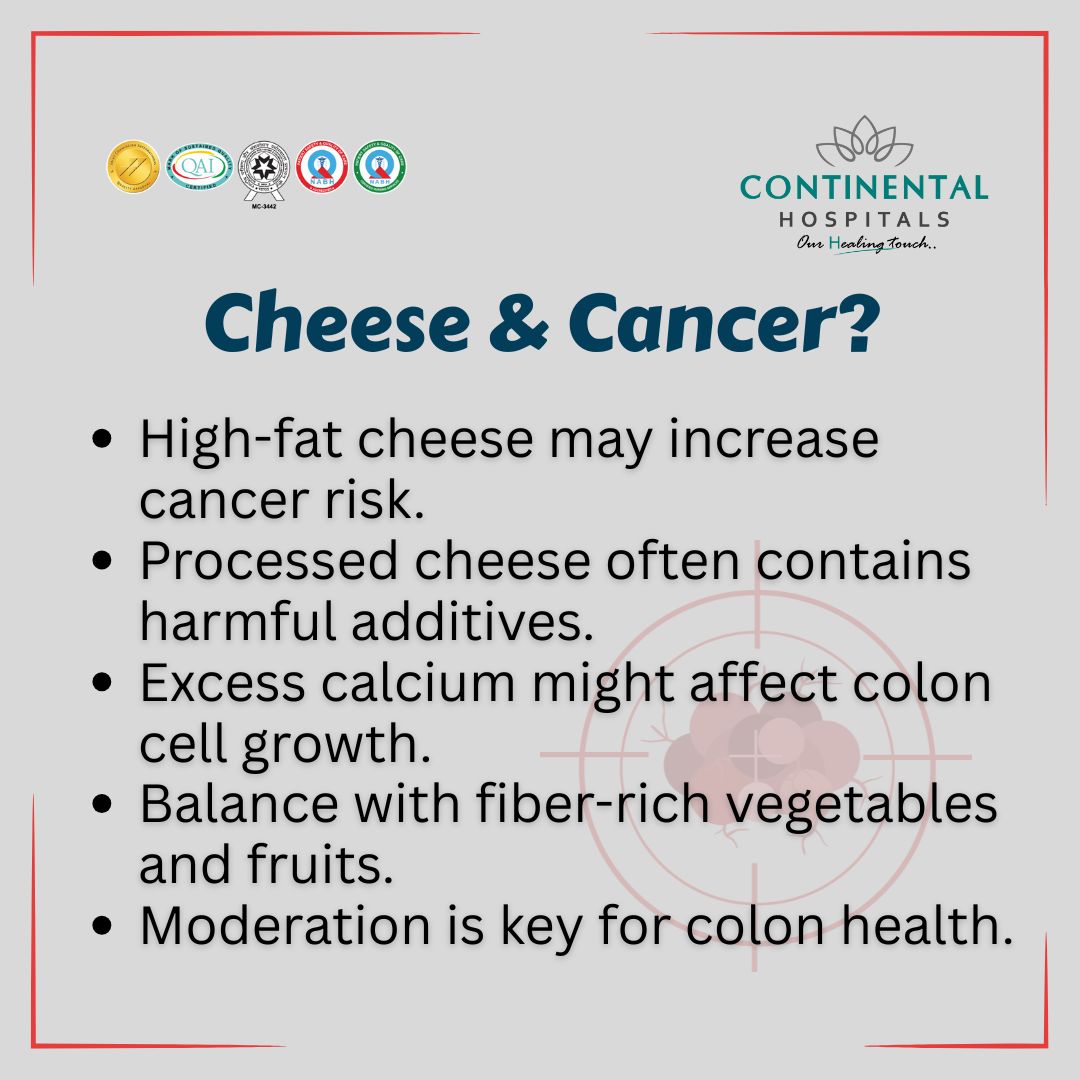
1. High-Fat Content
Many cheeses are high in saturated fats. Diets high in saturated fat have been associated with inflammation in the body, which can influence the growth of cancer cells in the colon. Chronic inflammation can damage cells in the digestive tract and may lead to the development of tumors over time.

2. Preservatives and Additives
Some processed cheeses contain additives, preservatives, or high amounts of sodium. These substances may irritate the gut lining or contribute to poor gut health, creating an environment that’s more prone to disease, including cancer.

Second Opinion

3. Low Fiber
Cheese is low in dietary fiber. A fiber-rich diet helps keep the colon clean and supports regular bowel movements. Fiber also feeds healthy gut bacteria that protect your digestive system. A diet too heavy in cheese and low in fiber can slow down digestion and increase your colon cancer risk.

4. Calcium’s Dual Role
Calcium found in cheese may help reduce the risk of colon cancer by binding with harmful substances in the gut, such as bile acids. However, getting calcium only from cheese could also mean taking in too much fat and not enough fiber, tipping the scale in the wrong direction.

What Does the Research Say?

Some studies suggest that moderate dairy intake, including cheese, may help lower the risk of colon cancer, thanks to calcium and vitamin D.

Other studies find that high consumption of saturated fat and animal protein from dairy can contribute to a higher risk.

The World Health Organization (WHO) classifies processed meats as carcinogenic and red meat as possibly carcinogenic, but there is no direct classification for cheese. Still, the concerns about high-fat and low-fiber diets remain.

The conclusion? Moderation is key. Cheese alone may not cause colon cancer, but excessive intake, especially alongside other risk factors like low physical activity and poor fiber intake, may contribute to the problem.

How Much Cheese Is Too Much?

There’s no fixed limit, but dietary guidelines suggest limiting saturated fat and salt. This means if cheese is your main source of these nutrients, it may be time to balance your plate.

Need an Appointment?

Focus on:

  • Small portions (one to two servings a day, max)
  • Choosing lower-fat cheese options like mozzarella or paneer
  • Combining cheese with fiber-rich foods like vegetables, whole grains, and legumes

How can you protect your colon health?

You don’t have to give up cheese completely. But you can make better food and lifestyle choices to support your colon health:

1. Add More Fiber
Fruits, vegetables, whole grains, nuts, and seeds help keep your colon clean and healthy. Aim for fiber in every meal.

2. Stay Hydrated
Water supports digestion and helps fiber do its job. Dehydration can lead to constipation, increasing colon stress.

3. Exercise Regularly
Physical activity improves bowel movement and reduces inflammation. Even a 30-minute walk can help.

4. Limit Red and Processed Meats
Bacon, sausages, and heavily processed foods are linked to colon cancer. Reducing these helps your digestive system.

5. Avoid Smoking and Limit Alcohol
Both are major risk factors for colon and many other types of cancer.

6. Get Screened Early
Colon cancer can be prevented or detected early through screenings like colonoscopy. If you're over 45 or have a family history, talk to a doctor.

How do I know if my digestive symptoms need medical attention?

If you experience symptoms such as the following:

  • Persistent abdominal pain
  • Blood in your stool
  • Unexplained weight loss
  • Changes in bowel habits (like constipation or diarrhea)

It's time to consult a doctor. These could be early warning signs of colon issues, including cancer.

Why Choose Continental Hospitals?

At Continental Hospitals, we combine medical excellence with compassionate care. Our team of expert gastroenterologists and oncologists use the latest diagnostic tools and treatments to ensure accurate care and early detection. We believe prevention is just as important as treatment.

Our advanced imaging and screening technologies, nutrition guidance, and personalized treatment plans ensure that every patient receives world-class care in a safe, comforting environment.

Whether you need a routine colon check-up or specialized cancer care, Continental Hospitals is here for you.

Conclusion

Cheese isn’t the enemy — but too much of anything can harm your health. When it comes to colon cancer, the focus should be on a balanced diet, regular checkups, and healthy lifestyle habits. Cheese can still be part of your meals — just in moderation and alongside other nutrient-rich foods.

Concerned about colon health? Visit Continental Hospitals to consult our best medical oncologists in Hyderabad for expert digestive cancer care.

Related Blogs:

  1. Does Junk Food Increase the Risk of Colon Cancer?
  2. Colon Cancer Stages: From Diagnosis to Treatment

Frequently Asked Questions

Current research does not show that cheese alone directly causes colon cancer. However, regularly eating large amounts of high fat, high calorie, and heavily processed foods may contribute to obesity, which is a known risk factor for colorectal cancer. Some cheeses are also high in saturated fat and sodium, which should be consumed in moderation. On the positive side, dairy products contain calcium, which may help protect the lining of the colon and lower cancer risk. The overall effect depends on the type of cheese, portion size, and the rest of your diet. A balanced eating pattern that includes fruits, vegetables, whole grains, and lean proteins is more important than avoiding cheese completely. Moderation is the key to enjoying cheese while supporting long term colon health.
Fresh and minimally processed cheeses are generally better choices than heavily processed varieties. Cottage cheese, mozzarella, ricotta, and paneer often contain fewer additives than processed cheese slices or cheese spreads. Choosing lower fat or reduced sodium options may also support better overall health. Eating cheese as part of a meal with vegetables, whole grains, and healthy fats creates a more balanced diet. Portion control is also important because even healthier cheeses can be high in calories. Reading nutrition labels can help you choose products with lower sodium and fewer preservatives. Variety and moderation are more beneficial than relying on one specific type of cheese.
There is no single amount of cheese that automatically increases colon cancer risk for everyone. Most nutrition experts recommend enjoying cheese in moderate portions as part of a balanced diet. Eating large servings every day may increase calorie and saturated fat intake, which can contribute to weight gain. Obesity is a well established risk factor for colorectal cancer. Instead of eating cheese with processed meats and refined foods, combine it with salads, vegetables, fruits, and whole grains. Paying attention to serving sizes helps you enjoy cheese without overconsumption. Maintaining healthy eating habits over time is more important than focusing on one food alone.
Yes, calcium found in dairy products may play a protective role against colorectal cancer. Calcium can bind to potentially harmful substances in the digestive tract and reduce irritation to the lining of the colon. Several studies suggest that adequate calcium intake is associated with a lower risk of colorectal cancer. Cheese can contribute to daily calcium needs, but it should not be the only source. Other calcium rich foods include yogurt, milk, leafy green vegetables, fortified foods, and certain nuts and seeds. A balanced diet provides multiple nutrients that work together to support colon health. Calcium offers benefits when combined with an overall healthy lifestyle.
A diet high in processed meats, red meat, refined grains, sugary drinks, and ultra processed foods has been linked with a higher risk of colorectal cancer. Frequent consumption of these foods may increase inflammation, contribute to obesity, and negatively affect gut health. Low intake of dietary fiber is another important dietary risk factor. Replacing processed foods with vegetables, fruits, legumes, whole grains, nuts, and lean proteins supports healthier digestion. Drinking enough water and maintaining regular physical activity also help improve bowel health. Healthy dietary patterns have a greater impact on colon cancer prevention than any single food.
Yes, cheese can be part of a healthy diet aimed at reducing colon cancer risk when eaten in moderation. It should be combined with fiber rich foods such as vegetables, fruits, beans, and whole grains to support healthy digestion. Limiting processed meats and maintaining a healthy body weight are equally important preventive measures. Choosing natural cheeses over highly processed varieties may also be beneficial. Regular physical activity, avoiding smoking, limiting alcohol intake, and attending recommended screening tests further reduce risk. Healthy eating focuses on overall dietary balance rather than eliminating individual foods. Moderation remains the best approach.
Several healthy lifestyle habits can significantly lower the risk of colorectal cancer. Eating a diet rich in fiber, vegetables, fruits, legumes, and whole grains supports digestive health. Maintaining a healthy body weight and staying physically active reduce cancer risk. Avoiding tobacco products and limiting alcohol consumption also provide important protection. Regular colorectal cancer screening helps detect precancerous polyps before they develop into cancer. Managing chronic conditions such as diabetes and obesity further supports long term health. Combining these healthy habits offers the greatest benefit for colon cancer prevention.
You should consult a doctor if you notice persistent changes in bowel habits, blood in the stool, unexplained weight loss, ongoing abdominal pain, persistent bloating, fatigue, or unexplained anemia. Symptoms lasting for more than a few weeks should not be ignored. People with a family history of colorectal cancer or inflammatory bowel disease may require earlier screening. Early diagnosis greatly improves treatment outcomes. Even if symptoms are caused by noncancerous conditions, medical evaluation is important for accurate diagnosis. Regular screening based on your age and risk factors remains one of the most effective ways to prevent colorectal cancer.
Disclaimer: The information provided in this blog is intended for general knowledge and informational purposes only, and does not constitute medical advice. Always consult with a qualified healthcare professional for any medical concerns or before making any decisions about your health.

Get in Touch With Us

Whether you are from India or abroad, we are here to help you with your medical queries. Please fill out the form below and our team will connect with you shortly.

  • ✔ Quick response from our medical experts
  • ✔ Secure data handling & privacy
  • ✔ Easy upload for reports & documents
banner_image

Chat with our medical experts on WhatsApp for quick assistance and hassle-free appointment booking

Recent Posts