EECP therapy is one of the options that can help improve blood circulation in people suffering from some types of heart disease and in particular those people suffering from continuous chest pain because of lack of adequate blood supply to the heart. EECP is an abbreviation for Enhanced External Counterpulsation. EECP therapy involves use of inflatable cuffs placed on the legs to help improve blood supply to the heart. The process differs from the other types of therapy because it does not require surgery or insertion of any instrument inside the blood vessels.
Who requires EECP therapy and how does EECP therapy work? Individuals who suffer from chronic angina and who continue to suffer despite medication and other forms of treatment can benefit from this form of treatment.
How Does EECP Therapy Work?
How does EECP help increase blood flow in the body? The process involves the use of special inflatable cuffs that are placed on the calf, thigh, and buttock regions. These inflatable cuffs are attached to a computerized system that operates in harmony with the heartbeat of the patient.
Some of the key aspects involved in EECP are as follows:
1. Patient Preparations: The patient rests comfortably on a treatment table where cuffs are put on his/her legs.
2. Heartbeat Measurements: Electrodes measure heartbeats in order to synchronize the process with the heartbeat.
3. Cuff Inflation: The cuffs are inflated one after another when the heart relaxes.
4. Cuff Deflation: The cuffs deflate rapidly just before the heart beats.
5. Increased Blood Flow: The repeated process may result in increased blood flow towards the heart and the formation of new pathways for blood flow.
Visit the Best Heart Specialist Hospital in Hyderabad at Continental Hospitals, Hyderabad, for expert heart care and advanced cardiac services.
Which Individuals Require EECP Therapy?
Is EECP therapy meant for all individuals having some kind of heart disease? The answer is no; it is usually recommended for certain patients with stable angina whose condition has not been brought under control by proper medicine.
There are some cases where EECP therapy can be recommended to individuals who have:
- Stable angina caused by coronary artery disease.
- Symptoms of chest discomfort even when taking prescribed medications.
- Not been deemed ideal for any invasive procedures concerning their heart.
- Angioplasty or bypass surgery that did not reduce their symptoms.
- The need for more treatment to help them carry out everyday tasks.
What Are the Benefits of EECP Treatment?
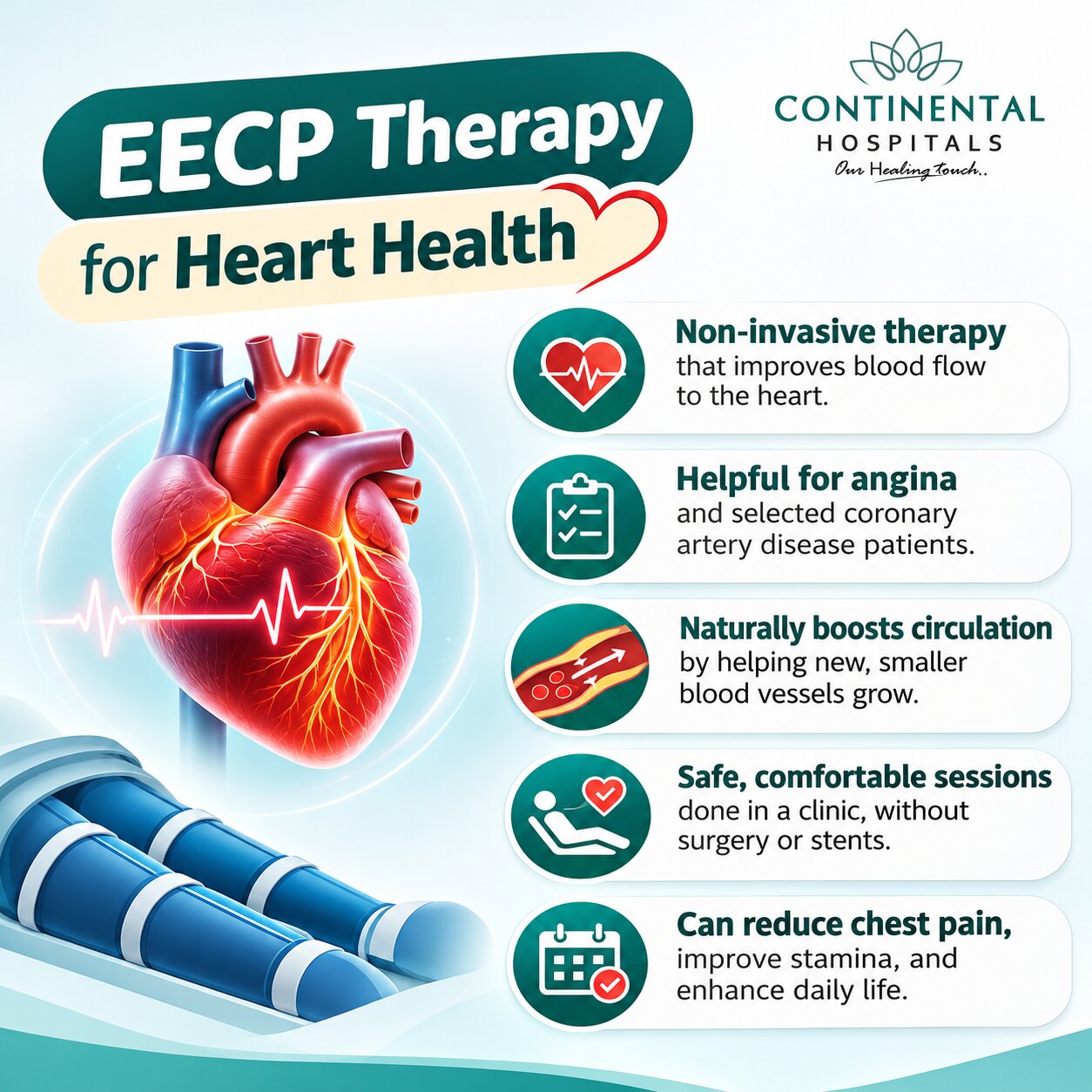
Why can EECP treatment be valuable to selected heart disease sufferers? First, it is a non-invasive heart procedure, and thus it doesn’t involve any surgery or introduction of tools into blood vessels.

Here are some possible EECP benefits:
1. Enhanced Blood Flow: The treatment might aid in increasing blood flow towards the heart muscle.
2. Decreased Chest Pain: There are cases where angina pain decreases.
3. Increased Physical Activity Capacity: Patients can engage in physical activities more easily.
4. Non-Invasive Procedure: No surgical incision is involved.
5. Enhanced Quality of Life: Patients who have angina suffer less from its symptoms and feel more comfortable during daily activities.
6. Outpatient Treatment: Most patients do not need to stay in hospital to receive their sessions.
EECP benefits vary individually. EECP cannot treat coronary artery disease and is not a substitute for any medications or treatments necessary for the patient’s condition.
How Long Is the EECP Treatment?
What does the EECP treatment schedule look like? Usually, it takes one session every day, five days a week for about seven weeks. One session lasts for about one hour.
What Happens During the EECP procedure?
- You stay conscious and relaxed.
- Your heart rate and blood pressure might be monitored.
- Cuffs inflate and deflate following your heart beats.
- You can resume light activity after the treatment according to your doctor’s recommendation.
Treatment schedules may vary from patient to patient.
Does EECP Procedure Have Any Risks or Side Effects?
Is the EECP procedure totally free from any risks and side effects? EECP is considered relatively safe for properly selected patients, but there may be some side effects experienced by some patients.
Possible side effects may include:
- Irritation and bruises at cuff sites.
- Leg pain and muscular pain.
- Feeling of exhaustion after procedure.
- Skin sensitivity due to repetitive compression with cuffs.
Patients with some diseases may be contraindicated for the EECP procedure, such as severe peripheral artery disease, severe aortic regurgitation, hypertension, presence of blood clots, or heart arrhythmia. It should be assessed by a cardiologist prior to the procedure.
In case of acute chest pain, visit the emergency room immediately rather than scheduling your EECP session.
Why Should You Consider EECP Therapy at Continental Hospitals?
Why is it crucial to have specialized advice before opting for EECP therapy? Heart diseases need a thorough analysis because not all patients with coronary artery disease can be treated the same way.
Continental Hospitals of Hyderabad provides cardiac services backed by seasoned cardiologists, advanced diagnostics facilities, and the expertise of multi-specialty doctors. The hospital has been certified by the Joint Commission International and the National Accreditation Board for Hospitals and Healthcare Providers in India.
The cardiac care specialists emphasize the importance of diagnosing the patient and choosing the appropriate treatment program.
Conclusion
EECP treatment is one of the non-invasive treatments for the heart that could benefit certain heart patients suffering from chronic stable angina to improve blood circulation and control chest pains. The procedure involves compression cuffs on the legs to enhance the blood flow to the heart. While EECP treatment has certain advantages, the procedure is not meant for all heart patients and must only be recommended following an appropriate medical assessment.
If you have been experiencing constant chest pains, chronic angina, or other problems associated with coronary artery disease, please consult our best cardiologist in Hyderabad at Continental Hospitals, Hyderabad, for a complete cardiac examination and advice on appropriate treatment options.