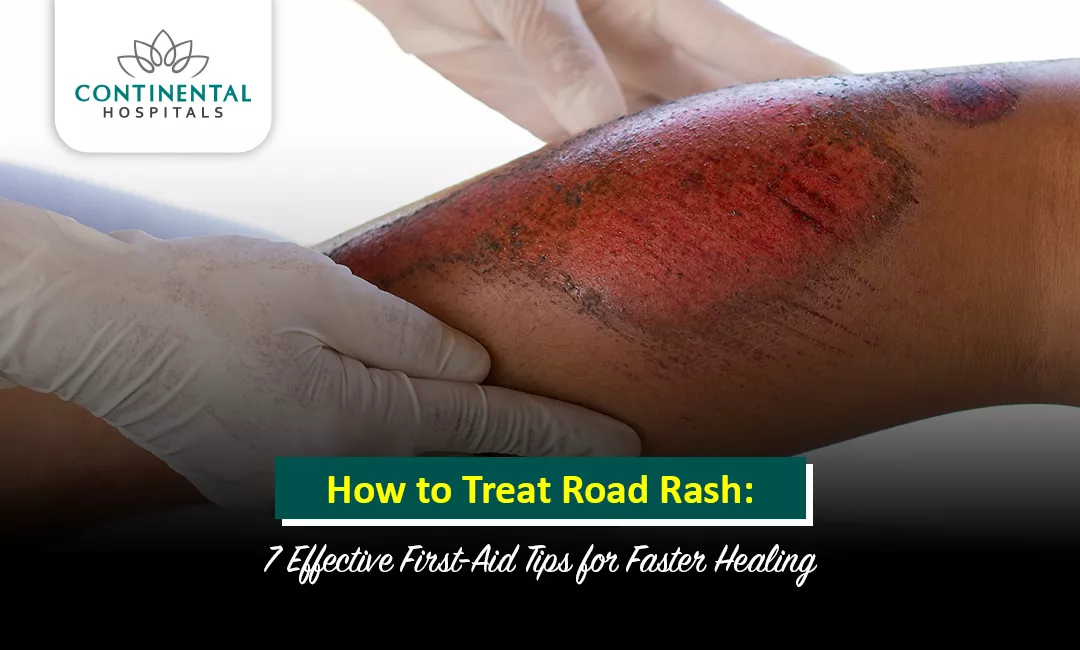
Road rash is a term used for describing injuries inflicted through skin contact with a hard and rough surface such as a road, concrete, or gravel. It may occur due to motorbike accidents, falling off a bicycle, playing sports, or slipping accidentally. Skin abrasion caused by road rash can result in redness, bleeding, pain, swelling, and sometimes even open wounds. According to the severity of the condition, it can affect either the outer layers or inner parts of the skin.
Despite looking rather insignificant, road rash cannot be disregarded, as dirt, dust, stones, and bacteria can easily penetrate damaged skin and cause infections. It is crucial to provide appropriate first aid for the skin affected by road rash and take into account all the necessary road rash treatment measures.
What Are the Symptoms of Road Rash?
After getting into an accident, how will you be able to know that you have road rash? Here are some common symptoms:
- Redness or irritation of the affected area.
- Scratches on your skin that look like raw wounds.
- Bleeding or oozing fluid from the injury.
- Tenderness or pain in the affected area.
- Swelling on the affected part of your body.
- Small bits of dirt or rocks embedded in your skin.
Visit the Emergency Medicine Department at Continental Hospitals, Hyderabad, for prompt and expert emergency care.
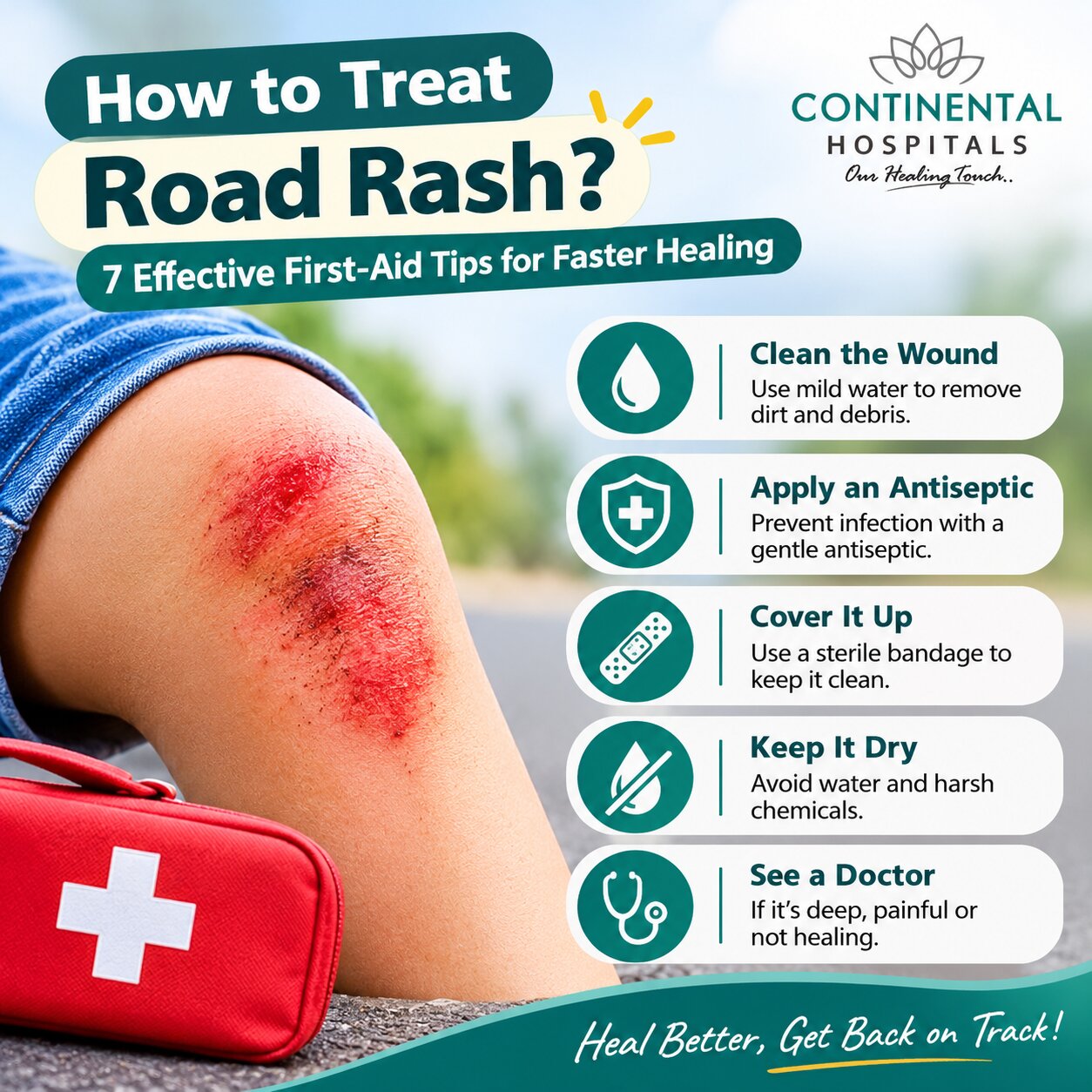
Road Rash Treatment: 7 Effective First-Aid Steps
What are the right steps to follow after getting road rash? Proper wound management can reduce infection risks and promote healing.
1. Clean Your Hands Before Handling the Wound
Why is it important to have clean hands? Bacteria can be transferred into an open wound from dirty hands and increase infection risks.
- Wash your hands carefully using soap and clean water.
- If there are any available, wear disposable gloves.
- Try not to touch the damaged skin.
Keep your hands clean while dealing with road rash.
2. Rinse the Wound Under Running Clean Water

How do you clean road rash wounds? Rinse your injury under running clean water to wash out the dirt, dust, and other particles from it.
- Use drinking or sterile saline water.
- Don't rub the injured skin.
- Don't use any alcohol, hydrogen peroxide, or other strong substances to clean your skin.
- Seek professional medical help if you have gravel stuck in your skin.
Cleaning is one of the most crucial first-aid steps for road rash.
3. Control the Bleeding by Putting Pressure Gently
What should be done if the cut bleeds? Gently apply pressure with the help of sterile gauze or clean cloth.
- Put gentle pressure on the wounded spot.
- Try to avoid frequently removing the cloth from the injury to see if the bleeding stopped.
- Immediately consult a doctor in case of serious or uncontrolled bleeding.
In such cases, medical attention is needed.
4. Use Proper Protective Cream
Do you have to put some cream onto the road rash? Depending on the wound, a medical practitioner can recommend a proper protective cream to ensure moisture of the healing process.
- Do not use any random creams and homemade remedies.
- Avoid any substances that may irritate the wound.
- Follow all the recommendations about wound protection.
5. Put on sterile dressing over the wound
Why should you cover your road rash? It is necessary to protect the wounded skin from dust, friction, and irritations.
- Use a sterile non-adhesive bandage.
- Cover the entire injured part of the body.
- Put on a new one as recommended or when the old one gets wet or dirty.
6. Look Out for Signs of Infection
Is there a possibility that road rash may get infected? Indeed, open wounds increase chances of bacteria entering the skin and causing infection.
Look out for these symptoms:
- Swelling and redness getting worse.
- The presence of pus or discharge.
- Increasing pain and warmth in the wounded area.
- Fever or chills.
- Redness spreading further than the injury.
Get a medical examination if these signs occur.
7. Practice Good Wound Care While Healing
What are ways in which you can promote healing of road rash? Good wound care will help to protect the new layer of skin from possible risks.
- Clean the wound properly.
- Ensure the right covering of the wound.
- Change bandages as suggested.
- Refrain from scratching or damaging newly formed skin.
- Avoid engaging in activities that will irritate the wound.
- Make sure that your tetanus shot is up to date.
What is the healing time of a road rash?
What is the healing time for road rash? The healing time of road rash injury varies depending on the severity and condition of the injury.
Minor road rash: Superficial injuries can be healed in about one to two weeks.
Moderate road rash: More serious skin injuries will take more time to heal.
Serious road rash: Serious skin injuries can take a long time to heal and even need surgery.
Properly following wound care advice will help the healing process.
When Should I Seek Medical Help for Road Rash?
Is at-home treatment suitable for all road rash cases? Not necessarily. Some wounds need a professional medical intervention.
You should seek help from a physician in case of:
- A deep, large or heavily damaged wound.
- Dirt or gravel stuck in the skin.
- Constant bleeding.
- Infection symptoms.
- Injury on your face, hands, or joints.
- Severe pain and inability to move the affected part of the body.
Seek immediate care in an emergency room if the injury is severe.
Why Go to Continental Hospitals for Road Rash Injury?
Why should patients seek professional wound care following a road accident? Injuries such as road rashes can be more serious and complicated than initially thought, as there can be issues of contamination and infection. Appropriate evaluation is important in order to provide proper treatment.
Continental Hospitals in Hyderabad offers complete emergency services, including traumatic care, due to the presence of skilled doctors and quality healthcare institutions. It is accredited by JCI, NABH, and QAI.
Continental Hospitals strives for quality of patient care, safety, and coordination of medical help and is determined to offer appropriate evaluation and treatment.
Conclusion
Is it possible for road rash to heal more quickly with proper first aid treatment? Indeed, it is. Proper cleaning of the wound, control of bleeding, proper use of dressings, and following proper first aid techniques can help to heal the wound and lower infection risks. However, it is always recommended to see a doctor if your injury is serious or contaminated.
If you have severe road rash, deep wounds, excessive bleeding, or infected wounds, it is recommended to see our best emergency medicine doctors in Hyderabad from Continental Hospitals, Hyderabad.