post-title

Stent or Surgery? Get a Second Opinion Before You Decide

Written by - Editorial Team
Medically Reviewed by - Dr Meeraji Rao Dandangi

When it comes to heart and vascular health, deciding between a stent procedure and surgery can feel overwhelming. Both options aim to restore proper blood flow and relieve symptoms, but they come with different benefits, risks, and recovery paths. Here’s the thing: rushing into a decision without fully understanding your options can lead to unnecessary complications or treatments that may not be the best fit for your condition.

What this really means is that before you say yes to stents or surgery, getting a second medical opinion can make a big difference. It helps confirm the diagnosis, explore alternatives, and tailor the treatment plan specifically for you.

What is the difference between stent placement and surgery?

A stent is a small mesh tube inserted into narrowed or blocked arteries to keep them open. It’s a minimally invasive procedure, often done through a catheter inserted in the groin or wrist, guiding the stent to the affected artery. The recovery time is usually short, and many patients can return to normal activities quickly.

On the other hand, surgery often means coronary artery bypass grafting (CABG) or other open-heart procedures. Surgery is more invasive, involves a longer hospital stay, and requires more recovery time. However, it may be the better choice if multiple arteries are affected or if the artery blockages are complex.

Visit the Best Cardiology Doctors in Hyderabad at Continental Hospitals for comprehensive heart care, advanced diagnostics, and expert treatment from leading cardiologists in Hyderabad.
Why Choosing Between Stent or Surgery Isn’t Always Simple

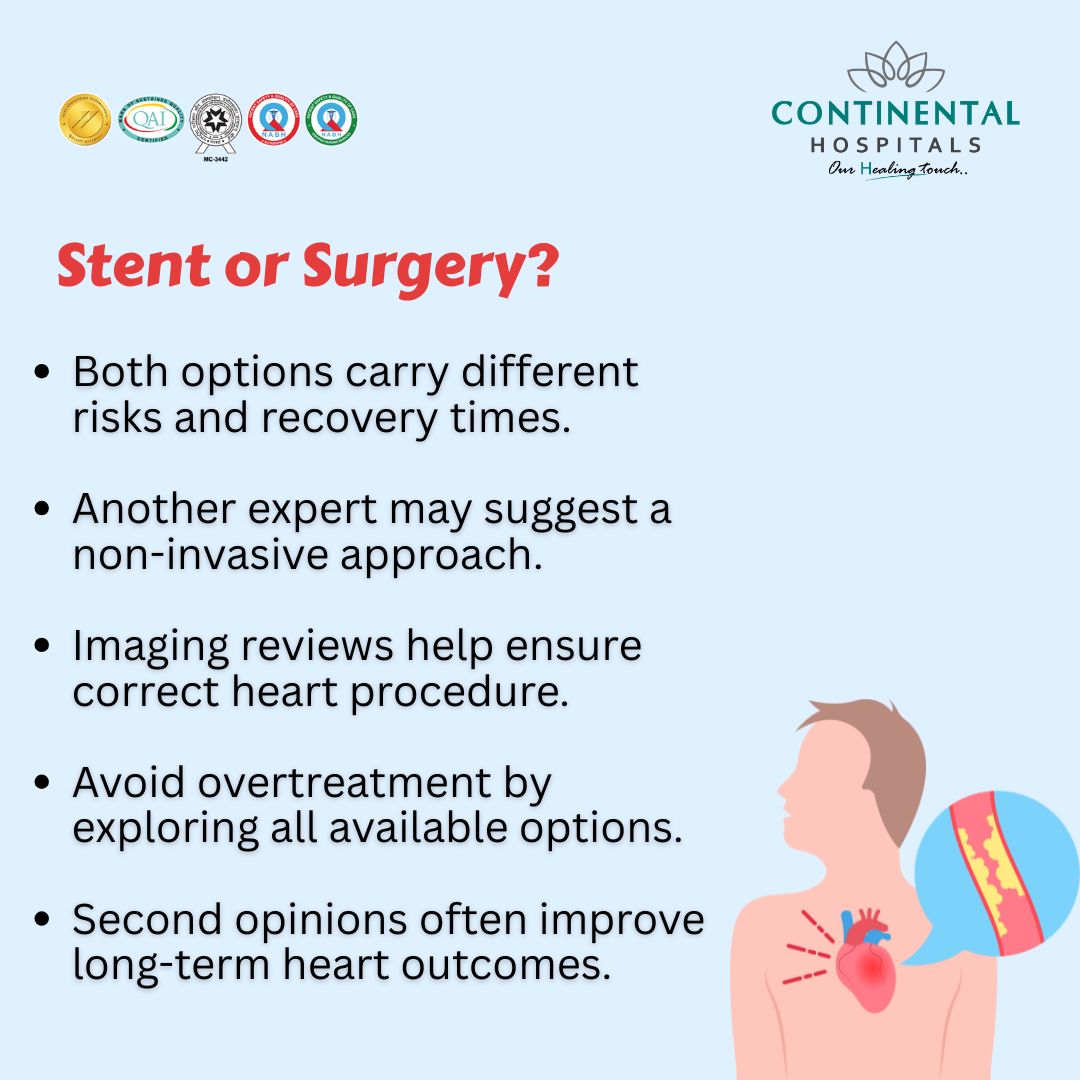
Doctors base treatment recommendations on your specific health condition, the location and severity of artery blockages, symptoms, and overall health status. Still, the complexity of heart disease means that two doctors might suggest different approaches based on their experience and the latest medical evidence.

Here’s why you should get a second opinion:

Confirming the diagnosis: Sometimes, initial tests may miss important details or need a fresh review.

Second Opinion

Understanding risks and benefits: A second doctor may explain different risks or potential long-term outcomes.

Exploring alternatives: Surgery might be necessary in some cases, but stents or even medical management may be better for others.

Building confidence: Knowing that multiple experts agree on the treatment helps you make a more confident decision.

Who Should Consider Getting a Second Opinion?

If you or a loved one has been told you need a stent or surgery, especially for heart disease, consider getting a second opinion if:

  • You feel uncertain or unclear about the treatment plan.
  • Your symptoms are mild or you’re unsure about the urgency.
  • You want to explore less invasive options first.
  • You have other health conditions that might affect surgery or stent outcomes.
  • You want reassurance before committing to a major procedure.

What to Expect When Getting a Second Opinion

Getting a second opinion doesn’t mean you doubt your first doctor. It means you’re taking control of your health and seeking the best possible care.

At Continental Hospitals, our cardiology specialists review your medical history, test results, and imaging carefully. We may recommend additional tests if needed. Then, we provide a clear explanation of all treatment options, including pros and cons.

You’ll get answers to questions like:

Need an Appointment?

  • Is a stent necessary, or can medication control my condition?
  • Is surgery the safest and most effective long-term solution?
  • What lifestyle changes can improve my heart health?
  • What are the risks of each treatment option?

Why Choose Continental Hospitals for Your Second Opinion?

Continental Hospitals has a team of experienced cardiologists and cardiac surgeons who bring the latest medical knowledge and techniques to every patient. Here’s why we stand out:

Specialized expertise: Our doctors regularly perform both stent procedures and complex heart surgeries, so they understand the nuances of each treatment.

Comprehensive care: We focus on not just the procedure but also pre- and post-treatment support, including cardiac rehabilitation and lifestyle counseling.

Patient-centered approach: Every treatment plan is personalized. We listen to your concerns and goals to ensure your care fits your life.

Advanced technology: Continental Hospitals is equipped with modern cardiac imaging and interventional tools, improving accuracy and safety.

Clear communication: We explain every step in plain language, so you know exactly what to expect.

What Happens If You Choose a Stent?

A stent can quickly open blocked arteries and relieve symptoms like chest pain and shortness of breath. Recovery is usually quick, with many patients resuming normal activities within days.

However, stents have limitations. In some cases, arteries may narrow again (restenosis), or multiple blockages might not be addressed fully with stents alone. Stents usually require lifelong medications to prevent blood clots.

What Happens If You Choose Surgery?

Surgery, especially bypass surgery, reroutes blood flow around blocked arteries using vessels from elsewhere in your body. It’s more invasive but can offer longer-lasting results, especially in severe cases.

Recovery takes weeks to months, and it requires close follow-up care. Surgery carries risks like infections and complications but is often the best option when blockages are extensive or complex.

How to Prepare for Your Second Opinion Appointment

To make the most of your second opinion visit, gather your medical records, including:

  • Test results like angiograms, stress tests, or CT scans.
  • Notes from your first cardiologist.
  • A list of your current medications.
  • A summary of symptoms and any changes over time.

Write down any questions or concerns you have, so you don’t forget to ask.

Conclusion: Don’t Rush the Decision

Heart disease treatment is not one size fits all. Stents and surgery both have their place, but the best choice depends on your unique health situation.

Getting a second opinion gives you clarity, peace of mind, and a better chance of the right outcome. It’s not about doubting your doctor but about making sure you have all the information to choose wisely.

If you're experiencing symptoms, don't wait. Contact our healthcare team at Continental Hospitals today. Visit our top cardiologists in Hyderabad


Frequently Asked Questions

Doctors decide between a stent and bypass surgery after carefully evaluating several factors, including the number of blocked arteries, the severity and location of the blockage, heart function, symptoms, age, and overall health. A coronary angiogram helps visualize the arteries and guides treatment decisions. Stents are often recommended for one or two localized blockages that can be safely opened using angioplasty. Bypass surgery is generally preferred for multiple blockages, left main coronary artery disease, diabetes with extensive coronary disease, or complex arterial narrowing. Cardiologists also consider the patient's risk factors, lifestyle, and long-term outlook. International treatment guidelines help determine the most suitable option. Every patient is different, so treatment should always be personalized rather than based on a single test result.
A second opinion helps confirm whether the recommended treatment is truly the best option for your specific heart condition. Different specialists may interpret angiograms differently and suggest alternative approaches depending on the complexity of the disease. In some cases, medication and lifestyle changes may be sufficient, while in others, bypass surgery may provide better long-term results than a stent. A second opinion can reduce unnecessary procedures and improve confidence in your treatment decision. It also gives patients an opportunity to understand the benefits, risks, expected recovery, and long-term outcomes of each option. Making an informed decision can significantly improve both safety and treatment success.
Yes, in certain patients, medications combined with healthy lifestyle changes can effectively manage coronary artery disease without immediate stenting or bypass surgery. This approach is generally suitable for patients with mild or stable blockages that are not causing severe symptoms or reducing blood flow significantly. Medicines such as blood thinners, cholesterol-lowering drugs, blood pressure medications, and anti-anginal drugs help reduce symptoms and lower the risk of heart attacks. Lifestyle improvements like quitting smoking, exercising regularly, maintaining a healthy diet, and controlling diabetes are equally important. However, if symptoms worsen or tests show high-risk disease, invasive treatment may become necessary. Regular follow-up with a cardiologist is essential.
Coronary stents offer a minimally invasive way to restore blood flow through narrowed heart arteries. The procedure usually requires a small puncture in the wrist or groin, allowing faster recovery, shorter hospital stays, and less discomfort than open-heart surgery. Many patients return to daily activities within a few days. Modern drug-eluting stents significantly reduce the risk of artery re-narrowing. However, stents may not be the best option for patients with multiple complex blockages or severe diabetes. Patients also need long-term blood-thinning medications after stent placement. Although stents relieve symptoms effectively, they do not cure the underlying process of atherosclerosis, making healthy lifestyle changes essential.
Bypass surgery is often recommended when there are multiple blocked coronary arteries, significant narrowing of the left main coronary artery, or complex blockages that cannot be effectively treated with stents. Patients with diabetes and widespread coronary artery disease may also benefit more from bypass surgery because it offers better long-term survival and fewer repeat procedures. During surgery, healthy blood vessels from another part of the body are used to create new pathways around blocked arteries. Although recovery takes longer than stenting, bypass surgery often provides durable symptom relief and improved blood flow for many years. Your cardiac surgeon and cardiologist will jointly determine if surgery offers the greatest long-term benefit.
Before making a treatment decision, ask your doctor why the procedure is recommended and whether any alternative treatments are available. Request an explanation of your angiogram findings and the severity of your coronary artery disease. Ask about the expected benefits, possible risks, recovery time, long-term success rates, and whether medication alone could be considered. You should also understand the likelihood of future procedures, lifestyle changes required after treatment, and any medications you will need. If you are uncertain or feel rushed into making a decision, seeking a second opinion from another experienced cardiologist is entirely appropriate and may provide additional reassurance.
No. During a true heart attack or other life-threatening cardiac emergency, immediate treatment should never be delayed to obtain a second opinion because rapid restoration of blood flow saves heart muscle and improves survival. However, many patients diagnosed with stable coronary artery disease have enough time to discuss treatment options and obtain another expert opinion before scheduling a planned stent procedure or bypass surgery. Your cardiologist can advise whether your condition requires urgent intervention or whether there is sufficient time to review all available treatment choices. Understanding the urgency of your condition is an important part of making an informed healthcare decision.
To make the most of a second opinion consultation, carry copies of your angiogram or angiography CD, ECG, echocardiogram, stress test reports, blood investigations, medication list, and previous medical records. Prepare a summary of your symptoms, when they started, and how they affect your daily activities. Write down any questions you have regarding stents, bypass surgery, recovery, risks, and long-term outcomes. Inform the specialist about existing medical conditions such as diabetes, kidney disease, or previous heart procedures. Providing complete medical information allows the cardiologist to review your case thoroughly and recommend the most appropriate treatment based on evidence and your individual health needs.
Disclaimer: The information provided in this blog is intended for general knowledge and informational purposes only, and does not constitute medical advice. Always consult with a qualified healthcare professional for any medical concerns or before making any decisions about your health.

Get in Touch With Us

Whether you are from India or abroad, we are here to help you with your medical queries. Please fill out the form below and our team will connect with you shortly.

  • ✔ Quick response from our medical experts
  • ✔ Secure data handling & privacy
  • ✔ Easy upload for reports & documents
banner_image

Chat with our medical experts on WhatsApp for quick assistance and hassle-free appointment booking

Recent Posts