post-title

What Heart Care Changes After a Stent Should You Know?

Written by - Editorial Team
Medically Reviewed by - Dr Meeraji Rao Dandangi

When someone has a blocked artery, doctors often place a stent to restore blood flow to the heart. A stent is a tiny mesh tube that keeps the artery open, reducing the risk of heart attack and chest pain. But here’s the thing: getting a stent is not the end of the journey. It is the start of a new chapter in heart care. Understanding what changes you need to make after a stent can help you stay healthy, avoid complications, and protect your heart for years to come.

Why is heart care important after a stent?

A stent solves an immediate problem, but the underlying cause of artery blockage usually remains. High cholesterol, high blood pressure, diabetes, smoking, or lifestyle habits often contribute to blocked arteries. Without proper care, new blockages can develop in other parts of the heart. This is why doctors recommend lifelong attention to heart health after stent placement.

What Medications Should You Take After a Stent?

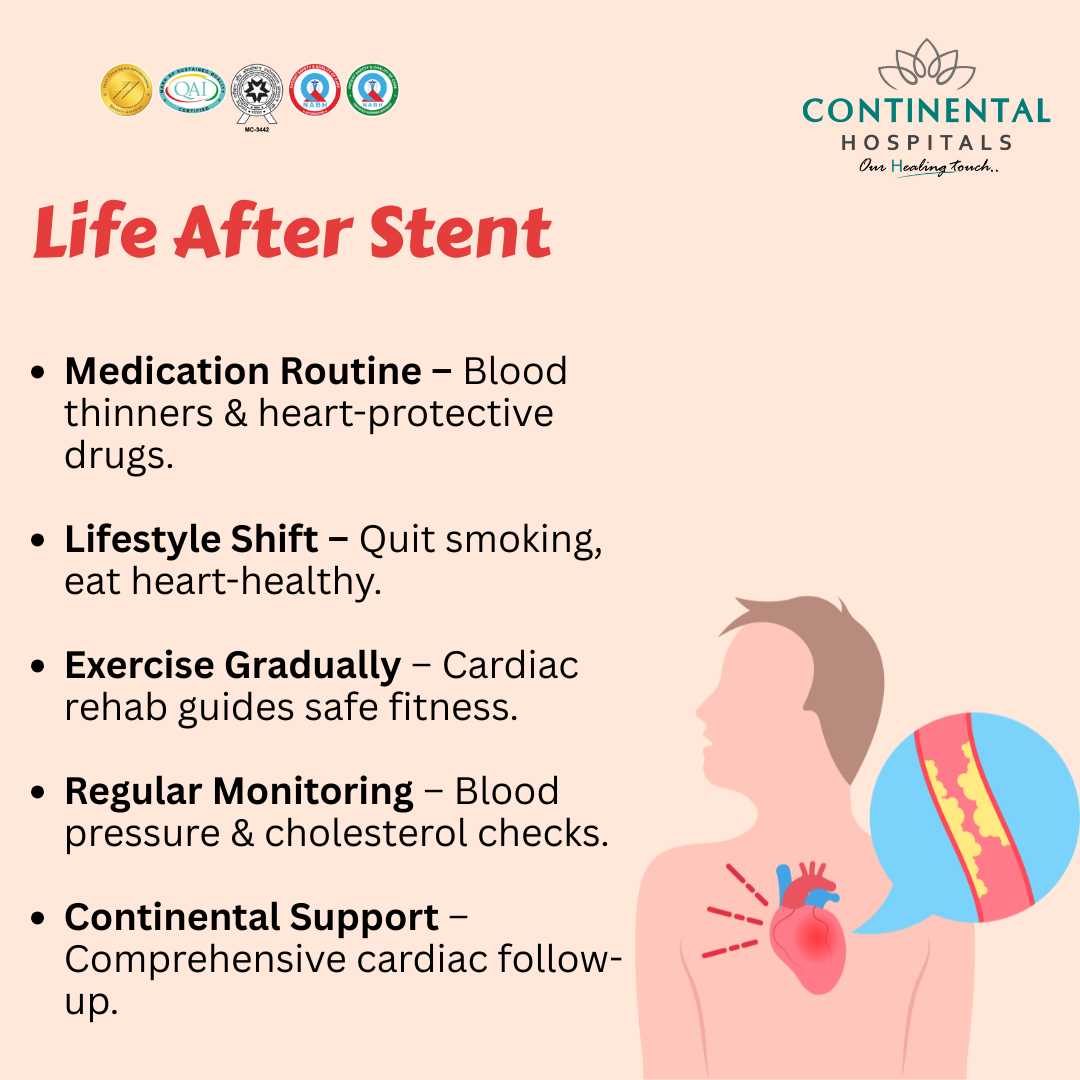
One of the biggest changes after a stent is the need for long-term medications. These drugs help prevent blood clots, reduce cholesterol, and control blood pressure. Commonly, patients need antiplatelet medicines that keep blood flowing smoothly through the stent. Skipping medicines can be dangerous. That is why doctors emphasize regular follow-ups and medication adherence.
Experiencing chest discomfort, breathlessness, or concerns after a stent? Visit the Best Cardiology Doctors in Hyderabad at Continental Hospitals for timely diagnosis and personalized treatment.

What lifestyle changes should you make for a healthier heart after a stent?

A stent opens the artery, but lifestyle habits determine how well your heart stays in shape. Here are the changes you should focus on:

Healthy eating: Choose a diet rich in vegetables, fruits, whole grains, and lean proteins. Limit fried foods, sugary snacks, and processed meals.

Regular activity: Walking, cycling, or swimming improves circulation and strengthens the heart. Always ask your doctor about safe levels of exercise.

Quit smoking: Tobacco damages blood vessels and increases the risk of stent blockage. Quitting smoking is one of the most powerful ways to protect your heart.

Second Opinion

Control alcohol intake: Moderate consumption may be acceptable for some people, but always check with your doctor.

Manage stress: Practices like meditation, yoga, or deep breathing can lower stress, which is important for long-term heart health.

How Often Should You Have Regular Checkups and Tests After a Heart Stent?

After a stent, regular monitoring becomes part of your life. Your cardiologist may recommend blood tests, cholesterol checks, and sometimes stress tests or imaging scans. These checkups ensure that the stent is working well and that no new blockages are forming. Consistent follow-up care helps detect issues early before they become serious.

What are heart rehabilitation programs after a stent?

Many patients benefit from cardiac rehabilitation after stent placement. These programs include supervised exercise, dietary guidance, counseling, and education about heart health. Rehabilitation builds confidence, helps you regain strength, and lowers the risk of another cardiac event.

What are the warning signs you should not ignore after a heart stent?

Even after a stent, some people experience chest pain, shortness of breath, or unusual fatigue. If you notice these symptoms, seek medical care immediately. They can be signs that the stent is narrowing again or that a new blockage is forming. Quick action can prevent serious outcomes.

How Does Mental Health Affect Recovery After a Heart Stent?

It is common to feel anxious after a stent procedure. Some patients worry about their heart or fear another heart attack. Talking to your doctor, joining support groups, or seeking counseling can help. Emotional health is as important as physical recovery in overall heart care.

Why Choose Continental Hospitals for Heart Care?

When it comes to advanced cardiac treatment, choosing the right hospital makes all the difference. Continental Hospitals in Hyderabad is accredited by national and international healthcare bodies, which means it meets the highest standards of patient safety and medical excellence. The hospital offers world-class infrastructure, modern cardiac technology, and 24x7 emergency support.

Need an Appointment?

The team of expert cardiologists, interventional cardiologists, and cardiac surgeons at Continental Hospitals has extensive experience in performing stent procedures and managing long-term cardiac care. With personalized treatment plans, advanced diagnostic facilities, and a strong focus on preventive care, patients receive comprehensive support throughout their journey.

Continental Hospitals also provides integrated rehabilitation and lifestyle management programs, helping patients recover faster and maintain heart health in the long run. Its commitment to quality care and international accreditations makes it one of the most trusted names for cardiac treatment in India.

What Is Life Like After a Heart Stent in the Long Term?

With the right approach, most people with a stent live active, healthy lives. The stent itself does its job silently, but your lifestyle and care routine decide how successful the treatment will be. Think of it as teamwork between you, your doctor, and your daily choices.

  • Take medications regularly.
  • Keep follow-up appointments.
  • Stay active and eat well.
  • Pay attention to warning signs.

By making these changes, you protect your heart and prevent further complications.

Conclusion

A stent can save your life, but what you do after the procedure determines your long-term heart health. From taking medicines consistently to eating right, exercising, and attending regular checkups, every step counts. If you experience any unusual symptoms or have concerns about your heart health, do not delay seeking medical advice.

At Continental Hospitals, Hyderabad, our experienced cardiology team is here to guide you through every stage of recovery and long-term care. With advanced technology, global accreditations, and personalized treatment plans, we ensure your heart gets the best possible care.

If you suffer from chest pain, breathlessness, or have concerns about your heart after a stent, consult our Best Cardiologist in hyderabad at Continental Hospitals today.
Related Blogs:

  1. Is Your Lifestyle Damaging Your Heart?
  2. Can Heart Disease Be Reversed Naturally?

Frequently Asked Questions

After a heart stent procedure, healthy lifestyle changes are essential to protect your heart and reduce the risk of future blockages. Eat a balanced diet rich in fruits, vegetables, whole grains, lean proteins, and healthy fats while limiting salt, sugar, and saturated fats. Stay physically active by following your cardiologist's exercise recommendations. Quit smoking and avoid all tobacco products. Maintain a healthy weight and manage stress through relaxation techniques, yoga, or meditation. Take all prescribed medications exactly as directed and attend regular follow-up appointments. Monitor your blood pressure, cholesterol, and blood sugar levels. These changes help improve heart health, support recovery, and reduce the chances of another cardiac event.
Recovery after a heart stent procedure varies depending on your overall health and the reason for the procedure. Most people return home within one or two days and resume light daily activities within a few days. Complete recovery usually takes about one to two weeks for uncomplicated cases. Heavy lifting and strenuous exercise should be avoided until your doctor approves. Follow all discharge instructions carefully, including wound care if the stent was inserted through the wrist or groin. Regular follow-up visits allow your cardiologist to monitor healing and adjust medications if needed. A heart-healthy lifestyle and participation in cardiac rehabilitation can improve recovery and long-term heart health.
Medications play a critical role after heart stent placement because they help prevent blood clots from forming inside the stent. Doctors commonly prescribe dual antiplatelet therapy, which usually includes aspirin and another blood-thinning medicine. Stopping these medications without medical advice can significantly increase the risk of stent blockage, heart attack, or other serious complications. You may also need cholesterol-lowering medicines, blood pressure medications, or diabetes medications depending on your health condition. Always take medications at the recommended time and dosage. Inform your healthcare provider about any side effects instead of discontinuing treatment. Consistent medication use is one of the most important steps for successful long-term recovery.
Yes, regular physical activity is encouraged after heart stent placement once your cardiologist confirms it is safe. Walking is often recommended as the first form of exercise during recovery. Gradually increase the duration and intensity based on your doctor's advice. Cardiac rehabilitation programs provide supervised exercise and education to help improve cardiovascular fitness safely. Avoid intense workouts or heavy lifting until you receive medical clearance. Stop exercising immediately if you experience chest pain, dizziness, unusual shortness of breath, or palpitations. Regular exercise helps strengthen the heart, improve circulation, control weight, reduce stress, and lower the risk of future heart disease.
A heart-healthy diet is essential after receiving a heart stent. Choose fresh fruits, vegetables, whole grains, legumes, nuts, seeds, and lean protein sources such as fish and skinless poultry. Include healthy fats from olive oil and avocados while limiting fried foods, processed snacks, sugary beverages, and foods high in saturated or trans fats. Reduce salt intake to help control blood pressure. Drink enough water unless your doctor advises otherwise. If you have diabetes, monitor carbohydrate intake carefully. Following a balanced diet supports healthy cholesterol levels, maintains a healthy weight, improves blood vessel health, and reduces the risk of future cardiovascular complications.
Although most patients recover well, it is important to recognize warning signs that require immediate medical attention. Seek emergency care if you experience chest pain similar to your previous heart symptoms, severe shortness of breath, fainting, or sudden weakness. Contact your doctor if you notice excessive bleeding, swelling, redness, or increasing pain at the catheter insertion site. Persistent fever or unusual bruising should also be evaluated. Never ignore symptoms because early treatment can prevent serious complications. Keep emergency contact numbers available and attend all scheduled follow-up appointments to ensure your recovery is progressing safely.
Yes, although modern drug-eluting stents have reduced the risk, a heart stent can occasionally become narrowed or blocked again. This may happen because of scar tissue formation or the development of new plaque inside or near the stent. Taking prescribed antiplatelet medications, maintaining healthy cholesterol levels, avoiding smoking, exercising regularly, and following a heart-healthy diet significantly reduce this risk. Regular follow-up with your cardiologist helps detect any concerns early. If chest pain or other heart symptoms return, seek medical evaluation promptly because timely treatment can prevent serious complications.
Regular follow-up appointments are an important part of long-term heart care after a stent procedure. Your first visit is usually scheduled within a few weeks after discharge, followed by additional appointments based on your recovery and medical condition. During these visits, your cardiologist reviews symptoms, checks blood pressure, evaluates cholesterol and blood sugar levels, adjusts medications if necessary, and recommends lifestyle improvements. Additional tests may be performed if new symptoms develop. Never skip follow-up appointments even if you feel well, as ongoing monitoring helps detect problems early and supports long-term cardiovascular health.
Disclaimer: The information provided in this blog is intended for general knowledge and informational purposes only, and does not constitute medical advice. Always consult with a qualified healthcare professional for any medical concerns or before making any decisions about your health.

Get in Touch With Us

Whether you are from India or abroad, we are here to help you with your medical queries. Please fill out the form below and our team will connect with you shortly.

  • ✔ Quick response from our medical experts
  • ✔ Secure data handling & privacy
  • ✔ Easy upload for reports & documents
banner_image

Chat with our medical experts on WhatsApp for quick assistance and hassle-free appointment booking

Recent Posts