post-title

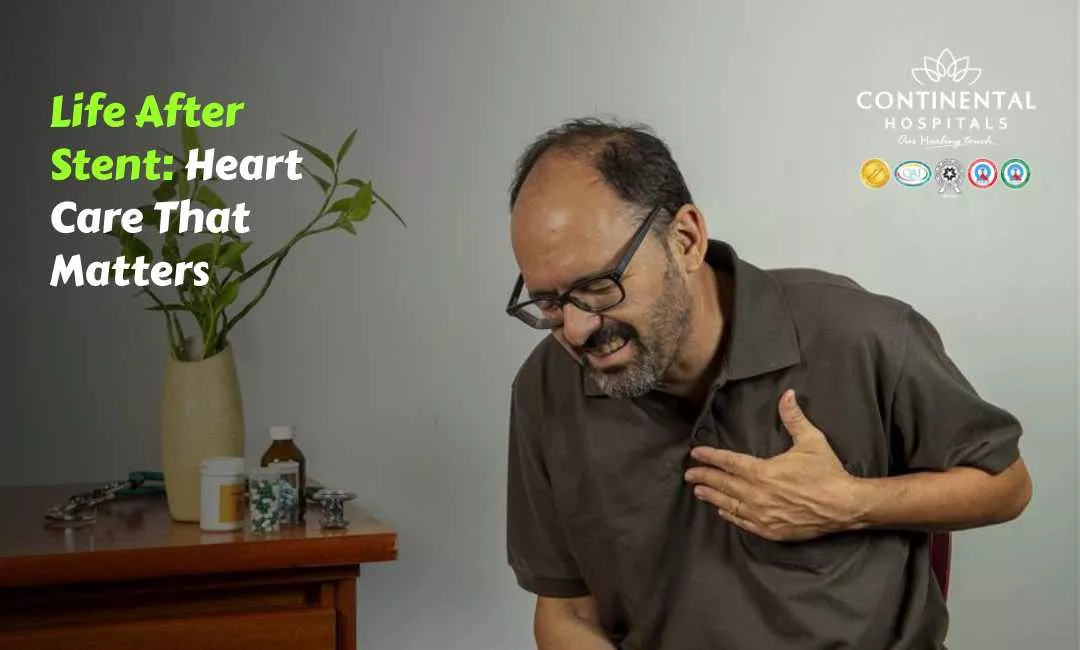
Life After Stent: Heart Care That Matters

Written by - Editorial Team
Medically Reviewed by - Dr Vivek Babu Bojjawar

Getting a stent placed is often a life-changing moment. It opens up blocked arteries and restores blood flow to the heart. But here’s the real question – what happens next? Life after a stent is not just about recovering from the procedure. It’s about protecting your heart for the long run, staying healthy, and preventing future problems.

This guide breaks down what to expect, how to take care of yourself, and why choosing Continental Hospitals can give you the best possible support on your heart health journey.

What Is a Stent and Why Is It Important?

A stent is a small, mesh-like tube placed inside a blocked or narrowed artery. Its job is simple – keep the artery open so blood can flow normally. Most people feel better soon after the procedure because chest pain reduces and breathing improves. But a stent is not a permanent fix by itself. It works best when combined with healthy lifestyle changes and regular follow-up care.

How long does it take to recover after a stent?

The recovery period usually starts right after the procedure. Most patients go home within a day or two. You might feel some soreness at the catheter site, which usually heals quickly. The real recovery is about making your heart stronger.

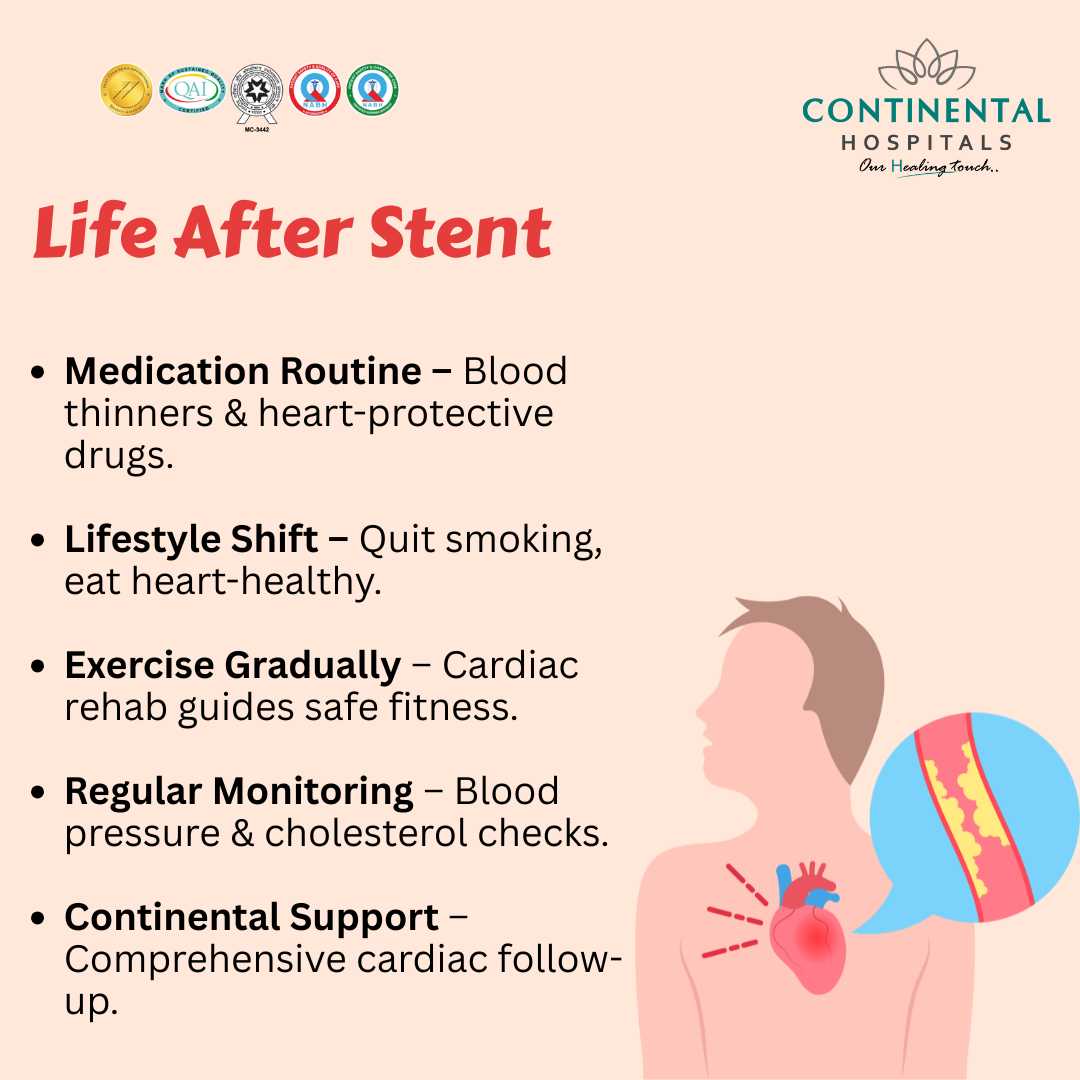
Follow your doctor’s advice carefully – take prescribed medicines exactly as told to prevent clotting inside the stent.

Stay active but start slow – light walking is usually encouraged after a few days. Gradually increase activity with your doctor’s approval.

Eat heart-friendly meals – more fruits, vegetables, whole grains, and less fried or processed food.

Quit smoking if you smoke – this single step dramatically lowers your risk of future heart issues.
Visit the Best Cardiology Doctors in Hyderabad at Continental Hospitals and consult our expert cardiologists. Our experienced heart specialists provide comprehensive care, guiding you through every step—from accurate diagnosis and advanced treatment to long-term heart health management.

Second Opinion

What lifestyle changes should I make after a heart stent?

The stent procedure is just the beginning. Your daily habits decide how well your heart stays protected.

Diet and Nutrition
Switching to a heart-healthy diet can make a big difference. Include fiber-rich foods, lean proteins, and healthy fats like nuts and olive oil. Reduce salt to control blood pressure. Avoid excess sugar and processed snacks.

Exercise and Activity
Ask your doctor about joining a cardiac rehabilitation program. These programs are designed to help you regain strength safely. Even simple activities like brisk walking, cycling, or yoga can improve circulation and lower stress.

Stress Management
Stress puts extra load on your heart. Practice deep breathing, meditation, or spending time doing something you enjoy. Quality sleep also helps your heart recover faster.

Regular Check-Ups
Keep up with scheduled follow-up visits. Your doctor may check cholesterol, blood pressure, and overall heart function to catch any issues early.

Possible Complications to Watch For
Most people recover well, but knowing what to look out for can save time and prevent emergencies. Contact your doctor right away if you notice:

Need an Appointment?

  • Chest pain that feels like the pain before your procedure
  • Shortness of breath that is getting worse
  • Unusual swelling or bleeding near the catheter site
  • Sudden weakness, dizziness, or irregular heartbeat

Prompt medical attention ensures your stent continues to work properly.

How does a stent affect emotional health?

It is common to feel worried after a heart procedure. Anxiety about another heart event can affect your quality of life. Talking to your doctor or joining a support group can help you regain confidence and return to normal routines.

Why Choose Continental Hospitals for Heart Care?

Continental Hospitals is known for advanced cardiac care and patient-centered treatment. The hospital is accredited by NABH and JCI, which means it follows strict international standards for quality and safety.

When you choose Continental Hospitals, you get:

  • Expert cardiologists with years of experience in angioplasty and stent procedures
  • State-of-the-art technology for diagnosis, treatment, and follow-up care
  • Personalized recovery plans designed to fit your lifestyle and health goals
  • 24x7 emergency care to handle any heart-related situation quickly
  • Comprehensive cardiac rehabilitation programs to support your recovery step by step

This combination of expert care, modern facilities, and patient support makes Continental Hospitals a trusted choice for long-term heart health.

Can I live a normal life after a heart stent?

Having a stent does not mean giving up on your favorite activities. It means taking smarter steps to protect your heart. With the right diet, exercise, medicines, and medical support, most people return to work, travel, and enjoy life just as before.

The goal is simple – keep your arteries open, prevent future blockages, and stay active. Make small, consistent lifestyle changes and stick with your follow-up plan.

Conclusion

Life after a stent is about more than recovery. It is your chance to build better heart health and prevent future problems. With expert guidance, regular check-ups, and lifestyle changes, you can keep your heart strong for years to come.

If you have recently had a stent or are worried about chest pain or heart health, talk to our Best Cardiologist in hyderabad at Continental Hospitals. Our team of experienced heart specialists can guide you through every step – from treatment to long-term care.

Related Blog Topics

  1. What Heart Care Changes After a Stent Should You Know?
  2. Stent Placement for Heart Blockage: Everything You Need to Know

Frequently Asked Questions

Yes. Most people return to a normal and active lifestyle after recovering from a heart stent procedure. A stent improves blood flow to the heart by opening a blocked artery, which often reduces chest pain and improves daily activities. However, the stent is not a cure for heart disease. Maintaining a heart-healthy lifestyle is essential to prevent future blockages. Eat a balanced diet, exercise regularly, avoid smoking, limit alcohol, and take medications exactly as prescribed. Attend regular follow-up appointments with your cardiologist to monitor your heart health. Managing diabetes, high blood pressure, and cholesterol also plays a major role in long-term recovery. With proper care, many people enjoy a healthy and productive life for years after stent placement.
After receiving a heart stent, your diet should support heart health and reduce the risk of future artery blockages. Focus on eating plenty of fresh fruits, vegetables, whole grains, legumes, nuts, and healthy fats such as olive oil. Choose lean protein sources like fish, skinless chicken, and low-fat dairy products. Reduce salt intake to help control blood pressure and avoid processed foods high in sodium. Limit sugary drinks, sweets, fried foods, and foods rich in saturated and trans fats. Staying hydrated and maintaining a healthy body weight are equally important. A registered dietitian or your cardiologist can help create a personalized meal plan based on your health conditions and nutritional needs.
The duration of medication after a heart stent depends on your medical condition, the type of stent used, and your doctor's recommendation. Most patients are prescribed dual antiplatelet therapy, usually aspirin and another blood-thinning medicine, for several months to a year or longer. These medications help prevent blood clots from forming inside the stent. Stopping them without medical advice can significantly increase the risk of a heart attack. You may also need cholesterol-lowering medicines, blood pressure medications, or diabetes medications to reduce cardiovascular risk. Always take medicines exactly as prescribed and discuss any side effects with your cardiologist before making changes.
Most people can gradually resume physical activity within a few days to a few weeks after a heart stent procedure, depending on their recovery and overall health. Light walking is often encouraged soon after the procedure to improve circulation. More vigorous activities should only begin after approval from your cardiologist. Cardiac rehabilitation programs are highly recommended because they provide supervised exercise, education, and lifestyle guidance. Regular exercise strengthens the heart, improves blood circulation, lowers cholesterol, and helps maintain a healthy weight. Aim for consistent, moderate-intensity activity while avoiding sudden overexertion. Always stop exercising and seek medical advice if you experience chest pain, dizziness, or unusual shortness of breath.
Although modern heart stents are highly effective, there is still a possibility of narrowing or blockage developing again over time. This may occur because of scar tissue formation or the progression of coronary artery disease in the same or different blood vessels. Following your prescribed medications, especially blood thinners, significantly reduces this risk. Healthy lifestyle habits such as eating a balanced diet, exercising regularly, controlling cholesterol, managing diabetes, and avoiding tobacco are equally important. Routine follow-up visits help your cardiologist monitor your heart health and identify problems early. Report symptoms such as recurring chest pain or shortness of breath promptly for timely evaluation and treatment.
Mild soreness or bruising at the catheter insertion site is common after a heart stent procedure and usually improves within a few days. However, you should seek immediate medical attention if you develop severe chest pain, increasing shortness of breath, fainting, heavy bleeding from the insertion site, swelling that worsens, or signs of infection such as redness, warmth, or fever. Sudden weakness, confusion, or difficulty speaking also require urgent evaluation. Do not ignore recurring symptoms that resemble your previous heart problem. Early medical care can prevent serious complications and improve recovery outcomes. Always keep emergency contact numbers readily available.
Cardiac rehabilitation is strongly recommended for most patients after a heart stent procedure. It is a medically supervised program designed to improve heart health through structured exercise, nutrition counseling, stress management, and education about heart disease. Cardiac rehabilitation helps increase physical fitness, reduce the risk of future heart problems, improve emotional well-being, and build confidence in returning to daily activities. Patients who complete rehabilitation programs often experience better long-term outcomes and lower hospital readmission rates. Your cardiologist will determine the most appropriate rehabilitation plan based on your age, medical condition, and recovery progress. Consistent participation offers lasting benefits for overall cardiovascular health.
Protecting your heart after a stent requires lifelong commitment to healthy habits and regular medical care. Take all prescribed medications exactly as directed and never stop blood thinners without consulting your cardiologist. Follow a heart-friendly diet rich in vegetables, fruits, whole grains, lean proteins, and healthy fats. Exercise regularly, maintain a healthy weight, and avoid smoking or tobacco in any form. Keep blood pressure, cholesterol, and blood sugar under control through lifestyle changes and medications when needed. Manage stress with relaxation techniques and ensure adequate sleep. Attend regular follow-up appointments so your doctor can monitor your recovery and reduce the risk of future heart complications.
Disclaimer: The information provided in this blog is intended for general knowledge and informational purposes only, and does not constitute medical advice. Always consult with a qualified healthcare professional for any medical concerns or before making any decisions about your health.

Get in Touch With Us

Whether you are from India or abroad, we are here to help you with your medical queries. Please fill out the form below and our team will connect with you shortly.

  • ✔ Quick response from our medical experts
  • ✔ Secure data handling & privacy
  • ✔ Easy upload for reports & documents
banner_image

Chat with our medical experts on WhatsApp for quick assistance and hassle-free appointment booking

Recent Posts