

post-title

Top Magnesium-Rich Foods to Include in Your Everyday Diet

Written by - Editorial Team
Medically Reviewed by - Dr M Anuradha Reddy

It is a vital mineral that helps in maintaining one's health effectively. It is necessary for good muscle function, nerve action, strong bones, energy production, and heart health. Your body needs magnesium for various purposes, such as controlling blood glucose levels, maintaining normal blood pressure, and having a healthy immune system. Therefore, consuming magnesium-containing foods is one of the ways through which you can achieve all these functions effectively.

Do you suffer from muscle cramps, fatigue, or weakness? These may be due to many factors; however, one of them may be insufficient intake of magnesium. Consuming magnesium-containing foods will help keep your magnesium at optimal levels. There are various foods, both easy to get, that will provide you with magnesium.

What Are Some of the Best Magnesium Foods to Consume?

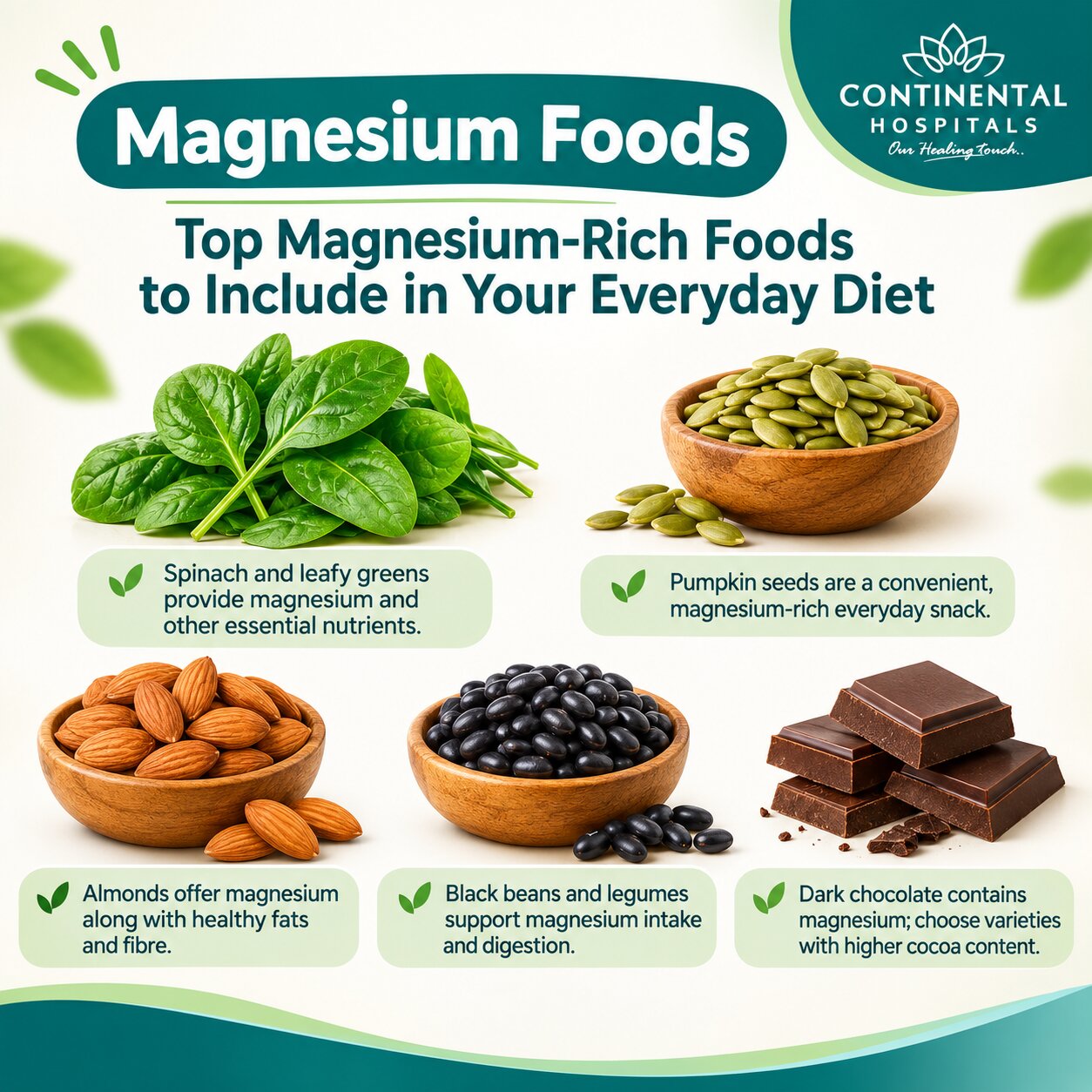
What kind of food should you consume to boost your magnesium intake? Below are some of the best foods to include in your daily diet:

1. Pumpkin Seeds
Pumpkin seeds are considered one of the best magnesium foods. Apart from magnesium, they contain healthy fats, proteins, and zinc. They can be added to salads, breakfast bowls, smoothies, or simply eaten as a snack.

2. Almonds
Another easy way to add magnesium and healthy fats to your diet is consuming almonds. This food can also help keep muscles and bones healthy when eaten in moderation.

3. Spinach
This leafy green vegetable contains magnesium, iron, and many other essential nutrients. Add it to your curries, soups, dals, or vegetables for a better nutrient intake.

4. Dark Chocolate
Consuming dark chocolate, which contains more cocoa than milk chocolate, is an excellent way to get both magnesium and antioxidants in your body.

5. Black Beans
These beans are an excellent source of magnesium, fiber, and plant protein. They are helpful in ensuring good digestive health and can be used in salads, soups, and other meals.

6. Avocados
Avocados are a source of magnesium, potassium, fiber, and healthy fats. They can be used in salads, sandwiches, and even breakfast meals.

Second Opinion

7. Whole Grains
These include brown rice, oats, quinoa, and whole wheat, which all have magnesium. You should consider using whole grains as opposed to refined grains to improve your nutrient intake.

8. Bananas
These fruits are a good source of magnesium and potassium that are important in ensuring that muscles and nerves work normally. They can be included in your breakfast or eaten as snacks.

9. Cashews
Cashews are foods with magnesium and have healthy fats, proteins, and other minerals. They should be used in moderation in your diet.

10. Legumes
This includes lentils, chickpeas, kidney beans, and other legumes that offer magnesium, proteins, and dietary fiber. They are particularly helpful for vegetarians.

Visit the Nutrition and Dietetics Department at Continental Hospitals, Hyderabad, for expert nutritional care.

What Are the Health Benefits of Consuming Food Sources Rich in Magnesium?

Why should you take magnesium daily? This mineral aids in many processes within your body.

  • Muscle function: Magnesium aids the proper contraction and relaxation of your muscles.
  • Bone health: This mineral plays a role in bone development and calcium regulation.
  • Heart health: It aids in heart rhythm maintenance.
  • Nerve function: Magnesium is an essential part of nerve-to-muscle communication.
  • Energy production: Magnesium aids in producing energy from food consumption.
  • Blood sugar control: Magnesium helps regulate your blood sugar levels.
  • Blood pressure maintenance: Magnesium intake contributes to healthy blood pressure levels.
What Are the Symptoms of Magnesium Deficiency?

Is there any symptom exhibited by the body when there is magnesium deficiency? Yes, but mild magnesium deficiency doesn’t have any obvious symptoms in the beginning.

Need an Appointment?

Some of the symptoms could be:

  • Muscle cramps or muscle spasms
  • Weakness and fatigue
  • Lack of appetite
  • Nausea
  • Tingling or numbness
  • Irregular heartbeat in extreme cases

Extreme magnesium deficiency can lead to seizures and irregular heartbeats. The symptoms may also be because of other diseases.

Can Magnesium Be Obtained Through Foods Only?

For the most part, people can achieve adequate magnesium levels through foods that include vegetables, fruits, nuts, seeds, beans, and whole grains.

Nevertheless, there are several factors, such as certain diseases, malabsorption problems, drugs, and poor nutrition, that may predispose one to magnesium deficiency. The use of magnesium supplements is recommended by a doctor if required; an overdose can lead to diarrhea.

Why should you opt for Continental Hospitals for Nutrition Guidance?

Why is professional nutrition guidance necessary for proper healthcare? There are specific nutritional needs that vary from person to person due to differences in age, lifestyle, medical background, and health problems.

Continental Hospitals in Hyderabad provides all-inclusive healthcare assistance facilitated by skilled doctors, advanced diagnostic facilities, and specialized medical expertise. Continental Hospitals is certified by some of the best accrediting bodies like JCI, NABH, and QAI.

Guidance is provided by Continental Hospitals' experts regarding the need for balanced diet, nutrition deficiencies, and other dietary concerns based on the individual health needs.

Conclusion

Magnesium is an essential mineral that helps in the functioning of muscles, nerves, bones, and the heart and in providing energy to the body. Incorporating foods rich in magnesium like pumpkin seeds, almonds, spinach, legumes, whole grains, and bananas in your regular meals will ensure proper magnesium balance in your body.

Healthy eating is one of the easiest ways to ensure good health. In case you have fatigue, muscle spasms, or deficiency, you should visit our best nutritionist or dietitian in Hyderabad at Continental Hospitals, Hyderabad.


Frequently Asked Questions

Several everyday foods are excellent sources of magnesium. Pumpkin seeds are among the richest dietary sources. Almonds and cashews also provide good amounts of this mineral. Spinach and other leafy green vegetables contain magnesium. Whole grains such as brown rice and oats can support daily intake. Black beans and lentils are useful plant-based sources. Avocados provide magnesium along with healthy fats. Bananas contain smaller amounts of magnesium. Dark chocolate with a high cocoa content can also contribute to magnesium intake. Tofu is another nutritious option. Including a variety of these foods helps maintain a balanced diet. Choose minimally processed foods whenever possible. A varied diet can help meet your daily magnesium requirements.
Magnesium is an essential mineral that supports several important body functions. It helps muscles contract and relax properly. It plays a role in maintaining normal nerve function. Magnesium supports a steady heartbeat and healthy muscle activity. It also contributes to strong bones and teeth. The mineral is involved in energy production. It helps regulate blood glucose levels. Magnesium supports normal blood pressure regulation. It also contributes to protein synthesis. The body needs magnesium for hundreds of biochemical reactions. Adequate magnesium intake supports overall health and well-being. Low magnesium levels may affect muscle and nerve function. Eating magnesium-rich foods regularly can help maintain healthy levels.
Certain fruits provide magnesium along with other essential nutrients. Avocados are a good source of magnesium and healthy fats. Bananas contain magnesium and potassium. Dried figs provide magnesium and dietary fibre. Papayas offer small amounts of magnesium along with vitamin C. Raspberries and blackberries also contribute to daily magnesium intake. Dates contain magnesium and natural carbohydrates. Prunes provide magnesium and support digestive health through their fibre content. Guavas offer several vitamins and minerals. These fruits can be included in breakfast or snacks. Fresh fruits are generally a nutritious choice for everyday meals. Combining fruits with nuts and seeds can increase magnesium intake. Eating different fruits helps provide a range of nutrients. Choose whole fruits instead of relying on fruit juices.
Magnesium plays a role in regulating nerve and muscle function. It is also involved in processes that support normal sleep regulation. Adequate magnesium intake may help support healthy sleep patterns. The mineral contributes to normal nervous system function. It is involved in regulating neurotransmitters that influence relaxation. Some studies suggest a possible connection between magnesium intake and better sleep. However, research findings are not conclusive. Magnesium is not a guaranteed treatment for insomnia. Pumpkin seeds, almonds and spinach are useful dietary sources. Whole grains and legumes can also contribute to magnesium intake. Eating a balanced diet supports overall health. Maintaining regular sleep timings is equally important. Reducing caffeine intake late in the day may also help. Consult a healthcare professional if sleep problems continue.
Magnesium deficiency can affect several functions in the body. Early symptoms may be mild and difficult to identify. Loss of appetite can be an initial sign. Nausea and vomiting may also occur. Some people experience tiredness and general weakness. Muscle cramps and involuntary muscle contractions can develop. Tingling or numbness may occur in certain cases. Severe deficiency can affect heart rhythm. It may also cause seizures in serious cases. Low magnesium levels can sometimes occur alongside low potassium or calcium levels. Certain digestive conditions and medications can increase the risk of deficiency. A blood test and medical evaluation may help identify the problem. Consult a doctor if you experience persistent or unusual symptoms.
The daily magnesium requirement varies depending on age and sex. Adult men generally need around 400 to 420 mg per day. Adult women generally need around 310 to 320 mg per day. Pregnant women may require higher amounts. Breastfeeding women also have specific nutritional requirements. Magnesium supports muscle and nerve function. It contributes to healthy bones and energy production. A balanced diet can provide much of the required magnesium. Nuts, seeds and leafy vegetables are useful sources. Whole grains and legumes can also improve daily intake. Individual requirements may vary depending on health conditions. Certain medications can influence magnesium levels. A healthcare professional or dietitian can recommend an appropriate intake. Avoid taking high-dose supplements without medical advice.
Magnesium is important for normal muscle contraction and relaxation. Low magnesium levels can contribute to muscle cramps and spasms. Adequate magnesium intake supports normal muscle function. Pumpkin seeds and almonds are useful dietary sources. Spinach and other leafy vegetables also contain magnesium. Beans and lentils can contribute to daily requirements. Whole grains provide additional magnesium. However, not all muscle cramps are caused by magnesium deficiency. Dehydration and muscle fatigue can also trigger cramps. Certain medications and medical conditions may contribute to muscle discomfort. Magnesium supplementation does not reliably prevent all types of muscle cramps. Persistent or severe cramps should be evaluated by a doctor. A balanced diet and adequate hydration support muscle health. Seek medical advice before starting magnesium supplements.
Getting magnesium from food is generally recommended for healthy individuals. Natural food sources provide additional vitamins, minerals and dietary fibre. Pumpkin seeds, almonds and spinach are nutritious options. Whole grains and legumes also contribute to magnesium intake. A balanced diet can help meet daily nutritional requirements. Supplements may be recommended when dietary intake is insufficient. They may also be needed for certain diagnosed deficiencies. The appropriate supplement depends on individual health requirements. Taking excessive magnesium supplements can cause diarrhoea and nausea. Very high doses may lead to serious complications, particularly in people with kidney problems. Certain medications can interact with magnesium supplements. Always consult a healthcare professional before taking supplements. Food-based nutrition should remain an important part of everyday health.
Disclaimer: The information provided in this blog is intended for general knowledge and informational purposes only, and does not constitute medical advice. Always consult with a qualified healthcare professional for any medical concerns or before making any decisions about your health.

Get in Touch With Us

Whether you are from India or abroad, we are here to help you with your medical queries. Please fill out the form below and our team will connect with you shortly.

  • ✔ Quick response from our medical experts
  • ✔ Secure data handling & privacy
  • ✔ Easy upload for reports & documents
banner_image

Chat with our medical experts on WhatsApp for quick assistance and hassle-free appointment booking

Recent Posts