post-title

Viral Gastroenteritis: How Long Does Stomach Flu Last?

Written by - Editorial Team
Medically Reviewed by - Dr Guru N Reddy

Viral gastroenteritis, often called the stomach flu, is one of the most common infections that affect both children and adults. It can make you feel weak, nauseous, and dehydrated. While it usually goes away on its own, understanding how long it lasts, what causes it, and how to recover quickly can help you get back on your feet faster.

What is Viral Gastroenteritis?

Viral gastroenteritis is an infection of the stomach and intestines caused by viruses such as norovirus, rotavirus, adenovirus, or astrovirus. It spreads easily through contaminated food, water, or contact with infected people. Unlike the flu that affects your respiratory system, the stomach flu targets your digestive system.

The infection leads to inflammation of the stomach and intestines, which causes symptoms like diarrhea, vomiting, abdominal pain, and dehydration. While most cases are mild, severe infections can require medical attention, especially in young children, older adults, and people with weak immunity.

Visit our best gastroenterologist in hyderabad at Continental Hospitals, Hyderabad, for expert diagnosis and advanced treatment of digestive, liver, pancreas, and gastrointestinal disorders.
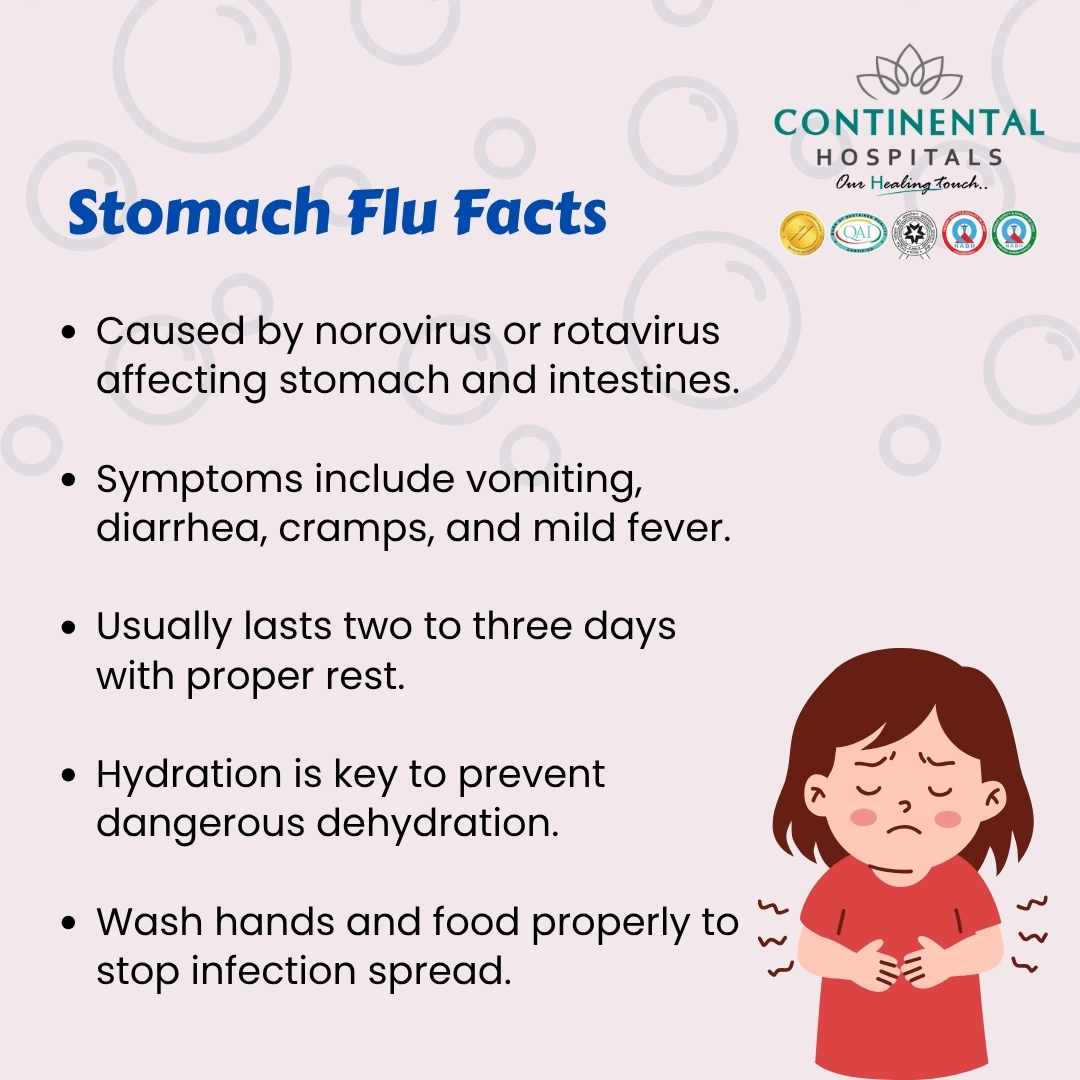
How Long Does Stomach Flu Last?

One of the most common questions patients ask is, “How long does the stomach flu last?” The answer depends on the type of virus and your overall health.

  • Mild cases usually last for 1 to 3 days.
  • Moderate infections may take around 4 to 5 days to subside.
  • Severe cases, especially in young children or the elderly, can last up to a week or longer if dehydration occurs.

Even after symptoms disappear, the virus can still be present in your stool for a few days, which means maintaining good hygiene is important to prevent spreading it to others.

What are the common symptoms of viral gastroenteritis?

The symptoms may start within 12 to 48 hours after exposure to the virus. Common signs include:

  • Diarrhea (watery or loose stools)
  • Nausea and vomiting
  • Abdominal cramps or pain
  • Fever and chills
  • Fatigue and body weakness
  • Headache
  • Loss of appetite

These symptoms usually appear suddenly and may last for a few days before you start feeling better. Staying hydrated and getting enough rest are key steps in recovery.

Second Opinion

What Causes the Stomach Flu?

Several viruses can cause gastroenteritis. The most common include the following:

Norovirus: The leading cause of viral gastroenteritis in adults and children. It spreads through contaminated food, water, or surfaces.

Rotavirus: Common among infants and young children. Vaccination helps prevent severe rotavirus infections.

Adenovirus: Often spreads in daycare centers and schools, leading to mild gastroenteritis in children.

Astrovirus: Usually causes mild stomach flu, more common in children and the elderly.

Understanding the cause helps doctors decide on the best treatment approach and preventive measures.

How is Viral Gastroenteritis Spread?

Viral gastroenteritis is highly contagious. It spreads through:

Need an Appointment?

  • Consuming contaminated food or water
  • Touching infected surfaces and then your mouth
  • Close contact with someone who has the infection
  • Sharing utensils, towels, or personal items

Practicing good hygiene, washing hands frequently, and cleaning contaminated surfaces can help prevent the spread of infection.

How to Recover Quickly from Stomach Flu?

While there is no specific cure for viral gastroenteritis, supportive care helps relieve symptoms and speed recovery. Here are some tips to help you recover faster:

1. Stay Hydrated:
Drink plenty of fluids such as water, clear soups, and oral rehydration solutions. Dehydration is the biggest risk during stomach flu, especially if vomiting and diarrhea are severe.

2. Eat Light and Simple Foods:
When your appetite returns, start with bland foods like rice, bananas, toast, or applesauce. Avoid spicy, oily, or dairy-based foods until your stomach settles.

3. Get Enough Rest:
Your body needs energy to fight off the infection. Sleep well and avoid physical exertion until you regain strength.

4. Avoid Caffeine and Alcohol:
These can worsen dehydration and delay recovery. Stick to water and hydrating fluids.

5. Use Over-the-Counter Medicines Carefully:
Doctors may recommend medications to control vomiting or diarrhea, but it’s best to take them only under medical guidance.

When Should You See a Doctor?

In most cases, viral gastroenteritis improves within a few days. However, seek medical help if you notice:

  • Persistent vomiting for more than 48 hours
  • High fever that doesn’t go away
  • Blood in vomit or stool
  • Signs of dehydration such as dry mouth, dizziness, or dark urine
  • Severe abdominal pain

These may indicate a more serious condition or severe dehydration that requires medical care.

How to Prevent Viral Gastroenteritis?

Prevention is the best protection. Simple hygiene and food safety measures can reduce your risk:

  • Wash your hands frequently with soap and water
  • Disinfect commonly touched surfaces
  • Avoid eating raw or undercooked food
  • Wash fruits and vegetables thoroughly
  • Keep food at safe temperatures
  • Avoid close contact with people who have stomach flu

For children, rotavirus vaccination provides strong protection against one of the leading causes of gastroenteritis.

Why Choose Continental Hospitals?

Continental Hospitals, Hyderabad, is a globally accredited and patient-centric healthcare institution recognized for its excellence in diagnosis, treatment, and infection control. The hospital is JCI-accredited, ensuring the highest international standards in patient safety and quality of care.

Our Department of Gastroenterology specializes in diagnosing and managing all gastrointestinal infections, including viral gastroenteritis. With advanced laboratory diagnostics, experienced gastroenterologists, and state-of-the-art facilities, we ensure accurate diagnosis and faster recovery.

Continental Hospitals is known for its:

  • Expert team of gastroenterologists and digestive care specialists
  • 24/7 emergency and critical care support
  • Advanced infection prevention and hygiene protocols
  • Personalized care for adults and children
  • Modern diagnostic and imaging facilities

We focus on holistic treatment that helps patients recover safely while preventing complications.

Conclusion

Viral gastroenteritis can be uncomfortable, but with proper care, it usually resolves within a few days. Staying hydrated, resting, and following hygienic practices can make a big difference in recovery.

Book an appointment with our gastroenterology specialists in Hyderabad at Continental Hospitals, Hyderabad, for expert diagnosis and complete digestive health care.

Related Blog Topics:

Stomach Flu: Causes and Prevention

Frequently Asked Questions

Viral gastroenteritis, commonly called stomach flu, is an infection of the stomach and intestines caused by viruses rather than influenza viruses. The most common causes include norovirus, rotavirus, adenovirus, and astrovirus. These viruses spread through contaminated food, water, surfaces, or close contact with an infected person. Once inside the body, they irritate the digestive tract, leading to inflammation and symptoms such as diarrhea, vomiting, nausea, stomach cramps, and fever. The illness is highly contagious and can spread rapidly in homes, schools, offices, hospitals, and community settings. Although most healthy adults recover without complications, infants, older adults, pregnant women, and people with weakened immune systems may develop severe dehydration and require medical care. Good hygiene and safe food handling are the best ways to reduce the risk of infection.
The duration of viral gastroenteritis depends on the virus responsible and the individual's overall health. In most healthy adults, symptoms begin within one to three days after exposure and usually last between one and three days. Some infections, particularly those caused by rotavirus or adenovirus, may continue for up to a week. Mild fatigue and reduced appetite can persist for several days after diarrhea and vomiting have stopped. Recovery is generally quicker when adequate fluids, rest, and a light diet are maintained. Young children, older adults, and people with chronic illnesses may take longer to recover. If symptoms continue beyond a week or worsen instead of improving, medical evaluation is recommended to rule out dehydration or other gastrointestinal conditions.
The symptoms of viral gastroenteritis usually appear suddenly and may vary in severity from person to person. Common symptoms include watery diarrhea, nausea, vomiting, stomach cramps, abdominal pain, bloating, loss of appetite, mild fever, headache, muscle aches, and general weakness. Some people may experience chills and feel extremely tired during the illness. Frequent vomiting and diarrhea can quickly lead to dehydration, causing excessive thirst, dry mouth, dizziness, dark urine, and reduced urination. Children may become unusually sleepy or irritable when dehydrated. Most symptoms gradually improve within a few days, but severe abdominal pain, persistent vomiting, or blood in the stool requires immediate medical attention.
The most effective way to recover from viral gastroenteritis is to prevent dehydration and allow your digestive system to rest. Drink plenty of water, oral rehydration solutions, clear soups, or electrolyte-containing fluids in small, frequent sips. Once vomiting decreases, gradually introduce bland foods such as rice, bananas, toast, applesauce, boiled potatoes, and plain crackers. Avoid spicy foods, oily meals, alcohol, caffeine, and dairy products until symptoms completely resolve. Get adequate sleep and avoid strenuous physical activity during recovery. Most viral infections do not require antibiotics because antibiotics are ineffective against viruses. Follow your doctor's advice regarding medications for nausea or diarrhea, especially for children, older adults, and individuals with underlying medical conditions.
Medical attention should be sought if symptoms become severe or dehydration develops. You should consult a doctor if vomiting or diarrhea lasts longer than two to three days without improvement, if you cannot keep fluids down, or if you experience high fever, severe abdominal pain, blood in vomit or stool, confusion, fainting, or signs of significant dehydration. Infants, elderly individuals, pregnant women, and people with diabetes, kidney disease, cancer, or weakened immunity should seek medical care earlier because they have a higher risk of complications. Persistent symptoms may also indicate bacterial infections, food poisoning, inflammatory bowel disease, or other digestive disorders that require different treatment approaches.
Viral gastroenteritis spreads mainly through the fecal-oral route, where tiny virus particles enter the mouth after contact with contaminated hands, food, water, or surfaces. It can also spread through close contact with an infected person, sharing utensils, preparing food while infected, or touching contaminated objects and then touching the face. Some viruses, especially norovirus, are extremely contagious and can survive on surfaces for several days. People may remain contagious even after symptoms improve, making proper hygiene essential. Washing hands thoroughly with soap and water, disinfecting commonly touched surfaces, and avoiding food preparation while ill significantly reduce the risk of spreading the infection to family members and coworkers.
Although viral gastroenteritis cannot always be prevented, several simple measures greatly reduce the risk of infection. Wash your hands thoroughly with soap and water before eating, after using the toilet, and after changing diapers. Drink clean, safe water and consume properly cooked food. Wash fruits and vegetables before eating and avoid cross-contamination during food preparation. Clean frequently touched surfaces with effective disinfectants, especially if someone at home is ill. Avoid sharing utensils, towels, or personal items with infected individuals. Children should receive recommended rotavirus vaccination according to national immunization schedules, as it helps prevent severe rotavirus infections and related complications.
Most cases of viral gastroenteritis improve without specific treatment, but severe dehydration can become dangerous if ignored. Continuous vomiting and diarrhea may cause significant loss of water and essential electrolytes, leading to dizziness, rapid heartbeat, low blood pressure, confusion, kidney problems, and even hospitalization. Infants, older adults, pregnant women, and individuals with weakened immune systems are especially vulnerable to serious complications. Delaying medical care can increase the risk of severe dehydration and prolonged recovery. Prompt fluid replacement, early medical evaluation for high-risk patients, and timely treatment of complications help ensure a safe recovery and reduce the likelihood of long-term health problems.
Disclaimer: The information provided in this blog is intended for general knowledge and informational purposes only, and does not constitute medical advice. Always consult with a qualified healthcare professional for any medical concerns or before making any decisions about your health.

Get in Touch With Us

Whether you are from India or abroad, we are here to help you with your medical queries. Please fill out the form below and our team will connect with you shortly.

  • ✔ Quick response from our medical experts
  • ✔ Secure data handling & privacy
  • ✔ Easy upload for reports & documents
banner_image

Chat with our medical experts on WhatsApp for quick assistance and hassle-free appointment booking

Recent Posts