.webp)


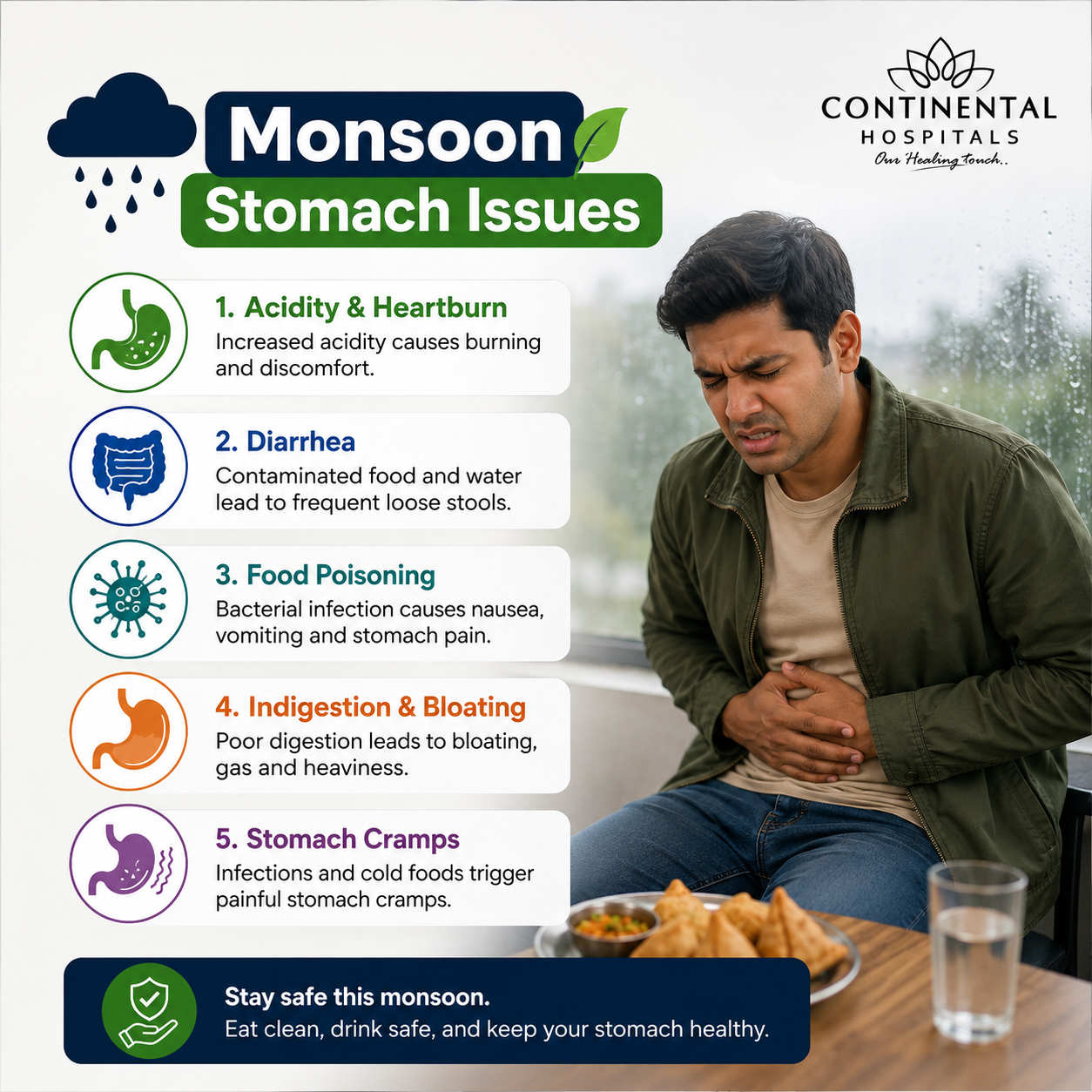
The monsoon brings welcome relief from the summer heat, but it also increases the risk of many health concerns, especially stomach issues. During this season, contaminated food, unsafe drinking water, and increased bacterial and viral growth can affect your digestive system. Many people experience stomach pain, diarrhea, vomiting, food poisoning, and stomach infections because of poor food hygiene and weakened digestive health.
Understanding the common stomach issues during monsoon can help you protect yourself and your family. Eating freshly prepared food, drinking clean water, and maintaining good hygiene are simple yet effective ways to reduce the risk of illness. If digestive symptoms continue or become severe, seeking timely medical care is essential to prevent complications.
Why Do Stomach Issues Increase During Monsoon?
The rainy season creates an ideal environment for bacteria, viruses, and parasites to grow rapidly. Food and water become easily contaminated, leading to various monsoon digestive problems. Humidity also affects food storage, increasing the chances of food spoilage.
Some common reasons include:
- Drinking contaminated water
- Eating unhygienic street food
- Poor hand hygiene
- Improper food storage
- Increased bacterial and viral infections
- Weakened digestive health due to seasonal changes
Taking preventive measures can significantly lower your risk of developing stomach issues during this season.
Visit the best gastroenterologist in gachibowli at Continental Hospitals and consult our best gastroenterologists in Hyderabad. Our expert digestive health specialists provide accurate diagnosis, advanced treatment, and personalized care for a wide range of digestive disorders.
What Are the Most Common Stomach Issues During Monsoon?
Several digestive illnesses become more common during the rainy season. Recognizing the symptoms early helps ensure faster treatment and recovery.
1. Food Poisoning
Food poisoning is one of the most common monsoon stomach infections. It occurs when food is contaminated with bacteria, viruses, or toxins.

Common symptoms include:
- Nausea
- Vomiting
- Diarrhea
- Stomach cramps
- Fever
- Weakness
Eating freshly cooked meals and avoiding stale food can reduce the risk.
2. Diarrhea
Diarrhea frequently occurs during monsoon because of contaminated food and water. Frequent loose stools can quickly lead to dehydration if not treated promptly.
Symptoms include:
- Frequent loose motions
- Abdominal pain
- Dehydration
- Fatigue
- Loss of appetite
Drinking plenty of fluids and seeking medical care when symptoms persist are important.
3. Gastroenteritis
Gastroenteritis is an inflammation of the stomach and intestines caused by bacterial or viral infections. It is one of the leading stomach issues during monsoon.
Symptoms include:
- Vomiting
- Watery diarrhea
- Fever
- Stomach pain
- Body weakness
Proper hydration and medical evaluation are essential for recovery.
4. Typhoid
Typhoid spreads through contaminated food and water. It commonly affects digestive health during the rainy season.
Symptoms may include:
- High fever
- Persistent stomach pain
- Weakness
- Constipation or diarrhea
- Headache
- Poor appetite
Early diagnosis helps prevent serious complications.
5. Cholera
Cholera is another serious stomach infection that spreads through contaminated water. Although preventable, it requires immediate medical attention.
Common symptoms include:
- Severe watery diarrhea
- Vomiting
- Extreme dehydration
- Muscle cramps
Prompt treatment can prevent life-threatening complications.
6. Parasitic Infections
Rainwater contamination increases exposure to parasites that affect the digestive tract.
Symptoms include:
- Bloating
- Abdominal discomfort
- Loose stools
- Weight loss
- Fatigue
Proper hygiene and safe drinking water help reduce the risk.
What Symptoms Should You Never Ignore?
Some digestive symptoms may appear mild initially but can become serious if ignored.
Seek medical attention if you experience:
- Severe abdominal pain
- Blood in stools
- Continuous vomiting
- High fever
- Persistent diarrhea lasting more than two days
- Signs of dehydration such as dizziness, dry mouth, or reduced urination
- Sudden weight loss
- Severe weakness
Ignoring these warning signs may lead to complications requiring hospitalization.
How Can You Prevent Stomach Issues During Monsoon?
Preventing monsoon digestive problems is easier than treating them. Healthy eating habits and proper hygiene play a major role.
Follow these simple preventive measures:
- Drink boiled or purified water.
- Wash hands before eating and after using the restroom.
- Eat freshly cooked meals.
- Avoid raw salads from outside.
- Wash fruits and vegetables thoroughly.
- Avoid roadside food during heavy rains.
- Store food properly in clean containers.
- Maintain kitchen hygiene.
- Consume probiotic-rich foods if advised by your doctor.
- Stay hydrated throughout the day.
These habits help maintain better digestive health and reduce the risk of infections.
Which Foods Support Digestive Health During Monsoon?
Choosing the right foods can strengthen your digestive system and lower the chances of developing stomach issues.
Recommended foods include:
- Freshly cooked rice
- Moong dal
- Vegetable soups
- Curd if suitable for your health condition
- Bananas
- Apples
- Steamed vegetables
- Coconut water from hygienic sources
- Herbal teas
- Soft cooked foods that are easy to digest
Avoid oily, spicy, and uncooked foods whenever possible during the rainy season.
Who Is at Higher Risk of Monsoon Stomach Infections?
Anyone can develop stomach issues during monsoon, but certain groups have a higher risk.
These include:
- Children
- Older adults
- Pregnant women
- People with diabetes
- Individuals with weakened immunity
- Patients with chronic digestive disorders
- People consuming unhygienic food frequently
These individuals should take extra precautions during the rainy season.
When Should You Visit a Doctor for Stomach Issues?
Many mild digestive complaints improve with rest and hydration. However, some symptoms require immediate medical evaluation.
Visit a doctor if you have:
- Persistent stomach pain
- Frequent vomiting
- Continuous diarrhea
- High fever with digestive symptoms
- Blood in stools
- Difficulty eating or drinking
- Signs of dehydration
- Recurrent stomach infections
Early diagnosis helps prevent complications and ensures faster recovery.
Why Choose Continental Hospitals for Digestive Health Care?
Continental Hospitals is recognized as one of the best hospitals in Hyderabad for advanced digestive health care. The hospital provides comprehensive evaluation and treatment for various stomach issues, including food poisoning, gastroenteritis, stomach infections, and other digestive disorders.
Patients benefit from:
- Expert Gastroenterologists and Digestive Health Specialists
- Advanced diagnostic technology for accurate evaluation
- Comprehensive treatment for digestive diseases
- 24/7 emergency and critical care services
- Multidisciplinary team approach
- Personalized treatment plans
- International standards of patient safety
- JCI-accredited hospital
- NABH-accredited healthcare services
- QAI Accredited quality care
- Modern infrastructure with advanced medical technology
- Compassionate and patient-centered care
The hospital's commitment to clinical excellence, internationally recognized accreditations, and experienced specialists ensures trusted digestive care for patients of all ages.
Conclusion
The monsoon increases the risk of stomach issues, but many of these illnesses can be prevented through proper hygiene, safe food practices, and clean drinking water. Understanding the causes, recognizing early symptoms, and following healthy eating habits can help protect your digestive health throughout the rainy season.
Do not ignore persistent abdominal pain, diarrhea, vomiting, or signs of dehydration. Early medical attention can prevent serious complications and support a quicker recovery.
If you are experiencing stomach issues during the monsoon, frequent monsoon digestive problems, or symptoms of a stomach infection, consult our best gastroenterologist in Hyderabad at Continental Hospitals. Our expert digestive health specialists provide accurate diagnosis, advanced treatment, and personalized care to help you recover quickly and maintain long term digestive health.
Related Blogs: