.webp)


Food safety has become a growing concern for many families in India. With increasing reports about antibiotic residues in food, people are asking important questions about what they eat every day. One such concern is nitrofuran metabolites, especially AOZ, which is often discussed in relation to poultry, meat, and seafood safety. But what exactly is AOZ? Is it really dangerous to health? And should you be worried?
What Are Nitrofuran Antibiotics?
Nitrofurans are a group of synthetic antibiotics that were once used in animal farming to prevent infections and promote faster growth. These antibiotics were commonly used in poultry, fish farming, and livestock.
Over time, health authorities discovered that nitrofurans break down inside the body into harmful compounds known as nitrofuran metabolites. Because of serious safety concerns, nitrofuran antibiotics are now banned in food-producing animals in many countries, including India.
Concerned about antibiotic residues or unexplained health issues? Consult our best General Physicians speciality at Continental Hospitals.
What Is AOZ and Why Is It Important?
AOZ, also known as 3-amino-2-oxazolidinone, is one of the most commonly detected nitrofuran metabolites. It is formed when animals are exposed to nitrofurazone, a banned antibiotic.
AOZ is important because:
- It can remain in animal tissues for a long time
- It is not easily destroyed by cooking or freezing
- It may enter the human body through contaminated food
Because of these factors, AOZ has become a key marker used in food safety testing.
How Do AOZ Residues Enter the Food Chain?
AOZ can enter your food in several ways:

- Use of banned antibiotics in poultry or fish farming
- Contaminated animal feed
- Illegal or unregulated farming practices
- Poor monitoring of food safety standards
Common food sources linked to AOZ residues include poultry meat, eggs, seafood, and sometimes milk products.
Are Nitrofuran Metabolites Like AOZ Dangerous to Health?
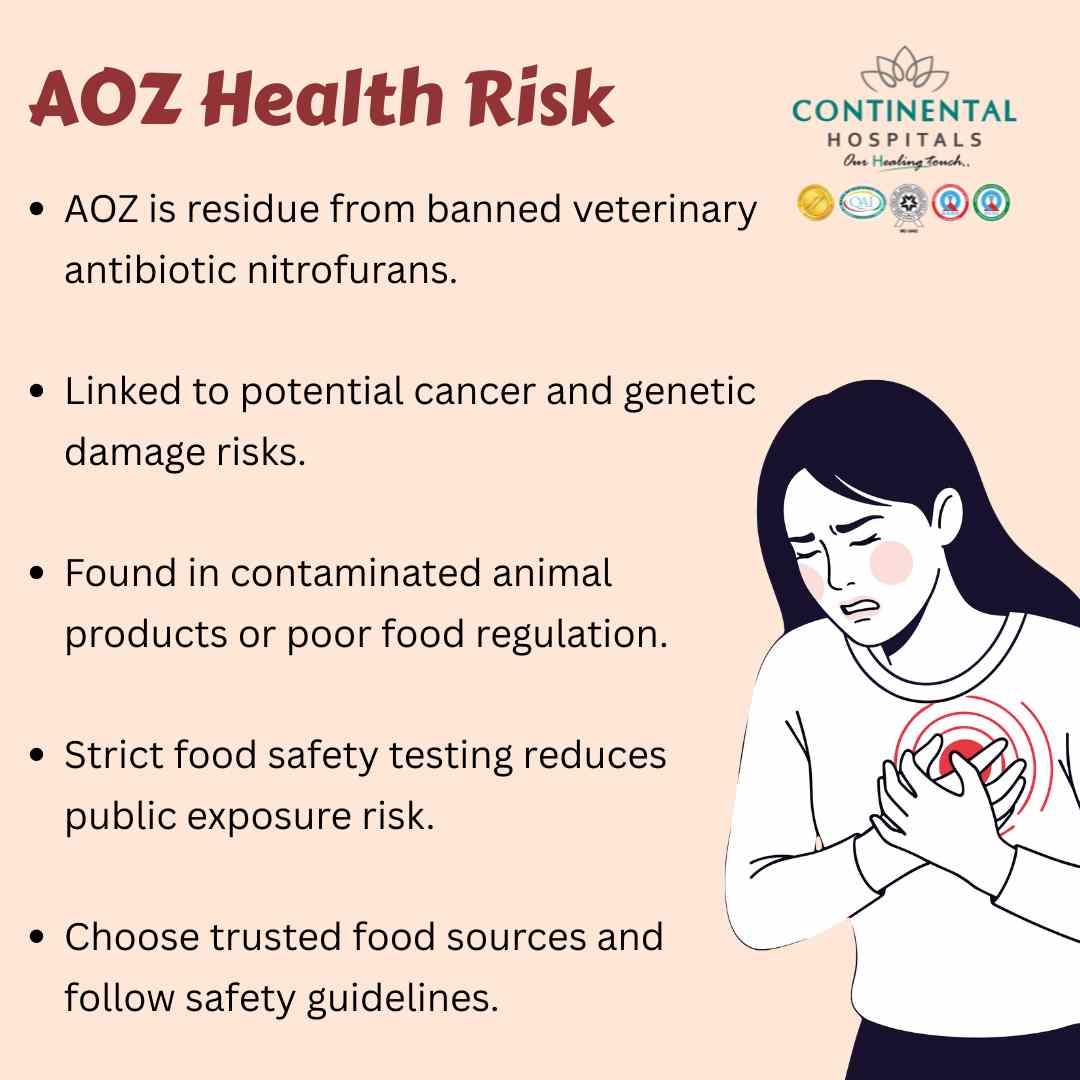
Yes, long-term exposure to nitrofuran metabolites like AOZ may pose health risks. Scientific studies and food safety authorities have raised concerns due to the following reasons.
Key AOZ Health Risks
- Possible cancer risk with prolonged exposure
- DNA damage that may increase the chance of abnormal cell growth
- Liver and kidney stress due to toxin processing
- Immune system effects over long periods
Because of these risks, AOZ is considered unsafe, and its presence in food is strictly regulated.
AOZ and Cancer Risk: What Do We Know?
One of the biggest concerns linked to AOZ is its potential cancer risk. Laboratory studies have shown that nitrofuran metabolites can damage genetic material. This type of damage may increase the risk of cancer over time, especially with repeated exposure through food.
While occasional exposure may not cause immediate illness, regular consumption of contaminated food can increase long-term health risks. This is why food safety experts strongly recommend zero tolerance for AOZ residues.
Does Cooking Destroy AOZ?
Many people believe that thorough cooking can eliminate all harmful substances from food. Unfortunately, this is not true for AOZ.
Important facts to know:
- AOZ is heat stable
- Boiling, frying, or grilling does not fully remove it
- Freezing also does not break it down
This makes prevention at the farming and supply level extremely important.
Symptoms of Antibiotic Residue Exposure
There are no immediate or specific symptoms that clearly indicate AOZ exposure. However, long-term exposure to antibiotic residues may contribute to:
- Digestive discomfort
- Fatigue or weakness
- Reduced immunity
- Liver-related issues
- Increased antibiotic resistance in the body
If you frequently consume animal products and experience unexplained health concerns, medical evaluation is advised.
Why Antibiotic Residues in Food Are a Bigger Problem?
AOZ is part of a larger issue involving food contamination risks and antibiotic residues in food.
Major concerns include:
- Increased antibiotic resistance, making infections harder to treat
- Long-term toxin exposure through daily meals
- Greater health risks for children, elderly people, and pregnant women
Food safety awareness plays a crucial role in protecting public health.
How Can You Reduce the Risk of AOZ Exposure?
You can lower your risk by taking these practical steps:
- Buy meat and eggs from trusted, regulated sources
- Avoid very cheap animal products with unknown origins
- Support food brands that follow antibiotic-free practices
- Maintain a balanced diet with plant-based foods
- Stay informed about food safety alerts
These steps do not eliminate risk completely but help reduce exposure.
How Doctors Evaluate Food-Related Health Risks
Doctors may:
- Review dietary habits
- Order blood tests to assess liver and kidney function
- Evaluate immune health
- Provide guidance on safe nutrition and lifestyle changes
Specialists such as general physicians, gastroenterologists, or internal medicine experts play an important role in managing such concerns.
Why Choose Continental Hospitals?
When it comes to food-related health concerns and toxin exposure, choosing the right healthcare provider matters. Continental Hospitals is recognized as one of the best hospitals in Hyderabad, known for its clinical excellence and patient-focused care.
Key reasons to choose Continental Hospitals:
- NABH and JCI-accredited standards of care
- Advanced diagnostic facilities for early detection
- Experienced general physicians and specialists
- Evidence-based, ethical medical practices
- Strong focus on preventive healthcare and patient education
The hospital follows strict quality and safety protocols to ensure accurate diagnosis and trusted medical guidance.
Conclusion
Nitrofuran metabolites like AOZ are not just technical food safety terms. They represent a real public health concern linked to banned antibiotics, food contamination risks, and long-term health effects. While AOZ does not usually cause immediate symptoms, repeated exposure through contaminated food may increase the risk of serious health problems, including cancer.
Consult our best General Physician at Continental Hospitals for expert evaluation, personalized guidance, and trusted care that puts your long-term health first.