.webp)

Pelvic health concerns are common among women, and two conditions that often create confusion are yeast infections and Pelvic Inflammatory Disease also known as PID. While both can cause discomfort, they are very different in terms of cause, severity, symptoms, diagnosis, and long-term impact on reproductive health. Many women wonder whether a yeast infection can lead to Pelvic Inflammatory Disease. This article explains the difference, clarifies risks, and guides you on when to seek medical attention.
Can a Yeast Infection Lead to Pelvic Inflammatory Disease?
A yeast infection is caused by an overgrowth of a fungus called Candida. It affects the vagina and vulva, leading to intense itching, burning, and thick white discharge. Pelvic Inflammatory Disease is a serious bacterial infection that affects the uterus, fallopian tubes, and ovaries. It commonly develops from sexually transmitted infections like chlamydia or gonorrhea that travel upward into the reproductive organs.
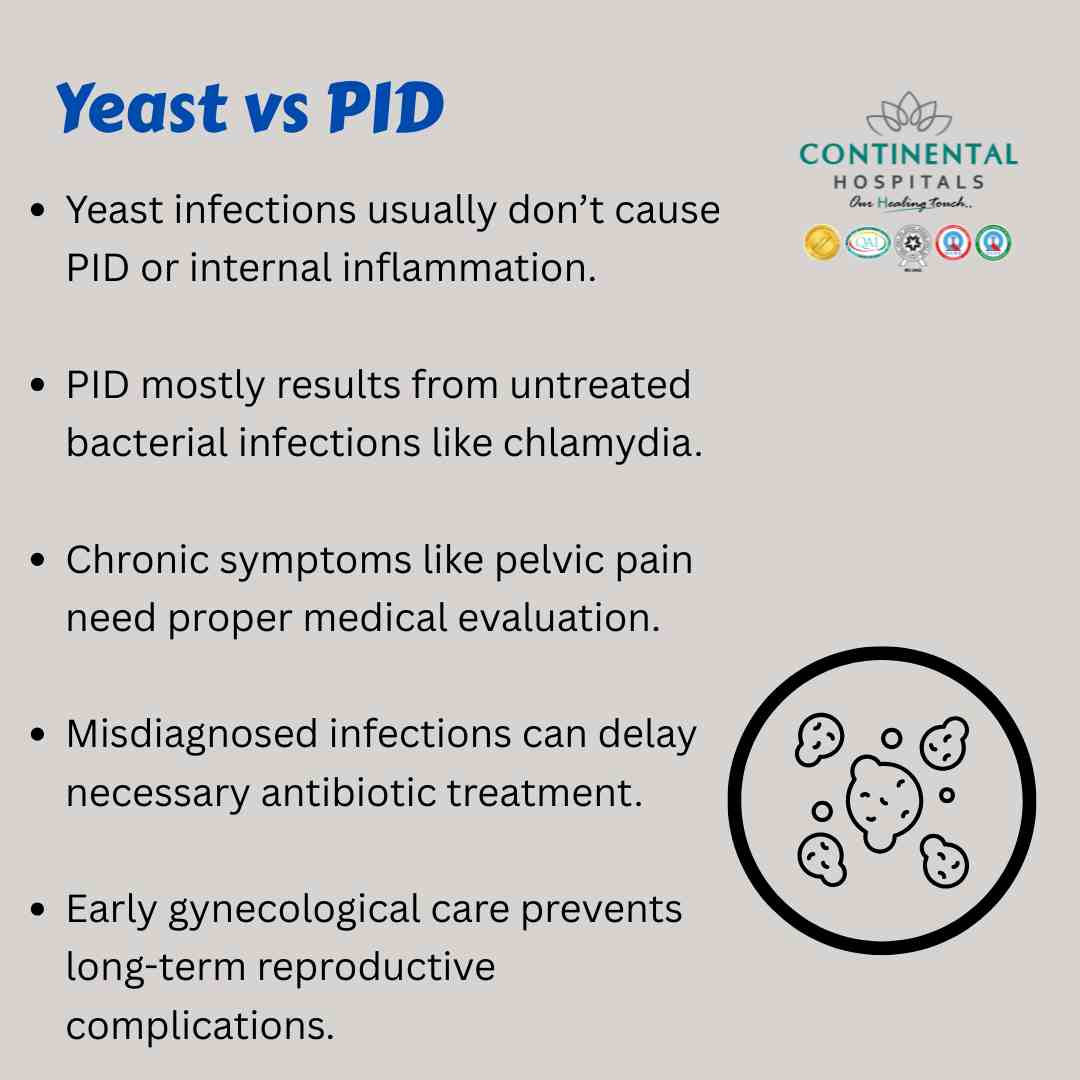
Yeast infections themselves do not cause PID. However, symptoms may sometimes overlap or be misunderstood, delaying correct diagnosis. Also, self-treatment without proper evaluation can mask underlying infections that may progress into PID. Understanding the difference is essential for timely care.
Yeast Infection vs PID Symptoms
Although both conditions affect the reproductive system, their symptoms differ significantly. Knowing how to identify them can prevent complications.
Yeast Infection Symptoms
- Intense itching and irritation in the vagina
- Thick white discharge with a cottage cheese-like appearance
- Redness and swelling around the vulva
- Burning sensation especially during urination
- No fever or abdominal pain
PID Symptoms
- Lower abdominal or pelvic pain
- Fever and chills
- Unusual yellow or green vaginal discharge
- Pain during intercourse
- Irregular menstrual bleeding
- Nausea or fatigue
- Painful or difficult urination
A key difference is that PID often presents with systemic symptoms like fever, abdominal pain, and malaise. A yeast infection typically does not cause these signs.
How to Tell if Pelvic Inflammatory Disease or Yeast Infection?
To differentiate between the two, consider the following:

Compare Discharge Characteristics
Yeast infection discharge is thick, white, and clumpy. PID discharge may be brown, yellow, or green and may have an unpleasant smell.
Look for Fever or Abdominal Pain
PID fever and abdominal pain signs are important indicators. If you have pelvic pain, high temperature, or pain during intercourse, this suggests PID rather than a yeast infection.
Check for Itching or Burning
Severe itching is more commonly associated with yeast infections. PID usually does not cause itching.
Consider Sexual Health History
A history of untreated sexually transmitted infections increases the likelihood of PID.
Diagnostic Tests for PID
PID cannot be diagnosed by symptoms alone. Doctors use a combination of tests such as:
- Pelvic examination to check for tenderness
- Cervical and vaginal swabs to test for bacteria
- Urine tests to rule out other infections
- Ultrasound to look for inflammation or fluid buildup
- Blood tests to check for infection markers
Early diagnosis is crucial because untreated PID can lead to infertility, chronic pelvic pain, and ectopic pregnancy.
Treatment Differences: Yeast Infection and PID
The treatment for both conditions is different and should only be taken under medical guidance.
Yeast Infection Treatment
Treatment usually includes antifungal medications that may be applied as creams or taken orally. Yeast infections generally resolve quickly with proper treatment.
PID Treatment
PID requires antibiotics to clear the underlying bacterial infection. In severe cases, intravenous medication or hospitalization may be needed. Sexual partners may also require treatment to prevent reinfection. Delayed treatment increases the risk of complications.
When to See a Doctor for Pelvic Pain
Visit a doctor immediately if you experience:
- Persistent pelvic or lower abdominal pain
- Fever with unusual discharge
- Pain during intercourse
- Bleeding between periods
- Symptoms not improving after treating a suspected yeast infection
- Painful urination or difficulty passing urine
Early intervention helps prevent long-term damage to reproductive organs.
Complications of Untreated PID
If left untreated, PID can result in:
- Scar tissue formation around fallopian tubes
- Difficulty getting pregnant
- Chronic pelvic pain
- Increased risk of ectopic pregnancy
- Recurrent infections
Recognizing symptoms early and seeking medical care can significantly reduce these risks.
Why Choose Continental Hospitals for Women Health and PID Care?
Continental Hospitals in Hyderabad is a trusted center for advanced women health services. The hospital maintains high international standards supported by global accreditations. The team consists of experienced gynecologists, infectious disease specialists, and emergency care experts who provide comprehensive evaluation and treatment for conditions like yeast infections, PID, and other reproductive health concerns.
You receive:
- Accurate diagnosis using advanced laboratory and imaging facilities
- Evidence based treatment plans tailored to your condition
- Multidisciplinary care for complex pelvic infections
- High quality infection control practices and accredited clinical protocols
- Confidential and compassionate care for all women
Continental Hospitals prioritizes safety, precision, and timely treatment, ensuring better outcomes for patients.
Key Points to Remember
- A yeast infection cannot directly cause Pelvic Inflammatory Disease.
- Yeast infection symptoms include itching and thick white discharge.
- PID symptoms include pelvic pain, fever, and abnormal discharge.
- Diagnostic tests help clearly identify PID and prevent complications.
- Treatment for yeast infections and PID is completely different.
- Seek medical help if symptoms persist, worsen, or include pelvic pain with fever.
Conclusion
Yeast infections and Pelvic Inflammatory Disease are two different conditions, but misunderstanding symptoms can delay proper treatment. A yeast infection does not lead to PID, but ignoring pelvic pain, fever, or unusual discharge can put your reproductive health at risk. Timely diagnosis and appropriate treatment are essential.
If you suffer from recurrent yeast infections, persistent pelvic pain, fever, or unusual discharge, consult an expert gynecologist at Continental Hospitals. Our specialists provide accurate diagnosis, personalised care, and advanced treatment to protect your reproductive health.
Book an appointment with our best Gynecology Specialists at Continental Hospitals today for complete evaluation and care.