.webp)


Low testosterone is often spoken about in relation to physical symptoms like low energy, reduced muscle mass, or changes in sexual health. But many people do not realise that testosterone also plays an important role in emotional wellbeing. When levels drop, the mind can be affected just as much as the body. Understanding this connection helps people identify symptoms early and seek timely medical support from experts at Continental Hospitals, one of the best hospitals in Hyderabad.
Testosterone is a hormone produced mainly in men, but it is also present in women in smaller amounts. It helps regulate mood, energy, confidence, and concentration. When testosterone levels become lower than normal, chemical balance in the brain can shift. This imbalance can lead to changes in how a person thinks, feels, and responds to daily challenges.
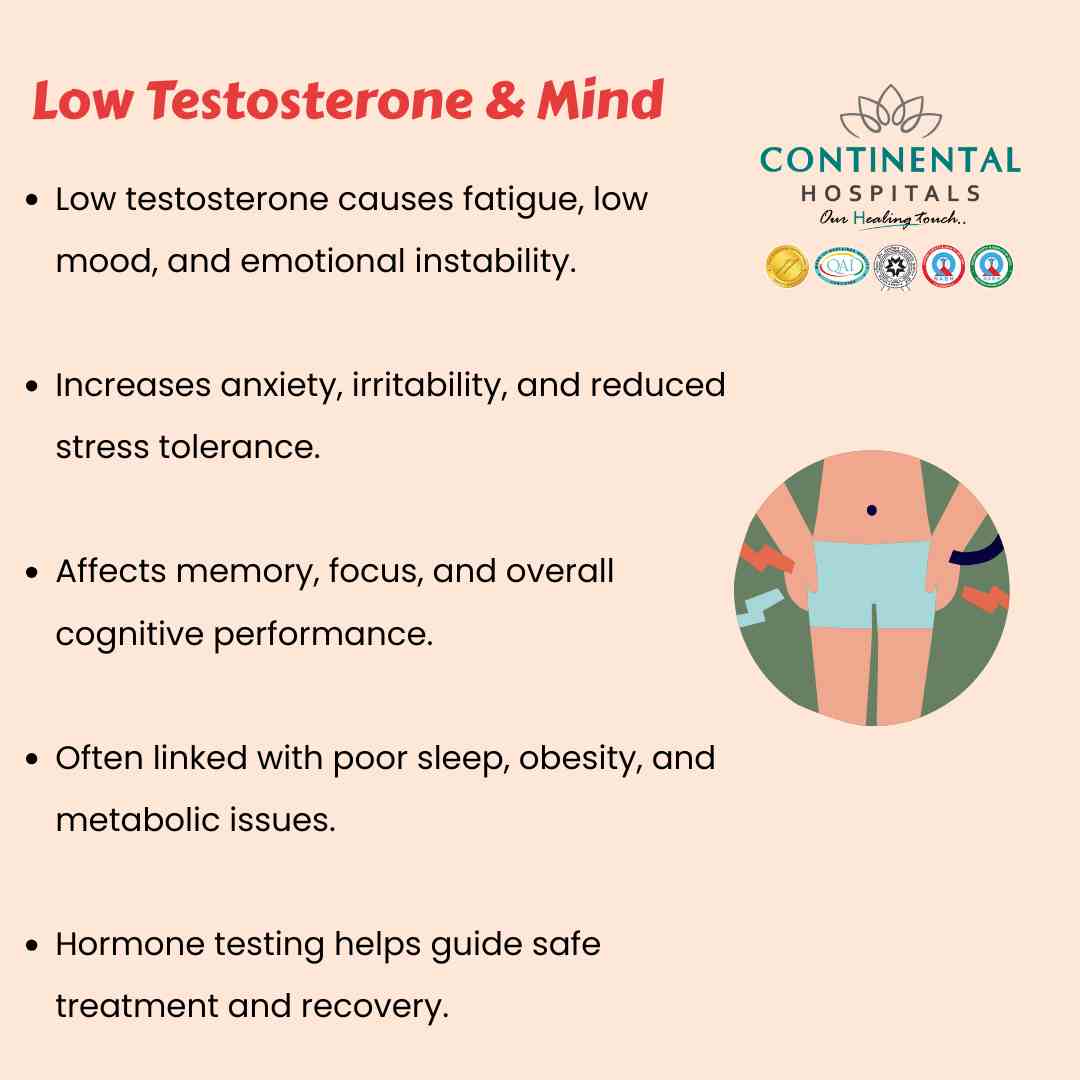
How Low Testosterone Can Affect Mental Health?
Low testosterone does not affect everyone in the same way, but many people experience emotional and cognitive changes, such as:
Low mood and sadness
People may feel emotionally low without a clear reason. This can resemble symptoms of depression.
Irritability and sudden mood changes
Hormonal imbalance affects brain chemicals responsible for emotional control. This can cause frustration or anger over small issues.
Loss of motivation
Tasks that once felt easy may suddenly feel overwhelming. The drive to complete daily activities may reduce.
Fatigue and reduced energy
Testosterone helps regulate energy. When it drops, constant tiredness becomes common, which further impacts mood.
Anxiety
Some people experience worry, restlessness, or a feeling of constant tension.
Reduced confidence or self esteem
Hormonal changes can influence how a person views themself, which can lead to social withdrawal.

Difficulty with focus and memory
Changes in hormone levels may affect cognitive function, making it harder to concentrate or remember details.
These mental health effects can occur gradually, which makes them easy to overlook. Many people assume they are caused by stress or lifestyle changes, while the real issue may be hormonal imbalance.
Why Does Low Testosterone Impact the Brain?
Testosterone influences the brain receptors that control mood, memory, and senses of reward and satisfaction. When hormone levels fall, these pathways may not work as effectively. This can create emotional swings, trouble focusing, or a lack of interest in previously enjoyable activities.
Low testosterone also affects sleep quality. Poor sleep further disrupts mood and brain function, creating a cycle that makes symptoms more noticeable.
Who Is at Risk of Low Testosterone?
Several factors can increase the chances of experiencing low testosterone. These include:
- Natural ageing
- Chronic illnesses
- Obesity
- High levels of stress
- Hormonal disorders
- Side effects of certain medications
Understanding risk factors helps people assess whether their symptoms may be linked to hormonal imbalance.
Signs That You Should Get Tested
You should consider medical evaluation if you notice:
- Ongoing fatigue
- Lack of motivation
- Mood changes affecting work or relationships
- Sleep disturbance
- Sexual health changes
- Loss of muscle strength
A simple blood test can help identify if testosterone levels are low. Early diagnosis allows doctors to create a personalised care plan that supports both physical and mental health.
Treatment Options for Low Testosterone
Treatment depends on the cause. Doctors may focus on lifestyle improvement, nutritional changes, stress management, or medical therapy. Hormone replacement therapy can also be recommended when needed. The goal is to restore hormonal balance and improve overall wellbeing.
Most people notice positive changes when treatment begins. Mood stabilises, energy improves, and daily functioning becomes easier.
How Supporting Mental Health Helps During Treatment?
It is important to pay attention to emotional health while treating low testosterone. Managing stress, maintaining healthy sleep patterns, and staying physically active all support hormonal balance. Speaking with specialists can also help address emotional concerns during recovery.
Why Choose Continental Hospitals?
Continental Hospitals is one of the best hospitals in Hyderabad, known for delivering advanced, patient centred care. The hospital follows international standards and holds prestigious accreditations, reflecting its commitment to safety, accuracy, and high quality treatment. Patients receive support from experienced endocrinologists, mental health experts, dietitians, and rehabilitation teams, all working together to create effective and personalised treatment plans.
Continental Hospitals is equipped with advanced diagnostic technology that ensures fast and precise hormone testing. The hospital environment is designed for comfort, privacy, and comprehensive care from consultation to follow up support.
Key Advantages of Choosing Continental Hospitals
- Accredited hospital offering globally recognised clinical standards
- A multidisciplinary team approach for effective hormonal and mental health management
- State of the art diagnostic laboratory and imaging services
- Personalised treatment plans based on medical history and lifestyle
- Focus on patient safety and long term wellness
- Trusted by thousands of patients as one of the best hospitals in Hyderabad
How You Can Support Your Mental Health?
Along with medical treatment, small changes can make a big difference in daily mood and energy levels.
- Maintain a balanced diet rich in protein, healthy fats, and essential nutrients
- Stay physically active with regular exercise
- Improve sleep hygiene by maintaining a consistent routine
- Reduce stress through relaxation techniques
- Avoid smoking and limit alcohol
- Stay connected with supportive people
These practices help stabilise hormones and strengthen emotional resilience.
Conclusion
Low testosterone affects more than just physical health. It can influence mood, energy, confidence, and mental clarity. Recognising the connection between hormones and emotional wellbeing is essential for early diagnosis and effective treatment. If you experience ongoing mood changes, low motivation, or unexplained fatigue, it may be time to get your hormone levels checked.
If you suffer from symptoms that may be linked to low testosterone, consult an expert at Continental Hospitals. Our best Andrologist comprehensive evaluation and personalised treatment designed to restore balance and improve overall wellbeing.