.webp)


Migraine is more than just a bad headache. It can interrupt your day, reduce your focus, affect your work, and impact your overall wellbeing. Many people look for drug-free ways to manage migraine symptoms and prevent future attacks. One of the most effective and well-studied natural methods is meditation for migraine prevention.
What Makes Migraines So Difficult to Manage?
Migraines are triggered by a mix of nervous system sensitivity, stress, anxiety, irregular sleep, hormonal fluctuations, dehydration, and even loud environments. When the brain becomes overstimulated, blood vessels and pain pathways react strongly, causing intense throbbing pain, nausea, vomiting, and sensitivity to light or sound.
Traditional treatment focuses on medicines that reduce pain or prevent attacks. While these are important, many people prefer adding natural methods like mindfulness, guided breathing, and relaxation. Meditation brings a sense of balance and calm that directly influences the brain’s pain-processing centers.
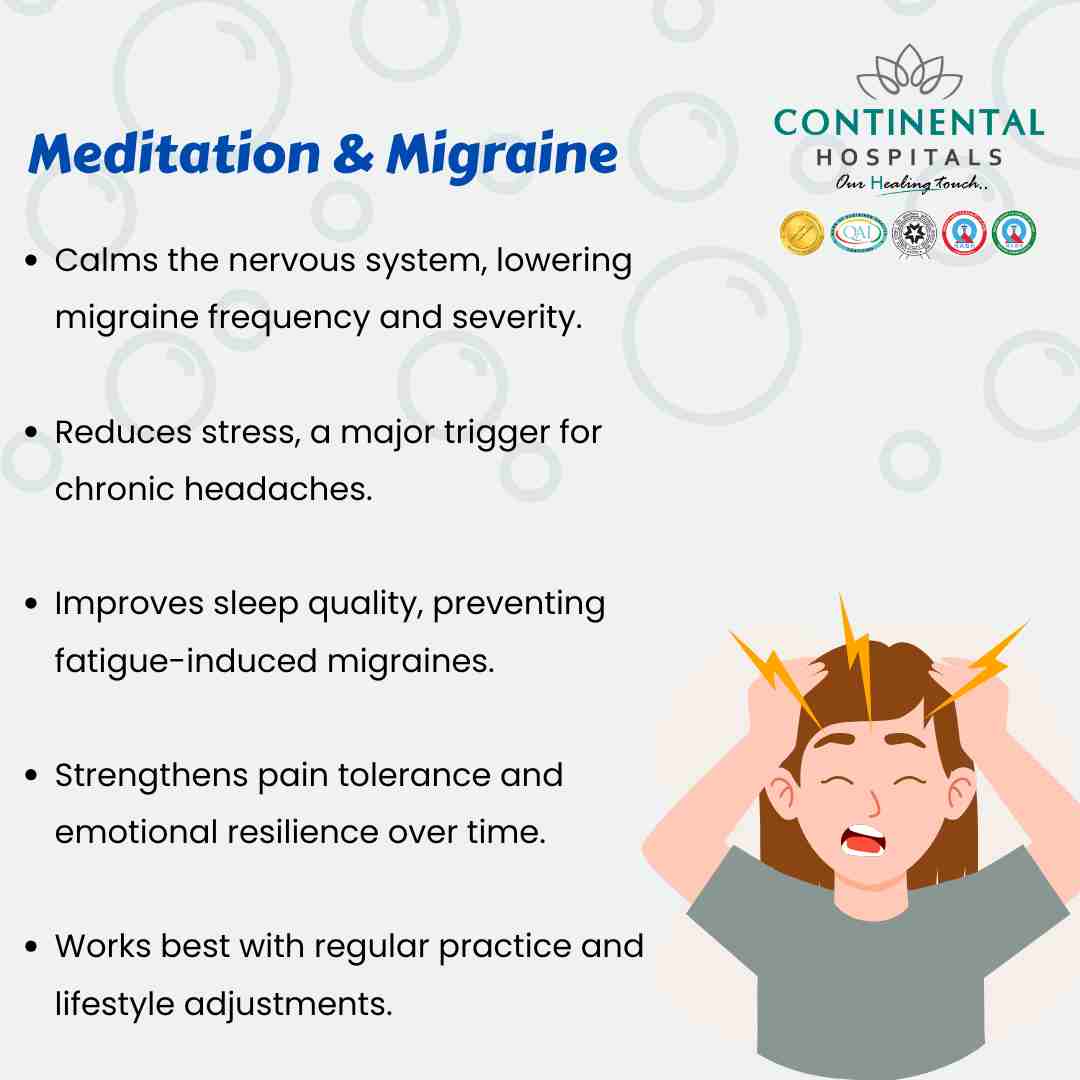
How Meditation Helps Prevent Migraines?
Meditation is a mind-body practice that trains your brain to stay calm, centered, and less reactive to stress triggers. Migraine attacks often begin when stress hormones surge or when the nervous system becomes overloaded. Regular meditation lowers these responses and creates long-term stability.
Here is how mindfulness techniques reduce headaches:
- Meditation calms overactive pain pathways in the brain
- It lowers stress hormones that trigger migraine episodes
- It improves sleep quality, an essential factor in migraine prevention
- It reduces muscle tension around the neck and head
- It improves emotional resilience, making the brain less sensitive to triggers
Scientific research suggests that meditation increases grey matter in areas of the brain that control pain and emotional regulation. This leads to fewer migraine days and reduced intensity.
Best Meditation Techniques for Chronic Migraine
Different forms of meditation can help with chronic migraine. You do not need advanced skills. Even beginners can experience relief when practiced correctly and consistently.
Mindfulness Meditation
Mindfulness helps you stay aware of your thoughts, sensations, and emotions without reacting to them. Since migraines often worsen with anxiety or fear, mindfulness breaks this cycle.

Guided Meditation During a Migraine Attack
Listening to a guided audio track helps you relax your breathing, unclench your muscles, and reduce pain perception. It may not completely stop an attack but it can make the episode more manageable.
Breath Awareness Meditation
Focusing on slow, deep breathing activates the relaxation response and reduces the physical tension that often triggers headaches.
Body Scan Meditation
This method helps identify tension areas in the head, neck, shoulders, and jaw. Relaxing these muscles lowers the chances of developing a migraine.
Visualization Meditation
You imagine calm scenes such as gentle waves, open fields, or soothing light. Visual imagery helps reduce the emotional intensity of pain.
Breathwork for Headache Relief: Why It Works
Breathing exercises are powerful tools for headache and migraine relief. When your breathing becomes slow and steady, your nervous system immediately shifts into a relaxed state.
Helpful breathwork techniques include:
- Slow diaphragmatic breathing
- Box breathing
- Alternate nostril breathing
- 4-7-8 relaxation breathing
These practices reduce pulse rate, lower stress hormones, and release tension in the upper body. Many people use breathwork as a quick tool during early headache signs.
Meditation vs Medication for Migraine
Medication remains a central part of migraine treatment, especially for frequent or severe cases. However, meditation works at the root of the problem by training the brain to handle stress better and decreasing triggers.
Meditation supports migraine treatment in the following ways:
- It reduces the number of migraine days
- It makes attacks less severe
- It lowers dependency on pain medicines over time
- It improves mood, sleep, and mental clarity
The best approach is not meditation vs medication but meditation plus medication. This combination gives stronger and more sustainable results.
How Often Should You Meditate to Prevent Migraines?
Consistency is more important than duration. Even short daily sessions can make a major difference.
Recommended routine:
- Start with five to ten minutes a day
- Increase to fifteen to twenty minutes as you get comfortable
- Practice at the same time each day
- Use guided meditation apps or audio clips if needed
- Add breathwork breaks between stressful tasks
Many people notice benefits within a few weeks of regular practice.
Tips to Start Meditation for Migraine Management
If you are new to meditation, you can begin with simple steps:
- Sit comfortably in a quiet place
- Close your eyes and focus on your natural breath
- Observe any thoughts without reacting
- Relax your shoulders and jaw
- Practice daily even if you feel stressed or tired
The goal is not perfection. The goal is consistency.
Additional Lifestyle Habits That Support Migraine Prevention
Apart from meditation, you can follow these healthy practices:
- Maintain steady sleep schedules
- Drink enough water throughout the day
- Avoid skipping meals
- Limit screen time
- Practice gentle stretching for neck and shoulder muscles
- Identify your personal migraine triggers
- Reduce caffeine intake
- Stay physically active
Combining meditation with simple routine improvements gives long-term results.
Why Choose Continental Hospitals for Migraine Care?
Continental Hospitals offers advanced neurological care with a team of experienced neurologists who specialize in headache and migraine management. The hospital follows globally recognised standards of quality and safety and is accredited for excellence in patient care. With modern diagnostic facilities, personalised treatment plans, and a patient centered approach, Continental Hospitals ensures accurate evaluation and effective management for both chronic and episodic migraine conditions. The hospital also focuses on holistic methods such as stress management, lifestyle modification, and education on relaxation techniques to help patients achieve long lasting relief.
Conclusion
Meditation is a powerful, natural, and safe method to reduce migraine frequency, ease headache intensity, and support emotional wellbeing. Mindfulness techniques to reduce headaches, breathwork for headache relief, guided meditation during migraine attacks, and daily relaxation exercises create long term improvement. While meditation does not replace medical treatment, it enhances its effectiveness and helps build a healthier, more balanced life.
For personalised migraine treatment and guidance on natural therapies, book an appointment with our best Neurologist at Continental Hospitals.