.webp)


Christmas in India is a beautiful mix of celebration, faith, family gatherings, and of course, food. From rich plum cakes and kalkals to biryani feasts and creamy desserts, Christmas tables across the country are filled with variety. While enjoying festive food is part of the joy, many people also experience acidity, bloating, weight gain, blood sugar spikes, and fatigue during this season.
Why Christmas Eating Habits Matter for Your Health?
During Christmas, eating patterns change suddenly. Meal timings become irregular, portion sizes increase, and sugary and fried foods are consumed more frequently. This can affect:
- Digestion and gut health
- Blood sugar levels in people with diabetes
- Cholesterol and heart health
- Weight management
- Energy levels and immunity
Understanding what is healthy and what is not helps you enjoy the festival without regret later.
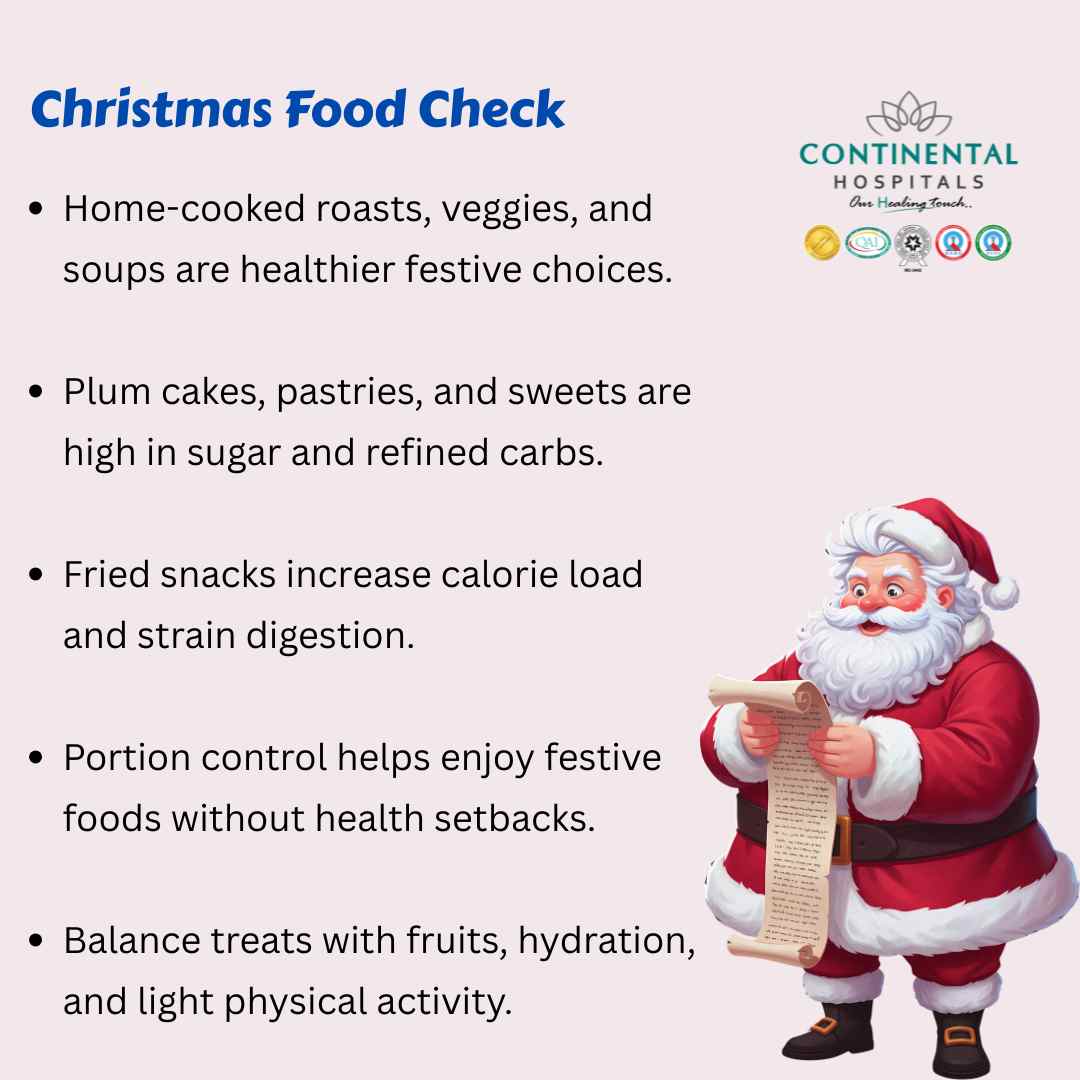
Common Christmas Foods in India: A Health Perspective
Indian Christmas cuisine varies by region, but some foods are common across households and celebrations.
- Popular Christmas Foods You Will See
- Plum cake and Christmas cake
- Kalkals, rose cookies, and fried sweets
- Biryanis, roast chicken, pork, and mutton dishes
- Cream-based gravies and cheese-rich snacks
- Sugary desserts, chocolates, and sweetened drinks
Not all of these are harmful. The impact depends on ingredients, cooking methods, and portion sizes.
Christmas Foods That Are Healthier Choices
You do not need to avoid festive food completely. Some Christmas foods can actually fit into a balanced diet.
1. Home Cooked Roasted and Grilled Dishes
Roasted chicken, grilled fish, or baked vegetables are much healthier than deep-fried options. They are rich in protein and nutrients and easier on digestion.
Why they are better?

- Lower oil content
- Good protein source
- Keeps you full for longer
2. Nuts, Dry Fruits, and Seeds in Moderation
Almonds, walnuts, cashews, and raisins are commonly used during Christmas baking and snacking.
Health benefits include:
- Healthy fats for the heart
- Better satiety
- Nutrients like magnesium and vitamin E
Stick to small portions to avoid excess calories.
3. Traditional Spices Used in Christmas Cooking
Cloves, cinnamon, nutmeg, ginger, and pepper are widely used in Christmas recipes.
These spices help:
- Improve digestion
- Reduce bloating
- Support immunity during winter
4. Fruit Based Desserts
Desserts made with fruits like apples, bananas, or berries are better than cream-heavy sweets.
Good options include:
- Fruit salads
- Baked apples
- Moderate portions of fruit cake
Christmas Foods That Are Not So Healthy
Some festive foods can disturb your health if eaten frequently or in large quantities.
1. Deep Fried Snacks and Sweets
Kalkals, rose cookies, and fried snacks absorb a lot of oil.
Health risks include:
- Indigestion and acidity
- Weight gain
- Increased cholesterol
2. Sugar Loaded Desserts
Plum cakes, pastries, chocolates, and sweets contain high amounts of refined sugar.
This may lead to:
- Blood sugar spikes
- Fatigue after meals
- Increased risk for people with diabetes
3. Creamy Gravies and Cheese Heavy Dishes
Cream, butter, and cheese are commonly used to make food rich and indulgent.
Excess intake can cause:
- Bloating
- Acid reflux
- Worsening of cholesterol levels
4. Sugary Beverages and Alcohol
Sweetened drinks and alcohol are common during celebrations.
Health concerns include:
- Dehydration
- Liver strain
- Poor sleep quality
Smart Christmas Eating Tips That Actually Work?
Enjoying Christmas does not mean giving up on health. Small changes can make a big difference.
Simple Tips to Follow
- Eat smaller portions instead of skipping meals and overeating later
- Start meals with salads or soups to control hunger
- Choose grilled or roasted foods when possible
- Drink enough water between celebrations
- Limit sweets to one small serving a day
- Avoid lying down immediately after heavy meals
Special Care for People with Health Conditions
If you have existing health issues, extra caution is needed.
For People with Diabetes
- Avoid sugary desserts and sweetened drinks
- Eat high fiber foods first
- Monitor blood sugar regularly
For People with Acidity or Gut Problems
- Avoid very spicy, oily, and fried foods
- Eat at regular intervals
- Limit alcohol and carbonated drinks
For Heart Patients
- Reduce salt and saturated fat intake
- Avoid processed meats
- Focus on lean protein and vegetables
When to See a Doctor After Festive Eating?
Occasional discomfort is common, but some symptoms should not be ignored.
Consult a doctor if you experience:
- Persistent acidity or chest burning
- Severe bloating or abdominal pain
- Sudden blood sugar fluctuations
- Continuous vomiting or loose motions
- Unusual fatigue or breathlessness
Early medical advice helps prevent complications.
Why Choose Continental Hospitals for Festive Health Concerns?
Continental Hospitals is recognized as one of the best hospital in Hyderabad, known for patient focused care and clinical excellence. The hospital follows internationally accepted safety and quality standards and is accredited by JCI and NABH, reflecting its commitment to world class healthcare.
Why patients trust Continental Hospitals?
- Experienced general physicians and specialists
- Advanced diagnostic facilities
- Multidisciplinary approach to care
- Strong focus on preventive health
- Transparent and ethical medical practices
Whether it is digestive issues, diabetes management, or heart health, expert care is available under one roof.
Conclusion: Celebrate Christmas Without Compromising Your Health
Christmas is a time for joy, not health worries. You do not need to avoid festive food completely. The key lies in balance, portion control, and mindful eating. Choose healthier options when you can, limit foods that burden your digestion, and listen to your body.
If you are experiencing digestive issues, blood sugar imbalance, or fatigue after festive eating, consult our best General Physician at Continental Hospitals, Hyderabad.
Related Blog topic: