.webp)


Many women feel that their period pain becomes stronger during winter. If you also notice more intense cramps, mood changes, or discomfort during colder months, you are not alone. Research and clinical observations show that winter can influence menstrual health in several ways. This article explains why winter menstrual cramps may worsen, how vitamin D levels affect period pain, and what you can do to manage winter pelvic pain effectively.
Why Do Period Pains Increase During Winter?
Winter brings significant changes in temperature, sunlight exposure, and metabolism. These seasonal shifts can make menstrual symptoms feel more intense. Here are the most common reasons:
1. Cold Weather Tightens Muscles
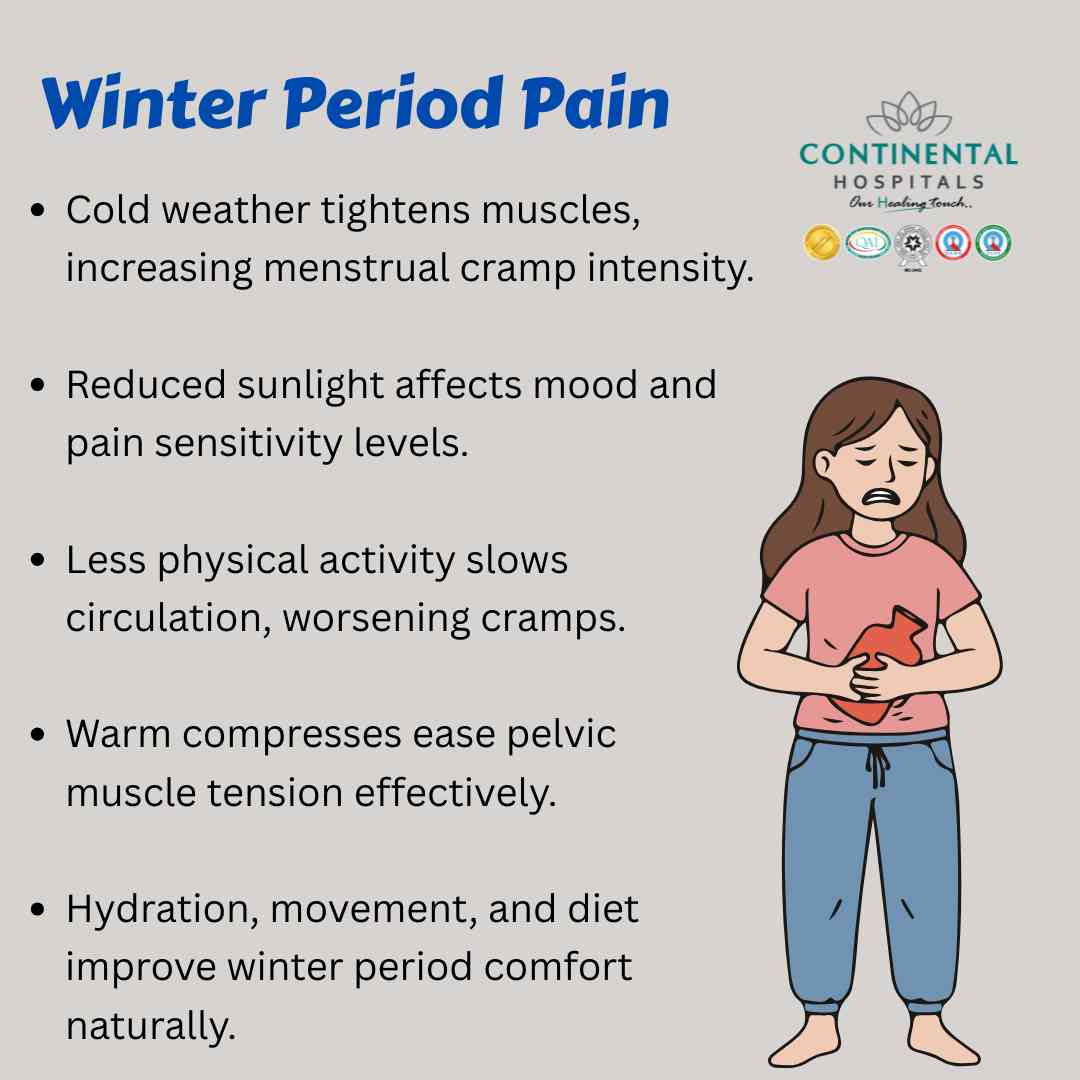
When temperatures drop, your body naturally restricts blood flow to the skin and limbs to preserve warmth. This reduced circulation can cause the uterine muscles to contract more strongly, leading to winter menstrual cramps. Many women feel deeper and sharper cramps during cold weather cramps because the muscles become less flexible and more sensitive.
2. Low Vitamin D Levels
Vitamin D plays a key role in reducing inflammation and supporting hormonal balance. Due to limited sunlight exposure in winter, vitamin D levels often drop. Low vitamin D period pain is closely linked to stronger cramps, fatigue, and mood fluctuations. Reduced sunlight exposure may also aggravate PMS symptoms.
3. Increased Sensitivity to Pain
Cold weather can heighten overall pain sensitivity. Studies show that people tend to perceive pain more intensely during winter, which may make dysmenorrhea winter symptoms feel more severe even if the underlying cause remains the same.
4. Hormonal Changes
Winter may trigger subtle hormonal shifts in serotonin and melatonin levels. These changes affect mood, energy levels, and menstrual cycles. Women often report worsening winter PMS symptoms including irritability, mood swings, and breast tenderness.
5. Reduced Physical Activity
People typically move less when it is cold. Lower activity levels reduce blood flow to the pelvic area and may increase winter pelvic pain. Regular movement helps ease cramps but becomes limited during winter months, contributing to painful periods winter concerns.
How Winter Impacts PMS and Overall Menstrual Health?
Winter does not only amplify cramps. It may also influence other aspects of menstrual health India. Women commonly notice:

- Heavier feeling during menstruation
- More bloating due to water retention
- Increased cravings for sugar
- Higher fatigue
- More irritability and mood changes
- Lower motivation to exercise
- Difficulty maintaining routine sleep
- Lower exposure to sunlight leading to hormonal imbalance
All these factors can contribute to more uncomfortable periods during winter.
Signs That Winter Is Affecting Your Menstrual Cycle
If you are wondering whether cold weather is making your menstrual symptoms worse, look for these patterns:
- Your cramps become more severe during winter months
- You feel more pelvic pressure
- Your PMS symptoms worsen
- You experience more fatigue and back pain
- Your cycle becomes slightly irregular
- You feel more anxious or low in mood
- You need more pain relief methods than usual
Tracking your symptoms can help you understand if winter is playing a role in your discomfort.
How to Manage Winter Menstrual Cramps
While winter can aggravate period pain, there are many simple and effective ways to reduce discomfort. Try the following strategies:
1. Use Warmth
Heat therapy relaxes the uterine muscles, improves blood flow, and eases cramps. A warm water bath or heating pad can provide quick period pain relief winter.
2. Stay Physically Active
Gentle movement helps reduce inflammation and improves circulation. Try walking, yoga, or stretching indoors to counter cold weather cramps.
3. Boost Vitamin D Intake
Since vitamin D deficiency can worsen cramps, include sunlight exposure whenever possible and add vitamin D rich foods. Discuss supplements with your doctor if needed.
4. Maintain Hydration
Cold weather reduces the feeling of thirst but dehydration can worsen cramps. Drink warm water or herbal teas to stay hydrated.
5. Eat Anti-inflammatory Foods
Choose foods that support hormonal balance such as nuts, leafy vegetables, fruits, whole grains, and omega rich foods.
6. Manage Stress
Stress can intensify PMS symptoms. Try deep breathing, meditation, or light exercise to keep stress under control during winter.
7. Get Quality Sleep
Good sleep supports hormonal health and reduces winter PMS symptoms. Try maintaining a regular bedtime routine.
8. Track Your Cycle
Monitoring symptoms can help your doctor understand patterns and suggest personalised treatment for painful periods winter.
When Should You See a Doctor?
Not all period pain is normal. If your pain becomes severe or disrupts your daily activities, it may indicate an underlying condition. Seek medical help if you notice:
- Severe cramps lasting more than two or three days
- Pain that affects your ability to work or move
- Extremely heavy bleeding
- Irregular periods
- Pain during intercourse
- Signs of hormonal imbalance
- Pain that worsens every cycle
- No relief even after home remedies
Conditions like endometriosis, fibroids, PCOS, and pelvic inflammatory disease can mimic winter pelvic pain and may require specialised care.
Why Choose Continental Hospitals for Menstrual and Reproductive Health Care?
Continental Hospitals in Hyderabad is known for its high-quality clinical care, advanced technology, and expertise in women’s health. The hospital follows international patient safety protocols and holds globally recognised accreditations including JCI accreditation that ensures world-class standards in diagnosis and treatment.
The Department of Obstetrics and Gynaecology includes experienced specialists who focus on personalised care for menstrual disorders, dysmenorrhea winter cases, hormonal issues, endometriosis, PCOS, and chronic pelvic pain. Patients benefit from:
- Evidence-based treatment plans
- Advanced diagnostic imaging
- Minimally invasive surgical options
- Multidisciplinary support teams
- Patient-centric care in a comfortable environment
- Strong focus on menstrual health education and long-term wellness
Continental Hospitals ensures prompt, accurate, and compassionate care for women of all age groups.
Conclusion
Winter can aggravate period pain due to cold temperatures, muscle tension, hormonal changes, low vitamin D levels, and reduced physical activity. Understanding how winter affects your body can help you take proactive steps to manage winter menstrual cramps and winter PMS symptoms more effectively.
If you suffer from persistent or severe period pain, it is important to consult a gynaecologist. Untreated menstrual issues can affect overall health and may indicate deeper concerns.
At Continental Hospitals, our expert gynaecologists offer comprehensive evaluation and personalised treatment to help you find long-lasting relief and improve your menstrual health.