.webp)


Planning a pregnancy after 35 has become increasingly common. Many women focus on education, career growth, financial stability, and personal goals before starting a family. While this life choice is completely valid, it is important to understand how age affects fertility and what solutions are available.
Understanding Fertility After 35
Fertility after 35 refers to a natural stage in a woman’s reproductive life when the chances of getting pregnant begin to decline. Doctors often use the term advanced maternal age for pregnancies that occur after 35. This does not mean pregnancy is unsafe or impossible. It simply means that the body undergoes biological changes that can affect conception and pregnancy outcomes.
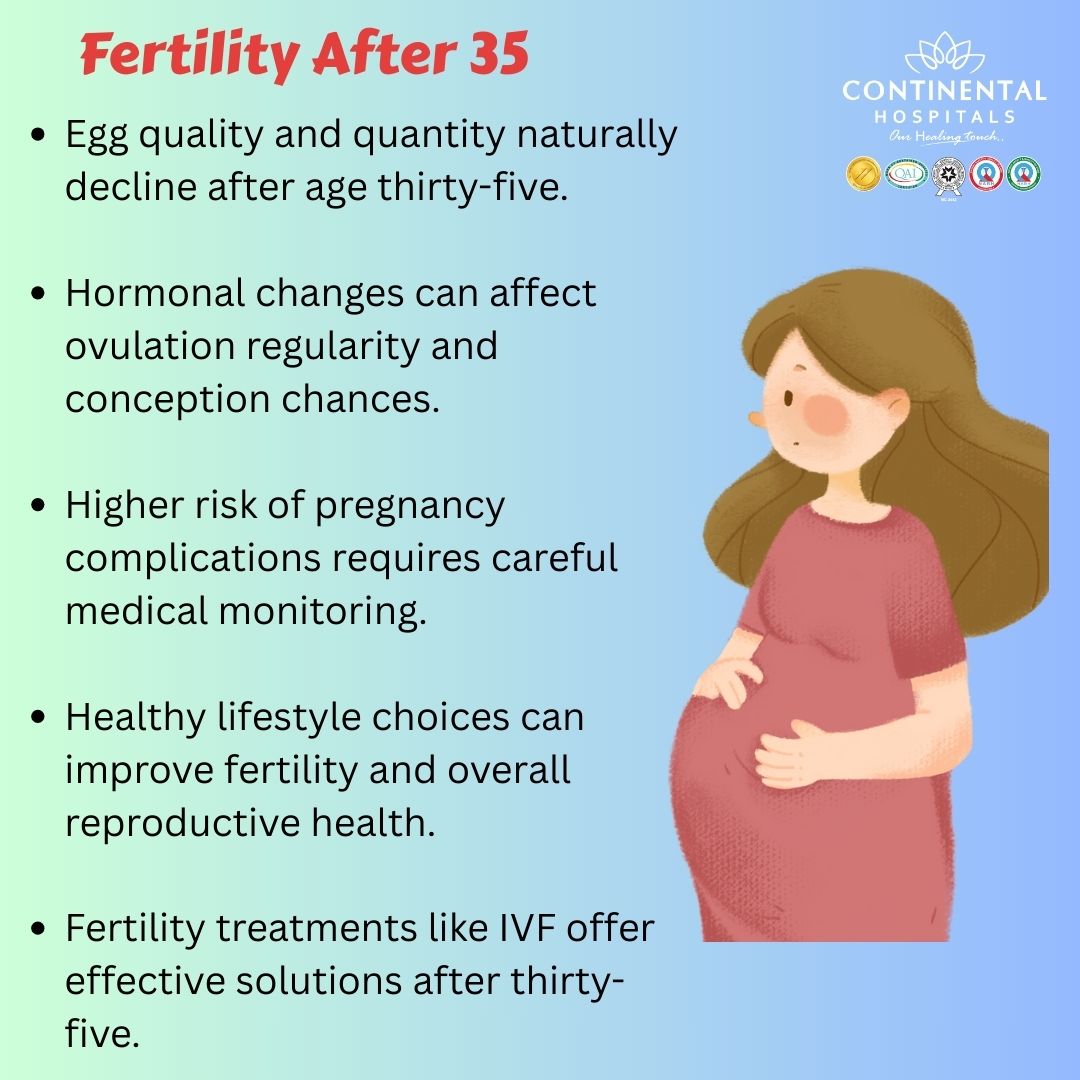
Age and fertility are closely linked because women are born with a fixed number of eggs. As age increases, both the quantity and quality of eggs gradually reduce. This process becomes more noticeable after the age of 35.
Visit our Fertility Department at Continental Hospitals, Hyderabad, for expert care, advanced treatments, and compassionate fertility support.
How Age Affects Fertility?
1. Decline in Egg Quality
Egg quality after 35 can reduce due to age-related changes. Older eggs have a higher chance of chromosomal abnormalities, which can affect fertilization and embryo development.
2. Reduced Egg Reserve
The ovarian reserve decreases with age. This means fewer eggs are available for ovulation, making getting pregnant more challenging over time.
3. Hormonal Changes
Hormonal fluctuations can impact ovulation cycles, making them irregular and less predictable.
4. Higher Risk of Health Conditions
Conditions like fibroids, endometriosis, thyroid disorders, and diabetes are more common with age and can affect fertility over 35.
Common Fertility After 35 Challenges
Women trying for pregnancy after 35 may face the following challenges.

- Longer time to conceive compared to younger women
- Increased risk of miscarriage
- Higher chances of gestational diabetes and high blood pressure
- Greater likelihood of chromosomal conditions
- Reduced success rates with natural conception
- These challenges sound worrying, but medical science now offers effective solutions to support fertility after 35.
Can You Get Pregnant After 35?
Yes. Many women successfully conceive and deliver healthy babies after 35. Pregnancy after 35 is possible with proper planning, timely evaluation, and expert medical guidance. Understanding your fertility status early can make a significant difference.
When should you seek help?
If you are over 35 and have been trying to conceive for six months without success, it is advisable to consult a fertility specialist.
Fertility Solutions After 35
1. Fertility Assessment
A fertility evaluation helps assess ovarian reserve, hormone levels, and overall reproductive health. Tests like AMH, ultrasound scans, and hormone profiling provide clarity.
2. Lifestyle Modifications
Simple changes can improve fertility outcomes.
- Maintain a healthy body weight
- Eat a balanced, nutrient-rich diet
- Avoid smoking and excessive alcohol
- Manage stress through relaxation techniques
- Get adequate sleep and regular physical activity
3. Timed Intercourse
Tracking ovulation accurately can increase the chances of conception. Fertility specialists can guide you on the most fertile window.
4. Medical Treatments
Depending on individual needs, doctors may recommend.
- Ovulation induction medications
- Hormonal support
- Treatment for underlying conditions
5. Assisted Reproductive Techniques
Advanced treatments have transformed fertility care.
- Intrauterine insemination
- In vitro fertilization
- Advanced embryo monitoring
These options significantly improve pregnancy rates in women facing fertility after 35 challenges.
Pregnancy Risks After 35 and How They Are Managed
Advanced maternal age pregnancy may carry higher risks, but modern obstetric care ensures safe monitoring and management.
Common concerns include:
- Gestational diabetes
- High blood pressure
- Preterm delivery
With regular antenatal checkups, early screening, and expert care, most risks can be effectively controlled.
Emotional Wellbeing and Fertility
Trying to conceive later in life can be emotionally demanding. Feelings of anxiety, pressure, or self-doubt are common. Emotional support and counseling play a vital role in fertility care. A compassionate medical team helps patients stay positive and focused throughout the journey.
Why Choose Continental Hospitals for Fertility Care?
Continental Hospitals is recognized as one of the best hospitals in Hyderabad, offering comprehensive and ethical fertility care under one roof.
Key reasons to choose Continental Hospitals include.
- Experienced fertility specialists and gynecologists
- Advanced diagnostic and treatment facilities
- Evidence-based clinical protocols
- NABH and JCI accredited hospital standards ensuring quality and safety
- Multidisciplinary team approach for personalized care
- Patient-centered environment with transparency and trust
The hospital follows global best practices, supported by strong clinical governance and internationally recognized accreditations. This ensures that every patient receives care that meets the highest standards of safety, accuracy, and outcomes.
When to See a Fertility Specialist?
You should consult a specialist if.
- You are over 35 and unable to conceive after six months
- Menstrual cycles are irregular or absent
- You have a known medical condition affecting fertility
- You have a history of pregnancy loss
Early consultation improves success rates and helps plan the right treatment at the right time.
Conclusion
Fertility after 35 comes with unique challenges, but it also comes with effective solutions. Age and fertility are closely connected, yet age alone should never stop you from pursuing motherhood. With timely medical advice, healthy lifestyle choices, and advanced fertility treatments, pregnancy after 35 can be a safe and fulfilling experience.
Understanding your body, seeking expert guidance, and staying informed are the most powerful steps you can take on this journey.
Consult our Best Fertility Specialists at Continental Hospitals, Hyderabad. Our team is committed to guiding you with personalized care, advanced treatments, and compassionate support to help you achieve a healthy pregnancy safely.
Related Blog Topics: