.webp)


Did you know that your mouth can warn you about your heart before your chest does? It might sound surprising, but gum problems can be an early sign of heart disease. The health of your teeth and gums is deeply linked with the health of your heart, and ignoring bleeding or swollen gums can sometimes mean missing the first clue that something’s wrong inside your arteries.
Can gum disease affect heart health?
Your mouth is full of bacteria, some good and some harmful. When oral hygiene is neglected, bacteria build up in the gums, leading to inflammation known as gum disease or periodontitis. This infection doesn’t stay limited to your mouth. The bacteria can travel through the bloodstream, triggering inflammation in the blood vessels and increasing your risk of heart disease.
Studies show that people with severe gum disease are more likely to develop clogged arteries, heart attacks, and strokes. The inflammation caused by gum infection can make the arteries narrow, reduce blood flow, and make it easier for fatty deposits to form. Over time, this can lead to coronary artery disease, one of the leading causes of chest pain and heart attacks.
Visit the Best Cardiology Doctors in Hyderabad at Continental Hospitals, Gachibowli, Hyderabad, and consult our expert cardiologists for comprehensive heart care.
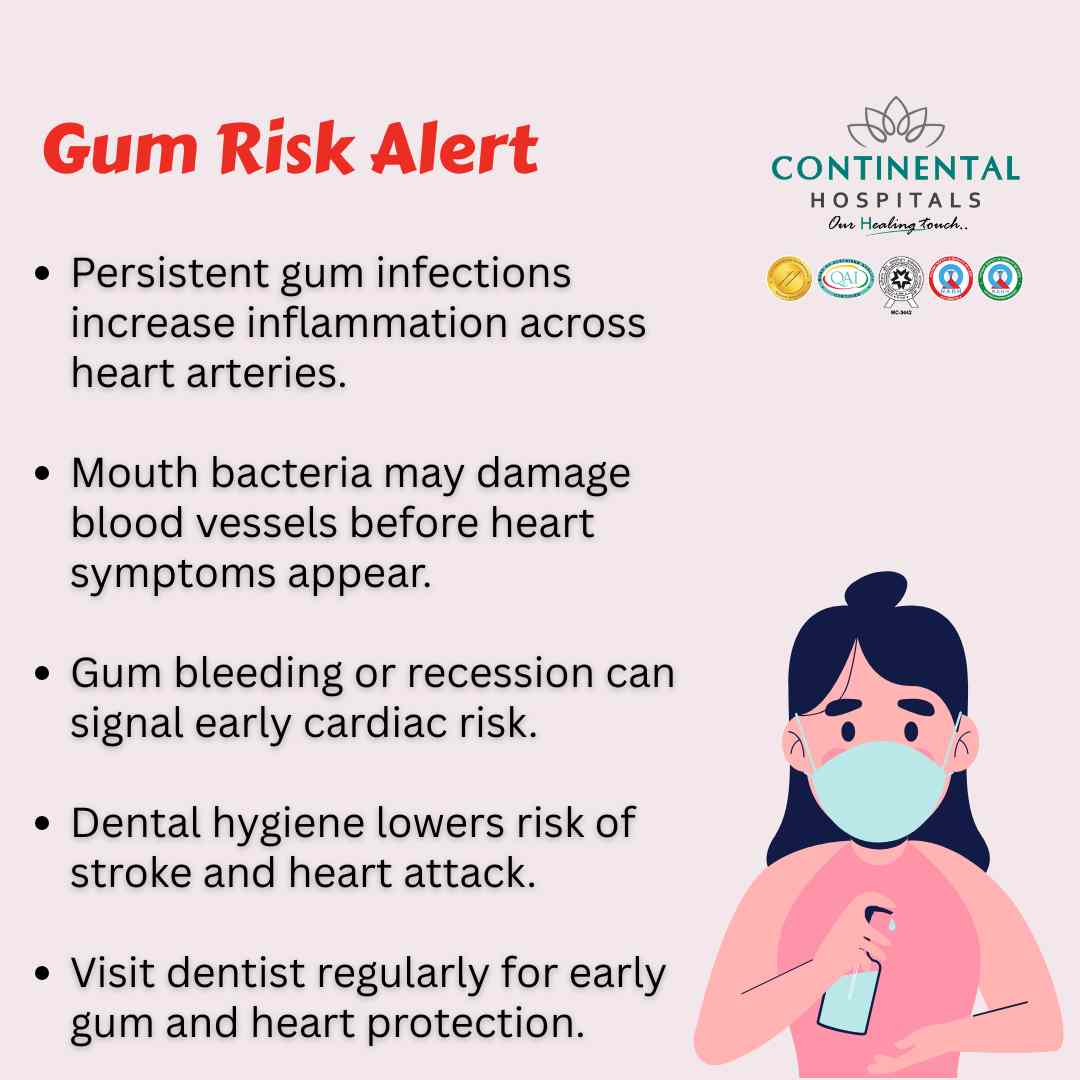
What Are the Early Signs of Heart-Related Gum Problems You Shouldn't Ignore?
Your gums often send warning signals before your heart does. If you notice any of these symptoms, it’s time to act fast:
- Bleeding gums while brushing or flossing
- Swollen or tender gums
- Receding gums exposing tooth roots
- Persistent bad breath even after cleaning
- Loose teeth or pain while chewing
These signs might seem minor, but they could point to ongoing inflammation that silently affects your heart.
Why Do Gum Problems Affect the Heart?
The connection lies in inflammation. When bacteria infect the gums, your body reacts by releasing chemicals to fight the infection. These inflammatory chemicals, like C-reactive protein (CRP), travel through the bloodstream and can irritate the inner lining of blood vessels. This leads to:
- Plaque buildup in arteries
- Increased blood pressure
- Reduced oxygen supply to the heart
When these conditions combine, your risk of heart attack or stroke increases significantly.

What are the common risk factors shared by gum disease and heart disease?
Gum disease and heart disease often develop together because they share common causes, such as:
- Smoking or tobacco use
- Uncontrolled diabetes
- Obesity and poor nutrition
- High stress levels
- Genetic predisposition
- Lack of regular dental checkups
If you already have one of these conditions, regular oral care becomes even more essential.
How to Protect Your Gums and Heart Together?
Taking care of your oral hygiene is not just about your smile — it’s about protecting your entire cardiovascular system. Here’s how you can lower your risk:
- Brush and floss twice a day using fluoride toothpaste.
- Visit your dentist regularly for cleaning and checkups.
- Eat a balanced diet rich in fruits, vegetables, and whole grains.
- Quit smoking and limit alcohol consumption.
- Manage diabetes and blood pressure with regular monitoring.
- Exercise regularly to improve blood flow and immunity.
A clean mouth means fewer bacteria entering your bloodstream, reducing inflammation and heart risk.
When to See a Doctor?
If you experience gum bleeding that doesn’t stop, chronic bad breath, or your gums appear red and swollen, visit both a dentist and a cardiologist. Sometimes, gum infections reveal hidden cardiovascular problems.
Ask yourself:
- Are your gums bleeding more frequently?
- Do you feel tired or experience mild chest discomfort after activity?
- Are your blood pressure or sugar levels fluctuating?
If the answer is yes to any of these, it’s best to schedule a comprehensive health check.
Why Choose Continental Hospitals?
At Continental Hospitals, Hyderabad, we believe in a holistic approach to patient health. We understand that your oral health and heart health are connected, which is why our multidisciplinary team of cardiologists, dental experts, and preventive health specialists work together to identify early signs and prevent complications.
Our hospital is JCI (Joint Commission International) and NABH accredited, ensuring that every patient receives world-class, safe, and high-quality medical care. From advanced cardiac diagnostics and minimally invasive heart procedures to preventive screenings and dental evaluations, we make sure you get complete care under one roof.
Located in the heart of Gachibowli’s Financial District, Continental Hospitals is easily accessible from Nanakramguda, Kokapet, Narsingi, Khajaguda, and Hitech City. Our expert team focuses on early detection, advanced treatment, and patient-centered care to help you stay healthy for years to come.
The Continental Advantage
- State-of-the-art cardiac facilities for diagnosis and treatment
- Comprehensive dental and oral health services
- International accreditations ensuring global healthcare standards
- Experienced team of cardiologists and specialists
- Personalized preventive health programs
Our goal is not just to treat disease but to detect it before symptoms appear — because prevention always saves lives.
The Bigger Picture: Mouth-Heart Connection
Your oral hygiene plays a key role in determining your heart’s future. Regular dental care can lower your risk of heart attacks and strokes by reducing inflammation. When your gums are healthy, your body experiences less strain from infections, allowing your heart to work efficiently.
Medical research has proven that improving oral health can reduce systemic inflammation markers and improve overall cardiovascular health. In short, healthy gums mean a healthier heart.
Conclusion
Your gums can reveal much more than just your dental hygiene — they can be your body’s early warning system for heart disease. Pay attention to small signs like bleeding gums, persistent bad breath, or gum pain. They could save your life.
Continental Hospitals, Hyderabad, offers integrated dental and cardiac care with world-class facilities, JCI accreditation, and expert specialists dedicated to your well-being.
If you suffer from gum disease, chest discomfort, or risk factors like diabetes or high blood pressure, don’t wait for symptoms to worsen. Visit Continental Hospitals today for a comprehensive cardiac and oral health evaluation.
Book your consultation with our Best Cardiologist in hyderabad at Continental Hospitals, Gachibowli, Hyderabad.
Related Blogs: