.webp)


Hamstring pain can appear suddenly during daily activities, exercise, or even while walking. Many people ignore early symptoms, thinking it is just muscle soreness. But a hamstring injury can worsen quickly if not identified and treated early. Knowing the warning signs helps you take timely action and avoid long-term complications.
What Is Hamstring?
The hamstring is a group of three muscles located at the back of the thigh. These muscles help you bend your knee and move your hip backward. Understanding what are the hamstring muscles is important because injury to any of them can limit daily movement.
The three hamstring muscles are:
- Semitendinosus
- Semimembranosus
- Biceps femoris
Together, these hamstring muscles play a key role in walking, running, standing, and maintaining balance.
Hamstring pain or strain? Consult our top orthopedic doctors in Hyderabad at Continental Hospitals.
What Is Hamstring Injury?
A hamstring injury occurs when one or more of these muscles are overstretched or torn. This is commonly known as a pulled hamstring or hamstring strain.
A hamstring strain can happen due to:
- Sudden acceleration or stopping
- Poor flexibility
- Weak hamstring muscles
- Skipping warm-up before exercise
- Overuse or fatigue
Understanding what is hamstring injury helps identify symptoms early and start proper care.

What Are the Common Signs and Symptoms of a Sprained Hamstring?
You may have a hamstring strain if you notice the following symptoms:
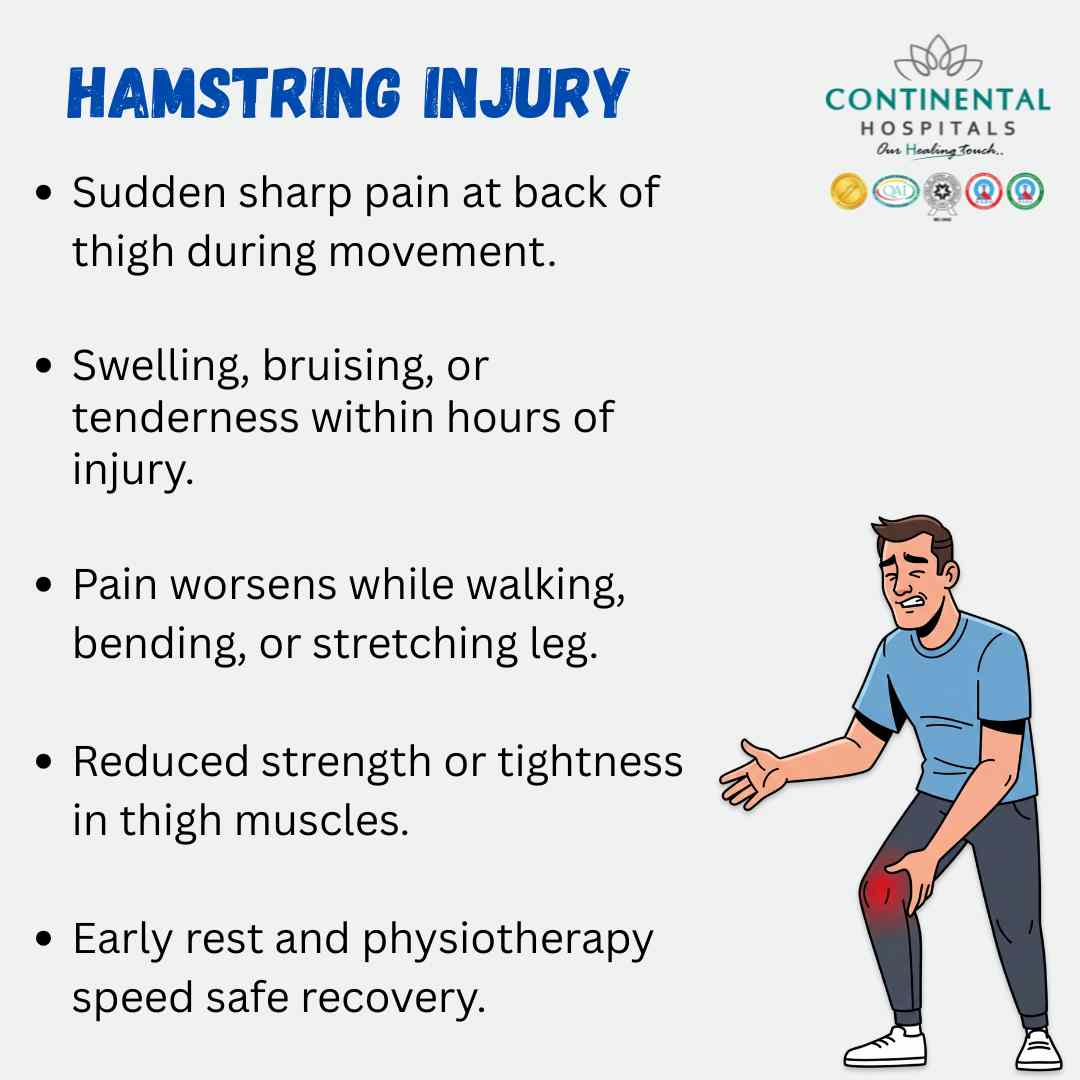
- Sudden sharp pain at the back of the thigh
- Tightness or pulling sensation
- Swelling or tenderness
- Difficulty walking or bending the knee
- Hamstring pain while sitting or standing
- Hamstring muscles pain that increases with movement
- Bruising appearing after a few hours or days
Mild strains may feel like stiffness, while severe pulled hamstring injuries cause intense pain and limited movement.
What Are the Different Types of Hamstring Strains?
Doctors usually classify hamstring strain into three grades:
Grade 1: Mild Strain
- Muscle overstretched
- Mild hamstring pain
- Minimal swelling
- Able to walk with slight discomfort
Grade 2: Moderate Strain
- Partial muscle tear
- Noticeable swelling and bruising
- Pain while walking
- Reduced strength
Grade 3: Severe Strain
- Complete muscle tear
- Severe pain and swelling
- Inability to walk
- Immediate medical attention required
Knowing the severity helps guide hamstring strain treatment.
How Do I Know If It Is a Sprain or Just Muscle Soreness?
Muscle soreness usually develops gradually and improves with rest. A hamstring injury often:
- Occurs suddenly
- Causes sharp pain
- Limits movement
- Worsens with activity
If your hamstring pain does not improve in a few days or keeps returning, medical evaluation is necessary.
How Is a Hamstring Injury Diagnosed?
At a hospital, doctors diagnose hamstring strain using:
- Physical examination
- Checking range of motion and strength
- Ultrasound or MRI if needed for severe injury
Early diagnosis ensures correct pulled hamstring treatment and prevents complications.
What Are the Best Hamstring Strain Treatment Options?
Initial Care
Early treatment focuses on reducing pain and swelling:
- Rest and activity modification
- Cold therapy during early stages
- Compression and elevation
- Pain management under medical guidance
Medical Treatment
Depending on severity, hamstring strain treatment may include:
- Physiotherapy
- Muscle strengthening programs
- Guided stretching routines
- Advanced rehabilitation techniques
Avoid self-treatment without guidance, especially in moderate or severe hamstring injury.
What Are the Best Hamstring Exercises and Stretches for Recovery?
Once pain reduces, doctors may recommend controlled hamstring exercises and hamstring stretch routines to restore strength.
Safe Recovery Exercises Include:
- Gentle leg curls
- Controlled hip extensions
- Low-impact strengthening movements
Hamstring Stretches:
- Seated hamstring stretch
- Standing hamstring stretch
- Supine towel stretch
Regular hamstring stretches help improve flexibility and prevent repeat injury.
How to Heal a Pulled Hamstring Fast?
Many patients ask how to heal a hamstring strain fast or how to heal a pulled hamstring in 2 days. Recovery depends on injury severity.
Key tips include:
- Follow doctor-recommended rest period
- Start rehabilitation only when advised
- Perform guided hamstring exercises
- Avoid early return to sports or strenuous activity
Mild injuries may improve in days, but deeper hamstring strain requires structured care.
When Should You See a Doctor?
Consult a specialist if you experience:
- Severe hamstring pain
- Difficulty walking
- Visible bruising or swelling
- Pain lasting more than a few days
- Repeated hamstring injury
Timely care prevents long-term muscle weakness and recurrence.
Prevention Tips for Hamstring Injury
Preventive measures help protect hamstring muscles:
- Warm up before activity
- Maintain flexibility with regular hamstring stretch routines
- Strengthen muscles through guided hamstring exercises
- Avoid sudden increases in physical intensity
- Correct posture and movement patterns
Why Choose Continental Hospitals?
Continental Hospitals is recognized as one of the best hospitals in Hyderabad, offering comprehensive care for muscle and sports-related injuries.
Patients benefit from:
- Experienced Orthopedic and Sports Medicine specialists
- Advanced diagnostic imaging
- Evidence-based hamstring strain treatment
- Personalized physiotherapy programs
- International healthcare standards and accreditations
- Multidisciplinary rehabilitation support
The hospital focuses on safe recovery, long-term mobility, and prevention of repeat injuries.
Conclusion
A hamstring injury may seem minor at first, but without proper care, it can limit daily movement and physical performance. Knowing what is hamstring, recognizing early symptoms, and following structured hamstring strain treatment are key to recovery.
At Continental Hospitals, Best Orthopedic Specialists in Hyderabad provide accurate diagnosis, advanced treatment, and guided rehabilitation to help you return to normal life safely.
Related Blog Topics: