.webp)


Face pigmentation is one of the most common skin concerns today. Many people notice dark patches, uneven skin tone, or stubborn spots that do not fade easily. These changes can affect confidence and make skin look dull or tired. The good news is that pigmentation can be managed effectively with the right care, expert guidance, and advanced treatments.
What Is Face Pigmentation?
Pigmentation happens when the skin produces excess melanin, the natural pigment that gives skin its color. When melanin production becomes uneven, it leads to dark patches, spots, or discoloration. This condition is also known as facial hyperpigmentation.
Pigmentation can affect people of all ages and skin types. It may appear gradually or suddenly and can become more noticeable without proper care.
If you are looking for safe and effective dermatologist pigmentation treatment, consult the Dermatology Department at Continental Hospitals.
Common Pigmentation Causes Face
Understanding the cause is the first step in choosing the right face pigmentation treatment.
Key reasons for pigmentation include
- Excessive sun exposure without protection
- Hormonal changes such as pregnancy or thyroid imbalance
- Melasma, especially common in women
- Acne marks and post inflammatory pigmentation
- Aging and prolonged environmental damage
- Certain medications or skin products
- Genetics and sensitive skin
Uneven skin tone causes often involve more than one factor, which is why professional evaluation is important.
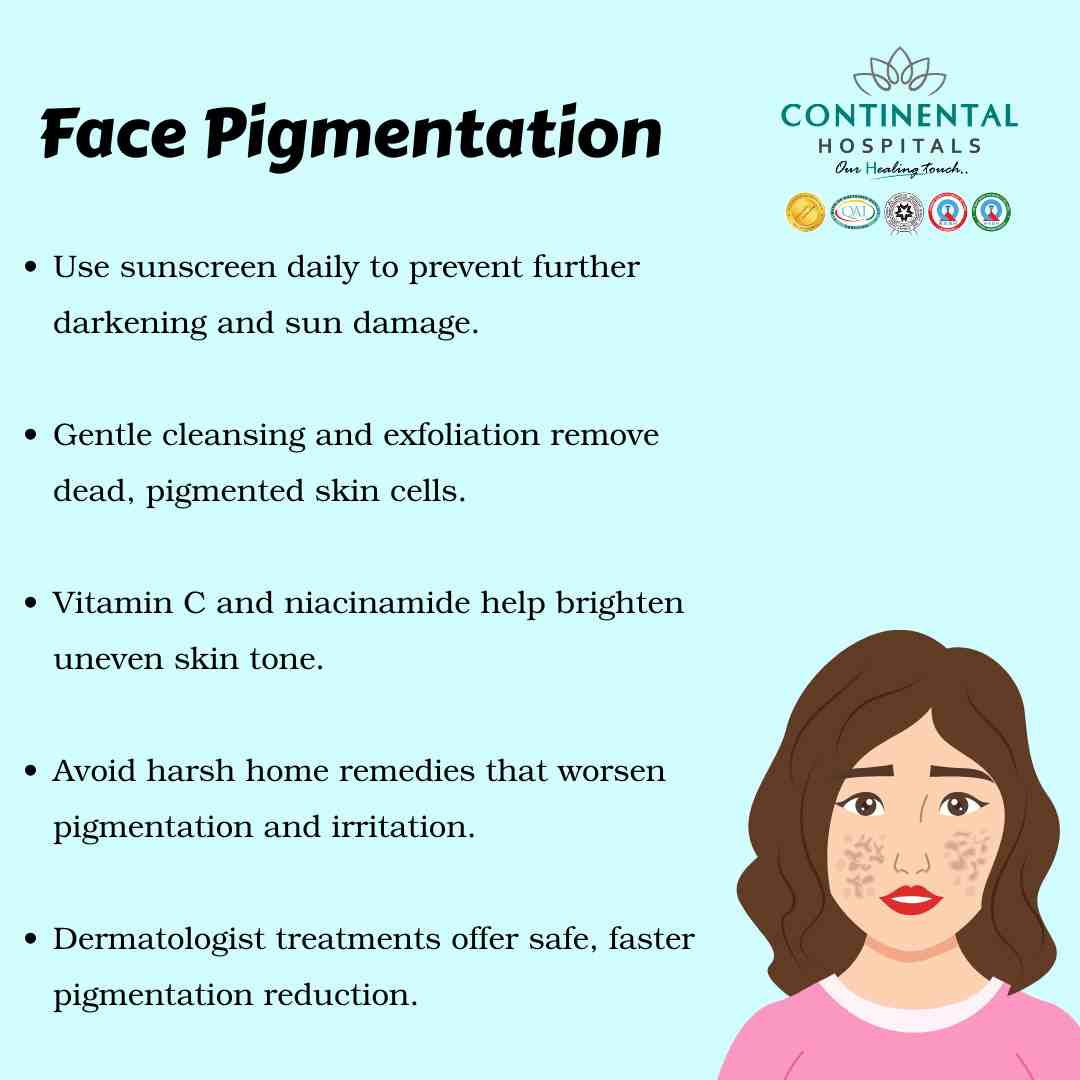
Types of Facial Pigmentation
Different forms of pigmentation need different approaches.

Common types include:
- Melasma: Brown or gray patches often seen on cheeks, forehead, and upper lip
- Sun spots: Also called age spots caused by UV exposure
- Post acne marks: Dark spots left after pimples heal
- Freckles: Small brown spots that may darken with sun exposure
Each type responds differently to treatment, so proper diagnosis is essential.
How to Remove Dark Spots Face Safely
Many people try home remedies, but not all skin pigmentation remedies work for everyone. Some may even worsen pigmentation if used incorrectly.
Safe and effective approaches include:
- Medical grade topical creams prescribed by a specialist
- Controlled exfoliation under expert guidance
- Sun protection as a daily habit
- Professional procedures performed by a dermatologist
Trying random products without understanding your skin type can delay results.
Effective Face Pigmentation Treatment Options
Modern dermatology offers multiple solutions to treat pigmentation safely.
Melasma Treatment Options:
- Prescription creams that regulate melanin production
- Chemical peels designed for pigmentation control
- Laser based therapies for resistant melasma
- Long term maintenance plans to prevent recurrence
Dermatologist Pigmentation Treatment
A dermatologist pigmentation treatment plan is customized based on:
- Type and depth of pigmentation:
- Skin sensitivity and tone
- Lifestyle and sun exposure
- Previous treatments, if any
This approach ensures better results and reduced risk of side effects.
Advanced Treatments for Facial Hyperpigmentation Care
When daily care is not enough, advanced treatments can help.
Common professional treatments:
- Chemical peels for gradual skin renewal
- Laser therapy for targeted sun spots face removal
- Microdermabrasion for mild discoloration
- Combination treatments for stubborn pigmentation
These procedures should always be performed under medical supervision.
Daily Skin Pigmentation Remedies That Support Treatment
While medical treatments are effective, daily habits play a major role.
Simple skincare habits:
- Use broad spectrum sunscreen daily
- Avoid harsh scrubs or over exfoliation
- Follow a gentle cleansing routine
- Use dermatologist recommended products only
These steps help maintain results and reduce uneven skin tone causes over time.
Pigmentation Prevention Tips for Long Term Results
Preventing pigmentation is just as important as treating it.
Helpful prevention tips:
- Reapply sunscreen every few hours outdoors
- Wear hats or protective clothing in strong sunlight
- Avoid self medicating with skin lightening products
- Treat acne early to prevent dark spots
- Follow up regularly with a skin specialist
Consistent care reduces the chance of pigmentation returning.
Why Professional Care Matters for Pigmentation?
Pigmentation is not just a cosmetic issue. It often reflects deeper skin responses to sun, hormones, or inflammation. Without proper evaluation, treatments may fail or worsen the condition.
Expert care ensures:
- Correct diagnosis of pigmentation type
- Safe and effective treatment selection
- Long lasting results with minimal risk
Why Choose Continental Hospitals for Pigmentation Treatment?
Continental Hospitals is recognized as one of the best hospital in Hyderabad, offering comprehensive skin and dermatology care.
What sets Continental Hospitals apart:
- Highly experienced dermatologists and skin specialists
- Advanced technology for face pigmentation treatment
- Personalized treatment plans for all skin types
- International quality standards and strict safety protocols
Accreditations and Quality Care
Continental Hospitals is accredited by globally respected healthcare bodies, reflecting its commitment to patient safety, clinical excellence, and ethical medical practices. These accreditations ensure that every pigmentation treatment follows international benchmarks for quality and care.
Patients benefit from a trusted environment where expertise, technology, and compassionate care come together.
Conclusion
Pigmentation on the face can be frustrating, but it is manageable with the right approach. Understanding pigmentation causes face, choosing proven melasma treatment options, following facial hyperpigmentation care routines, and practicing pigmentation prevention tips all contribute to healthier skin.
If you suffer from persistent skin discoloration, dark spots, or melasma, do not wait for it to get worse.
Would you like to book a consultation with our best Dermatologist at Continental Hospitals today.