.webp)


Heart health is not just about avoiding illness. It is about restoring strength, balance, and endurance when the heart has already been affected. Many people worry that exercise might strain damaged heart muscles, but medically guided physical activity is one of the most effective ways to support heart recovery and long-term function.
Understanding Heart Muscles and Damage
The heart is made of specialized cardiac muscle tissue that contracts rhythmically to pump blood throughout the body. These heart muscles include multiple components such as cardiac muscle cells, papillary muscles of the heart, and peripheral heart muscle fibers that support circulation.
Damage to heart muscles can happen due to:
- Heart attack
- Long-standing high blood pressure
- Diabetes
- Viral infections
- Lifestyle-related stress
- Poor physical activity levels
When heart muscles are damaged, the heart may become weaker or thicker. Thick heart muscle and thickening of the heart can reduce flexibility, while weak heart muscle reduces pumping strength. Both conditions can cause heart muscle pain, heart cramps, breathlessness, and fatigue.
Heart muscle pain, cramps, or breathlessness? Visit our best Cardiology Department at Continental Hospitals.
How Exercise Supports Damaged Heart Muscles
Exercise does not repair the heart overnight. Instead, it improves how heart muscles function, adapt, and regenerate over time.
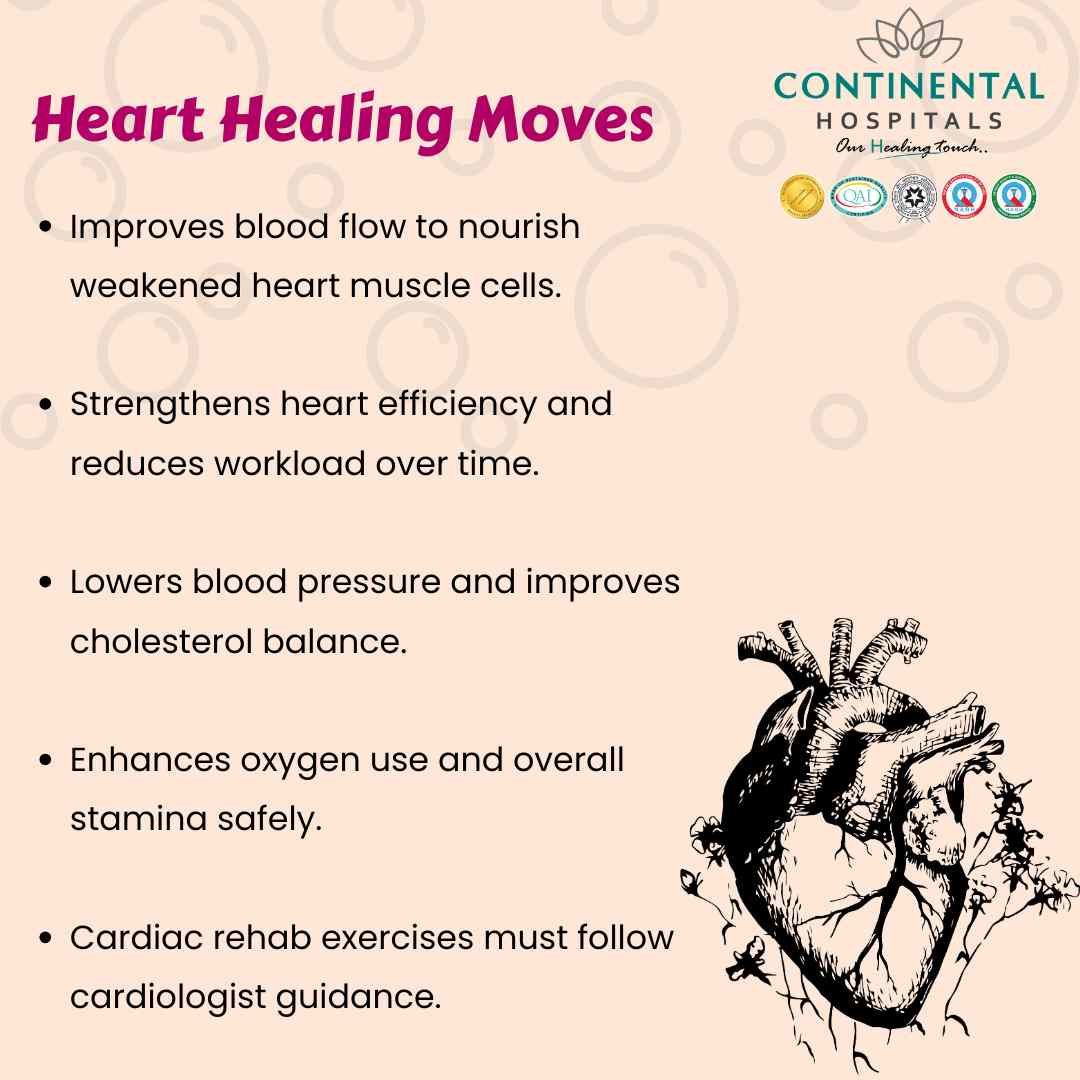
1. Improves Blood Flow to Heart Muscles
Regular physical activity increases blood circulation. This ensures that damaged cardiac muscle tissue receives more oxygen and nutrients. Better circulation reduces strain on the heart and supports healing at the level of each cardiac cell.
Improved blood flow also reduces chest discomfort and heart muscle pain by preventing oxygen deprivation.
2. Strengthens Weak Heart Muscle Safely
A weak heart muscle struggles to pump efficiently. Supervised exercise trains the heart to pump more blood with less effort. Over time, heart muscles become more efficient without becoming overstressed.

This is one of the safest ways to learn how to strengthen heart muscle naturally under medical guidance.
3. Prevents Harmful Thickening of the Heart
Thick heart muscle often develops due to uncontrolled blood pressure or inactivity. Proper aerobic exercise improves elasticity and prevents excessive thickening of the heart, helping the heart relax better between beats.
This balance reduces symptoms like heart cramps and irregular heartbeats.
Exercise at the Cellular Level
Exercise works deep inside the heart at a microscopic level.
- It improves the function of each cardiac muscle cell
- It supports healthy cardiac cell metabolism
- It enhances communication between cardiac muscle cells
- It improves oxygen usage within cardiac muscle tissue
This cellular improvement explains why consistent exercise reduces hospital visits and improves survival in heart patients.
Types of Exercise That Help Heart Muscles
Not all exercises are the same. The goal is to support heart muscles without overloading them.
Recommended Exercises:
- Walking at a steady pace
- Cycling on flat surfaces
- Light jogging under supervision
- Swimming
- Breathing and flexibility exercises
- Cardiac rehabilitation programs
These activities improve peripheral heart muscle endurance and support papillary muscles of the heart during pumping.
Exercises to Avoid Without Medical Advice:
- Sudden heavy weightlifting
- High-intensity interval training without clearance
- Competitive sports during recovery
Always consult a cardiologist before starting any exercise if you have heart muscle pain or known heart muscle conditions.
How Exercise Reduces Symptoms?
Regular exercise helps reduce:
- Heart muscle pain
- Heart cramps
- Breathlessness
- Fatigue
- Anxiety related to heart health
By improving coordination between cardiac muscle tissue and blood vessels, the heart works smarter rather than harder.
How Often Should You Exercise?
For damaged heart muscles, consistency matters more than intensity.
General medical guidance includes:
- Moderate exercise most days of the week
- Short sessions that gradually increase
- Rest days when needed
- Monitoring heart rate and symptoms
Structured cardiac rehabilitation programs are especially beneficial for patients with weak heart muscle or thick heart muscle.
When Exercise Needs Medical Supervision?
Exercise should never cause discomfort. Stop and seek medical advice if you experience:
- Chest tightness
- Severe heart muscle pain
- Dizziness
- Irregular heartbeat
- Excessive fatigue
A doctor evaluates heart muscle function, cardiac muscle health, and overall fitness before adjusting activity levels.
Long-Term Benefits of Exercise for Heart Muscles
With time, exercise helps:
- Improve heart muscle strength
- Increase endurance
- Reduce hospital admissions
- Improve quality of life
- Slow progression of heart disease
- Improve function of papillary muscles of the heart
- Enhance peripheral heart muscle performance
Patients who remain active under medical supervision often experience better outcomes than those who avoid physical activity completely.
Why Exercise Alone Is Not Enough?
Exercise works best when combined with:
- Heart-healthy nutrition
- Blood pressure control
- Blood sugar management
- Stress reduction
- Proper sleep
- Regular medical follow-ups
Ignoring symptoms while exercising can be harmful. Balance and expert guidance are essential.
Why Choose Continental Hospitals?
Continental Hospitals is recognized as one of the best hospital in Hyderabad for advanced cardiac care. The hospital offers comprehensive evaluation and treatment for heart muscle conditions using evidence-based protocols.
Key strengths include:
- Experienced cardiologists and cardiac rehabilitation specialists
- Advanced diagnostics for heart muscles and cardiac muscle tissue
- Personalized exercise and recovery programs
- International quality standards and global accreditations
- Multidisciplinary care focused on long-term heart health
Patients receive structured guidance on how to strengthen heart muscle safely and effectively.
Conclusion
Exercise is not dangerous for damaged heart muscles when done correctly. It is one of the most powerful tools to restore strength, improve circulation, and enhance the function of cardiac muscle tissue. From weak heart muscle to thick heart muscle, medically supervised physical activity supports healing at both cellular and functional levels.
Avoiding exercise out of fear can weaken heart muscles further. The right approach builds resilience, confidence, and long-term heart health.
If you are experiencing heart muscle pain, heart cramps, breathlessness, or have been diagnosed with weak heart muscle or thickening of the heart, do not self-manage your condition.
Consult our best Cardiologist at Continental Hospitals for a complete heart evaluation and a personalized exercise and recovery plan designed to protect and strengthen your heart muscles safely.