• Share this:
post-title

How Obesity Increases the Risk of Kidney Disease

Written by - Editorial Team
Medically Reviewed by - Dr Sree Rama Chandra Sekhar Susarla

When we discuss the health risks associated with extra weight, heart health and diabetes often take center stage. There is, however, one other pair of vital organs that has a massive overload from excessive body weight: your kidneys.

You may wonder what effect excess body weight has on kidney (renal) function. Knowing the impact of excess weight on kidney function is key to ensuring long-term health. The link between obesity and renal disease is very direct, serious, and often silent until the damage is done. By understanding the risks, you can do more to protect your health.

Your kidneys are the ultimate filter in your body, responsible for purging waste products, balancing fluids, and regulating blood pressure. As body mass increases, these small organs shoulder much more of the workload of extra tissue, and over the years, this increased strain can result in serious changes in the function of the kidney that can never be fully reversed.

How Does Obesity Directly Impact Your Kidneys?

To understand how obesity and renal disease are connected, it is helpful to understand the physical stress imposed on the renal system. Why does extra body weight put your kidneys at risk?

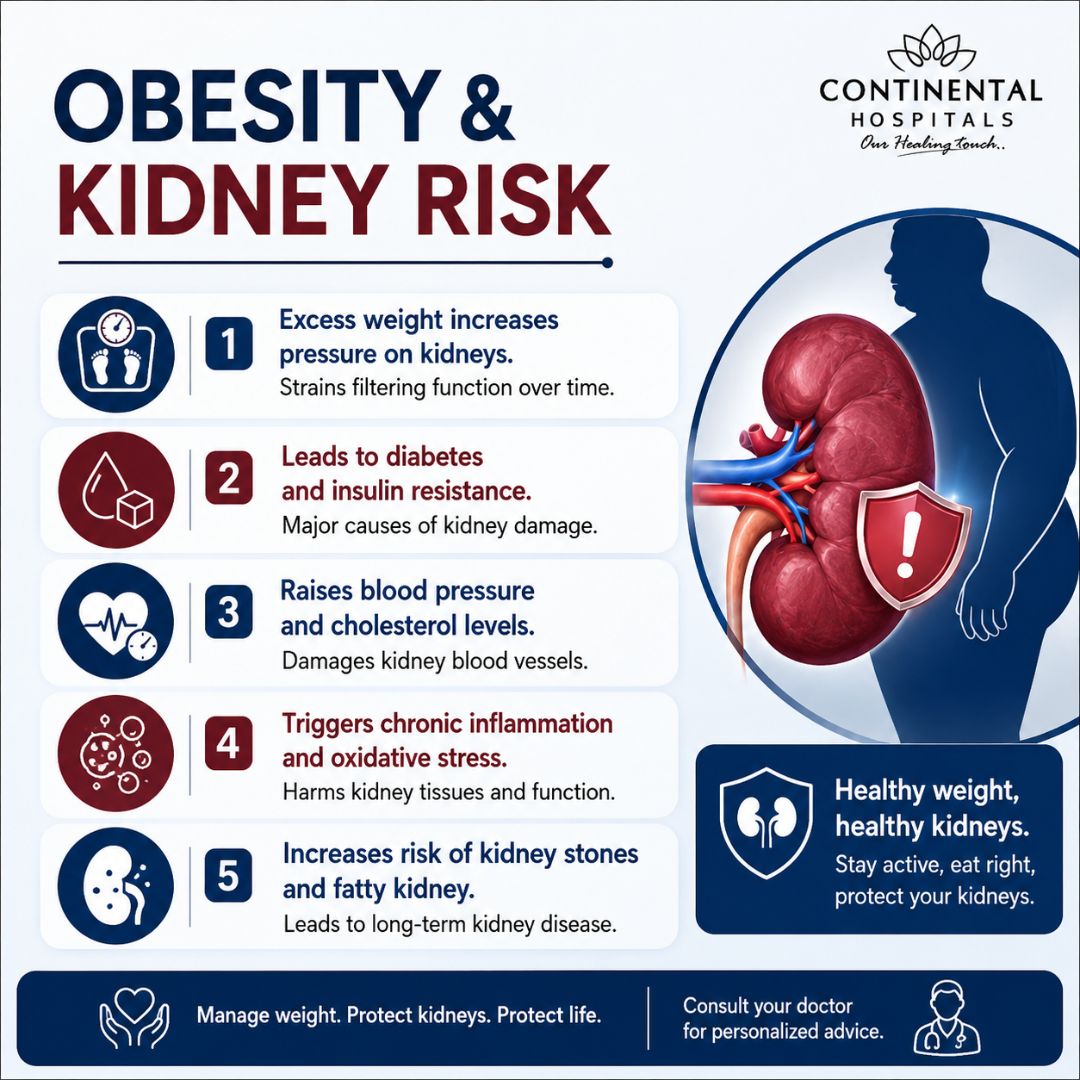
  • Hyperfiltration Stress: As a person increases in body mass, the kidneys must filter more blood than is considered normal to sustain the metabolic needs of the body. This constant overwork is known as hyperfiltration. Over the years, this constant load has the potential to damage the individual filtering units of your kidneys.
  • Direct tissue damage: The physical pressure and metabolic changes associated with excess weight can lead to a condition called focal segmental glomerulosclerosis. This is a specific type of kidney scarring that occurs directly because of the increased workload placed on the organs.
  • Chronic inflammation: Excess fat tissue is not inactive. It produces inflammatory chemicals and hormones that circulate throughout the body. This continuous, low-grade inflammation damages blood vessels and healthy tissues, including the sensitive filters in your kidneys.

Visit the Nephrology Department at Continental Hospitals for expert kidney care, comprehensive screening, and personalized treatment from our experienced nephrologists.

What Are the Indirect Ways Obesity Causes Kidney Problems?

In addition to the direct strain on your kidneys, being overweight also tends to increase the risk of other major health conditions. And these other conditions are often the main reasons for long-term kidney damage.

Blood pressure
How obesity can harm your kidneys is intimately linked to blood pressure. Extra weight makes your heart work harder, which raises the pressure throughout all your blood vessels. The kidneys are full of tiny, fragile blood vessels. When high blood pressure repeatedly puts pressure on these vessels, they become hardened and scarred, cutting down their filtering power.

Type 2 Diabetes
Diabetes is another major pathway where the obesity risk for kidney disease becomes a reality. Excess weight can cause your cells to become resistant to insulin, which can lead to high blood sugar. Chronic high blood sugar is like a toxin to kidney filters, slowly killing them off over time and causing diabetic nephropathy.
Second Opinion

What Are the Hidden Symptoms of Obesity-Related Kidney Damage?

Perhaps the most concerning aspect of kidney disease caused by obesity is that it is so silent it most of the time will occur without any remarkable symptoms in the early phases of the disease.

  • Frequency of urination: You might feel an increased urge to urinate, especially during the night, or the urine may appear excessively foamy, a sign of leak of protein into the urine.
  • Swelling of the extremities: If the kidneys are becoming less able to get rid of excess fluid and sodium, excess fluid will stay in the tissues of your body. The fluid often accumulates in the ankles, feet, and legs.
  • Sensation of tiredness: as kidney function declines, toxins accumulate in the blood, and you might feel excessively tired, weak or simply not able to focus.
  • High blood pressure that is difficult to normalize: if your blood pressure has become very difficult to bring down with only safe lifestyle changes, it could be a sign of kidney disease.

Why Is Preventing Obesity and Chronic Kidney Disease Critical?

If this disease is left untreated, it can lead to chronic kidney disease, a condition where the kidneys gradually become less and less able to function. When it has reached the end stage the kidneys stop working entirely, and treatment with life-saving dialysis or a kidney transplant is required.

This is good news for you because reducing body weight can effectively stop or even reverse the early stress imposed on your kidneys. Lowering your weight reduces internal inflammation, blood sugar, and blood pressure.

Why Choose Continental Hospitals for Kidney Care?

When it comes to metabolic and renal health, it is important to choose the best partner for your healthcare needs. Continental Hospitals has always been at the top of the list.

International Recognition of Continental Hospitals: Continental Hospitals is globally known for maintaining the best standards in healthcare safety and clinical practices. It holds the elite accreditation from the US Joint Commission International, which is the gold standard of quality in global healthcare. It is also accredited by the National Accreditation Board for Hospitals and Healthcare Providers.

Integrated Care System: We have a comprehensive approach to your health. Our state-of-the-art department of bariatric and metabolic sciences works seamlessly with our world-class nephrology team to address your kidney health along with weight management.

Advanced Diagnostic and Infrastructure: Our hospital has the best dialysis units and state-of-the-art technology. We also have advanced surgical suites and precise diagnostic imaging to monitor your kidney health and identify early signs of stress before it leads to drastic damage.

Need an Appointment?

Patient-Centered Approach: We have a one-stop solution to your weight and kidney health issues. We personalize every treatment plan to cater to your needs in terms of lifestyle management, medical therapies, and long-term preventative measures.

Conclusion

The connection between obesity and kidney disease is apparent, but it’s a problem you can work to avoid. Managing your weight isn’t just about looking good, but about protecting the organs inside you from damage that feels little, happens slowly, and can amount to a lifetime. A balanced lifestyle and timely medical advice keep your kidneys in good standing for years to come.

If you struggle with your weight, high blood pressure, or urinary habits, don’t wait for the worst symptoms to appear. Early screening checks for signs of kidney stress while it’s still preventable. Consult our best nephrologist in Hyderabad at Continental Hospitals today for a complete assessment of your renal health and a personalized wellness plan.

Related Blog Topics:

  1. Does Eating Too Much Protein Damage Your Kidneys? What Science Says
  2. 7 Ways to Keep Your Kidneys Healthy

Frequently Asked Questions

Obesity places extra stress on the kidneys because they must work harder to filter increased amounts of blood. Excess body fat can lead to chronic inflammation, hormonal imbalances, and metabolic changes that damage kidney tissues over time. Obesity is also strongly linked to conditions such as high blood pressure and type 2 diabetes, which are among the leading causes of chronic kidney disease. Increased fat accumulation around organs may affect kidney function directly and contribute to abnormal filtration rates. Over time, this excessive workload can result in kidney damage and reduced filtration capacity. The risk rises further when obesity is combined with unhealthy lifestyle habits. Maintaining a healthy weight through balanced nutrition and regular physical activity can help protect kidney health. Early screening and medical evaluation are important for individuals with obesity to identify kidney problems before they become severe.
Yes, obesity can increase the risk of chronic kidney disease even in people who do not have diabetes. Excess body weight can directly affect kidney function by causing increased filtration pressure and structural changes in kidney tissues. Obesity-related inflammation may damage blood vessels that supply the kidneys. Fat accumulation can also alter hormone levels that regulate blood pressure and kidney performance. Research has shown that obese individuals have a higher likelihood of developing protein leakage in urine, an early sign of kidney damage. The longer obesity persists, the greater the strain on the kidneys. Other factors such as poor diet, lack of exercise, and sleep disorders can further increase risk. Regular kidney function testing and weight management strategies can help reduce the likelihood of obesity-related kidney disease.
Early kidney disease often develops silently and may not cause noticeable symptoms in the beginning. Some individuals may experience swelling in the feet, ankles, or hands due to fluid retention. Increased fatigue, difficulty concentrating, and changes in urination patterns can also occur. Foamy urine may indicate excess protein loss, which can be an early sign of kidney damage. High blood pressure that is difficult to control may signal underlying kidney stress. Obesity-related kidney disease may progress gradually over several years. Because symptoms are often subtle, routine health screenings are essential. Blood and urine tests can help detect kidney damage before complications develop. Early diagnosis allows timely treatment and lifestyle modifications that may slow disease progression.
Weight loss can significantly improve kidney health and reduce the risk of chronic kidney disease in obese individuals. Losing excess weight helps decrease the workload placed on the kidneys and improves filtration efficiency. Weight reduction can also lower blood pressure and improve blood sugar control, both of which are important for kidney protection. Studies have shown that even modest weight loss can reduce protein leakage in urine and improve overall kidney function. Healthy lifestyle changes such as balanced eating habits and regular exercise provide additional benefits. Weight management may also reduce inflammation and improve cardiovascular health. Individuals with obesity-related kidney concerns should seek guidance from healthcare professionals before starting a weight-loss program. A personalized approach can help achieve sustainable results while protecting kidney function.
High blood pressure and obesity often occur together and create a harmful combination for kidney health. Excess body weight increases the likelihood of developing hypertension, which damages the delicate blood vessels inside the kidneys. Over time, these damaged vessels become less effective at filtering waste products from the blood. Obesity can also increase inflammation and metabolic stress that worsen kidney injury. Uncontrolled hypertension accelerates the progression of chronic kidney disease and increases the risk of kidney failure. The kidneys play a key role in regulating blood pressure, creating a cycle in which kidney damage can further worsen hypertension. Regular monitoring and treatment of both conditions are essential. Lifestyle changes and medical management can help reduce kidney-related complications.
Childhood obesity can have long-term effects on kidney health and may increase the risk of chronic kidney disease in adulthood. Excess weight during childhood can lead to early development of high blood pressure, insulin resistance, and metabolic disorders that affect the kidneys. The kidneys may experience increased filtration demands for many years, causing gradual damage. Obese children are also more likely to remain obese as adults, extending the duration of kidney stress. Early intervention through healthy eating, physical activity, and regular medical checkups can help prevent complications. Monitoring kidney function may be beneficial for children with severe obesity or associated health conditions. Encouraging healthy habits at a young age can provide lifelong protection for kidney health and overall well-being.
The frequency of kidney screening depends on an individual's overall health, age, and presence of risk factors. Obese individuals, especially those with diabetes, high blood pressure, or a family history of kidney disease, should undergo regular kidney health evaluations. Routine blood tests can assess kidney filtration function, while urine tests can detect protein leakage or other abnormalities. Annual screenings are commonly recommended for people at increased risk. Early detection allows healthcare providers to identify problems before symptoms appear and implement preventive measures. Regular monitoring also helps evaluate the effectiveness of weight management and treatment strategies. Individuals should discuss their personal risk profile with a nephrologist or primary care physician to determine the most appropriate screening schedule.
Several lifestyle modifications can help lower the risk of kidney disease associated with obesity. Maintaining a healthy body weight through balanced nutrition and regular physical activity is one of the most effective strategies. A diet rich in fruits, vegetables, whole grains, and lean proteins supports kidney and overall health. Limiting processed foods, excess salt, and sugary beverages can help control blood pressure and weight. Staying adequately hydrated and avoiding tobacco use also contribute to kidney protection. Managing diabetes, cholesterol levels, and hypertension is equally important. Regular health checkups enable early detection of kidney problems and other obesity-related complications. Consistent healthy habits can significantly reduce the likelihood of chronic kidney disease and improve long-term well-being.
Disclaimer: The information provided in this blog is intended for general knowledge and informational purposes only, and does not constitute medical advice. Always consult with a qualified healthcare professional for any medical concerns or before making any decisions about your health.

Get in Touch With Us

Whether you are from India or abroad, we are here to help you with your medical queries. Please fill out the form below and our team will connect with you shortly.

  • ✔ Quick response from our medical experts
  • ✔ Secure data handling & privacy
  • ✔ Easy upload for reports & documents
0 / 100
Checkboxes Section


Chat with our medical experts on WhatsApp for quick assistance and hassle-free appointment booking

Recent Posts
Language Based Image
0 / 100