.webp)


Winter is a challenging season for people with breathing problems. The cold air becomes heavy, pollutants remain trapped close to the ground, and the air quality drops sharply. Many people notice that their cough, breathlessness, and throat irritation get worse during the winter months. This is not a coincidence. Winter pollution directly affects your lungs, weakens your respiratory immunity, and increases the risk of infections.
Why Pollution Worsens in Winter?
Winter weather conditions create a natural trap for pollutants. The cooler temperatures cause a phenomenon called temperature inversion. Instead of rising, polluted air stays close to the ground.
Some key reasons pollution increases in winter include:
- Low wind movement which stops pollution from dispersing
- Rising use of vehicles and fuel burning for warmth
- Industrial emissions accumulating due to cold, dense air
- Airborne dust and toxic particles staying suspended for longer
This combination of cold weather and pollution leads to a spike in pollution and winter respiratory infections.
How Winter Pollution Affects Lungs?
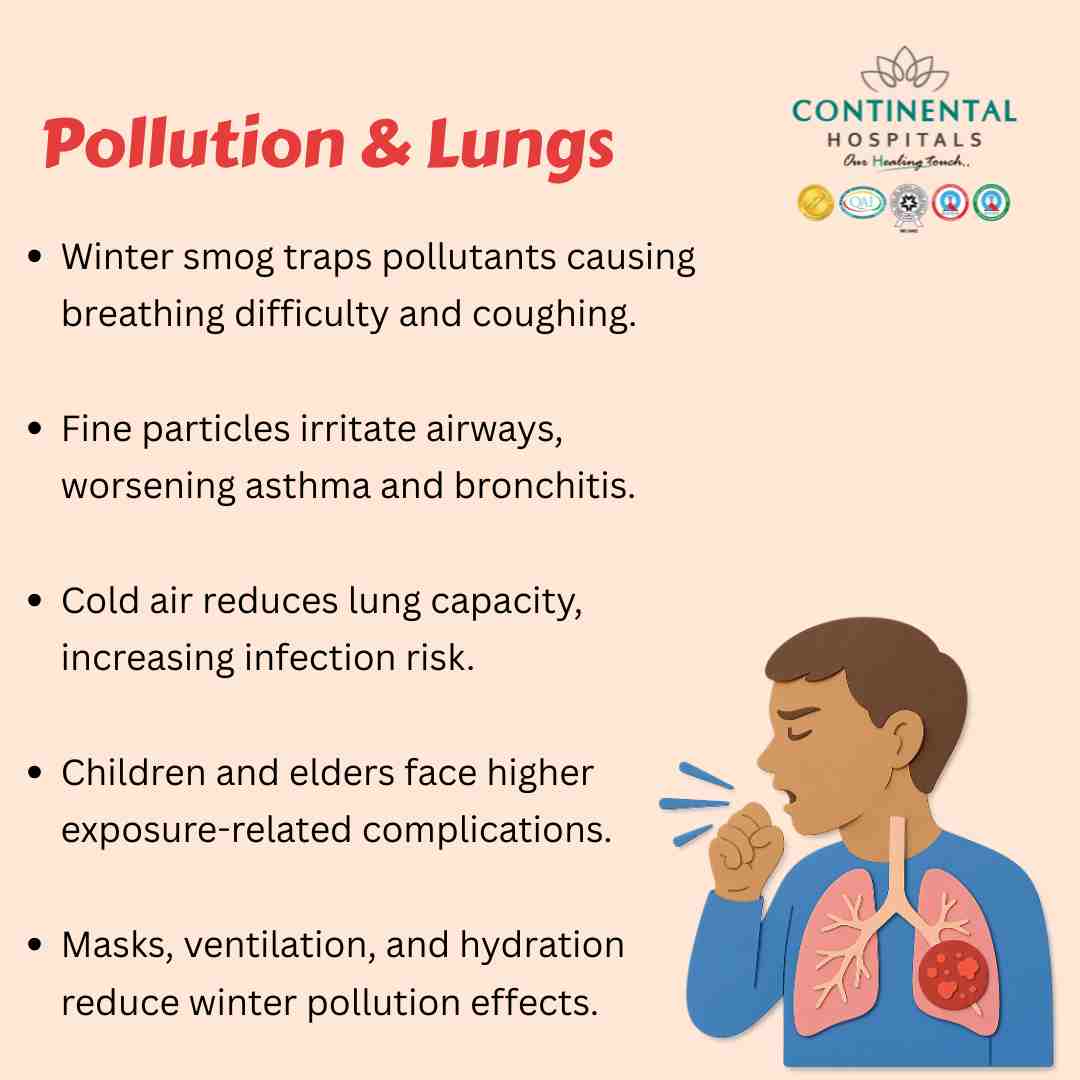
Your lungs suffer the most during winter because polluted air contains harmful pollutants like PM2.5, PM10, nitrogen dioxide, sulfur dioxide, and smoke particles.
Here is how winter pollution harms the lungs:
- Polluted air irritates the inner lining of your airway
- The lungs produce extra mucus to trap pollutants
- Persistent exposure leads to inflammation of the bronchi
- Breathing becomes more difficult for those with asthma, COPD, and allergies
- Pollutants weaken the lung’s natural defense system making viral infections more common
Even healthy individuals may experience burning in the throat, coughing, chest tightness, and difficulty breathing.
Pollution and Winter Respiratory Infections
Winter pollution does more than irritate your lungs. It increases your risk of respiratory infections.

Pollutants reduce the ability of the respiratory tract to clear viruses and bacteria. The cold air slows down the function of cilia which normally protect the lungs. As a result, viruses stay longer in the airway and multiply faster.
Common infections linked to winter pollution include:
- Upper respiratory infections
- Sinus infections
- Bronchitis
- Pneumonia
- Worsening of asthma and COPD symptoms
Children and elderly individuals face a higher risk because their immune systems are more vulnerable.
Pollution Impact on Children Lungs
Children breathe faster than adults and their lungs are still developing. Polluted winter air affects them more severely.
Winter pollution can lead to:
- Frequent cough and cold
- Sinus congestion
- Breathing difficulty during physical activity
- Higher chances of asthma flare ups
- Slower lung growth over time
Parents should closely monitor children during high pollution days and use protective measures to avoid long term lung impact.
Protective Measures for Polluted Air in Winter
You can reduce the harmful effects of winter pollution by taking simple and effective precautions.
Important protective measures include:
- Check air quality index regularly
- Avoid outdoor exercise when the AQI is poor
- Keep windows closed during peak pollution hours
- Use exhaust fans while cooking
- Keep yourself hydrated to thin the mucus
- Steam inhalation once a day provides comfort
- Maintain a clean indoor environment
These preventive steps help reduce exposure and protect your lungs from irritants.
Best Masks for Air Pollution and Viruses
Choosing the right mask can significantly reduce the amount of pollution you inhale.
Recommended masks include:
- N95 masks
- KN95 masks
- FFP2 masks
These masks can filter fine particles that enter deep into the lungs. They also offer protection against viruses circulating during winter.
Cloth masks and surgical masks offer limited protection against pollutants.
Air Purifier Benefits During Winter
Indoor air can be just as polluted as the air outside during winter.
Benefits of using an air purifier include:
- Removal of particulate matter like PM2.5 and PM10
- Reduction of dust, smoke, and pet dander
- Lower risk of respiratory infections
- Improved sleep quality
- Better breathing comfort for asthma and allergy patients
HEPA filter based air purifiers are most effective for winter use.
Winter Air Quality Health Tips
Follow these health tips to keep your respiratory system strong during winter months:
- Eat foods rich in vitamin C and antioxidants
- Keep your home ventilated during low pollution hours
- Use a warm scarf to cover your nose and mouth outdoors
- Perform deep breathing and lung strengthening exercises
- Avoid smoking and exposure to secondhand smoke
These steps help support lung health and reduce the impact of pollution related issues.
When to See a Doctor for Pollution Related Cough?
A mild cough from pollution may settle with home care. But certain symptoms require medical attention.
Seek medical help if you experience:
- Continuous cough for more than one week
- Breathlessness or chest tightness
- Noisy breathing
- High fever with cough
- Cough that worsens at night
- Difficulty performing routine physical activities
People with asthma, COPD, allergies, heart disease, or low immunity should not delay medical consultation.
Why Choose Continental Hospitals?
Continental Hospitals is one of the most trusted healthcare centers in Hyderabad for respiratory and lung related issues. The hospital maintains global standards of care and holds prestigious accreditations that ensure patient safety and quality treatment. The respiratory care team consists of experienced pulmonologists, state of the art diagnostic support, advanced treatment options, and dedicated emergency services.
Patients benefit from comprehensive lung function testing, high precision imaging, infection control systems, and personalized treatment plans. Continental Hospitals focuses on evidence based medicine, safety, and faster recovery for every patient.
Conclusion
Winter pollution is a serious threat to respiratory health. The combination of cold air and high pollution levels irritates the lungs, triggers breathing problems, and increases the chances of infections. Understanding how winter pollution affects lungs, using protective measures for polluted air in winter, choosing the best masks for air pollution and viruses, using air purifiers, and following winter air quality health tips can make a significant difference.
If you suffer from persistent cough, breathlessness, or repeated infections during winter, it is important to consult our best general physician specialist. Early diagnosis and proper treatment can prevent complications and protect long term lung health.