.webp)


Pregnancy is a time of excitement, change, and responsibility. Along with caring for your growing baby, your body goes through many hormonal shifts. One condition that may appear during this phase is gestational diabetes in pregnancy. With the right guidance, diet, activity, and medical support, this condition can be managed safely, helping you deliver a healthy baby and maintain your own well being.
What Is Gestational Diabetes in Pregnancy?
Gestational diabetes in pregnancy is a type of diabetes that develops during pregnancy, usually in the second or third trimester. It happens when pregnancy hormones interfere with insulin action, causing blood sugar levels to rise.
In most cases, blood sugar returns to normal after delivery. However, careful control during pregnancy is essential to protect both mother and baby.
Understanding what is gestational diabetes in pregnancy helps expectant mothers take timely action and avoid complications.
Gestational diabetes concerns? Visit our Endocrinology Department at Continental Hospitals.
Causes of Gestational Diabetes in Pregnancy
The exact causes of gestational diabetes in pregnancy vary, but common factors include:
- Hormonal changes during pregnancy that reduce insulin effectiveness
- Family history of diabetes
- Being overweight before pregnancy
- Previous history of gestational diabetes in pregnancy
- Polycystic ovary syndrome
- Sedentary lifestyle
Knowing the causes of gestational diabetes in pregnancy helps doctors assess risk early and plan monitoring.
Symptoms of Gestational Diabetes in Pregnancy
Many women do not notice obvious signs. That is why routine screening is important. When symptoms occur, they may include:
- Increased thirst
- Frequent urination
- Fatigue beyond normal pregnancy tiredness
- Blurred vision
These symptoms of gestational diabetes in pregnancy are often mild and easy to miss, so regular blood sugar testing is essential.

Why Managing Gestational Diabetes Is Important?
Poorly controlled blood sugar can increase the risk of:
- High birth weight of the baby
- Difficult delivery
- Preterm birth
- Low blood sugar in the newborn
- Higher chances of type two diabetes later in life
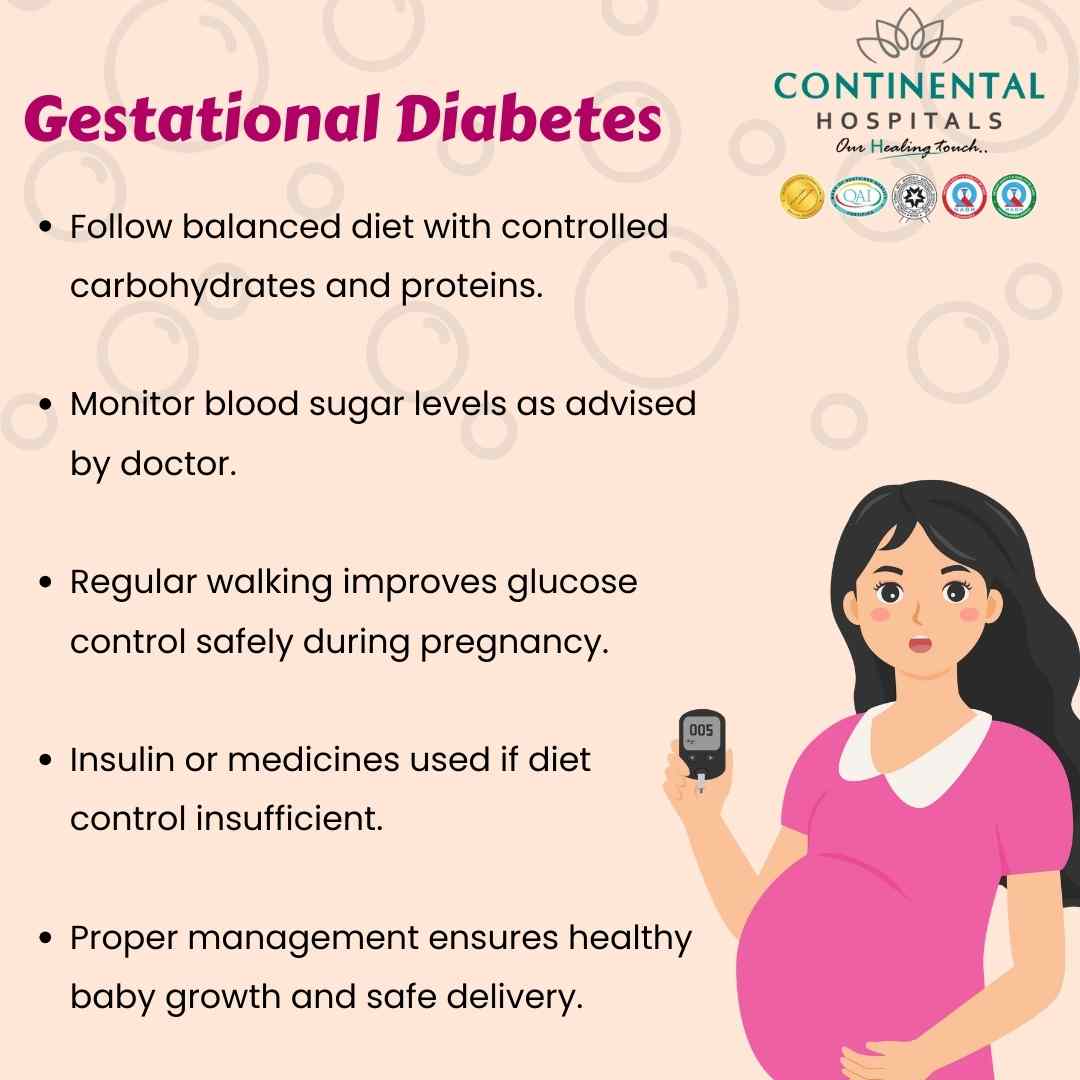
Learning how to control gestational diabetes in pregnancy reduces these risks and supports a healthy delivery.
Gestational Diabetes Diet: The Foundation of Control
A well planned gestational diabetes diet plays a key role in blood sugar control. The goal is balanced nutrition without sudden sugar spikes.
Diet Plan for Gestational Diabetes in Pregnancy
A good diet plan for gestational diabetes in pregnancy focuses on:
- Regular meal timing
- Balanced portions
- Low glycaemic index foods
- Adequate protein and fibre
Diet Chart for Gestational Diabetes in Pregnancy
A simple diet chart for gestational diabetes in pregnancy may include:
Morning
- Warm water
- Whole grain toast or vegetable oats
- Protein such as eggs or paneer
Mid Morning
- Fruit like apple or guava
- Handful of nuts
Lunch
- Brown rice or whole wheat roti
- Dal or grilled chicken or fish
- Cooked vegetables
- Salad
Evening
- Sprouts or roasted chana
Dinner
- Light meal with vegetables and protein
- Avoid heavy carbs late at night
Following a structured diet for gestational diabetes in pregnancy helps maintain stable blood sugar levels throughout the day.
Foods to Prefer and Avoid
Foods to Prefer
- Whole grains
- Fresh vegetables
- Low sugar fruits
- Lean protein
- Healthy fats
Foods to Avoid
- Sugary drinks
- Refined flour items
- Sweets and desserts
- Fried foods
This balanced approach supports an effective gestational diabetes diet without compromising nutrition.
Exercise for Gestational Diabetes in Pregnancy
Physical activity improves insulin action and helps lower blood sugar naturally. Safe exercise for gestational diabetes in pregnancy includes:
- Walking for thirty minutes daily
- Prenatal yoga
- Stretching exercises
- Light household activity
Always consult your doctor before starting any exercise routine, especially if you have pregnancy related complications.
Monitoring Blood Sugar Levels
Regular monitoring helps track progress and adjust treatment. Doctors may recommend:
- Fasting blood sugar checks
- Post meal sugar testing
- Periodic HbA1c if needed
Consistent monitoring is essential in managing gestational diabetes in pregnancy safely.
Medical Treatment When Needed
If diet and exercise alone do not control sugar levels, doctors may prescribe insulin or other pregnancy safe treatments. Medication is used only when necessary and under strict medical supervision.
Learning how to control gestational diabetes in pregnancy sometimes requires a combination of lifestyle changes and medical care.
Can Gestational Diabetes Affect Delivery?
With proper management, most women have normal deliveries. Doctors closely monitor baby growth, sugar levels, and delivery timing to ensure safety.
Good control of gestational diabetes in pregnancy significantly reduces delivery related risks.
After Delivery: What Happens Next?
Blood sugar usually returns to normal after childbirth. However:
- Blood sugar testing is advised after delivery
- Healthy lifestyle should continue
- Future pregnancies require early screening
Women with a history of gestational diabetes in pregnancy have a higher chance of developing diabetes later, so regular health checkups are important.
Why Choose Continental Hospitals?
Choosing the right hospital makes a significant difference in pregnancy care. Continental Hospitals is known as one of the best hospital in Hyderabad for high risk pregnancies and diabetes management.
Key reasons include:
- Experienced obstetricians and endocrinologists
- Advanced maternal and fetal monitoring facilities
- Multidisciplinary care approach
- International standards of patient safety
- JCI and NABH accredited infrastructure
- Personalized diet counselling and education
Our team focuses on both mother and baby, ensuring safe outcomes through evidence based care.
Conclusion
Gestational diabetes in pregnancy can feel overwhelming, but it is manageable with the right approach. Understanding the condition, following a structured gestational diabetes diet, staying active, monitoring blood sugar, and seeking expert care are the keys to a healthy pregnancy.
With proper support, most women with gestational diabetes go on to have safe deliveries and healthy babies.
If you are struggling with gestational diabetes in pregnancy or have concerns about your blood sugar levels, do not self manage.
Consult our best Obstetrician and our top Endocrinologist at Continental Hospitals for personalized care, accurate monitoring, and a safe pregnancy journey. Early expert support protects both mother and baby and ensures peace of mind throughout your pregnancy.