.webp)


Cortisol is an essential hormone that plays a major role in your body’s stress response. It helps regulate blood pressure, blood sugar, metabolism, sleep cycles, and inflammation. When balanced, cortisol supports survival and daily functioning. However, consistently high cortisol levels can negatively impact your physical and emotional health.
If you have been feeling tired, anxious, gaining weight without reason, or struggling with sleep, your cortisol levels may be elevated. Understanding how to reduce cortisol naturally can help you regain control of your health and prevent long term complications.
What Is Cortisol and Why Is It Important?
Cortisol is often called the stress hormone. It is produced by the adrenal glands and released during stressful situations. The cortisol hormone helps your body respond quickly to challenges. It increases heart rate, boosts energy supply, and sharpens focus.
Short term increases in cortisol are normal and helpful. Problems arise when cortisol levels remain elevated for long periods. Chronic stress, poor sleep, unhealthy eating habits, and certain medical conditions can lead to high cortisol levels.
If you’re facing high cortisol symptoms or stress-related health issues, visit our Psychiatry Department at Continental Hospitals for expert evaluation and personalized care.
Signs and Symptoms of High Cortisol
High cortisol symptoms may not always be obvious in the beginning. Over time, they can become more noticeable.
Common symptoms include:
• Weight gain, especially around the abdomen
• Difficulty sleeping
• Mood swings and irritability
• Anxiety and depression
• High blood pressure
• Fatigue even after rest
• Frequent headaches
• Weak immunity
• Irregular menstrual cycles in women
If these symptoms persist, it is important to consult a doctor. At Continental Hospitals, our endocrinology team evaluates hormone imbalances using advanced diagnostic tools.

What Causes High Cortisol Levels?
Understanding the causes helps in knowing how to reduce cortisol effectively.
Common causes include:
• Chronic emotional stress
• Lack of sleep
• Excessive caffeine intake
• Intense overtraining without rest
• Poor nutrition
• Certain medications
• Medical conditions like Cushing syndrome
Identifying the root cause is the first step in managing high cortisol.
How to Reduce Cortisol Levels Naturally?
The good news is that lifestyle changes can significantly reduce cortisol levels. Below are practical, science based strategies that can help restore hormonal balance.
1. Improve Your Sleep Quality
Sleep and cortisol are closely connected. Poor sleep can increase cortisol levels, and high cortisol can disturb sleep.
To improve sleep:
• Maintain a fixed bedtime routine
• Avoid screens at least one hour before bed
• Keep your bedroom cool and dark
• Avoid heavy meals late at night
Aim for consistent, restful sleep each night to help reduce cortisol naturally.
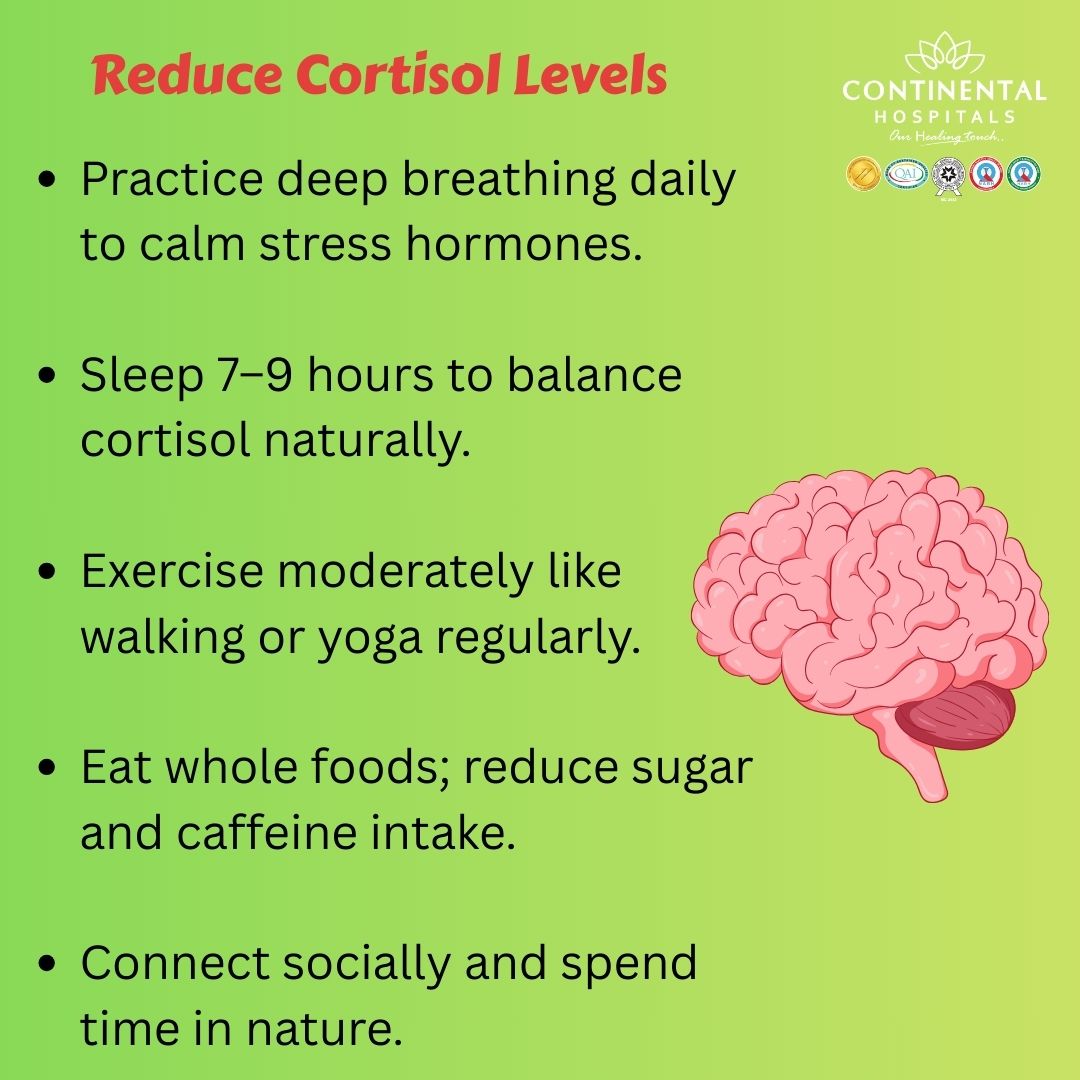
2. Practice Deep Breathing and Relaxation
Relaxation techniques help calm the nervous system and lower cortisol hormone release.
You can try:
• Deep breathing exercises
• Meditation
• Gentle yoga
• Guided relaxation sessions
Even ten to fifteen minutes daily can make a noticeable difference in high cortisol levels.
3. Exercise Smartly
Exercise is beneficial, but excessive high intensity workouts can increase cortisol.
To reduce cortisol effectively:
• Choose moderate activities like brisk walking
• Include strength training in moderation
• Add stretching or yoga
• Avoid overtraining
Balanced exercise supports healthy cortisol levels without overstressing the body.
4. Eat a Balanced Diet
Your diet plays a key role in regulating cortisol levels.
Include:
• Fresh fruits and vegetables
• Whole grains
• Lean protein sources
• Healthy fats like nuts and seeds
Limit:
• Refined sugar
• Excess caffeine
• Processed foods
Stable blood sugar levels help prevent unnecessary cortisol spikes.
5. Stay Hydrated
Dehydration can act as a physical stressor and raise cortisol levels. Drink adequate water throughout the day to support hormonal balance.
6. Maintain Strong Social Connections
Spending time with supportive family and friends can lower stress and reduce cortisol naturally. Emotional well being directly influences hormone health.
7. Spend Time in Nature
Exposure to natural sunlight and green spaces has been shown to reduce cortisol. A simple daily walk outdoors can calm your mind and lower stress hormones.
8. Manage Your Thoughts
Negative thinking patterns can trigger stress responses. Cognitive behavioral strategies, journaling, and mindfulness can help shift your mindset and reduce cortisol levels over time.
9. Consider Professional Support
If lifestyle measures are not enough, medical evaluation is necessary. Persistent high cortisol levels may indicate an underlying endocrine disorder.
At Continental Hospitals, our endocrinologists, internal medicine specialists, and mental health experts work together to provide comprehensive hormone care.
When Should You See a Doctor?
You should seek medical advice if you experience:
• Rapid unexplained weight gain
• Severe fatigue
• Persistent anxiety
• High blood pressure
• Muscle weakness
• Irregular periods
• Difficulty concentrating
These may be signs of prolonged high cortisol or related conditions.
Early diagnosis prevents complications and helps restore hormonal balance safely.
Why Choose Continental Hospitals?
Continental Hospitals is known as the best hospital in Hyderabad for advanced endocrine and metabolic care. Our commitment to excellence is reflected in our national and international accreditations.
We are accredited by NABH and JCI, ensuring global standards in patient safety and quality care. Our hospital infrastructure is designed with modern technology for accurate diagnosis and evidence based treatment.
Our strengths include:
• Experienced endocrinology specialists
• Comprehensive hormone testing facilities
• Multidisciplinary approach
• Patient centered care
• Advanced laboratory services
• Personalized treatment plans
We focus on identifying the exact cause of high cortisol levels and providing customized solutions that combine lifestyle guidance with medical care.
Long Term Risks of Ignoring High Cortisol
If left untreated, prolonged high cortisol levels can lead to:
• Type 2 diabetes
• Heart disease
• Osteoporosis
• Weakened immunity
• Depression
• Hormonal imbalances
Taking early steps to reduce cortisol protects your long term health.
Can Cortisol Levels Be Tested?
Yes. Blood, saliva, or urine tests can measure cortisol levels. Your doctor will decide which test is appropriate based on your symptoms and medical history.
Testing helps confirm whether your symptoms are due to high cortisol and guides further treatment.
Conclusion
Cortisol is essential for survival, but balance is key. Persistent stress, poor lifestyle habits, and underlying health conditions can lead to high cortisol levels that affect your overall well being.
Simple lifestyle changes such as better sleep, balanced nutrition, moderate exercise, and relaxation techniques can help reduce cortisol naturally. However, if symptoms continue, medical evaluation is important.
If you are experiencing high cortisol symptoms or struggling with stress related health issues, consult our best psychiatrist at Continental Hospitals. Our expert doctors provide comprehensive hormone evaluation and personalized care to help you restore healthy cortisol levels and improve your quality of life.
Related Blog Topics: