.webp)


Insulin plays a vital role in managing diabetes. For many people living with diabetes, insulin is not just a medicine but a lifeline that helps keep blood sugar levels within a healthy range. With multiple insulin types available, choosing the right one can feel confusing. Patients often ask questions like Which insulin is best for me? Why are there different insulin types? How does a doctor decide?
What Is Insulin and Why Is It Needed?
Insulin is a hormone that helps glucose enter the body’s cells to be used as energy. In people with diabetes, the body either does not produce enough insulin or cannot use it effectively. As a result, blood sugar levels rise and can damage vital organs if not controlled.
Insulin therapy helps
- Control blood sugar levels
- Prevent diabetes complications
- Improve energy and daily functioning
- Support long-term health
Not everyone with diabetes needs insulin, but for many patients, it becomes essential at some stage of the disease.
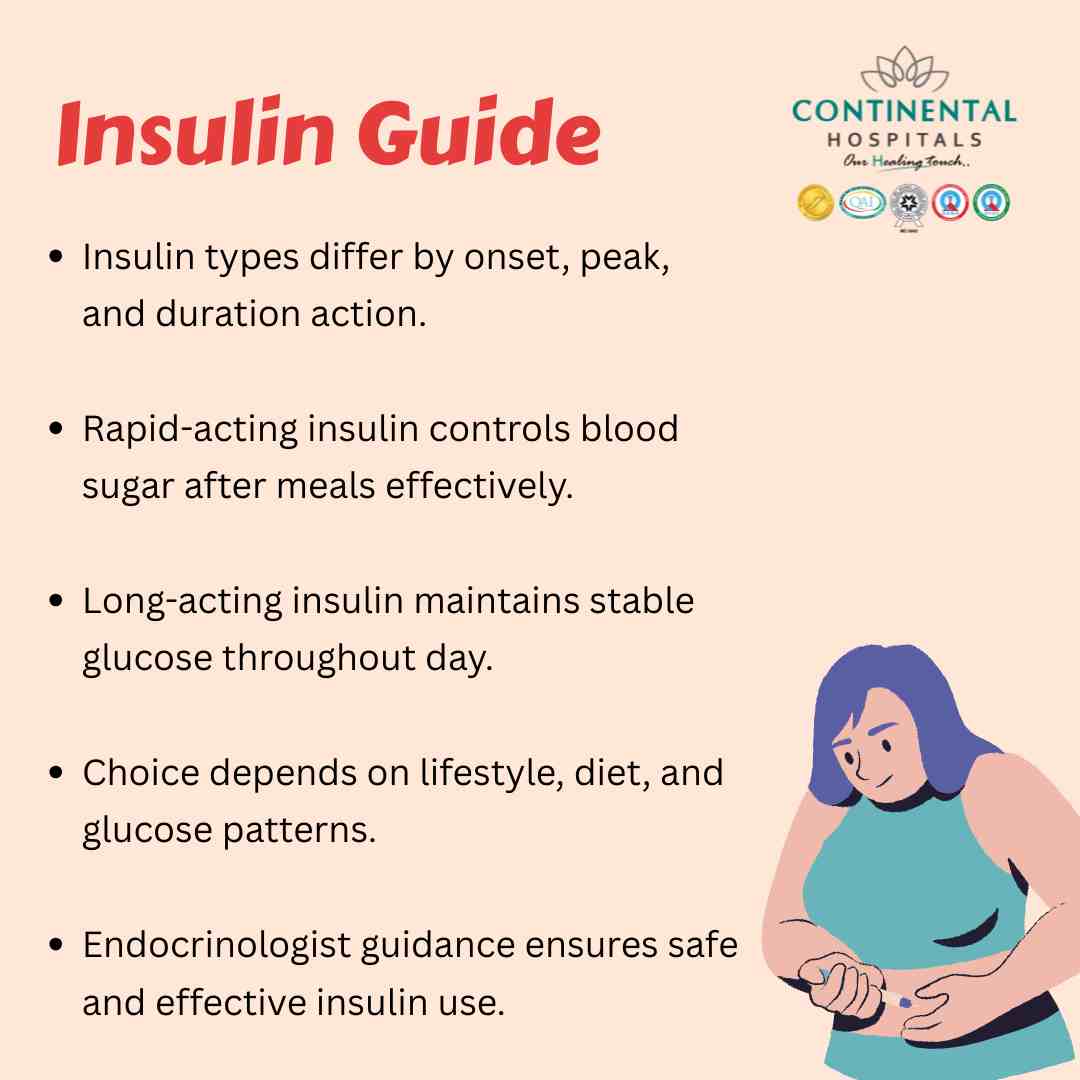
Why Are There Different Types of Insulin?
The body releases insulin at different times
- Small amounts throughout the day
- Larger amounts after meals
To mimic this natural pattern, different insulin types are designed to work at different speeds and durations. The right combination helps maintain stable blood sugar levels without sudden highs or lows.
Main Types of Insulin Explained
Insulin is usually classified based on how fast it starts working, when it peaks, and how long it lasts.
Rapid-Acting Insulin
Rapid-acting insulin starts working very quickly and is usually taken just before or immediately after meals.

Key features
- Starts working within minutes
- Controls blood sugar spikes after meals
- Short duration of action
This type is often used as mealtime insulin and is commonly combined with longer-acting insulin.
Short-Acting Insulin
Short-acting insulin works slightly slower than rapid-acting insulin and is also used around meal times.
Key features
- Starts working within a short time
- Helps manage blood sugar after food
- Lasts longer than rapid-acting insulin
Doctors may recommend this type depending on meal patterns and blood sugar response.
Intermediate-Acting Insulin
Intermediate-acting insulin provides blood sugar control for several hours and helps cover insulin needs between meals and overnight.
Key features
- Slower onset of action
- Moderate duration
- Often taken once or twice daily
It is sometimes combined with short-acting insulin for better overall control.
Long-Acting Insulin
Long-acting insulin is designed to provide steady insulin levels throughout the day and night.
Key features
- Minimal peaks
- Long duration of action
- Helps maintain fasting blood sugar levels
This type is often referred to as basal insulin and forms the foundation of many insulin treatment plans.
Premixed Insulin
Premixed insulin combines two types of insulin in one injection, usually a short or rapid-acting insulin with an intermediate-acting one.
Key features
- Fewer injections
- Convenient for some patients
- Fixed ratio limits flexibility
This option may suit people with regular meal timings and stable routines.
How Doctors Choose the Right Insulin?
Choosing the right insulin is not a one-size-fits-all decision. Doctors carefully evaluate multiple factors before recommending a type or combination.
Important considerations include
- Type of diabetes
- Age and lifestyle
- Eating habits
- Physical activity level
- Blood sugar patterns
- Risk of low blood sugar
- Other medical conditions
At Continental Hospitals, endocrinologists and diabetologists use detailed assessments to personalize insulin therapy for each patient.
Insulin Delivery Methods
Insulin can be delivered in different ways, depending on patient comfort and medical needs.
Common methods include
- Insulin pens
- Insulin syringes
- Insulin pumps
Doctors help patients choose a method that fits their lifestyle and ensures accurate dosing.
Common Concerns About Insulin Therapy
Many patients feel anxious when starting insulin. These concerns are common and understandable.
Is insulin a sign of severe diabetes?
No. Insulin is a tool to protect the body and prevent complications.
Will insulin cause dependency?
Insulin replaces what the body lacks. It does not cause addiction.
Is insulin safe for long-term use?
Yes. When monitored properly, insulin is safe and life-saving.
Does insulin mean daily injections forever?
Not always. Treatment plans may change over time based on blood sugar control.
Tips for Using Insulin Safely
Using insulin correctly is essential for effective diabetes management.
- Take insulin exactly as prescribed
- Monitor blood sugar regularly
- Rotate injection sites
- Store insulin properly
- Never skip follow-up visits
Education and regular monitoring greatly reduce risks and improve outcomes.
When Should Insulin Be Started?
Insulin may be recommended if
- Oral medicines are no longer effective
- Blood sugar remains uncontrolled
- During pregnancy with diabetes
- In severe illness or surgery
- When diabetes complications begin to appear
Early initiation, when needed, helps prevent long-term damage.
Why Choose Continental Hospitals for Diabetes and Insulin Care?
Managing diabetes requires expert guidance, advanced diagnostics, and continuous support. Continental Hospitals is recognized as one of the best hospital in Hyderabad for comprehensive diabetes care.
- What makes Continental Hospitals a trusted choice
- Experienced endocrinologists and diabetologists
- Personalized insulin treatment plans
- Advanced blood sugar monitoring systems
- Multispecialty care for diabetes-related complications
- Internationally accredited hospital standards
The hospital follows globally accepted protocols and strict safety measures to ensure accurate treatment and patient confidence.
When Should You See a Diabetes Specialist?
You should consult a specialist if you have
- Persistently high blood sugar levels
- Frequent low blood sugar episodes
- Difficulty managing insulin doses
- Newly diagnosed diabetes requiring insulin
- Diabetes-related complications
Early specialist care leads to better control and improved quality of life.
Conclusion
Understanding insulin types is the first step toward effective diabetes management. Each insulin type has a specific role, and choosing the right one depends on individual needs, lifestyle, and medical condition.
With expert doctors, patient-focused care, and advanced treatment facilities, Continental Hospitals provides trusted insulin therapy and diabetes management under one roof.
If you are suffering from uncontrolled diabetes, fluctuating blood sugar levels, or confusion about insulin use, consult our best Endocrinologist at Continental Hospitals. Timely expert guidance can help you choose the right insulin and protect your long-term health.